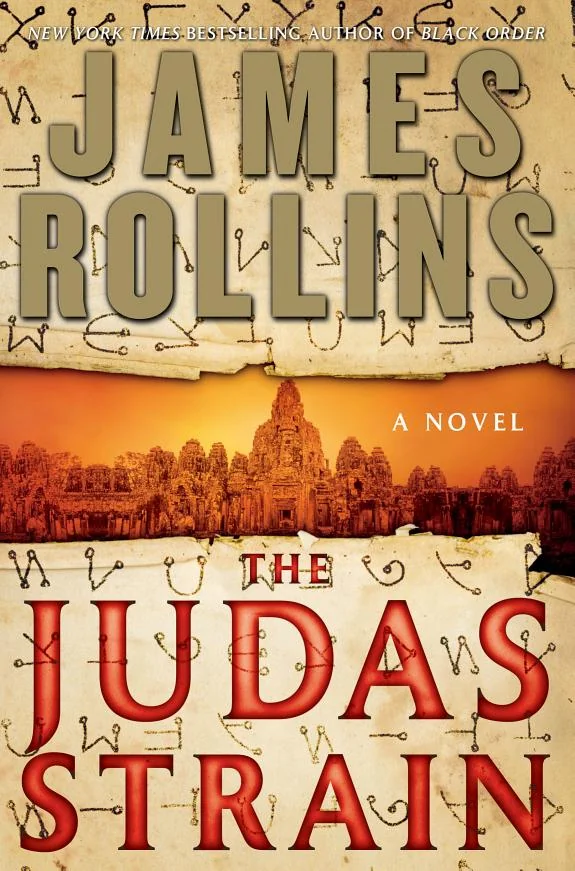
The Judas Strain
 79
79

The Judas Strain
James Rollins's "The Judas Strain" delivers a potent concoction of historical conspiracy and biological terror, a signature blend that has defined his career. The novel excels in its meticulous research, grounding its speculative premise in plausible scientific and historical frameworks, particularly concerning the potential for ancient biological manipulation. A standout element is the exploration of the "Judas Strain" as a meticulously engineered pathogen, a concept that elevates the narrative beyond a simple outbreak story. However, the relentless pace, while exhilarating, sometimes sacrifices character depth, leaving some figures feeling more like plot devices than fully realized individuals. The climax, while action-packed, leans into familiar thriller tropes. Despite these minor criticisms, the novel remains a compelling exploration of humanity's vulnerability to its own forgotten past, a stark reminder that some secrets are best left undisturbed.
📝 Description
79
In James Rollins' 2009 thriller, an ancient engineered plague threatens global civilization.
The Judas Strain follows a team of specialists as they race against time to stop a global pandemic. This is no ordinary virus; it is an ancient, engineered plague that has resurfaced. Rollins, known for his blend of historical puzzles and modern scientific threats, crafts a narrative where a biological weapon, possibly thousands of years old, poses an existential risk. The team must decipher the origins of this devastating organism and find a cure before it unravels civilization. The story taps into the idea that ancient civilizations may have possessed advanced biological warfare capabilities far beyond our current understanding. It positions the "Judas Strain" as an artifact of these forgotten scientific endeavors, challenging conventional historical timelines and notions of early human technological advancement.
Readers who appreciate fast-paced thrillers grounded in scientific and historical detail will find much to engage them. The book appeals to those interested in ancient mysteries, speculative biology, and how forgotten knowledge can impact the present. It is a narrative where archaeological discoveries and cutting-edge research collide, raising questions about humanity's past and its future.
This novel engages with the esoteric concept of lost ancient technologies, specifically in the realm of biological manipulation. It posits that advanced scientific knowledge, capable of creating sophisticated biological agents like the "Judas Strain," existed in antiquity, far predating modern scientific understanding. The narrative suggests that humanity's past may hold secrets of immense power, capable of both creation and destruction, which have lain dormant for millennia. This aligns with esoteric traditions that explore forgotten civilizations and hidden knowledge, hinting at a cyclical nature of human advancement and the potential for ancient discoveries to resurface with profound consequences.
💡 Why Read This Book?
• Learn about the speculative concept of the "Judas Strain," an ancient biological weapon, and its potential mechanisms for species extinction, prompting reflection on historical technological capabilities. • Experience the thrill of a global race against time as characters decipher clues from ancient texts and archaeological sites to combat a modern pandemic threat. • Understand the intersection of historical mysteries and cutting-edge biological science, as Rollins posits how forgotten knowledge could hold the keys to contemporary survival.
⭐ Reader Reviews
Honest opinions from readers who have explored this book.
❓ Frequently Asked Questions
What is the scientific definition of the 'Judas Strain' in the book?
In "The Judas Strain," the "Judas Strain" is a scientific term for an organism engineered to drive an entire species to extinction, presented as an ancient biological weapon.
What historical elements does James Rollins incorporate into 'The Judas Strain'?
The novel weaves in elements of ancient history, suggesting that early civilizations may have possessed advanced biological engineering capabilities, a concept explored through the origins of the titular strain.
What kind of adventure does 'The Judas Strain' offer?
It offers a high-octane thriller adventure, combining historical intrigue with scientific discovery as a team races to prevent a global extinction event caused by an ancient pathogen.
Is 'The Judas Strain' part of a series?
Yes, 'The Judas Strain' is part of James Rollins's Sigma Force series, featuring recurring characters and themes of scientific and historical adventure.
What is the core conflict in 'The Judas Strain'?
The core conflict involves a team of specialists trying to stop an ancient, engineered plague, the 'Judas Strain,' from causing a worldwide extinction event.
When was 'The Judas Strain' first published?
"The Judas Strain" by James Rollins was first published on July 2, 2007.
🔮 Key Themes & Symbolism
Ancient Biological Warfare
The novel posits the existence of "The Judas Strain" as an ancient, engineered biological weapon. This theme challenges conventional understandings of history and science, suggesting that advanced biological manipulation might have been present in early civilizations. The book explores the terrifying prospect of such a dormant threat resurfacing, forcing characters to confront the possibility that humanity's greatest dangers lie not in the future, but in its forgotten past.
Historical Contamination
This theme centers on the idea that historical events, particularly those involving forgotten civilizations or lost knowledge, can have profound and dangerous repercussions in the modern era. "The Judas Strain" acts as a metaphor for how ancient secrets or creations can 'contaminate' the present, posing existential threats. The narrative follows a quest to understand and neutralize this ancient contamination before it irrevocably alters the course of human history.
Scientific Espionage and Discovery
Underlying the biological threat is a layer of scientific discovery and, at times, clandestine research. Characters must race to uncover the origins and potential cure for the "Judas Strain," often finding themselves entangled with shadowy organizations or competing research factions. This theme highlights the dual nature of scientific advancement: its potential for salvation and its capacity for destruction, especially when dealing with forces of ancient design.
Existential Threats and Resilience
Fundamentally, , "The Judas Strain" explores humanity's vulnerability to extinction-level events. The "Judas Strain" represents an ultimate threat, a biological agent capable of wiping out the species. The narrative focuses on the resilience and ingenuity of a select group who must fight against overwhelming odds. It questions what it means to be human when faced with such an absolute danger, and what sacrifices are necessary for survival.
💬 Memorable Quotes
Direct passages from the work, attributed to the author.
“A scientific term for an organism that drives an entire species to extinction.”
— This definition expresses the central threat of the novel, framing the 'Judas Strain' as a deliberate, sophisticated biological agent designed for ultimate annihilation, not mere disease.
“The past was never dead. It wasn't even past.”
— An interpretation of the novel's premise that ancient threats and forgotten histories are not merely relics but active forces that can resurface and profoundly impact the present.
“Hope lay hidden in the most shocking place imaginable: within the la...”
— This suggests a paradoxical solution to the global crisis, implying that the cure or the key to survival might be found in the very source or nature of the ancient threat itself.
“The greatest discoveries often carry the greatest risks.”
— Reflecting the narrative's exploration of scientific progress, this highlights how uncovering the secrets of the 'Judas Strain' itself poses immense dangers to those involved.
💡 Key Ideas
Editorial paraphrase of the work's core concepts — not direct quotes.
He saw the shadow of extinction in the bloom of ancient knowledge.
This quote highlights the novel's central tension: the discovery of advanced ancient capabilities, like biological engineering, is paradoxically linked to humanity's potential downfall.
🌙 Esoteric Significance
Tradition
While not strictly adhering to a single esoteric lineage, "The Judas Strain" draws from Gnostic and Hermetic undercurrents concerning hidden knowledge and the potential for ancient, powerful forces to influence the material world. The concept of a deliberately engineered plague can be seen as a perversion of creation, a theme resonant in Gnostic cosmologies where the material world is a flawed creation. It also touches on themes of forgotten science and hidden histories, often explored in esoteric traditions.
Symbolism
The "Judas Strain" itself functions as a potent symbol of betrayal and destruction, a biological agent that undermines the very foundation of life, much like the biblical Judas betrayed Christ. Ancient texts and artifacts serve as symbols of lost wisdom and dangerous potential, representing a bridge between the ancient past and its perilous influence on the present. The concept of extinction embodies the ultimate failure of creation or the ultimate power of destructive forces.
Modern Relevance
Contemporary thinkers and practitioners in fields exploring speculative history, fringe archaeology, and the potential for ancient advanced technologies find resonance in Rollins's work. It fuels discussions about paradigm shifts in historical understanding and the possibility of forgotten scientific legacies. The novel's themes of biological threats and humanity's resilience are also relevant to modern concerns about biosecurity and existential risks, albeit framed through a dramatic, fictional lens.
👥 Who Should Read This Book
['• Readers fascinated by speculative history and the idea of lost ancient civilizations possessing advanced knowledge, particularly in biology.', '• Fans of thrillers who enjoy intricate plots involving scientific puzzles, historical research, and global stakes.', "• Individuals interested in exploring fictional scenarios of pandemic threats and humanity's struggle for survival against overwhelming odds."]
📜 Historical Context
Published in 2007, "The Judas Strain" emerged during a period of heightened global awareness of pandemics, following events like the 2003 SARS outbreak. James Rollins's work tapped into anxieties about biological threats, but crucially, he situated this concern within a speculative historical framework. The novel's premise—that ancient civilizations possessed the knowledge for engineered plagues—contrasted sharply with mainstream historical and archaeological consensus, which generally did not attribute such advanced biological capabilities to antiquity. This approach placed Rollins within a lineage of thriller writers, such as Michael Crichton, who blended scientific speculation with historical settings. While not directly engaging with a specific competing school of thought, the book implicitly challenged traditional views of ancient technological development, proposing a narrative where forgotten peoples were far more advanced than conventionally believed. Its reception highlighted a popular appetite for narratives that fused historical mystery with urgent, contemporary-sounding threats, even if the historical underpinnings were speculative.
📔 Journal Prompts
The potential for ancient civilizations to develop biological weapons like the 'Judas Strain'.
The concept of 'historical contamination' as a narrative device.
The ethical implications of uncovering and potentially weaponizing ancient scientific knowledge.
The role of hope and resilience in the face of extinction-level threats.
Connecting the 'Judas Strain' to broader themes of creation and destruction.
🗂️ Glossary
Judas Strain
A term coined within the narrative for a biological organism specifically engineered to cause the extinction of an entire species, presented as an ancient weapon.
Ancient Biological Warfare
The speculative concept, central to the novel, that ancient civilizations may have possessed the scientific knowledge to create sophisticated biological weapons capable of mass extinction.
Historical Contamination
The idea that dangerous elements from the past, such as dormant pathogens or lost technologies, can resurface and pose a threat to the present day.
Sigma Force
The elite special operations unit featured in James Rollins's novels, specializing in dealing with unconventional threats that blend science, history, and espionage.
Extinction Event
A catastrophic event resulting in the widespread death and extinction of a large percentage of life on Earth, a primary threat posed by the 'Judas Strain'.
Bio-weapon
A biological agent or toxin used as a weapon, particularly one intended to cause widespread death or incapacitate people or livestock.
Archeological Clues
Evidence found at historical sites, such as artifacts or texts, that characters use to piece together the origins and nature of the 'Judas Strain'.
This book appears in 1 collection
🔮 Readers Also Liked
Browse all →









From the “Secret Societies” Collection
View all →








More Free Occult Philosophy Books
View all →