Principles Of The Qabalah

 61
61

Principles Of The Qabalah

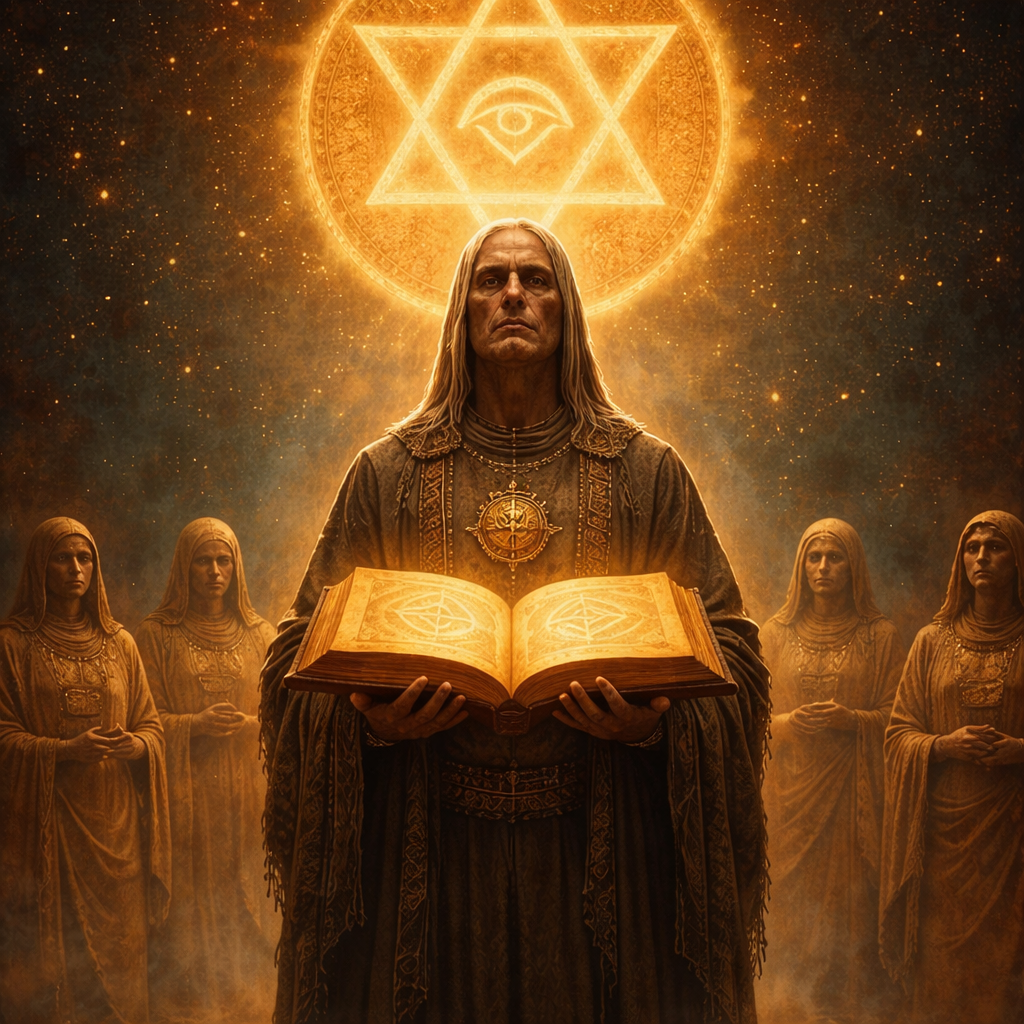

Amber Jayanti's 'Principles of the Qabalah' is a luminous beacon for anyone seeking to navigate the profound currents of Jewish mysticism. Sophia Crane, Associate Editor, writes: 'Jayanti masterfully deciphers the complex symbolism of the Qabalah, rendering its esoteric principles accessible without sacrificing their inherent depth. Her exposition of the Tree of Life and the interconnectedness of the Sephiroth is particularly insightful, offering a compelling framework for spiritual growth. This work is an indispensable guide for both neophytes curious about the Kabbalistic path and practitioners looking to deepen their understanding. It resonates with an authentic spiritual authority, making it a treasured addition to any esoteric library.'
📝 Description
61
Amber Jayanti's 'Principles of the Qabalah' was published in 2015.
Amber Jayanti's 'Principles of the Qabalah' explains the core concepts of this Jewish mystical tradition. The book details the Tree of Life, the ten Sephiroth, and the Hebrew alphabet. Jayanti presents these elements as active forces that influence existence, not merely theoretical ideas. The text aims to guide readers toward a deeper understanding of Qabalistic philosophy. It covers the fundamental structures and meanings within the tradition.
The book intends to make Qabalistic thought accessible to those interested in esoteric studies. It discusses the practical and philosophical dimensions of the Qabalah. Readers will find explanations of how these principles relate to spiritual development and self-knowledge. The author's approach is designed to illuminate the connections between the microcosm and macrocosm.
The Qabalah is a system of Jewish mysticism that developed in the Middle Ages. It seeks to understand the divine nature and the creation of the universe through esoteric interpretations of scripture and tradition. Key elements include the Tree of Life, a symbolic diagram representing divine emanations, and the Sephiroth, the ten attributes or spheres through which God manifests. The Qabalah also uses gematria, a method of assigning numerical values to Hebrew letters, to uncover hidden meanings. This tradition influences various Western esoteric schools and spiritual practices.
💡 Why Read This Book?
Unlock the ancient wisdom of the Qabalah and embark on a profound spiritual journey. 'Principles of the Qabalah' offers clear, evocative explanations of its core tenets, making it ideal for seekers of hidden knowledge, students of comparative religion, and practitioners aiming to deepen their mystical practice. Discover the symbolic language of creation and your place within the cosmic order.
⭐ Reader Reviews
Honest opinions from readers who have explored this book.
❓ Frequently Asked Questions
What is the Qabalah?
The Qabalah, often translated as 'reception' or 'tradition,' is an esoteric system of Jewish mysticism that explores the nature of God, the cosmos, and the human soul through symbolic interpretation of scripture and contemplation of divine emanations.
Who was Amber Jayanti?
Amber Jayanti was a dedicated scholar and practitioner of Qabalistic studies, known for her ability to articulate complex mystical concepts with clarity and spiritual depth, making the tradition accessible to a wider audience.
What is the Tree of Life?
The Tree of Life (Etz Chaim) is a central diagram in Qabalistic cosmology, representing the divine emanations (Sephiroth) through which God manifests creation, and serving as a map for spiritual ascent and understanding.
Is this book suitable for beginners?
Yes, 'Principles of the Qabalah' is highly recommended for beginners due to its clear explanations and methodical approach, while still offering substantial depth for those with prior knowledge.
What are the Sephiroth?
The Sephiroth are the ten divine attributes or emanations described in the Qabalah, representing stages of divine revelation and the building blocks of the universe, often depicted on the Tree of Life.
🔮 Key Themes & Symbolism
The Tree of Life as a Cosmic Map
The Tree of Life serves as the central organizing principle in 'Principles of the Qabalah,' presented not merely as a diagram but as a living, dynamic representation of divine emanation and the structure of existence. Jayanti meticulously details each of the ten Sephiroth, clear their unique energies, symbolic correspondences, and their interconnected roles in the process of creation and spiritual evolution. This section guides the reader through the pathways linking these divine spheres, offering a profound visual and conceptual framework for understanding the universe and one's place within it, essential for any student of esoteric traditions.
The Hebrew Alphabet and Divine Language
A significant focus of the book lies in the esoteric power of the Hebrew alphabet, viewed as the primordial language of creation. Amber Jayanti explores how each letter is not just a symbol but a potent energetic force, imbued with profound meaning and capable of shaping reality. The text looks at gematria, the mystical practice of assigning numerical values to Hebrew letters, revealing hidden connections and deeper layers of understanding within sacred texts and divine names. This exploration offers readers a glimpse into the Qabalistic belief that the universe was constructed through the interplay of these sacred letters.
The Path of Spiritual Ascent
'Principles of the Qabalah' illuminates the Qabalistic path of spiritual ascent, detailing the journey of the soul from the material realm towards divine consciousness. Jayanti explains how understanding the Tree of Life and its energetic currents provides a roadmap for personal transformation and gnosis. The book emphasizes the practical application of Qabalistic principles for self-awareness, healing, and the realization of one's divine potential. It encourages the reader to engage in contemplative practices and to integrate this ancient wisdom into their daily lives, fostering a deeper connection with the sacred.
💬 Memorable Quotes
Direct passages from the work, attributed to the author.
“Each Sephiroth is a step on the ladder of consciousness.”
— This highlights the transformative nature of the Tree of Life, presenting it as a guide for spiritual growth and ascension through understanding divine attributes.
“The Hebrew letters are the building blocks of existence.”
— This points to the Qabalistic belief in the sacred power of language and the fundamental role of the Hebrew alphabet in the creation and structure of the universe.
“Wisdom flows through the channels of the Tree.”
— This evocative phrase suggests the dynamic and interconnected nature of divine energy as it moves through the Sephiroth, accessible through Qabalistic study.
💡 Key Ideas
Editorial paraphrase of the work's core concepts — not direct quotes.
The Qabalah is the science of the divine.
This quote captures the book's core premise: that Qabalistic study is not merely philosophical but a rigorous, systematic exploration of the sacred and its manifestations.
Know thyself, and know the divine.
A timeless maxim, this quote underscores the Qabalistic emphasis on introspection and self-knowledge as the pathway to understanding the divine nature.
🌙 Esoteric Significance
Tradition
This book is deeply rooted in the Jewish Kabbalistic tradition, a mystical interpretation of Judaism that seeks to understand the divine nature and the structure of the cosmos. It specifically engages with the Lurianic Kabbalah and its symbolic representations, particularly the Tree of Life, offering a path for spiritual realization and gnosis through the study of divine emanations and sacred texts.
Symbolism
The primary symbolism revolves around the Tree of Life, a diagram comprising ten Sephiroth and twenty-two pathways, representing the divine attributes and the process of creation. The Hebrew alphabet, each letter imbued with profound energetic and spiritual meaning, is also central. Other significant symbols include divine names, archetypal forces, and the interplay of masculine and feminine divine principles.
Modern Relevance
In an era seeking deeper meaning and spiritual connection, 'Principles of the Qabalah' offers a timeless framework for understanding oneself and the universe. Its emphasis on introspection, the interconnectedness of all things, and the inherent divine spark within each individual resonates profoundly. The book provides tools for personal growth, psychological insight, and a richer appreciation of the mystical dimensions of life, proving its enduring relevance for contemporary seekers.
👥 Who Should Read This Book
This clear text is a treasure for a diverse audience. **Beginners** will find it an accessible and clear introduction to the foundational concepts of Kabbalah, clarifying complex ideas. **Scholars** of religion and mysticism will appreciate its thorough exploration of core Qabalistic principles and their symbolic depth. **Spiritual seekers** drawn to esoteric wisdom will discover a profound roadmap for inner exploration and connection to the divine. **Practitioners** of meditation, yoga, or other contemplative disciplines will find valuable insights for deepening their understanding of consciousness and the energetic architecture of reality.
📜 Historical Context
Amber Jayanti's 'Principles of the Qabalah' emerges within a collection of esoteric thought, drawing heavily from the medieval Kabbalistic traditions that flourished in the Mediterranean basin, particularly in Safed, during the 16th century. This era saw a surge in mystical inquiry, influenced by figures like Isaac Luria, who systematized many Qabalistic concepts. The Enlightenment and subsequent Romantic periods also witnessed a renewed interest in esoteric systems, leading to their study and dissemination in Western Europe. Jayanti's work contributes to this lineage by making these profound, often intricate, teachings accessible, bridging the gap between ancient Kabbalistic thought and the modern seeker, while acknowledging the enduring influence of these mystical currents on Western esotericism.
📔 Journal Prompts
Reflect on the symbolism of the first Sephirah, Keter, and how its essence might manifest in your own life.
How does the concept of divine emanation, as described through the Sephiroth, challenge or affirm your current worldview?
Consider the numerical and symbolic value of a Hebrew letter that appeals to you. What insights does this connection offer?
Explore the idea of working through the pathways between the Sephiroth. What personal journey do these pathways represent for you?
How can the principles of Qabalah be applied practically to foster greater self-awareness and spiritual growth in your daily life?
🗂️ Glossary
Kabbalah
An esoteric system of Jewish mysticism that explores the nature of God, the cosmos, and the human soul through symbolic interpretation and contemplation of divine emanations.
Sephirah
One of the ten divine attributes or emanations described in the Qabalah, representing stages of divine revelation and the building blocks of the universe.
Tree of Life
A central diagram in Qabalistic cosmology, representing the ten Sephiroth and the pathways connecting them, serving as a map for spiritual ascent and understanding the divine structure of existence.
Gematria
A system of mystical interpretation in Kabbalah that assigns numerical values to Hebrew letters, revealing hidden connections and deeper meanings within words and concepts.
Ein Sof
The unmanifest, infinite, and unknowable essence of God that exists beyond all creation and comprehension in Qabalistic thought.
This book appears in 1 collection
🔮 Readers Also Liked
Browse all →







More by Amber Jayanti
All books →




From the “Kabbalah” Collection
View all →






More Free Kabbalah & Jewish Mysticism Books
View all →