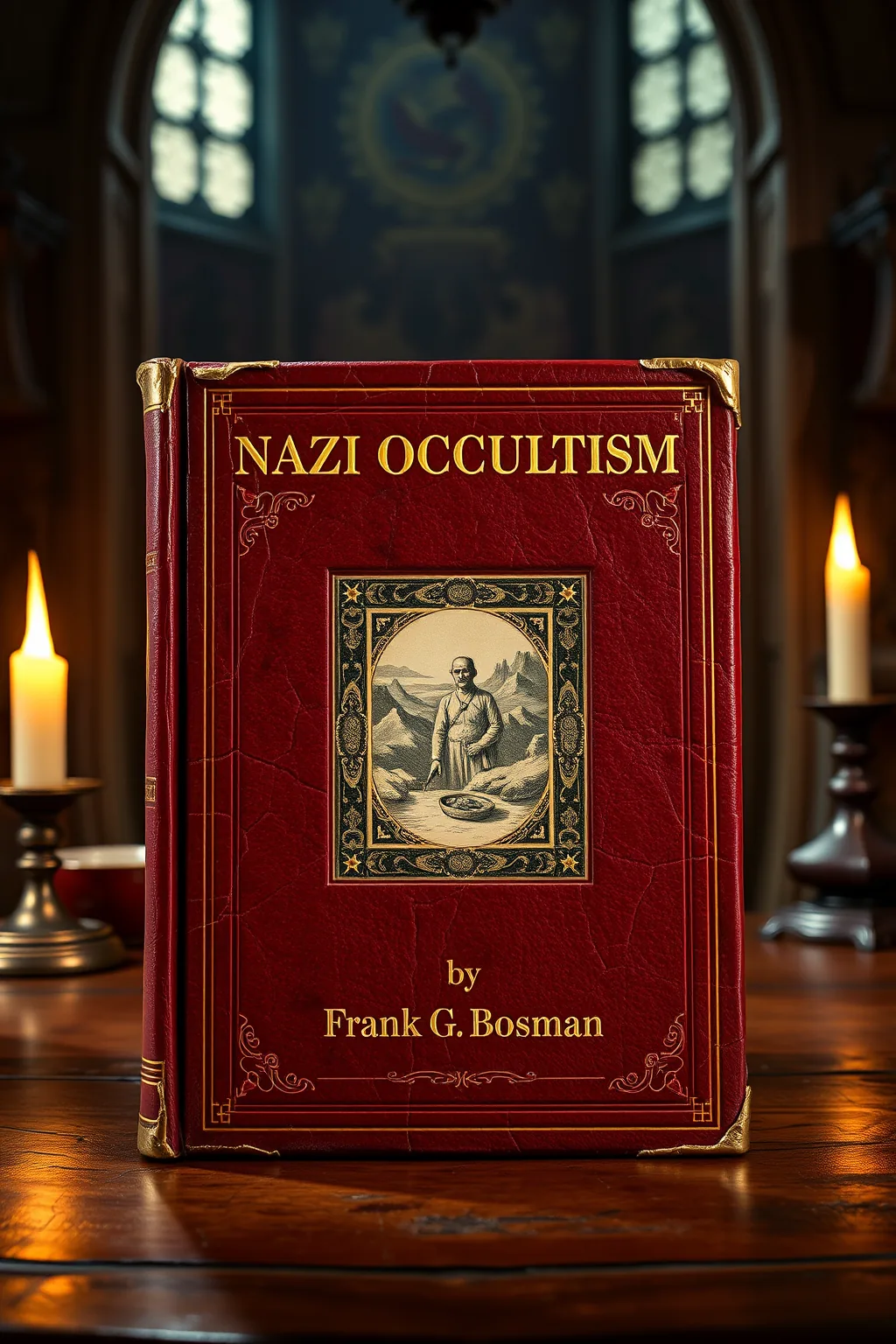
Nazi Occultism, Jewish Mysticism, and Christian Theology in the Video Game Series Wolfenstein
 62
62

Nazi Occultism, Jewish Mysticism, and Christian Theology in the Video Game Series Wolfenstein



Sophia Crane (Associate Editor) — Frank G. Bosman's exploration of the Wolfenstein series is a revelation for those attuned to the esoteric. He meticulously navigates the complex interplay of Nazi occultism, Kabbalistic concepts, and Christian theological allusions, revealing layers of meaning often overlooked by casual players. Bosman's analysis is both scholarly and accessible, illuminating how these esoteric traditions inform the narrative and thematic weight of the games. This book is a must-read for scholars of religious studies, cultural critics, and any gamer who appreciates the profound symbolic resonance within interactive storytelling. It offers a unique perspective on how ancient mystical ideas can manifest in modern media.
📝 Description
62
Frank G. Bosman's 2023 book examines the esoteric symbolism in the Wolfenstein video game series.
Frank G. Bosman's analysis scrutinizes the Wolfenstein video game franchise, moving beyond its combat to uncover the esoteric ideas embedded within its narratives. The book details how the games incorporate elements from Nazi occultism, Jewish mysticism, specifically Kabbalah, and Christian theology. Bosman examines the symbolic conflicts of light versus shadow and the misuse of religious concepts within the game's violent settings.
The author connects these game elements to broader themes of salvation and the corruption of knowledge. Bosman frames the Wolfenstein games as a corrupted sacred space, inviting an esoteric interpretation of both the games themselves and older mystical traditions. This approach offers a way to understand the series' appeal to players seeking more than just action, and how it reflects enduring mystical concepts.
This work sits within contemporary scholarship that analyzes popular media through the lens of esoteric traditions. It applies methodologies usually reserved for historical religious texts or philosophical movements to a modern video game series. By examining the Wolfenstein games, Bosman connects contemporary digital narratives to historical occult doctrines and theological frameworks, showing how these older systems can be reinterpreted or echoed in new cultural forms. The book highlights how themes of spiritual warfare, hidden knowledge, and redemption persist in secularized or fictionalized contexts.
💡 Why Read This Book?
Uncover the hidden esoteric dimensions of the Wolfenstein video game saga. This book reveals how Nazi occultism, Jewish mysticism (Kabbalah), and Christian theology are intricately woven into its narrative, offering profound insights into symbolism, power, and salvation. Ideal for gamers seeking deeper meaning, scholars of religion and occultism, and anyone fascinated by the intersection of popular culture and ancient esoteric traditions.
⭐ Reader Reviews
Honest opinions from readers who have explored this book.
❓ Frequently Asked Questions
What specific occult beliefs are explored regarding the Nazis?
The book examines Nazi Germany's appropriation and perversion of various esoteric traditions, including elements of Aryan mysticism, Thule Society ideologies, and attempts to harness occult forces for their genocidal agenda, often misinterpreting ancient symbols for their warped worldview.
How is Kabbalah represented in the Wolfenstein games?
Bosman analyzes how Kabbalistic concepts, such as the Tree of Life and divine emanations, might be subtly referenced or distorted within the game's lore, exploring the potential for Jewish mystical ideas to be present even within a narrative dominated by Nazi antagonists.
What Christian theological elements are present?
The book investigates themes of redemption, sacrifice, the struggle between good and evil, and the potential for divine intervention or its absence, often framed through a Christian lens that contrasts sharply with the pagan or occult elements the Nazis sought to embrace.
Is prior knowledge of the Wolfenstein games required?
While familiarity with the Wolfenstein series enhances the reading experience, Bosman provides sufficient context to understand the game's narrative and thematic elements, making it accessible to those interested in the esoteric themes explored.
Who is Frank G. Bosman?
Frank G. Bosman is a scholar specializing in religion, esotericism, and popular culture, with a particular interest in how these domains intersect within contemporary media and historical contexts.
🔮 Key Themes & Symbolism
The Perversion of Ancient Symbols
This theme studies how the Nazi regime, and by extension the Wolfenstein narrative, co-opted and twisted ancient symbols and mystical traditions to serve their sinister ideology. It explores the corruption of sacred knowledge, transforming symbols of unity and spiritual growth into instruments of oppression and destruction. The book examines how these perverted symbols function within the game's lore, creating a chilling atmosphere where history and myth intertwine, and the very fabric of reality seems warped by malevolent intent.
Kabbalah as a Counterpoint to Darkness
Bosman investigates the subtle presence and potential subversion of Kabbalistic principles within the Wolfenstein universe. This theme explores how Jewish mysticism, with its emphasis on divine order, creation, and the interconnectedness of all things, might serve as an implicit or explicit counterpoint to the chaotic and destructive forces unleashed by the Nazi agenda. The analysis highlights the resilience of spiritual wisdom even in the face of profound adversity, and how its echoes can be found in unexpected places.
Theology of Salvation in a Desperate World
This central theme examines how Christian theological concepts, such as redemption, martyrdom, and the eternal struggle between good and evil, are woven into the fabric of the Wolfenstein games. It explores how characters grapple with immense suffering and moral compromise, seeking meaning and salvation in a world seemingly abandoned by grace. The book analyzes the archetypal narratives of heroism and sacrifice, and how the players' actions can be interpreted through the lens of spiritual conflict and the enduring human quest for transcendence.
💬 Memorable Quotes
Direct passages from the work, attributed to the author.
“The swastika, a sun symbol, twisted into a mark of death.”
— This highlights the core theme of perverted symbolism, where ancient sacred imagery is corrupted to represent destruction and hate.
“From the roots of Kabbalah, whispers of divine order in a chaotic war.”
— This suggests the subtle presence of Jewish mystical wisdom as a potential beacon or counterforce against the overwhelming darkness presented.
“Redemption sought not in heaven, but in the ashes of a fallen world.”
— This points to the theological struggle for salvation within the brutal, earthly context of the game's narrative.
“The machine, a new idol, demanding sacrifice at the altar of progress.”
— This illustrates the perversion of technology and progress into a form of idolatry, a common theme in examining totalitarian regimes.
“Hidden knowledge, a dangerous weapon in the hands of the uninitiated.”
— This speaks to the inherent risks and corruptibility of esoteric wisdom when pursued by those with impure intentions.
🌙 Esoteric Significance
Tradition
The book bridges the esoteric significance of Nazi occultism, the profound wisdom of Kabbalah and Jewish mysticism, and the enduring theological frameworks of Christianity. It examines how these disparate traditions, often in conflict, are reinterpreted and utilized within the Wolfenstein narrative to explore themes of power, corruption, salvation, and the human condition.
Symbolism
Key symbols explored include the perversion of ancient runes and Germanic mythology by the Nazis, the intricate symbolism of the Kabbalistic Tree of Life and its potential echoes, and the archetypal Christian symbols of the cross, sacrifice, and divine light. Bosman analyzes how these symbols are manipulated within the game to convey ideological messages and create an atmosphere of profound spiritual conflict.
Modern Relevance
The study of these esoteric themes in a popular video game series holds significant modern relevance. It demonstrates how ancient mystical concepts continue to resonate and inform contemporary cultural narratives, even in secularized forms. By deconstructing these elements, the book offers insights into the enduring human fascination with hidden knowledge, the dangers of ideological perversion, and the persistent search for meaning and transcendence in an increasingly complex world.
👥 Who Should Read This Book
This book is a rich source for a diverse audience. Gamers who appreciate narrative depth and seek to understand the profound symbolic layers of the Wolfenstein series will find it informative. Scholars of religious studies, comparative mythology, and cultural criticism will benefit from its rigorous analysis of esoteric traditions within popular media. Seekers of hidden knowledge and practitioners of mystical arts will discover fascinating connections between ancient doctrines and their manifestations in modern storytelling. It is essential reading for anyone intrigued by the potent interplay of history, spirituality, and the virtual realms that captivate our imagination.
📜 Historical Context
The mid-20th century was a period of profound global upheaval, marked by the rise of totalitarian ideologies and the devastating impact of World War II. This era also saw a resurgence of interest in esoteric and occult philosophies, both as expressions of national identity and as perceived sources of hidden power. Nazi Germany, in particular, actively pursued and distorted various mystical and occult traditions, attempting to legitimize their racial theories and expand their dominion through perceived supernatural means. Simultaneously, Jewish mysticism, particularly Kabbalah, offered a rich intellectual and spiritual tradition that stood in stark opposition to Nazi ideology. Christian theology, with its enduring narratives of good versus evil, sacrifice, and redemption, provided a moral and spiritual framework for understanding the immense suffering and the fight for humanity's soul. This historical crucible of conflicting worldviews and desperate searches for meaning forms the fertile ground upon which the Wolfenstein series builds its potent, often unsettling, narratives.
📔 Journal Prompts
How does the Wolfenstein series utilize or subvert traditional religious iconography?
In what ways can the 'machines' and technologies in Wolfenstein be interpreted as modern idols?
Explore the concept of 'redemption' as presented through the protagonist's actions in the game.
Analyze the symbolic significance of light and darkness as depicted in the Wolfenstein narrative.
How do the game's antagonists embody a perversion of sacred or occult knowledge?
🗂️ Glossary
Esotericism
Refers to beliefs, attitudes, and practices that involve esoteric or mystical knowledge of spiritual truths. It often implies a hidden or inner meaning accessible only to a select few.
Kabbalah
A system of Jewish mysticism that seeks to understand the nature of God and the universe through esoteric interpretations of scripture, often utilizing the Tree of Life as a symbolic map.
Aryan Mysticism
A pseudoscientific and occult belief system embraced by the Nazis, which claimed the superiority of a mythical 'Aryan race' and sought to connect them to ancient, often misinterpreted, spiritual traditions.
Theology
The study of the nature of God and religious belief. In this context, it refers to the exploration of Christian doctrines and themes as they appear within the game.
Archetype
A recurring symbol, character, or pattern of circumstances found universally in literature and mythology, representing fundamental human experiences or concepts.
This book appears in 1 collection
🔮 Readers Also Liked
Browse all →







From the “Kabbalah” Collection
View all →

![EBOOK COLLECTION ( PART 8) [ CSI][h 33t]](/img/thumb/ebook-collection-part-8-csi-h-33t.webp)






More Free Kabbalah & Jewish Mysticism Books
View all →