Nightly Wisdom
 79
79

Nightly Wisdom
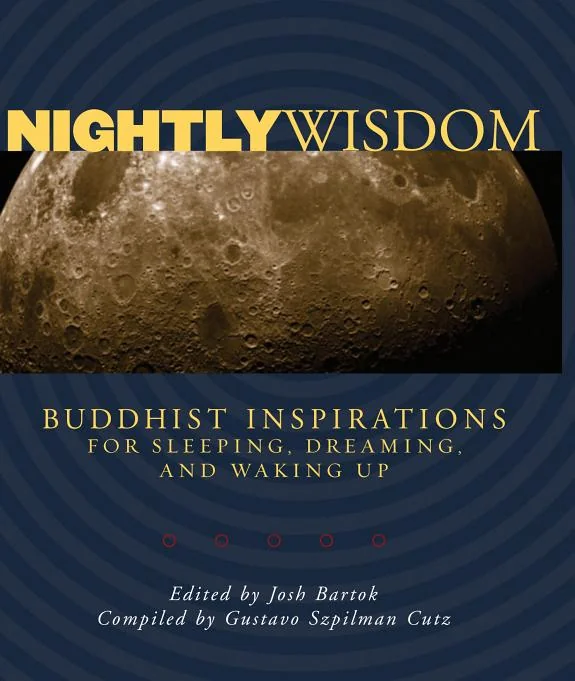
Josh Bartok and Gustavo Szpilman Cutz's "Nightly Wisdom" attempts to bridge the gap between the ephemeral nature of dreams and the structured teachings of Buddhism. The book’s strength lies in its consistent focus on the nocturnal experience as a spiritual practice, a perspective often marginalized in Western self-help literature. The authors successfully connect Buddhist concepts like "awakening" (Buddha's very name) to the liminal state of sleep and dreaming. However, the work occasionally feels like a broad survey rather than a deep dive, particularly when touching upon the vastness of Buddhist dream yoga traditions. A notable passage discusses the moon as a symbol for enlightenment, a metaphor that effectively grounds abstract spiritual goals in a tangible, visual representation of clarity piercing the night's obscurity. While the encouragement offered is clear, the practical steps for integrating this wisdom into daily life could be more robustly detailed.
"Nightly Wisdom" offers a compelling Buddhist framework for understanding the significance of our sleeping lives.
📝 Description
79
"Nightly Wisdom," published in 2007, connects nighttime experiences to Buddhist consciousness studies.
Josh Bartok and Gustavo Szpilman Cutz's 2007 book, "Nightly Wisdom," examines the relationship between nighttime, sleep, dreams, and human consciousness through a Buddhist perspective. The authors use Buddhist teachings to explain how these states can lead to spiritual insight and deeper understanding. The book is for anyone interested in how esoteric thought and Buddhist philosophy intersect, especially concerning the symbolism found in dreams and altered states. It offers practical advice for those looking to find greater meaning in their nightly experiences and to use Buddhist principles for personal spiritual development.
This work emerged in 2007, a time when Western esoteric circles showed growing interest in Eastern philosophies. It draws on centuries of Buddhist thought about the mind and liberation, referencing core ideas traceable to the Buddha himself. The book's focus on sleep and dreams as paths to spiritual realization echoes perennialist ideas that universal truths exist across cultures and time. It encourages a view of sleep and dreams not as simple biological processes, but as chances for spiritual practice and awareness.
This book situates itself within the Western esoteric tradition's engagement with Eastern religions, particularly Buddhism. It addresses themes of consciousness and altered states, common in mystical and contemplative practices across various traditions. By focusing on the night and sleep as potential sites for spiritual realization, it taps into a lineage of contemplative inquiry that seeks wisdom beyond ordinary waking experience. The authors frame these nocturnal states through Buddhist concepts, aligning with a broader trend of integrating Eastern contemplative techniques into Western spiritual seeking.
💡 Why Read This Book?
• Learn how the Buddhist concept of "awakening" is directly applicable to understanding states of consciousness during sleep and dreaming, as explored in the book's examination of the Buddha's meaning. • Gain practical insights into interpreting dream symbolism through Buddhist philosophy, using the metaphor of the full moon illuminating the night as a guide to clarity. • Discover how to approach sleep not as an absence of consciousness, but as an opportunity for spiritual practice and self-discovery, drawing from the book's encouragement and clear teachings.
⭐ Reader Reviews
Honest opinions from readers who have explored this book.
❓ Frequently Asked Questions
What is the primary focus of "Nightly Wisdom"?
The book's primary focus is exploring the mystical and metaphorical significance of nighttime, sleep, and dreams through the lens of Buddhist philosophy and teachings.
Who are the authors of "Nightly Wisdom"?
The authors are Josh Bartok and Gustavo Szpilman Cutz. The book was first published in November 2007.
What Buddhist concepts are discussed in relation to dreams?
The book discusses core Buddhist ideas such as "awakening" (the meaning of Buddha), enlightenment as a guiding light (like the moon), and the potential for spiritual insight during sleep and dreaming.
Is "Nightly Wisdom" a practical guide for dream interpretation?
While it offers a philosophical framework for understanding dreams, its emphasis is more on the spiritual significance and metaphorical richness of nocturnal experiences from a Buddhist perspective rather than a prescriptive interpretation manual.
What is the significance of the moon metaphor in the book?
The moon is used as a metaphor for enlightenment, symbolizing clarity and wisdom that can illuminate the 'blinding black of night,' representing ignorance or confusion.
What does the title "Nightly Wisdom" imply?
The title suggests that profound insights and spiritual understanding can be found by paying attention to the experiences and symbolism associated with the night, sleep, and dreams.
🔮 Key Themes & Symbolism
The Buddha and Awakening
The book frequently references the literal meaning of "Buddha" as "the one who has awakened." This concept serves as a central pillar for understanding consciousness beyond ordinary waking states. It posits that true awakening, a core Buddhist goal, can be approached by examining the states of sleep and dreaming. The authors encourage readers to consider how the transition from sleep to wakefulness, or the nature of dream consciousness itself, mirrors the journey toward spiritual enlightenment, suggesting that wisdom can be found by observing these natural cycles.
Night as Metaphor for Ignorance
The pervasive darkness of night is employed as a potent metaphor for ignorance, delusion, or the unilluminated state of the unenlightened mind. In contrast, enlightenment is often depicted as a luminous full moon, a clear source of clarity cutting through the obscurity. This symbolism is used to frame the spiritual path as a process of bringing light to the dark, unknown aspects of oneself, particularly those that surface during sleep and dreams. The book suggests that by consciously engaging with the 'night' of the unconscious, one can achieve greater lucidity.
Dreams as Spiritual Arenas
Contrary to viewing dreams as mere random neural firings or subconscious residue, "Nightly Wisdom" highlights their potential as arenas for spiritual growth and insight within Buddhist traditions. The work encourages a mindful approach to dream recall and reflection, suggesting that these experiences can offer profound messages, symbolic guidance, or even direct experiences of a subtler reality. It aligns with practices in some Buddhist lineages that utilize dream states for advanced meditation and the integration of spiritual understanding.
Consciousness Beyond Waking
A fundamental theme is the exploration of consciousness not being limited to the familiar waking state. The book advocates for recognizing the depth and significance of the states associated with sleep and dreaming. By drawing on Buddhist teachings, it presents these altered states as integral parts of the human experience that hold potential for wisdom and self-realization. The work invites readers to expand their definition of consciousness and explore its full spectrum.
💬 Memorable Quotes
Direct passages from the work, attributed to the author.
“The name Buddha means the one who has awakened.”
— This simple statement anchors the book's premise: that the ultimate spiritual goal, awakening, is intrinsically linked to understanding consciousness, particularly in its less conventional states like dreaming.
“Human beings the world over have always found the nighttime-and its attendant activities of sleeping, dreaming, and waking up-mysterious, mystical, and rich with meaning and metaphor.”
— This highlights the universal human fascination with the night and its associated phenomena, setting the stage for exploring these experiences through a specific, profound philosophical lens.
“Nightly Wisdom goes deep into the wealth of Buddhist inspirations on these powerful topics.”
— This directly states the book's purpose: to draw extensively from Buddhist traditions to illuminate the mysteries of the night, sleep, and dreams.
“Offering encouragement and clear teaching.”
— This phrase suggests the book's pedagogical approach, aiming to provide both supportive guidance and understandable instruction on integrating Buddhist principles into understanding one's nocturnal life.
💡 Key Ideas
Editorial paraphrase of the work's core concepts — not direct quotes.
Enlightenment itself is often portrayed literarily as the luminous full moon, lighting our way through the blinding black of night.
This quote expresses the central metaphor used to illustrate the Buddhist path: clarity and wisdom (the moon) overcoming ignorance and confusion (the night).
🌙 Esoteric Significance
Tradition
The work is rooted in the Buddhist tradition, specifically drawing from its philosophical and contemplative aspects concerning mind, consciousness, and liberation. While Buddhism is a major world religion, its emphasis on direct experiential insight, the nature of reality, and the transformation of consciousness places many of its contemplative practices within the broader scope of esoteric or spiritual disciplines. "Nightly Wisdom" departs from purely devotional or ritualistic aspects, focusing instead on the psychological and existential dimensions inherent in Buddhist teachings applied to the often-overlooked field of sleep and dreams.
Symbolism
The primary symbols explored are the night and the moon. The 'blinding black of night' serves as a potent metaphor for ignorance, confusion, and the unawakened state of mind. Conversely, the 'luminous full moon' represents enlightenment, clarity, wisdom, and the informative power of spiritual realization that can pierce through darkness. These symbols are used to frame the spiritual journey as one of bringing light to the unconscious and understanding the profound metaphors embedded within our nightly experiences.
Modern Relevance
In contemporary spiritual and wellness circles, there is a growing interest in understanding sleep and dreams beyond their physiological functions. "Nightly Wisdom" speaks to this trend by offering ancient Buddhist perspectives on these states as opportunities for useful insights and self-discovery. Thinkers and practitioners interested in lucid dreaming, consciousness studies, and the integration of Eastern philosophies into modern life can find value in its approach. Its emphasis on finding wisdom in the 'unseen' aspects of our lives speaks to current explorations of mindfulness and altered states.
👥 Who Should Read This Book
• Individuals interested in comparative religion and spirituality, seeking to understand Buddhist perspectives on consciousness beyond standard waking awareness. • Practitioners of meditation and mindfulness who wish to explore how Buddhist teachings can be applied to the experiences of sleep and dreaming. • Seekers of personal growth who are drawn to the symbolic and metaphorical aspects of the night and dreams, looking for a spiritual framework to interpret them.
📜 Historical Context
Published in 2007, "Nightly Wisdom" emerged at a time when interest in Eastern spirituality, particularly Buddhism, had gained significant traction in the West. The book taps into a long tradition of Buddhist thought concerning consciousness, meditation, and the nature of reality, which dates back to Siddhartha Gautama's teachings in ancient India. Its focus on dreams and sleep as spiritual tools aligns with practices found in certain Tibetan Buddhist lineages, such as dream yoga (Milarepa being a notable practitioner of yogic disciplines). The era saw a burgeoning of comparative religion studies and a popular embrace of mindfulness and meditation techniques, making this exploration of Buddhist perspectives on nocturnal consciousness particularly relevant. While not directly engaging with contemporary Western psychology's approach to dreams (e.g., Freudian or Jungian interpretations), it offered a distinct, spiritually-oriented framework that appealed to those seeking meaning beyond purely materialist explanations.
📔 Journal Prompts
The Buddha's meaning of 'awakening' and its relation to your own sleep experiences.
Reflecting on the moon as a symbol of enlightenment in the context of your dreams.
Exploring the 'blinding black of night' metaphor in relation to your personal understanding of ignorance.
Identifying moments of clarity or insight that have arisen from your dreams.
Considering how the transition from sleep to wakefulness can be viewed as a form of daily awakening.
🗂️ Glossary
Buddha
In Buddhism, an "awakened one," a fully enlightened being. The term literally means 'one who has awakened' from the sleep of ignorance and delusion.
Enlightenment
The ultimate goal in Buddhism, representing a state of profound wisdom, compassion, and liberation from suffering and the cycle of rebirth.
Awakening
The process or state of spiritual realization and understanding, often contrasted with the 'sleep' of ignorance. In Buddhism, it signifies liberation from delusion.
Metaphor
A figure of speech in which a word or phrase is applied to an object or action to which it is not literally applicable, used here to describe how night/moon represent spiritual concepts.
Dreaming
The state of experiencing images, sounds, emotions, and thoughts during sleep. In "Nightly Wisdom," it's explored as a potential source of spiritual insight.
Nighttime
The period from sunset to sunrise. The book imbues this time with mystical and symbolic significance related to consciousness and spiritual exploration.
Buddhist Inspirations
Teachings, concepts, and wisdom derived from the philosophy and practice of Buddhism, used in the book to interpret nocturnal experiences.
This book appears in 1 collection
🔮 Readers Also Liked
Browse all →









From the “Dream Yoga” Collection
View all →









More Free Occult Philosophy Books
View all →