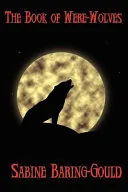
The Book of Were-Wolves
 73
73

The Book of Were-Wolves
Sabine Baring-Gould’s 1865 compilation offers an unparalleled historical survey of lycanthropy, a work that has indeed remained a touchstone for subsequent research. Its strength lies in the sheer breadth of material gathered, from ancient Greek accounts to French legal records of the 1500s. However, the critical lens of modern folklore studies or psychology is absent, as one would expect from its publication date. The section detailing the alleged transformations and pacts made with the devil, while fascinating for its historical context, reads less as objective analysis and more as a reflection of the era's theological anxieties. The book is essential for its archival value, providing primary source material that is otherwise scattered and difficult to access. It offers a dense, fact-heavy approach to a subject often mired in speculation, anchoring it in historical documentation.
📝 Description
73
Sabine Baring-Gould's 1865 book meticulously chronicles werewolf folklore and history across cultures.
First published in 1865, The Book of Were-Wolves is a comprehensive study of lycanthropy. Sabine Baring-Gould gathered accounts from ancient texts, medieval chronicles, and contemporary testimonies to examine the phenomenon beyond simple sensationalism. His approach is comparative, drawing connections between legends from different geographical areas and historical periods. The book systematically collects and categorizes these stories, looking for patterns and potential origins of the widespread belief in human-wolf transformation.
Appreciating the book's 19th-century context is important. Baring-Gould was part of a growing interest in folklore and comparative mythology. His work reflects the era's methods for cataloging oral traditions and historical accounts for academic study. The book covers the alleged magical means of transformation, legal trials for lycanthropy accusations from periods like the 16th century, and early psychological interpretations. It presents the werewolf as a complex cultural symbol, not merely a monster.
This work belongs to a tradition of folklore collection and comparative mythology that gained traction in the 19th century. Scholars like Baring-Gould sought to systematize beliefs and narratives previously considered mere superstition. His approach, while rooted in the academic methods of his time, engages with themes that resonate with esoteric interests in hidden histories, collective psychology, and the enduring power of myth. It sits alongside other studies that analyze archetypal figures and deep-seated cultural anxieties.
💡 Why Read This Book?
• Gain a comprehensive historical overview of werewolf lore, drawing from Baring-Gould's extensive collection of 19th-century documented accounts and folklore. • Understand the legal and social context of lycanthropy accusations, particularly through the examination of 16th-century European witch trials. • Explore early anthropological approaches to myth, as Baring-Gould attempts to categorize and find origins for shapeshifting beliefs across cultures.
⭐ Reader Reviews
Honest opinions from readers who have explored this book.
❓ Frequently Asked Questions
When was Sabine Baring-Gould's 'The Book of Were-Wolves' first published?
Sabine Baring-Gould's 'The Book of Were-Wolves' was first published in 1865. This original edition established it as a foundational text for the study of lycanthropy.
What kind of historical evidence does Baring-Gould use?
Baring-Gould utilizes a wide array of historical evidence, including ancient texts, medieval chronicles, legal records from periods like the 16th century, and contemporary testimonies.
Is 'The Book of Were-Wolves' a work of fiction?
No, it is a non-fiction work of folklore and historical research. Baring-Gould compiles and analyzes accounts and beliefs surrounding lycanthropy, rather than creating fictional stories.
Does the book discuss modern interpretations of lycanthropy?
Primarily, the book focuses on historical accounts and beliefs up to Baring-Gould's time (1865). It lays the groundwork for later psychological or modern esoteric interpretations by presenting the historical data.
What makes this book important for occult studies?
Its importance lies in its comprehensive cataloging of historical beliefs and alleged phenomena related to shapeshifting, providing source material for understanding the cultural and psychological underpinnings of lycanthropy in esoteric traditions.
What is lycanthropy as described in the book?
Lycanthropy, as explored by Baring-Gould, refers to the supposed condition or act of humans transforming into wolves, often through supernatural means or perceived curses, a belief documented across centuries.
🔮 Key Themes & Symbolism
Folklore and Legend Compendium
Baring-Gould meticulously gathers werewolf tales from diverse sources, spanning ancient Greece, medieval Europe, and beyond. The work functions as an extensive archive, documenting oral traditions and written accounts that illustrate the persistent human fascination with shapeshifting. It highlights how these narratives, though varying in detail, share common threads of transformation, bestial nature, and the supernatural, offering a comparative study of mythic archetypes.
Historical Trials and Beliefs
A significant portion of the book addresses historical instances where individuals were accused of lycanthropy, particularly during the peak of the witch trials in the 16th century. Baring-Gould presents legal testimonies and confessions, examining the societal fears and beliefs that led to such prosecutions. This section offers insight into how lycanthropy was perceived not merely as folklore but as a tangible, often criminal, phenomenon by contemporary authorities.
Origins and Mechanisms of Transformation
The work explores various theories and reported methods for werewolf transformation prevalent in folklore. These include the use of enchanted ointments, magical belts, pacts with demonic entities, or curses. Baring-Gould categorizes these accounts, attempting to trace potential origins and cultural influences behind the widespread belief in humans possessing the ability to become wolves.
The Werewolf as Cultural Symbol
Beyond literal interpretations, Baring-Gould's compilation implicitly examines the werewolf as a potent symbol. It represents the duality of human nature, the fear of the wild, and the projection of primal instincts. The recurring motif of the wolf connects to ancient fears and reverence, reflecting deeper psychological and societal anxieties that have manifested across different historical periods.
💬 Memorable Quotes
Direct passages from the work, attributed to the author.
“The belief in lycanthropy was not confined to the vulgar.”
— This observation highlights that belief in humans transforming into wolves was not merely a superstition held by the uneducated masses, but was also present among learned individuals and documented in more formal historical records.
“Werewolves were sometimes said to be able to change their shape at will.”
— This points to a key element in many werewolf legends: the idea of voluntary transformation, suggesting a degree of control or agency over the shapeshifting process, rather than it being solely a curse.
“The accounts of werewolves often involved acts of extreme violence and cannibalism.”
— This interpretation emphasizes the monstrous aspect of the werewolf in folklore, where the transformed individual is depicted as engaging in savage, inhumoduman behavior, reflecting primal fears of predation and loss of control.
“Legal records show punishments for those accused of being werewolves.”
— This indicates that lycanthropy was treated as a real offense in certain historical periods, leading to trials and punishments, underscoring the societal impact of these beliefs beyond mere storytelling.
💡 Key Ideas
Editorial paraphrase of the work's core concepts — not direct quotes.
Sorcerers and witches were frequently implicated in the practice of lycanthropy.
This quote links werewolf legends to broader occult beliefs of the time, suggesting that the power to transform into a wolf was often attributed to those practicing magic or engaging in forbidden arts.
🌙 Esoteric Significance
Tradition
While not strictly aligned with a single esoteric lineage like Hermeticism or Kabbalah, Baring-Gould's work serves as a foundational historical text for modern occult studies. It provides the empirical and anecdotal basis for understanding lycanthropy within the broader context of Western esoteric traditions that explore shapeshifting, demonic pacts, and the darker aspects of human nature and the supernatural.
Symbolism
The werewolf itself is a potent symbol of the shadow self, the primal instincts that lie beneath civilization's veneer. Baring-Gould's collection details how this symbol manifested across cultures: the wolf represents untamed nature, predatory aggression, and the potential for human beings to devolve into bestial states, often through forbidden knowledge or supernatural intervention.
Modern Relevance
Contemporary practitioners of witchcraft, modern animistic traditions, and certain branches of psychological occultism draw upon the historical accounts documented by Baring-Gould. His work provides a rich source for exploring themes of transformation, the animalistic aspects of the psyche, and the historical manifestations of beliefs in human-animal metamorphosis.
👥 Who Should Read This Book
• Folklore enthusiasts and cultural historians seeking a comprehensive, historically-grounded survey of werewolf legends and beliefs. • Students of comparative mythology interested in tracing archetypal figures and their manifestations across different cultures and eras. • Occult researchers and practitioners looking to understand the historical roots and folkloric context of shapeshifting myths within Western esoteric traditions.
📜 Historical Context
Published in 1865, Sabine Baring-Gould’s work emerged during a period of intense interest in folklore, mythology, and comparative religion. The Victorian era saw scholars actively collecting and analyzing oral traditions and historical accounts from across the globe. Baring-Gould's approach, while comprehensive for its time, mirrored the cataloging methods of contemporaries like Andrew Lang, who also explored fairy tales and myths. The book’s scholarly ambition was to document and understand the widespread phenomenon of lycanthropy, treating it as a subject worthy of serious study, not just superstition. It engaged with earlier texts and documented legal proceedings, such as the infamous werewolves of Lorraine in the 16th century, placing these beliefs within a historical and cultural framework. The work predates modern psychoanalytic interpretations but provides the raw material upon which later theories would be built.
📔 Journal Prompts
The concept of the 'shadow self' as it relates to the werewolf archetype.
Instances of legal trials for lycanthropy, such as those from the 16th century.
The symbolic meaning of the wolf in various cultural narratives presented.
The methods of transformation described by Baring-Gould.
Beliefs about lycanthropy outside of European folklore.
🗂️ Glossary
Lycanthropy
The supposed transformation of a human into a wolf, or the condition of being a werewolf. It encompasses both the act of changing shape and the state of being.
Werewolf
An individual who is believed to be able to transform into a wolf, either permanently or temporarily, often associated with supernatural or magical means.
Shapeshifting
The supernatural ability to alter one's physical form into that of another being, typically an animal. Lycanthropy is a specific form of shapeshifting.
Folklore
The traditional beliefs, customs, and stories of a community, passed through the generations by word of mouth, as documented by Baring-Gould.
Witch Trials
Historical legal proceedings, particularly prominent in the 15th-18th centuries, where individuals were accused of practicing witchcraft, often including beliefs about demonic pacts and transformations.
Archetype
A very typical example of a certain person or thing; in mythology, a recurring symbol or motif (like the werewolf) that represents universal patterns of human nature.
Testimony
A formal written or spoken statement, especially one given in a court of law or by an eyewitness, used by Baring-Gould as source material.
This book appears in 1 collection
🔮 Readers Also Liked
Browse all →








From the “Superstition” Collection
View all →





More Free Occult Philosophy Books
View all →