A Pagan Ritual Prayer Book

 84
84

A Pagan Ritual Prayer Book
Ceisiwr Serith’s A Pagan Ritual Prayer Book is a workmanlike collection that sidesteps the more flamboyant theatricality often associated with modern paganism. Its strength lies in its clear, unadorned presentation of ritual structures. The book avoids prescribing rigid dogma, instead offering templates that encourage personal adaptation. However, this very adaptability can sometimes feel like a limitation; for those seeking a deeply specific, tradition-bound liturgy, the generalized approach might feel insufficient. A passage detailing the construction of a ritual circle, emphasizing the intentionality of each visualized boundary, exemplifies the book’s practical focus on the mechanics of sacred space. It’s a solid resource for those building their own practice, less so for those seeking a finished, singular path.
📝 Description
84
Published in 2017, A Pagan Ritual Prayer Book provides adaptable frameworks for prayer and ritual construction.
Ceisiwr Serith's book compiles devotional and ceremonial practices for contemporary pagans. It offers a structured method for personal and group worship, drawing on both historical traditions and modern understandings. The work avoids adherence to any single deity or pantheon, instead providing flexible templates for prayer, invocation, and the creation of rituals. This volume is for individuals looking to build or strengthen their pagan spiritual lives. It suits solitary practitioners and those in groups, such as covens, who need accessible liturgical material. Readers interested in how pagan rituals have developed historically and how they are practiced today will find it particularly useful.
The book grew from a period of expansion and diversification in modern paganism, particularly after the UK's witchcraft laws were eased and Neopagan movements emerged in the late 20th century. It approaches ritual reconstruction and creation with both scholarly insight and practicality. Influences include figures like Gerald Gardner and the academic study of religion that became prominent from the 1970s onward. The text focuses on concepts such as sacred space, divine presence, and the cyclical nature of time through seasonal festivals. It highlights the practitioner's role in invoking spiritual forces and connecting with the divine. The ritual structure, from beginning to end, is presented as a conscious process for focusing awareness and engaging with the sacred.
This book situates itself within the revival and development of modern paganism, particularly witchcraft traditions that gained visibility in the latter half of the 20th century. It synthesizes historical influences, such as those from early Wicca, with contemporary pagan thought. The work reflects an attempt to create usable ritual forms that are adaptable to various pagan paths, moving beyond narrowly defined traditions. It engages with concepts common in esoteric spirituality, like divine immanence and the intentional creation of sacred experience.
💡 Why Read This Book?
• Learn how to construct a ritual circle using specific visualization techniques outlined in the chapter on establishing sacred space, a method distinct from purely symbolic or material constructions. • Understand the practical application of invoking deities or spirits, referencing the adaptable invocation structures presented, which differ from rote memorization found in many tradition-specific texts. • Gain insight into the cyclical nature of worship by exploring the seasonal festival frameworks, offering a structured approach to marking solstices and equinoxes not found in general almanacs.
⭐ Reader Reviews
Honest opinions from readers who have explored this book.
❓ Frequently Asked Questions
When was A Pagan Ritual Prayer Book first published?
A Pagan Ritual Prayer Book was first published in 2011. This edition reflects contemporary approaches to pagan spirituality that emerged from earlier movements in the late 20th century.
Does this book focus on a specific pagan tradition?
No, the book is designed to be adaptable across various pagan traditions. It provides frameworks for prayer and ritual rather than adhering to a single pantheon or set of beliefs.
What kind of rituals are included in the book?
The book includes rituals for personal devotion, group ceremonies, and the observance of seasonal festivals. It covers the construction of sacred space and methods of invocation.
Who is the author, Ceisiwr Serith?
Ceisiwr Serith is an author and practitioner known for works on paganism and esoteric subjects. His approach often emphasizes practical application and historical context.
Is this book suitable for beginners in paganism?
Yes, the book is generally suitable for beginners due to its clear explanations and adaptable ritual structures, allowing newcomers to build a foundational practice.
Where can I find information on specific pagan deities mentioned in the book?
While the book provides frameworks, readers may need to consult supplementary materials or engage in personal research to understand specific deities relevant to their chosen path.
🔮 Key Themes & Symbolism
Constructing Sacred Space
The book details the intentional creation of sacred space, often beginning with the visualization of a ritual circle. This concept is fundamental to many pagan traditions, marking a boundary between the mundane and the divine. Serith emphasizes the psychological and energetic work involved, treating the circle not merely as a physical boundary but as a focused point of spiritual will and protection. This theme is crucial for any practitioner aiming to establish a dedicated space for ritual work, whether in a dedicated temple or a temporary outdoor setting.
Adaptable Invocation
A core theme is the adaptable nature of invocation, the act of calling upon deities or spiritual energies. Rather than providing fixed prayers, the book offers structural templates that practitioners can modify to suit their personal pantheon or spiritual focus. This approach acknowledges the diversity within paganism and empowers individuals to forge their own unique relationships with the divine. The emphasis is on sincere intent and personal connection over prescribed dogma, allowing for a dynamic and evolving spiritual practice.
Cyclical Observance
The book highlights the importance of observing natural cycles, particularly through the lens of seasonal festivals such as solstices and equinoxes. This theme connects human spiritual practice to the rhythms of the Earth and the cosmos, a hallmark of many pagan belief systems. It encourages practitioners to mark these turning points with meaningful ritual, fostering a sense of alignment with the greater cycles of life, death, and rebirth. This provides a framework for grounding spiritual practice in tangible, observable phenomena.
Personalized Devotion
Underpinning the entire work is the theme of personalized devotion. Serith guides readers to move beyond inherited or imposed religious structures towards developing a spiritual practice that is authentic to their own inner landscape. This involves cultivating self-awareness, understanding personal spiritual needs, and actively shaping rituals and prayers to reflect those needs. It champions the idea that genuine spiritual connection is built through individual effort and heartfelt expression, making the practice deeply meaningful.
💬 Memorable Quotes
Direct passages from the work, attributed to the author.
“The ritual circle is not merely drawn; it is willed into being.”
— This interpretation emphasizes the active, intentional nature of creating sacred space. It suggests that the power of the circle comes not from physical markings but from the focused consciousness and spiritual energy projected by the practitioner.
“Seasonal festivals anchor the spirit to the turning Earth.”
— This interpretation underscores the connection between pagan ritual and natural cycles. It suggests that observing festivals like the solstices grounds spiritual practice in the tangible rhythms of the planet.
“Ritual is the deliberate shaping of intention into form.”
— This interpretation focuses on the purposeful nature of ritual practice. It suggests that rituals serve as a means to manifest inner desires or spiritual goals into tangible, albeit energetic, outcomes.
💡 Key Ideas
Editorial paraphrase of the work's core concepts — not direct quotes.
Invocation templates offer a scaffold for personal communion.
This paraphrased concept highlights the book's approach to prayer and calling upon deities. It positions the provided structures as supportive tools that enable, rather than dictate, a practitioner's unique dialogue with the divine.
Authentic prayer arises from the deep well of the self.
This paraphrased concept speaks to the theme of personalized devotion. It implies that the most potent spiritual expressions are those that originate from an individual's genuine inner experience and heartfelt intent.
🌙 Esoteric Significance
Tradition
This work fits within the broader spectrum of modern Western esoteric traditions, particularly those drawing from Neopaganism and contemporary witchcraft. It departs from strictly Hermetic or Kabbalistic frameworks by focusing on a more nature-based, immanent divinity often found in polytheistic reconstructionism and eclectic paganism. While not explicitly tied to a single lineage, its emphasis on intentionality, symbolic action, and the construction of sacred space echoes principles found in ceremonial magic, albeit applied to a devotional context.
Symbolism
Key symbols include the ritual circle, representing the microcosm and the sacred boundary between worlds; the elements (Earth, Air, Fire, Water), used as foundational forces within the circle and for invocations; and seasonal markers (solstices, equinoxes), symbolizing cosmic cycles of birth, death, and rebirth. These symbols are employed not as rigid dogma but as adaptable tools for focusing consciousness and interacting with spiritual energies.
Modern Relevance
Contemporary pagan practitioners, particularly those involved in eclectic witchcraft, reconstructionist traditions, and solitary practice, continue to find value in Serith's adaptable frameworks. Thinkers and groups focused on creating inclusive, accessible, and personally meaningful spiritual technologies draw upon the principles outlined in the book. Its emphasis on ritual construction appeals to a modern desire for tangible spiritual practice in an increasingly digitized world.
👥 Who Should Read This Book
• Solitary practitioners seeking to formalize their personal devotional practices and establish a consistent ritual structure. • Members of small pagan groups or covens looking for adaptable liturgical templates to foster communal worship and shared spiritual experiences. • Students of comparative religion and esoteric studies interested in understanding the development and practical application of modern pagan ritual.
📜 Historical Context
Published in 2011, A Pagan Ritual Prayer Book emerged during a period of solidified growth for modern paganism, building upon foundations laid by earlier movements like the Gardnerian tradition of witchcraft, which gained prominence in the mid-20th century. The late 20th and early 21st centuries saw an explosion of diverse pagan paths, moving beyond earlier monolithic views. Serith's work reflects a trend towards more scholarly, accessible, and adaptable liturgical resources, contrasting with the more proprietary or orally transmitted traditions of some earlier groups. This era also saw increased academic interest in paganism, with scholars like Margot Adler documenting the movement's evolution. The book’s focus on structure and adaptability aligns with a desire to create inclusive practices that could be adopted by solitary practitioners or small, independent groups, a significant demographic within contemporary paganism.
📔 Journal Prompts
The visualization of the ritual circle's boundaries and energetic composition.
Personalizing the invocation structure for a chosen deity or spirit.
Reflecting on the symbolic meaning of the current season's festival.
The practice of intentionality in ritual action, beyond mere performance.
Developing a personal prayer or devotional practice aligned with core themes.
🗂️ Glossary
Invocation
The act of calling upon a deity, spirit, or divine energy to be present or to manifest within a ritual space or practitioner. It is a formal address intended to invite spiritual presence.
Sacred Space
An area intentionally consecrated or set apart for spiritual purposes, often through ritual actions, visualization, and focused intent, creating a boundary between the mundane and the divine.
Ritual Circle
A symbolic boundary, often visualized or physically marked, established to contain and focus spiritual energy during a ritual. It serves as a protected space for communion with the divine.
Seasonal Festivals
Observances tied to the astronomical cycles of the year, such as solstices and equinoxes, which hold significant meaning in many pagan traditions related to natural rhythms and cosmic forces.
Pantheon
A collective of deities or gods belonging to a particular mythology, religion, or culture. In paganism, practitioners may align with specific pantheons or eclectic collections of deities.
Devotion
Religious or spiritual commitment, often expressed through prayer, ritual, and worship directed towards a deity or sacred entity.
Neopaganism
A modern religious movement characterized by the revival or reinterpretation of pagan or indigenous beliefs and practices, often incorporating elements of nature worship and polytheism.
🔮 Readers Also Liked
Browse all →








More by Ceisiwr Serith
All books →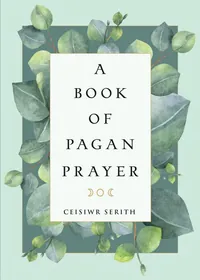



More Free Witchcraft & Paganism Books
View all →