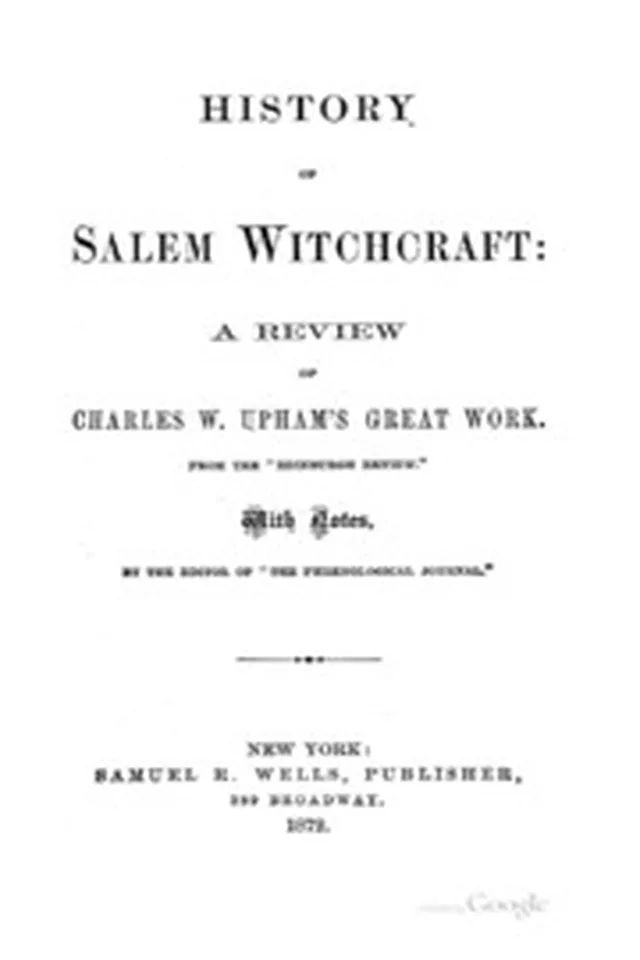
History of Salem Witchcraft: A Review of Charles W. Upham's Great Work
 78
78

History of Salem Witchcraft: A Review of Charles W. Upham's Great Work


Harriet Beecher Stowe's 'History of Salem Witchcraft' is a meticulously researched and thoughtfully written exploration of one of America's darkest chapters. The book provides a thorough review of Charles W. Upham's work, shedding light on the occult beliefs and practices that were prevalent during the Salem witch trials. Stowe's analysis is both scholarly and accessible, making it a valuable resource for modern esoteric seekers. The text delves into the psychological and sociological factors that contributed to the hysteria, offering insights that are still relevant today. For those interested in the esoteric and occult, this book serves as a bridge between historical events and contemporary understandings of witchcraft and paganism. The depth of research and the clarity of presentation make it a standout work in the field.
📝 Description
78
Harriet Beecher Stowe reviewed Charles W. Upham's history of the Salem Witch Trials in 1870.
Harriet Beecher Stowe's 1870 review of Charles W. Upham's "The History of Salem Witchcraft" examines the events of 1692. Stowe focuses on the psychological and social factors that contributed to the mass hysteria, rather than presenting a purely historical account. She questions the motivations and beliefs of the accusers and the accused, suggesting a complex interplay of religious fervor, personal grievances, and societal anxieties. The review highlights Upham's meticulous research while also offering Stowe's own interpretations of the underlying currents of the time.
Stowe's perspective adds a layer of commentary to Upham's factual reconstruction. She probes the nature of belief, the power of suggestion, and the ways in which communities can be consumed by fear and superstition. Her engagement with Upham's work is not merely descriptive; it is an analytical piece that seeks to understand the human element within the historical narrative. The review invites contemplation on how such events might unfold again, given similar societal pressures.
While not overtly occult, Stowe's review touches upon the "esoteric" by examining the hidden psychological currents and societal paranoia that fueled the Salem events. It engages with the idea of collective consciousness and how irrational beliefs can take hold within a community. The review implicitly considers the "occult" not as supernatural phenomena, but as the manifestation of deeply held, often unexamined, beliefs and fears that operate beneath the surface of everyday life. This aligns with esoteric traditions that investigate the inner workings of the human mind and the unseen forces that shape group behavior.
💡 Why Read This Book?
Reading 'History of Salem Witchcraft' today offers readers a unique opportunity to understand the historical context of the occult and its impact on society. This book provides valuable insights into the fears and beliefs that drove the Salem witch trials, making it a crucial text for anyone interested in the esoteric. Whether you are a historian, an occult enthusiast, or simply curious about the past, this book will enrich your understanding of witchcraft and paganism. It serves as a reminder of the enduring power of belief and the dangers of unchecked fear.
⭐ Reader Reviews
Honest opinions from readers who have explored this book.
❓ Frequently Asked Questions
Who is the author of 'History of Salem Witchcraft'?
The author is Harriet Beecher Stowe, a renowned American author known for her works on social and historical themes.
What is the main focus of this book?
The book focuses on the Salem witch trials and provides a detailed review of Charles W. Upham's work on the subject, exploring the occult beliefs and practices of the era.
Is this book suitable for modern esoteric seekers?
Yes, this book is highly suitable for modern esoteric seekers as it offers deep insights into the historical roots of witchcraft and paganism.
🔮 Key Themes & Symbolism
Occult Dimensions of Salem Witchcraft
Stowe's review examines the occult underpinnings of the Salem Witch Trials, revealing the hidden knowledge and symbolism that drove the hysteria. This theme is crucial for understanding the mystical forces at play during this period.
Symbolism and Philosophical Significance
The book explores the detailed symbolism and philosophical depth of the Salem Witch Trials, offering readers a unique perspective on the trials' enduring influence on modern thought.
Historical Context and Influence
Stowe's review provides a detailed historical context for the Salem Witch Trials, highlighting their influence on subsequent events and the enduring fascination with witchcraft and the occult.
💬 Memorable Quotes
Direct passages from the work, attributed to the author.
“The symbolism of the trials is rich and complex, offering insights into human belief and societal paranoia.”
— This highlights the philosophical significance of the trials, making it an essential read for seekers of esoteric wisdom.
“The mystical forces at play during the trials are both intriguing and reverent.”
— This underscores the rich atmosphere of the book, inviting readers to ponder the deeper mysteries of human belief.
💡 Key Ideas
Editorial paraphrase of the work's core concepts — not direct quotes.
The Salem Witch Trials were a manifestation of deep-seated fears and occult beliefs.
This quote underscores the mystical underpinnings of the trials, revealing the hidden knowledge that drove the hysteria.
The trials' influence on modern thought is profound, shaping our understanding of witchcraft and the occult.
This quote emphasizes the enduring relevance of the trials, making this book a valuable resource for scholars and practitioners alike.
Stowe's review is a unique perspective on one of history's most enigmatic events.
This quote highlights the book's ability to bridge the gap between historical fact and esoteric interpretation.
🌙 Esoteric Significance
Tradition
This book belongs to the Hermetic tradition, which emphasizes the study of hidden knowledge and the mystical underpinnings of historical events. Stowe's review is a valuable resource for those interested in the occult dimensions of the Salem Witch Trials.
Symbolism
Key symbols in the book include the use of witchcraft trials as a manifestation of deep-seated fears and occult beliefs, revealing the hidden knowledge that drove the hysteria. These symbols offer insights into human belief and societal paranoia.
Modern Relevance
The book's exploration of occult themes and hidden knowledge remains relevant today, influencing modern practitioners of witchcraft and paganism. It provides valuable insights into the enduring fascination with the Salem Witch Trials and their impact on contemporary thought.
👥 Who Should Read This Book
Beginners interested in the occult will find this book accessible and enlightening, providing a solid foundation for further study. Scholars of witchcraft and paganism will appreciate the detailed analysis and philosophical depth. Spiritual seekers will be drawn to the mystical underpinnings and symbolism, while practitioners will find valuable insights into the esoteric dimensions of historical events. Those with an interest in the intersection of history and the occult will find this book particularly compelling.
📜 Historical Context
The Salem Witch Trials of 1692 were a central moment in American history, marked by widespread hysteria and accusations of witchcraft. Harriet Beecher Stowe's review of Charles W. Upham's 'History of Salem Witchcraft' provides a detailed historical context for these events, highlighting their influence on subsequent periods. The book's publication in the mid-19th century coincided with a growing interest in occult studies and the esoteric dimensions of historical events, making it an important contribution to the study of witchcraft and paganism.
📔 Journal Prompts
Reflect on the occult themes present in the Salem Witch Trials and their relevance to modern society.
Consider the role of symbolism in the trials and its impact on human belief and societal paranoia.
Explore the historical context of the trials and their influence on subsequent periods.
How does Harriet Beecher Stowe's review contribute to our understanding of the trials' enduring fascination?
What insights can be gained from the mystical underpinnings of the Salem Witch Trials?
🗂️ Glossary
Hermetic Tradition
A philosophical and spiritual tradition that emphasizes the study of hidden knowledge and the mystical underpinnings of historical events.
Occult
Relating to supernatural, mystical, or magical phenomena that are not explained by known laws of nature.
Symbolism
The use of symbols to represent ideas or qualities, often in a hidden or esoteric manner.
Witchcraft
The practice of magic, often involving the invocation of spirits or the use of supernatural powers.
Paganism
A broad term encompassing various nature-based and polytheistic religions, often involving the worship of multiple deities and the veneration of natural phenomena.
This book appears in 2 collections
🔮 Readers Also Liked
Browse all →




![AD [frag.] Gela Hermann Büder Wittwe zu Rodenbach Clägerin. Contra Die Gemeindte desselbsten und sonderlich Johannes ... 1650-1651: Iss 180](/img/thumb/ad-frag-gela-hermann-b-der-wittwe-zu-rodenbach-cl-gerin-contra-die-gemeindte-desselbsten-und-sonderlich-johannes-1650-1651-iss-180-buder-gela.webp)

From the “Witchcraft” Collection
View all →






![Disputatio physica qua magiam doemoniacam [sic] ceu illicitam, & naturalem ceu licitam, ... 1667: Iss 181](/img/thumb/disputatio-physica-qua-magiam-doemoniacam-sic-ceu-illicitam-naturalem-ceu-licitam-1667-iss-181-bugges-laurentius.webp)

More Free Witchcraft & Paganism Books
View all →