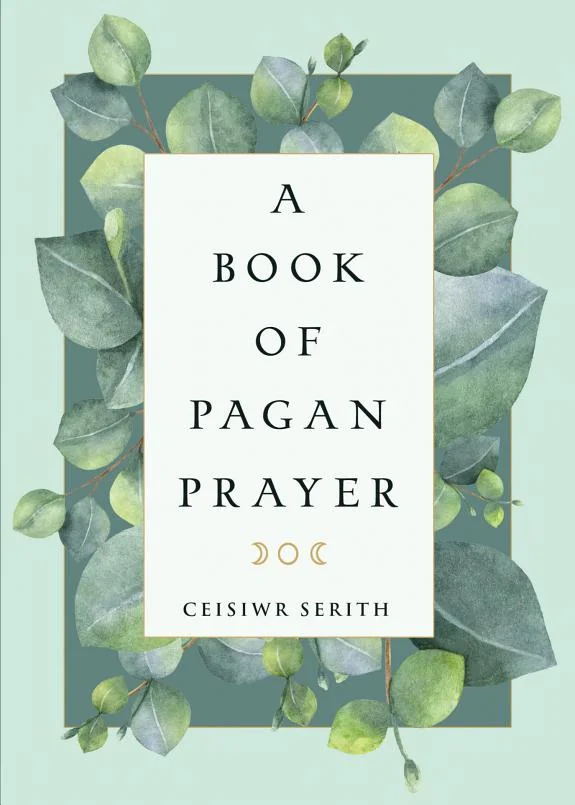
A Book of Pagan Prayer
 71
71

A Book of Pagan Prayer
Ceisiwr Serith's A Book of Pagan Prayer arrives not with thunderous pronouncements, but with a quiet offering of words for the spirit. Its strength lies in its breadth, presenting a mosaic of devotional language that acknowledges the multifaceted nature of modern pagan belief. Rather than prescribing a single path, it provides a toolkit for constructing one's own. The inclusion of prayers for various natural cycles, from solstices to eclipses, offers a tangible connection to the earth-centered spirituality that defines so much of contemporary paganism. However, the sheer eclecticism, while a strength, can also be a point of mild disorientation for the newcomer seeking a singular, authoritative voice. One passage that stands out is the simple, yet potent, invocation for dawn, which captures the essence of reverence for the natural world. Ultimately, this is a valuable, if sometimes diffuse, collection for the practicing pagan seeking to articulate their faith.
📝 Description
71
Published in 2002, A Book of Pagan Prayer collects devotional and ritual texts for modern pagans.
This volume contains a variety of prayers, invocations, and meditations suitable for contemporary pagan practice. It draws from diverse pagan traditions and individual spiritual paths, aiming to offer accessible language and structures for personal or communal worship, spiritual reflection, and magical work. The book does not focus on a single deity or pantheon, instead embracing a wide range of pagan expressions.
It is intended for individuals within modern paganism, including those who identify as Wiccans, Druids, Heathens, and eclectic or solitary practitioners. The book serves as a resource for those looking to deepen their spiritual connection through prayer and ritual, especially if traditional texts are unavailable or unsuitable. Both beginners learning to craft devotional practices and experienced practitioners seeking new forms of expression can find value within its pages.
Emerging in 2002, this book appeared during a time of significant growth and diversification in modern paganism. It followed earlier foundational texts of the late 20th century and reflected a trend toward more personalized and varied spiritual practices. This period saw a move beyond established traditions, encouraging individual creativity in ritual and theology. The work acknowledges and supports this evolving landscape of spiritual expression.
💡 Why Read This Book?
• Learn to articulate personal devotion through a variety of prayer forms, moving beyond generic requests to specific, intent-driven invocations as seen in the "Invocation for Inner Strength" section. • Deepen your connection to natural cycles by understanding and utilizing prayers aligned with specific astronomical events, such as those found in the sections addressing solstices and equinoxes. • Discover practical methods for incorporating ritual into daily life, providing templates for personal worship that can be adapted from the "Prayers for the Home" examples.
⭐ Reader Reviews
Honest opinions from readers who have explored this book.
❓ Frequently Asked Questions
What is the primary purpose of A Book of Pagan Prayer?
The book's primary purpose is to provide a diverse collection of prayers and invocations for modern pagans, enabling personal and communal spiritual practice across various traditions and individual paths.
When was A Book of Pagan Prayer first published?
A Book of Pagan Prayer was first published in 2002, reflecting the evolving landscape of modern paganism at the turn of the 21st century.
Does the book focus on specific pagan deities?
No, the book is designed to be inclusive, not focusing on a single deity or pantheon. It offers prayers that can be adapted for various gods, goddesses, spirits, or immanent divine forces.
Who is the author, Ceisiwr Serith?
Ceisiwr Serith is an author and practitioner known for their work in modern paganism, with A Book of Pagan Prayer being a significant contribution to devotional literature in the field.
Can beginners use this book effectively?
Yes, beginners can use the book effectively. It provides accessible language and structures for prayer and ritual, serving as a guide for those new to pagan devotional practices.
What kind of pagan paths does the book cater to?
The book caters to a wide range of pagan paths, including Wicca, Druidry, Heathenry, and eclectic or solitary practices, aiming for broad applicability within the pagan community.
🔮 Key Themes & Symbolism
Immanent Divinity and Personal Connection
The work champions the understanding that the divine is present within all things—nature, individuals, and the cosmos. It moves away from purely transcendent deities towards immanent forces that can be directly experienced and communed with. Prayers are framed to foster a direct, personal relationship, emphasizing the practitioner's agency in seeking and acknowledging the sacred in their immediate environment. This theme encourages a sense of the numinous in the everyday, transforming mundane experiences into opportunities for spiritual connection and reverence.
Rhythm of Nature and Sacred Cycles
A significant theme is the alignment of human spiritual life with the natural cycles of the Earth and cosmos. The book provides prayers and invocations tied to seasonal festivals like solstices and equinoxes, as well as lunar phases and other celestial events. This reflects a core pagan principle of living in harmony with the rhythms of the natural world, recognizing these cycles as sacred and potent times for ritual and reflection. It underscores the interconnectedness of humanity and the environment.
Intentionality in Prayer and Ritual
The book stresses that prayer is not merely passive supplication but an active engagement of the will and spirit. It presents various forms of devotional language—invocation, petition, thanksgiving, meditation—each serving a distinct purpose. The emphasis is on the clarity of intention behind the words spoken or thoughts held. This concept empowers practitioners, suggesting that focused intent, expressed through carefully chosen language and ritual action, can shape spiritual experience and manifest desired outcomes.
Diversity of Pagan Expression
Reflecting the pluralistic nature of contemporary paganism, the book deliberately avoids adhering to a single dogma or pantheon. It offers a broad spectrum of devotional language and concepts, encouraging readers to select, adapt, or create prayers that resonate with their personal beliefs and practices. This embrace of diversity is a key feature, acknowledging that there is no one-size-fits-all approach to pagan spirituality and celebrating the multitude of ways individuals connect with the divine.
💬 Memorable Quotes
Direct passages from the work, attributed to the author.
“May my spirit find its strength in the turning wheel of the year.”
— This sentiment highlights the pagan connection to natural cycles, suggesting that personal resilience and spiritual fortitude are drawn from the Earth's rhythms and seasonal transformations.
“I offer this breath, this moment, this awareness.”
— This concise phrase captures the practice of offering simple, present-moment awareness as a form of devotion, emphasizing the sacredness found in basic acts of living.
“With open hands, I receive the blessings of the unseen.”
— This expresses a receptive attitude towards spiritual grace and subtle energies, acknowledging the presence of forces beyond the material realm and welcoming their influence.
“Let the light of the dawn rekindle the fire within.”
— This invocation uses the symbolism of sunrise to represent spiritual renewal and the awakening of inner power or inspiration within the practitioner.
“In the quiet hearth, I find the heart of home.”
— This links the physical space of the home, symbolized by the hearth, with a deeper sense of spiritual sanctuary and inner peace, finding divinity in domesticity.
🌙 Esoteric Significance
Tradition
This work aligns with the broad umbrella of modern Western Esotericism, specifically within the contemporary pagan and Neopagan movements. It draws from a generalized, eclectic spirituality that synthesizes elements often found in Hermeticism (focus on divine immanence and personal gnosis), nature-based spiritualities akin to Druidry, and the general polytheistic inclinations prevalent in many pagan paths. It departs from rigidly defined traditions by prioritizing personal devotional expression and adaptable forms, reflecting a modern trend towards spiritual individualism within esotericism.
Symbolism
Key symbols include the 'turning wheel of the year,' representing the cyclical nature of time, seasons, and life, a fundamental concept in many pagan traditions that links the microcosm of human life to the macrocosm. The 'hearth' symbolizes domestic sanctuary, inner warmth, and the sacredness of home and community. 'Light,' particularly the dawn, serves as a potent symbol of illumination, spiritual awakening, hope, and the divine spark within.
Modern Relevance
A Book of Pagan Prayer remains relevant for contemporary practitioners seeking to articulate their spiritual beliefs through personal prayer and ritual. It informs modern eclectic paganism and solitary practitioners who value accessible, non-dogmatic devotional resources. Its emphasis on nature cycles and immanent divinity speaks to current trends in eco-spirituality and earth-based religions. Thinkers and practitioners focusing on personal gnosis and experiential spirituality within the broader Neopagan milieu often find its adaptable framework useful.
👥 Who Should Read This Book
• Solitary pagan practitioners seeking to develop personal devotional practices and enrich their spiritual expression with structured yet flexible prayers. • Students of modern paganism interested in understanding the diversity of contemporary devotional forms beyond established religious structures. • Individuals exploring earth-centered spirituality who wish to align their worship with natural cycles and the immanent divine.
📜 Historical Context
Published in 2002, A Book of Pagan Prayer emerged within a burgeoning and increasingly diverse modern pagan landscape. The late 20th and early 21st centuries saw a significant expansion beyond the foundational Wiccan traditions established by figures like Gerald Gardner. Movements such as Neopaganism, Druidry, and various forms of Heathenry were solidifying their identities, often emphasizing reconstructed practices or highly individualized spiritual paths. This period contrasted with earlier, more insular occult circles. Authors like Philip Carr-Gomm were exploring modern Druidry, while others were reviving interest in Norse mythology. Serith's work addressed a growing need for accessible, yet respectful, devotional materials that could serve this expanding and often eclectic community, moving beyond the established liturgical structures of earlier pagan revivals.
📔 Journal Prompts
The turning wheel of the year and its impact on your inner landscape.
Reflections on offering simple awareness as a form of devotion.
The symbolism of light in personal spiritual awakenings.
Cultivating sanctuary: finding the heart of home in your living space.
How can the unseen be welcomed into daily life?
🗂️ Glossary
Invocation
A formal or solemn request or prayer addressed to a deity or spiritual power, often inviting their presence or influence.
Deity
A god or goddess, or a divine being considered sacred, often worshipped in polytheistic religious systems.
Pantheon
All the gods of a particular people or religion, viewed collectively.
Solstice
The time of year when the sun reaches its highest or lowest point in the sky at noon, marked by the longest and shortest days; occurs twice each year.
Equinox
The time or date (twice each year) at which the sun crosses the celestial equator, when day and night are of equal length.
Immanent
Existing or operating within; inherent. In theology, describing a deity that is present within the universe.
Neopaganism
A modern religious movement incorporating aspects of pre-Christian European polytheistic religions, often characterized by nature worship and eclectic practices.
🔮 Readers Also Liked
Browse all →







More by Ceisiwr Serith
All books →



More Free Witchcraft & Paganism Books
View all →