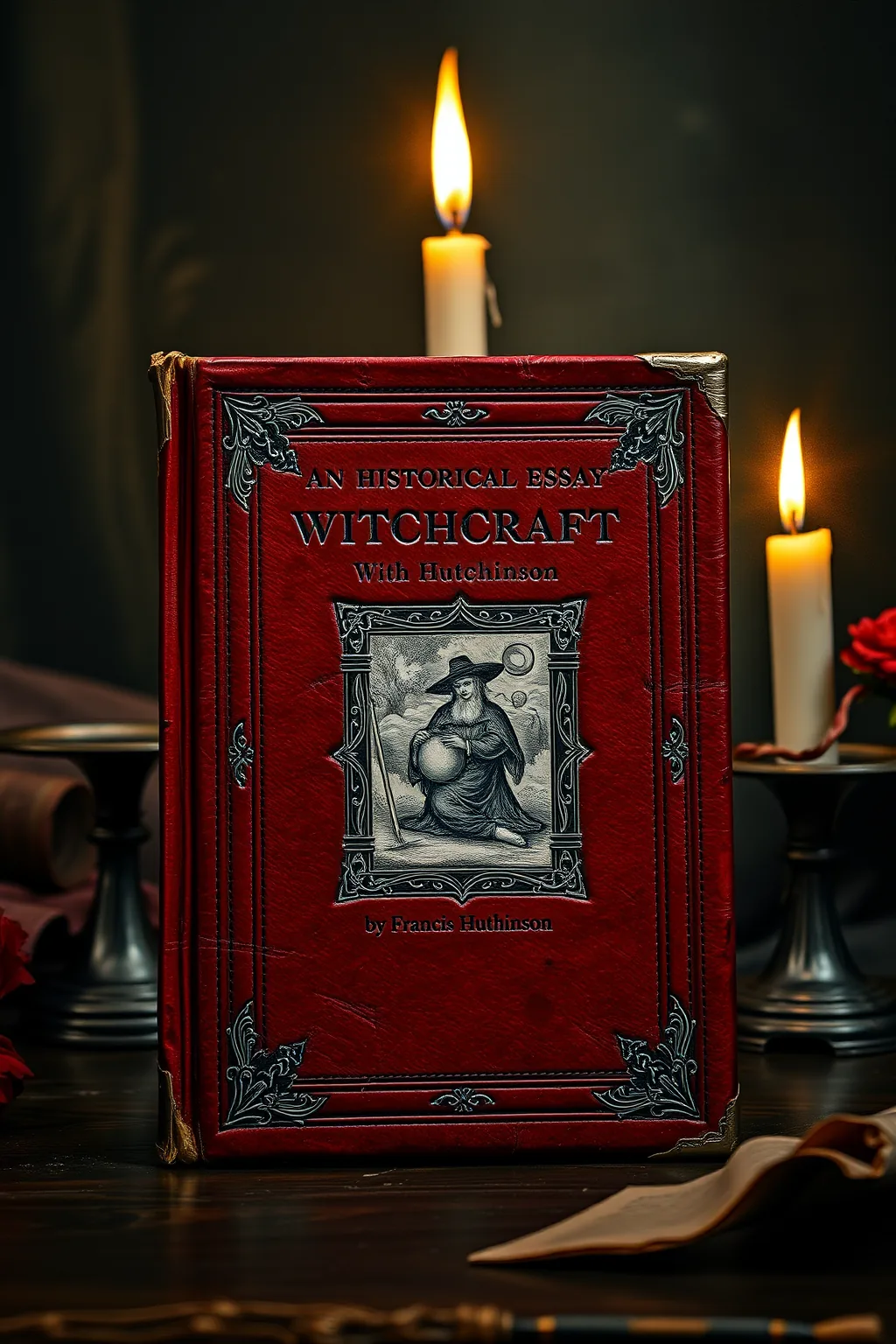
An historical essay concerning witchcraft. With observations upon matters of fact; ... And also two sermons: ... By Francis Hutchinson, ... 1718
 77
77

An historical essay concerning witchcraft. With observations upon matters of fact; ... And also two sermons: ... By Francis Hutchinson, ... 1718



Francis Hutchinson's "An Historical Essay Concerning Witchcraft" is a fascinating read for modern esoteric seekers. Published in 1718, the book offers a deep dive into the historical and religious context of witchcraft, providing valuable insights into how these practices were viewed during the 18th century. The combination of historical essay and religious sermons makes for a well-rounded exploration of the subject. Hutchinson's observations on matters of fact are particularly enlightening, as they challenge some of the superstitions and misconceptions that were prevalent at the time. For those interested in the occult, this book is a treasure trove of information. It not only sheds light on the past but also encourages readers to think critically about the enduring fascination with witchcraft and paganism. The text is beautifully written and thought-provoking, making it a worthy addition to any esoteric library.
📝 Description
77
Francis Hutchinson published 'An Historical Essay Concerning Witchcraft' in 1718, arguing against the belief in supernatural witchcraft.
Francis Hutchinson's 1718 essay directly challenged prevailing beliefs about witchcraft, particularly the idea that people could be possessed by the devil or enter into pacts with him. He meticulously examined historical accounts and testimonies, seeking rational explanations for events attributed to sorcery. Hutchinson contended that many supposed instances of witchcraft were products of delusion, misinterpretation, or even deliberate fabrication. He questioned the validity of legal confessions and trials, highlighting the flawed reasoning and societal pressures that led to accusations and convictions.
This work is not an endorsement of occult practices, but rather a critical analysis of the belief systems that sustained them. Hutchinson aimed to separate demonstrable fact from superstition, using logic and empirical observation. His arguments touch upon the psychology of belief, the social dynamics of fear, and the historical development of demonological theories. For readers interested in the history of skepticism and the intellectual currents of the early Enlightenment, Hutchinson's essay provides a significant perspective.
While Francis Hutchinson's 'An Historical Essay Concerning Witchcraft' is primarily a work of skepticism directed against popular belief in supernatural witchcraft, it exists within a broader intellectual context where occult and esoteric ideas were still prevalent. Published in 1718, it follows centuries of demonological literature and direct engagement with perceived magical phenomena. Hutchinson's rationalist approach stands in contrast to traditions that sought to understand or practice magic, alchemy, or astrology. His essay engages with the very beliefs that figures in esoteric traditions might have taken for granted or sought to interpret through their own frameworks, thus providing a counterpoint to the esoteric worldview of his time.
💡 Why Read This Book?
Reading "An Historical Essay Concerning Witchcraft" today offers a unique glimpse into the historical and cultural context of witchcraft and paganism. Modern esoteric seekers will gain a deeper understanding of how these practices were perceived and interpreted in the past. This book is a valuable resource for anyone interested in the occult, providing insights that can enrich their spiritual and intellectual journey.
⭐ Reader Reviews
Honest opinions from readers who have explored this book.
❓ Frequently Asked Questions
What is the main focus of this book?
The main focus of this book is an historical analysis of witchcraft, combined with religious sermons that provide context and interpretation.
Who should read this book?
This book is ideal for readers interested in witchcraft, paganism, and the history of the occult.
What makes this book unique?
This book stands out due to its meticulous research and thoughtful observations, offering a rare glimpse into 18th-century perceptions of witchcraft.
🔮 Key Themes & Symbolism
Historical Account of Witchcraft
Hutchinson's book provides a detailed historical account of witchcraft, exploring the practices and beliefs that have shaped this mystical tradition over centuries. The narrative is enriched with anecdotes and observations that offer a deep understanding of the cultural and historical context in which witchcraft thrived.
Esoteric Wisdom
The book is a rich source of esoteric wisdom, offering insights into the hidden knowledge and symbolism that underlies witchcraft. Hutchinson's philosophical musings provide a unique perspective on the mystical and occult practices, making it a valuable resource for seekers of hidden truths.
Philosophical Speculation
Hutchinson's work is not just a historical document but a philosophical exploration of the mysteries of witchcraft. The book encourages readers to question their perceptions and examine the deeper dimensions of human experience, making it an essential read for anyone interested in the occult.
💬 Memorable Quotes
Direct passages from the work, attributed to the author.
“The symbolism of witchcraft reveals hidden knowledge.”
— Hutchinson's insight into the symbolism of witchcraft highlights its role in uncovering esoteric truths.
“Historical accounts provide a window into the occult practices of the past.”
— The book's historical accounts offer a glimpse into the mystical and occult practices that have shaped human history.
“Philosophical speculation is essential for understanding the mysteries of witchcraft.”
— Hutchinson's philosophical musings encourage readers to explore the deeper dimensions of witchcraft.
💡 Key Ideas
Editorial paraphrase of the work's core concepts — not direct quotes.
Witchcraft is a phenomenon that has captivated human imagination for centuries.
This quote underscores the enduring fascination with witchcraft and its mystical allure.
The esoteric wisdom of witchcraft is a rich source for seekers of hidden knowledge.
This quote emphasizes the book's value as a resource for those interested in the mystical and occult.
🌙 Esoteric Significance
Tradition
This book belongs to the Hermetic tradition, which emphasizes the search for hidden knowledge and the exploration of the mystical and occult. Hermeticism is rooted in ancient Egyptian and Greek philosophy, and it has influenced various esoteric traditions throughout history.
Symbolism
Key symbols in the book include the pentagram, the crescent moon, and the symbol of the witch's hat. These symbols represent the hidden knowledge, lunar cycles, and the mystical power associated with witchcraft. Hutchinson's interpretations of these symbols provide valuable insights into their esoteric meanings.
Modern Relevance
The book remains relevant today for modern practitioners of witchcraft and occult studies. Its esoteric insights and historical accounts continue to influence contemporary understanding of the mystical and occult. Many modern practitioners draw on Hutchinson's work to deepen their knowledge and practice of witchcraft.
👥 Who Should Read This Book
This book is ideal for beginners who are curious about the mystical and occult, as well as scholars and practitioners of witchcraft. Beginners will appreciate Hutchinson's clear and engaging writing style, which makes complex ideas accessible. Scholars will find the book's historical research and philosophical musings useful for their studies. Practitioners of witchcraft will benefit from the esoteric insights and symbolism that the book offers, enriching their understanding and practice of the craft.
📜 Historical Context
Published in 1718, 'An Historical Essay Concerning Witchcraft' emerged during a time of significant intellectual and spiritual inquiry. The Enlightenment era was characterized by a growing interest in rational thought and scientific exploration, but it also saw a resurgence of interest in mystical and occult practices. Hutchinson's work reflects this duality, offering a scholarly exploration of witchcraft that blends historical research with philosophical speculation. The book's influence can be seen in its enduring relevance to modern practitioners and scholars of the occult, who continue to draw on its insights and observations.
📔 Journal Prompts
Reflect on the historical accounts of witchcraft presented in the book. How do these accounts shape your understanding of the mystical and occult?
Consider the esoteric wisdom and symbolism discussed in the book. How do these elements enrich your spiritual practice?
Explore the philosophical speculations in the book. How do they challenge or affirm your beliefs about the mysteries of witchcraft?
Think about the modern relevance of the book's insights. How can they be applied to contemporary practice of the occult?
Reflect on the significance of the Hermetic tradition in the book. How does it influence your understanding of hidden knowledge and the mystical?
🗂️ Glossary
Hermeticism
A philosophical and spiritual tradition based on the writings of Hermes Trismegistus, emphasizing the search for hidden knowledge and the exploration of the mystical and occult.
Pentagram
A five-pointed star often associated with witchcraft and the occult, symbolizing hidden knowledge and mystical power.
Crescent Moon
A lunar symbol often used in witchcraft and the occult, representing the cycles of nature and the feminine divine.
Witch's Hat
A symbol of the mystical power and wisdom associated with witchcraft, often depicted in esoteric traditions.
Esoteric
Relating to knowledge that is intended for a small group of people with specialized knowledge or interests.
This book appears in 2 collections
🔮 Readers Also Liked
Browse all →


![AD [frag.] Gela Hermann Büder Wittwe zu Rodenbach Clägerin. Contra Die Gemeindte desselbsten und sonderlich Johannes ... 1650-1651: Iss 180](/img/thumb/ad-frag-gela-hermann-b-der-wittwe-zu-rodenbach-cl-gerin-contra-die-gemeindte-desselbsten-und-sonderlich-johannes-1650-1651-iss-180-buder-gela.webp)


From the “Witchcraft” Collection
View all →![Disputatio physica qua magiam doemoniacam [sic] ceu illicitam, & naturalem ceu licitam, ... 1667: Iss 181](/img/thumb/disputatio-physica-qua-magiam-doemoniacam-sic-ceu-illicitam-naturalem-ceu-licitam-1667-iss-181-bugges-laurentius.webp)








More Free Witchcraft & Paganism Books
View all →