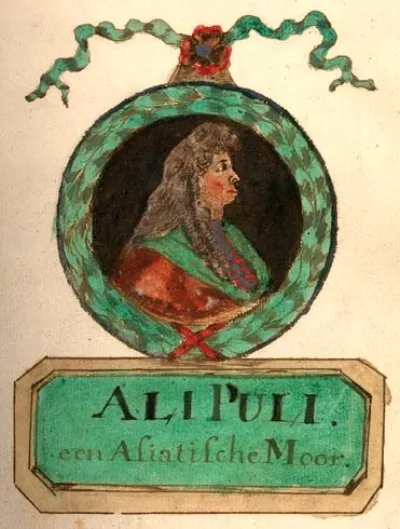
Ali Puli is the attributed author of 17th-century alchemical texts, possibly a pseudonym for Johann Otto von Helwig.
Ali Puli, also known as Alipili, is credited with authoring several alchemical and hermetic texts from the 17th century. However, his actual historical existence is uncertain, with some scholars, like A.E. Waite, suggesting the works attributed to him were later fabrications and lacked genuine antiquity. Descriptions of Ali Puli vary, portraying him as a Christian from Mauretania with Asiatic origins, or alternatively as an Arab or a Moor, largely due to the belief that he wrote in Arabic.
It is widely believed that Ali Puli was a pseudonym used by Johann Otto von Helwig, a German physician, alchemist, and writer who lived from 1654 to 1698. This theory suggests that the works attributed to Ali Puli were actually authored by von Helwig. The most significant text associated with Ali Puli is "Centrum Naturae Concentratum."
Attributed Authorship and Historical Doubt
The name Ali Puli is linked to a collection of 17th-century writings on alchemy and hermeticism. Despite these attributions, concrete evidence of his historical existence remains elusive. Prominent figures in occult studies, such as A.E. Waite, have expressed skepticism, labeling the attributed works as straightforward forgeries concerning their age and authorship, while suggesting their content might still hold some value. The identity of Ali Puli is further obscured by conflicting descriptions, which include him being a Mauretanian Christian of Asiatic descent, an Arab due to his supposed use of Arabic in his writings, or a Moor.
Centrum Naturae Concentratum and Its Influence
The most recognized work associated with Ali Puli is "Centrum Naturae Concentratum." This text was reputedly originally written in Arabic, although no original Arabic manuscript has survived. The work first appeared in German in 1682, published by Johann Otto von Helwig, who is considered the most likely actual author behind the Ali Puli pseudonym. A Dutch translation followed in 1694, and an English version was published in 1696 by Edmund Brice. A particularly famous passage from this work states: "I admonish thee, whosoever thou art, that desirest to dive into the innermost parts of Nature, if that thou seekest thou findeth not within thee, thou wilt never find it without thee."
Connection to Wicca
The aforementioned passage from "Centrum Naturae Concentratum" is recognized as a significant source for the Wiccan "Charge of the Goddess." This influential text was later adapted and revised by Gerald Gardner and Doreen Valiente. The identified connection makes the work attributed to Ali Puli the earliest known source for this foundational Wiccan scripture, highlighting its unexpected impact on modern esoteric traditions.
Key Ideas
- The search for inner truth is paramount; external seeking is futile if the inner source is not found.
Notable Quotes
“I admonish thee, whosoever thou art, that desirest to dive into the innermost parts of Nature, if that thou seekest thou findeth not within thee, thou wilt never find it without thee.”
Books by
5 free public domain books · Read online or download