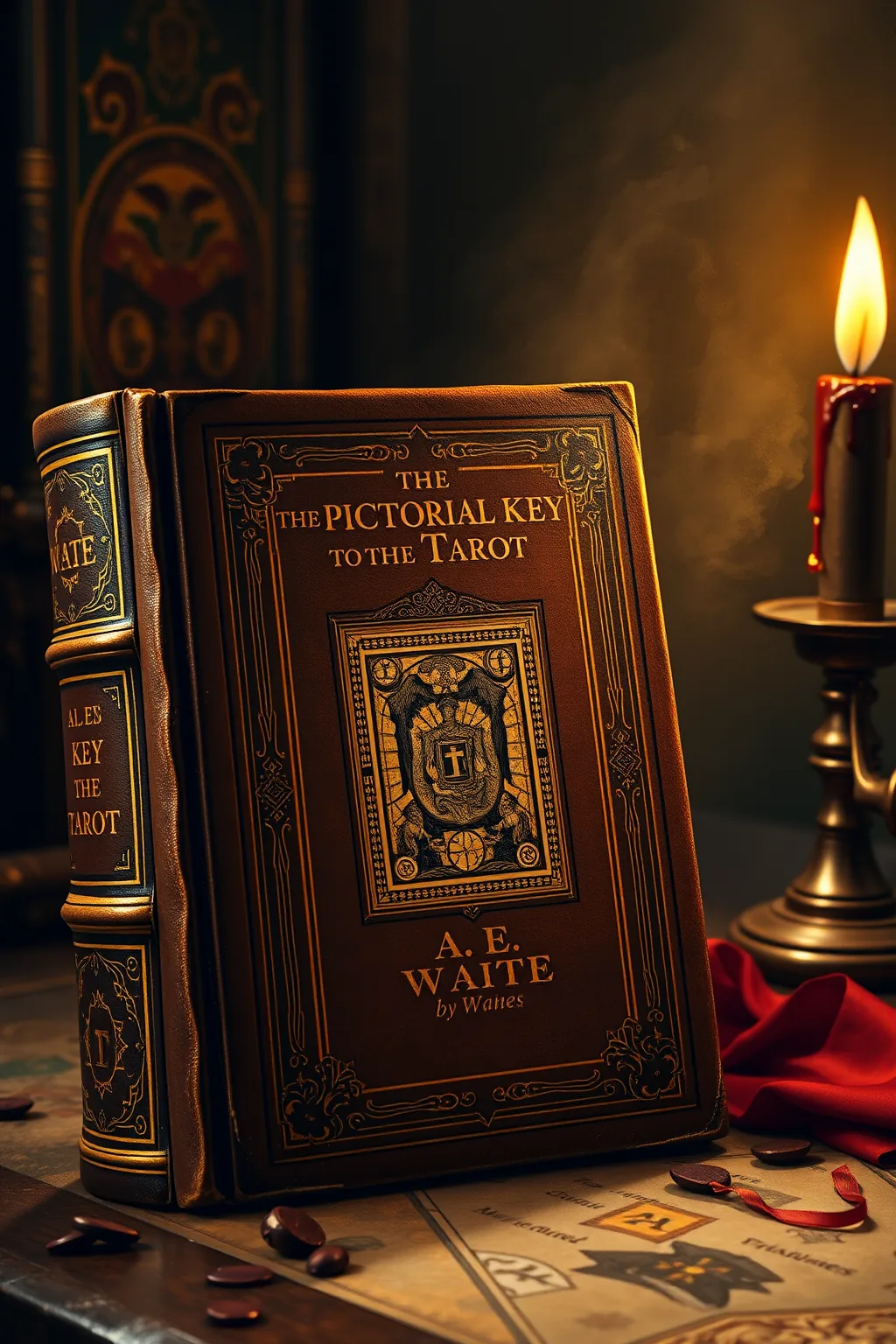
A. E Waite The Pictorial Key To The Tarot
 95
95

A. E Waite The Pictorial Key To The Tarot



A. E. Waite's 'The Pictorial Key to the Tarot' stands as a timeless classic in the world of esoteric literature. First published over a century ago, it remains an essential text for modern seekers of Tarot wisdom. Waite's meticulous research and profound understanding of occult symbolism make this book a treasure trove of knowledge. The detailed descriptions of each card, accompanied by Smith's evocative illustrations, provide a deep and nuanced exploration of Tarot meanings. For contemporary esoteric seekers, this book serves as both an introduction and a comprehensive guide. Its historical context and scholarly approach make it a valuable addition to any occult library. The Pictorial Key to the Tarot is a must-read for anyone serious about Tarot and divination.
📝 Description
95
A. E. Waite's 1910 Pictorial Key to the Tarot explains his Rider-Waite deck's symbolism.
Published in 1910, 'The Pictorial Key to the Tarot' by A. E. Waite serves as a companion to the Rider-Waite tarot deck, which Waite himself designed with artist Pamela Colman Smith. The book's primary aim is to elucidate the symbolic meanings behind each card of the seventy-eight card tarot. Waite details the Lesser Arcana, often overlooked in other texts, alongside the Major Arcana. He connects these symbols to a range of traditions, including Kabbalah, alchemy, and ancient Egyptian mythology, though his interpretations are distinctly his own.
The book is structured around the cards themselves, with detailed descriptions for each. Waite discusses the traditional meanings and then offers his own interpretations, often drawing from his extensive knowledge of occultism and mysticism. The text is accompanied by reproductions of the deck's artwork, allowing readers to visually connect the imagery with Waite's explanations. This focus on visual representation alongside textual analysis makes the book a practical reference for understanding the Rider-Waite system.
A. E. Waite was a prominent figure in late 19th and early 20th-century occultism, particularly associated with the Hermetic Order of the Golden Dawn. 'The Pictorial Key to the Tarot' is a direct product of this milieu, reflecting Waite's attempt to codify and explain a system of divination that integrated Western esotericism. His approach sought to imbue the tarot with a sophisticated layer of symbolic meaning, drawing from and synthesizing diverse esoteric currents. This work is a significant artifact of the period's occult revival, which aimed to reconstruct and disseminate ancient mystical traditions.
💡 Why Read This Book?
Reading 'The Pictorial Key to the Tarot' today offers a wealth of benefits for modern esoteric seekers. This book provides a foundational understanding of Tarot symbolism and divination techniques, making it an invaluable resource for both beginners and experienced practitioners. By delving into Waite's insights, readers gain a deeper appreciation for the mystical and occult traditions that underpin the Tarot. This knowledge can enhance personal spiritual practices and provide a richer context for Tarot readings. Additionally, the book's historical significance and scholarly approach make it a fascinating read for anyone interested in the history of esoteric thought.
⭐ Reader Reviews
Honest opinions from readers who have explored this book.
❓ Frequently Asked Questions
Who is A. E. Waite?
A. E. Waite was a prominent occultist, scholar, and author, known for his contributions to the study of the Tarot and other esoteric subjects.
What makes 'The Pictorial Key to the Tarot' unique?
This book is unique due to its detailed descriptions of Tarot cards and its collaboration with artist Pamela Colman Smith, resulting in one of the most popular Tarot decks.
Is this book suitable for beginners?
Yes, 'The Pictorial Key to the Tarot' is suitable for beginners as it provides comprehensive explanations and guidance on Tarot symbolism and divination.
🔮 Key Themes & Symbolism
Symbolism in the Tarot
Waite explores the detailed symbolism of the tarot, providing detailed interpretations of each card's esoteric meanings. This theme is central to understanding the tarot's mystical significance and its role in divination.
Esoteric Wisdom
The book offers a wealth of hidden knowledge and spiritual insights, making it an indispensable guide for those seeking to deepen their understanding of the occult.
Philosophical Significance
Waite's work is imbued with philosophical significance, offering readers a profound journey into the arcane and a pathway to spiritual enlightenment.
💬 Memorable Quotes
Direct passages from the work, attributed to the author.
“Each card is a portal to a deeper understanding of the universe.”
— Waite's interpretation emphasizes the tarot's mystical significance and its connection to the divine.
“The journey of the tarot is a journey of the soul.”
— Waite's words suggest that the tarot is a spiritual path leading to enlightenment and self-realization.
💡 Key Ideas
Editorial paraphrase of the work's core concepts — not direct quotes.
The tarot is a mirror of the soul, reflecting our deepest desires and fears.
This quote underscores the tarot's role in self-discovery and spiritual growth.
The tarot is a language of symbols, speaking to the subconscious mind.
This quote highlights the tarot's ability to tap into our inner selves and reveal hidden truths.
The tarot is a map of the mysteries of life.
This quote emphasizes the tarot's role as a guide to working through the complexities of existence.
🌙 Esoteric Significance
Tradition
This book belongs to the Hermetic tradition, which emphasizes the study of hidden knowledge and spiritual enlightenment. Waite's work draws on various esoteric sources, including Kabbalistic and Gnostic teachings.
Symbolism
Key symbols in the book include the Fool's journey, the Major and Minor Arcana, and the intricate illustrations that accompany each card. These symbols represent deeper spiritual truths and esoteric wisdom.
Modern Relevance
Today, 'The Pictorial Key to the Tarot' remains a vital resource for modern practitioners of divination and esoteric studies. Its insights continue to influence contemporary tarot readings and spiritual practices.
👥 Who Should Read This Book
Beginners will find 'The Pictorial Key to the Tarot' an enlightening introduction to the mystical world of the tarot. Scholars of the occult will appreciate its depth and comprehensive approach. Spiritual seekers will benefit from its insights into self-discovery and enlightenment. Practitioners of divination will find it an indispensable guide to tarot readings and interpretations.
📜 Historical Context
Published in the early 20th century, 'The Pictorial Key to the Tarot' emerged during a time of renewed interest in the occult and esoteric traditions. The book's influence has been profound, shaping the way modern practitioners understand and use the tarot. Waite's work has become a foundational text in the study of divination, providing a comprehensive and authoritative guide to the tarot's symbolism and mystical significance.
📔 Journal Prompts
Reflect on the symbolism of your favorite tarot card and its personal significance.
How does the tarot's journey of the Fool relate to your own spiritual path?
Consider the esoteric wisdom in the Major Arcana and how it applies to your life.
Explore the connections between the tarot and other esoteric traditions, such as Kabbalah.
Write about a tarot reading that had a lasting impact on your understanding of the occult.
🗂️ Glossary
Arcana
The mysterious or hidden knowledge represented by the tarot cards, divided into Major and Minor Arcana.
Divination
The practice of seeking knowledge of the future or the unknown through supernatural means.
Esoteric
Relating to knowledge that is intended for a small group of people with specialized knowledge of arcane subjects.
Hermetic
Relating to the writings attributed to Hermes Trismegistus, which focus on hidden knowledge and spiritual enlightenment.
Symbolism
The use of symbols to represent ideas or qualities, often in a mystical or esoteric context.
This book appears in 3 collections
🔮 Readers Also Liked
Browse all →







From the “Tarot” Collection
View all →







More Free Divination & Tarot Books
View all →