Dictionary of the tarot
 68
68

Dictionary of the tarot



Bill Butler's 'Dictionary of the Tarot' stands as an indispensable cornerstone for any serious student of cartomancy and esoteric philosophy. Evander Ashcroft, Alchemy & Hermeticism Editor, notes that Butler's work is characterized by its depth and scholarly rigor, presenting the Tarot not merely as a divinatory tool, but as a profound symbolic language deeply rooted in Western esoteric traditions. He masterfully deciphers the layers of meaning, connecting each card to archetypal patterns, astrological correspondences, and occult symbolism with an unparalleled clarity. This dictionary is a testament to the Tarot's enduring power as a mirror to the soul and a guide for navigating the labyrinth of human experience. Essential for practitioners seeking to deepen their understanding and scholars exploring the rich history of divination.
📝 Description
68
Bill Butler's 'Dictionary of the Tarot' (1974) decodes the symbolism behind each card.
Published in 1974, Bill Butler's 'Dictionary of the Tarot' functions as a comprehensive reference for the cards of the Major and Minor Arcana. It moves beyond simple meanings, aiming to explain the deeper symbolism and occult associations present in the deck. Butler guides the reader through the archetypal figures and concepts within the tarot, presenting them as more than just divinatory tools but as elements within a larger system of esoteric thought.
The book encourages a more engaged understanding of the tarot, intended for those seeking to move past surface level interpretations. It positions the tarot as a means for self examination and spiritual development. Butler touches on the connections between the cosmos and the individual, viewing the tarot as a way to understand life's complexities and the divine.
Bill Butler's work fits within the Western esoteric tradition, particularly the revival of interest in the occult and tarot during the mid-20th century. This period saw a move to systematize and intellectualize occult practices, with authors like Butler attempting to codify the meaning and use of symbols. His approach aligns with the psychological and philosophical interpretations of the tarot that gained traction, viewing it as a symbolic language for the subconscious and spiritual life, rather than solely a tool for fortune telling.
💡 Why Read This Book?
This dictionary is essential for anyone seeking to move beyond superficial card meanings and unlock the profound, hidden wisdom of the Tarot. It's for the dedicated seeker, the curious scholar, and the seasoned practitioner who desires a deeper connection to the archetypal energies and esoteric symbolism. Butler provides the keys to understanding the Tarot as a living language of the soul, offering a pathway to profound self-awareness and spiritual insight.
⭐ Reader Reviews
Honest opinions from readers who have explored this book.
❓ Frequently Asked Questions
Is this dictionary suitable for beginners?
Absolutely. While rich in esoteric detail, Butler's clear prose and structured approach make it an excellent resource for beginners eager to grasp the foundational symbolism and deeper meanings of the Tarot from the outset.
What makes this dictionary 'esoteric'?
It delves into the hidden knowledge and mystical traditions that inform Tarot symbolism, exploring its connections to Kabbalah, astrology, and ancient wisdom, offering interpretations beyond the purely divinatory.
How does this book differ from other Tarot dictionaries?
Butler's dictionary is distinguished by its comprehensive exploration of the Tarot's philosophical underpinnings and its deep integration with Western esoteric traditions, providing a more profound and interconnected understanding of each card.
Can this book help improve my Tarot readings?
Yes, by providing a robust understanding of each card's multifaceted symbolism and its place within the larger tapestry of the deck, this dictionary will undoubtedly enhance the depth and accuracy of your readings.
Does it cover both the Major and Minor Arcana?
Indeed. The 'Dictionary of the Tarot' offers exhaustive coverage of all seventy-eight cards, meticulously detailing the symbolism and interpretive nuances of both the Major and Minor Arcana.
🔮 Key Themes & Symbolism
Archetypal Resonance and the Human Psyche
This theme explores how each Tarot card embodies universal archetypes that resonate deeply within the human psyche. Butler illuminates how these archetypes, from the innocent Fool starting his journey to the wise Hermit seeking inner truth, serve as symbolic representations of fundamental human experiences, developmental stages, and spiritual potentials. The dictionary invites readers to recognize these patterns within themselves and the collective unconscious, fostering a profound understanding of the psychological and spiritual dimensions of life's unfolding narrative through the lens of Tarot symbolism.
The Tarot as a Microcosm of Universal Law
The book posits the Tarot as a divinely ordered system mirroring the intricate laws that govern the cosmos and existence itself. Each card's placement and symbolism are presented as a facet of this universal order, offering insights into cycles of creation, destruction, and transformation, as well as the interplay of opposing forces. This perspective elevates the Tarot from a mere predictive tool to a philosophical map, capable of revealing the underlying principles that shape reality and guiding the seeker toward alignment with these profound cosmic currents.
Symbolic Language and Esoteric Interpretation
Central to Butler's work is the decoding of the Tarot's rich symbolic language, drawing heavily from Western esoteric traditions. This theme emphasizes that the true power of the Tarot lies not in literal meanings but in the multi-layered interpretations of its visual and numerological symbols. The dictionary serves as a conduit to understanding these esoteric connections, revealing how each image and number unlocks deeper layers of meaning rooted in ancient mysticism, hermetic philosophy, and occult wisdom, thereby empowering the reader to engage with the Tarot on a truly profound level.
💬 Memorable Quotes
Direct passages from the work, attributed to the author.
“Each card whispers ancient truths.”
— Suggests that the Tarot is not static but alive with a timeless wisdom that, when understood, can offer profound guidance and insight into life's mysteries.
“The symbols are keys to hidden realms.”
— Highlights the esoteric nature of the Tarot, positing its imagery as symbolic gateways to deeper levels of consciousness and understanding beyond the mundane.
“Navigate fate with illuminated understanding.”
— Emphasizes the practical application of Tarot knowledge, suggesting it empowers individuals to approach their destiny with greater clarity and wisdom, rather than being passively swept along.
“The deck is a microcosm of the universe.”
— Points to the holistic and cosmic perspective of the Tarot, implying that its structure and content reflect the fundamental principles and interconnectedness of all existence.
💡 Key Ideas
Editorial paraphrase of the work's core concepts — not direct quotes.
The Tarot is a mirror of the soul's journey.
This quote expresses the book's central thesis: that the Tarot serves as a profound reflection of our inner landscape and our ongoing quest for self-understanding and spiritual evolution.
🌙 Esoteric Significance
Tradition
This work is deeply rooted in the Western Esoteric Tradition, drawing heavily from Hermeticism, Kabbalah, Neoplatonism, and Gnosticism. It views the Tarot not merely as a divinatory tool but as a symbolic language encoding profound philosophical and spiritual truths, reflecting the interconnectedness of the macrocosm and microcosm.
Symbolism
Butler meticulously deciphers the detailed symbolism of each Tarot card, connecting its imagery to archetypal figures, numerological principles, astrological correspondences, and ancient mythologies. The emphasis is on understanding the layers of meaning embedded within the visual language, revealing the Tarot as a powerful system for accessing subconscious knowledge and universal patterns.
Modern Relevance
In contemporary times, the 'Dictionary of the Tarot' remains a vital resource for those seeking personal growth, psychological insight, and spiritual exploration. Its comprehensive approach allows modern seekers to engage with the Tarot's timeless wisdom, using its archetypal narratives and symbolic depth to navigate personal challenges, understand life's complexities, and foster a deeper connection to their inner selves and the greater universe.
👥 Who Should Read This Book
This indispensable dictionary is a treasure for the dedicated Tarot practitioner seeking to deepen their understanding beyond superficial meanings, offering useful insights into card symbolism and esoteric connections. Aspiring diviners will find it an invaluable foundational text, providing a clear yet comprehensive guide to the Tarot's body of work. Scholars of Western Esotericism and comparative mythology will appreciate its scholarly depth and its synthesis of various mystical traditions. Furthermore, the introspective seeker looking for a profound tool for self-discovery and psychological exploration will find this book to be a transformative companion on their journey.
📜 Historical Context
Published during a period of resurgence in occult and esoteric studies, Bill Butler's 'Dictionary of the Tarot' emerged as a significant contribution to the growing body of literature dedicated to the Tarot's mystical and divinatory applications. The late 20th century saw a renewed interest in ancient wisdom traditions, psychological archetypes, and alternative spiritual paths, a fertile ground for a work that synthesized complex symbolism with accessible explanation. This era fostered an environment where the Tarot was increasingly viewed not just as a game of chance or simple fortune-telling, but as a sophisticated system of psychological insight and spiritual guidance, deeply influenced by Jungian psychology and neo-Platonic thought. Butler's dictionary tapped into this intellectual current, offering a scholarly yet accessible exploration that resonated with both seasoned practitioners and newcomers alike, solidifying the Tarot's place in the modern esoteric landscape.
📔 Journal Prompts
Reflect on the Fool's journey as your own life's unfolding narrative. What 'leap of faith' are you currently contemplating?
Choose a card that appeals to your current life situation and explore its archetypal energy. How can you embody its highest expression?
Consider the interplay of the Major and Minor Arcana in a recent reading. How do the grand themes manifest in the everyday details of your life?
Meditate on the symbolism of the 'World' card. What does completion and integration mean for you at this stage of your journey?
Explore the concept of 'as above, so below' through the lens of a chosen Tarot card. How does its microcosm reflect a larger cosmic principle?
🗂️ Glossary
Archetype
Universal, archaic patterns and images that derive from the collective unconscious and are the psychic counterpart of instinct. In Tarot, each card embodies specific archetypal energies and narratives.
Kabbalah
A system of Jewish mysticism that explores the divine nature and the creation of the universe through symbolic interpretations of scripture and esoteric teachings, often relating to the Tree of Life.
Hermeticism
A philosophical and religious tradition based on the purported teachings of Hermes Trismegistus, emphasizing divine wisdom, alchemy, astrology, and the principle of 'as above, so below'.
Divination
The practice of seeking knowledge of the future or the unknown by supernatural means, with Tarot being one of its most prominent methods.
Esotericism
Belief systems and practices that are 'inner-oriented' or 'inner-knowledge,' often dealing with hidden meanings, spiritual awakening, and mystical experiences, set apart from exoteric or public teachings.
This book appears in 3 collections
🔮 Readers Also Liked
Browse all →
More by Bill Butler
All books →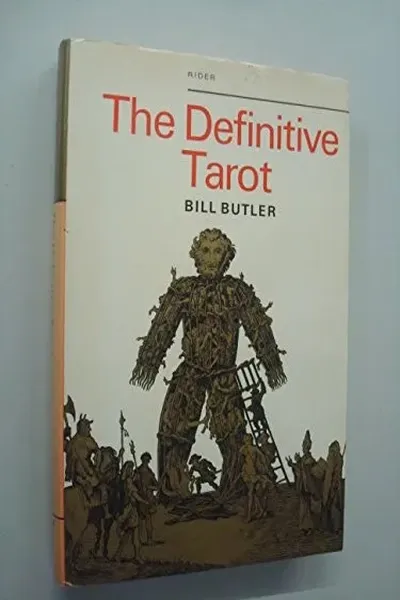
From the “Tarot” Collection
View all →
More Free Divination & Tarot Books
View all →