1-2-3 Tarot
 72
72

1-2-3 Tarot
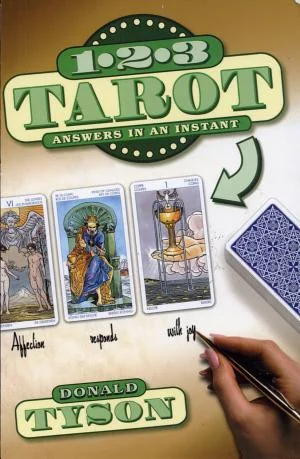
Donald Tyson’s 1-2-3 Tarot tackles the perennial problem of Tarot memorization head-on, proposing a system that, if adhered to, genuinely bypasses the need for lengthy keyword lists. Its strength lies in this elegant simplification; the core interpretive mechanism is indeed quick to grasp. For instance, the way it uses the card’s position and its relationship to preceding and succeeding cards to derive meaning is quite efficient. However, this very efficiency can be a double-edged sword. The reductionist approach, while practical, may leave some users feeling that the richer, multi-layered symbolism found in many other Tarot traditions is underserved. The nuance of a card like The Hierophant, for example, might feel compressed when viewed solely through the lens of the system’s core tenets. It’s a method for getting quick answers, perhaps less so for deep symbolic exploration. The book offers a functional, accessible entry point, but seasoned practitioners might find it lacks the depth they seek. It's a competent tool for rapid divination, not a comprehensive symbolic lexicon.
📝 Description
72
Donald Tyson's 1-2-3 Tarot, published in 2004, simplifies card interpretation with core principles over memorization.
Donald Tyson's 1-2-3 Tarot presents a direct method for reading the cards, moving away from the extensive memorization often associated with traditional Tarot study. Published in 2004, the book establishes a systematic framework for quick learning and practical use. Instead of detailing numerous keywords for each of the seventy-eight cards, Tyson's approach centers on a limited set of fundamental ideas applicable to any card in any spread position.
This book is written for people new to Tarot who find the sheer amount of information in standard guides daunting. It aims to make Tarot understandable for those who have never used a deck or who have found memorizing card meanings difficult. Experienced readers may also find value in this system if they seek a more direct or simplified way to achieve accurate readings without relying on rote memorization.
Donald Tyson's work appeared in the early 2000s, a time when digital resources were growing but traditional esoteric texts still guided Tarot instruction. Many popular Tarot books from the late 20th century focused on complex symbolic analyses. 1-2-3 Tarot offered an alternative, prioritizing practical use and accessible methods over exhaustive symbolic dives, fitting a broader trend toward DIY spiritual and divinatory practices.
💡 Why Read This Book?
• Learn a method that bypasses extensive memorization, enabling immediate practical application of Tarot reading skills without needing to recall hundreds of keywords. • Develop a more intuitive and contextual approach to card interpretation, focusing on how cards interact within a spread rather than isolated meanings. • Gain a functional toolkit for quick, accurate divination, making Tarot accessible even if you’ve never touched a deck before, cutting through the complexity often found in traditional guides.
⭐ Reader Reviews
Honest opinions from readers who have explored this book.
❓ Frequently Asked Questions
What makes Donald Tyson's 1-2-3 Tarot system different from other Tarot books?
Unlike most Tarot books that require memorizing numerous keywords for each card, 1-2-3 Tarot offers a simplified system. It focuses on a core interpretive framework, allowing users to start reading cards immediately without extensive memorization, a key feature since its first publication in 2004.
Is 1-2-3 Tarot suitable for absolute beginners with no prior Tarot experience?
Yes, the book is specifically designed for beginners who might be intimidated by traditional Tarot learning. Tyson's method aims to make reading the cards accessible and straightforward, even if you've never held a deck before.
Does Donald Tyson's system cover all 78 Tarot cards?
Yes, the system is designed to be applied to all 78 cards of the Tarot deck, including both the Major and Minor Arcana, providing a unified approach to interpretation across the entire deck.
Can experienced Tarot readers benefit from 1-2-3 Tarot?
Experienced readers might find the book useful for a different perspective or a quicker method. It can serve as a way to refresh intuitive skills or provide a structured approach for fast readings, complementing existing knowledge.
What is the core principle behind the '1-2-3' in the book's title?
While the exact '1-2-3' mechanism is detailed within the book, it implies a structured, multi-step interpretive process that is simple and sequential, enabling quick understanding and application of card meanings in a reading.
Where can I find Donald Tyson's 1-2-3 Tarot?
1-2-3 Tarot was first published in 2004 and is available through various booksellers specializing in esoteric literature and online retailers. It is not typically offered as free online content due to its commercial publication.
🔮 Key Themes & Symbolism
Simplified Interpretation
The central theme is clarifying Tarot reading by reducing the overwhelming number of meanings associated with each card. Donald Tyson's 2004 publication introduces a system that prioritizes a core set of interpretive principles. Instead of memorizing dozens of keywords for the seventy-eight cards, readers learn a method that focuses on contextual application. This allows for immediate, accurate readings without the burden of rote learning, making the Tarot accessible to novices and providing a fresh approach for experienced practitioners.
Contextual Reading
This work emphasizes that a card's meaning is not static but dynamically derived from its position within a spread and its relationship to other cards. The system encourages readers to look at how cards influence each other, shifting the focus from isolated meanings to the narrative flow of a reading. This contextual approach, central to Tyson's method, fosters a more intuitive and responsive style of divination, moving beyond rigid definitions.
Accessibility for Newcomers
1-2-3 Tarot is fundamentally about breaking down barriers to entry for those interested in Tarot. It directly addresses the common frustration of beginners facing lengthy keyword lists and complex symbolism. By offering a clear, step-by-step method, the book empowers individuals who have never used a Tarot deck to begin interpreting cards confidently and effectively, fostering a sense of immediate accomplishment.
Practical Application
The book is geared towards practical, actionable results rather than purely theoretical study. The system presented is designed for immediate deployment in actual readings. Whether for personal insight or for reading for others, the emphasis is on generating meaningful interpretations quickly and reliably. This focus on utility makes it a valuable tool for those seeking tangible divination skills.
💬 Memorable Quotes
Direct passages from the work, attributed to the author.
“Most books that teach you how to read the Tarot contain long lists of keywords for each card.”
— This statement directly identifies the common hurdle in learning Tarot – the sheer volume of information. It sets the stage for Tyson's solution, highlighting the problem his system aims to solve by offering an alternative to rote memorization.
“With seventy-eight cards and multiple keywords for each card, that's hundreds of meanings to memorize!”
— This quantifies the challenge faced by aspiring Tarot readers, emphasizing the daunting task of memorizing potentially hundreds of meanings. It underscores the need for a more efficient learning method, which the book purports to provide.
“The easy, effective system outlined in 1-2-3 Tarot will have you giving accurate readings right away without having to memorize anything.”
— This is a bold claim promising immediate competence and accuracy. It directly appeals to the desire for rapid learning and practical results, positioning the book as a quick-start guide to Tarot divination.
“The key to this u”
— This appears to be an incomplete sentence from the original blurb, suggesting the core of Tyson's method is about to be revealed. It creates anticipation for the unique technique that unlocks the Tarot's secrets without traditional memorization.
“You can start reading the cards immediately -- even if you've never even touched a Tarot deck before.”
— This powerfully asserts the book's beginner-friendliness and the immediate applicability of its system. It removes any perceived prerequisites for learning Tarot, making it accessible to a completely uninitiated audience.
🌙 Esoteric Significance
Tradition
While not explicitly tied to a single esoteric lineage like the Hermetic Order of the Golden Dawn or Kabbalah, Donald Tyson's work operates within the broader Western esoteric tradition of divination. It draws implicitly on the structure of Tarot, a system deeply intertwined with Hermeticism and Kabbalistic concepts through historical figures like Eliphas Lévi and A.E. Waite. Tyson's innovation lies in creating a functional overlay that simplifies interpretation, making the divinatory aspect of Tarot more accessible without necessarily discarding the underlying symbolic potential often explored in more traditional esoteric studies.
Symbolism
The core symbolism Tyson engages with is the inherent meaning encoded within the 78 cards of the Tarot. While his method de-emphasizes deep symbolic dives in favor of a functional system, the cards themselves (e.g., The Fool's journey, the elemental associations of the Minor Arcana, the archetypal figures of the Major Arcana) remain the foundation. His system implicitly relies on the reader's basic recognition of these archetypes, using a simplified interpretive grid to unlock their relevance to a specific question or situation, rather than requiring exhaustive knowledge of each symbol's esoteric history.
Modern Relevance
In an era saturated with quick-fix information and digital learning tools, Tyson's *1-2-3 Tarot* remains relevant for its promise of immediate utility. Contemporary readers, accustomed to rapid information processing, may find his streamlined approach appealing. It speaks to modern desires for efficiency and practical application in spiritual practices. While not a primary text for scholars of esoteric history, it serves as an entry point for a new generation of Tarot users who prioritize speed and direct experience over traditional, in-depth study, influencing the field of accessible divination resources.
👥 Who Should Read This Book
• Absolute beginners intimidated by traditional Tarot learning, who want a straightforward method to start reading cards immediately without feeling overwhelmed by memorization. • Individuals seeking a practical, functional system for quick divination, perhaps for daily insights or speed readings, who prioritize getting actionable answers over deep symbolic study. • Those who have previously tried learning Tarot but found the memorization aspect too challenging, offering a fresh, simplified perspective that emphasizes contextual interpretation.
📜 Historical Context
Donald Tyson's *1-2-3 Tarot*, first published in 2004, arrived during a period when the internet was rapidly changing how information, including esoteric knowledge, was accessed and disseminated. While the late 20th century saw influential Tarot works from authors like Rachel Pollack and Mary K. Greer, which often delved deeply into complex symbolism and Jungian psychology, Tyson’s approach offered a stark contrast. His system aimed to bypass the extensive memorization that characterized many traditional learning paths, a method that had been standard since authors like A.E. Waite published his Pictorial Key to the Tarot in 1910. Tyson’s work can be seen as part of a broader trend in the early 2000s towards simplifying complex spiritual or divinatory systems for broader, faster adoption, possibly influenced by the 'get-rich-quick' mentality permeating other self-help genres. Its reception likely appealed to those frustrated by the perceived academic or intellectual barriers in existing Tarot literature, offering a pragmatic, almost 'how-to' manual.
📔 Journal Prompts
How does Tyson's simplified approach change your perception of learning Tarot?
Reflect on a recent situation; how might a '1-2-3' interpretation differ from a traditional one?
What does 'immediate accuracy' mean to you in the context of divination?
Consider the trade-off between memorization and contextual interpretation in Tarot.
How can this system be applied to non-divinatory questions about personal growth?
🗂️ Glossary
Tarot Deck
A deck of 78 cards, typically divided into the Major Arcana (22 cards) and Minor Arcana (56 cards), used for divination, meditation, and self-exploration.
Major Arcana
The 22 trump cards in a Tarot deck (e.g., The Fool, The Magician, The High Priestess) that represent significant life lessons, archetypal themes, and spiritual journeys.
Minor Arcana
The 56 cards of a Tarot deck, divided into four suits (Wands, Cups, Swords, Pentacles/Coins), representing everyday events, situations, and challenges.
Reading
The process of interpreting Tarot cards, usually laid out in a specific pattern (a spread), to gain insight into a question or situation.
Spread
A specific arrangement of Tarot cards laid out for interpretation, designed to address particular aspects of a question or situation (e.g., a three-card spread for past-present-future).
Keywords
Short, memorable words or phrases associated with the meaning of a specific Tarot card, often used as mnemonic devices in traditional learning.
Interpretation
The act of deriving meaning from Tarot cards based on their symbolism, position in a spread, and the context of the question being asked.
This book appears in 1 collection
🔮 Readers Also Liked
Browse all →









From the “Tarot” Collection
View all →









More Free Occult Philosophy Books
View all →