Divination
 78
78

Divination
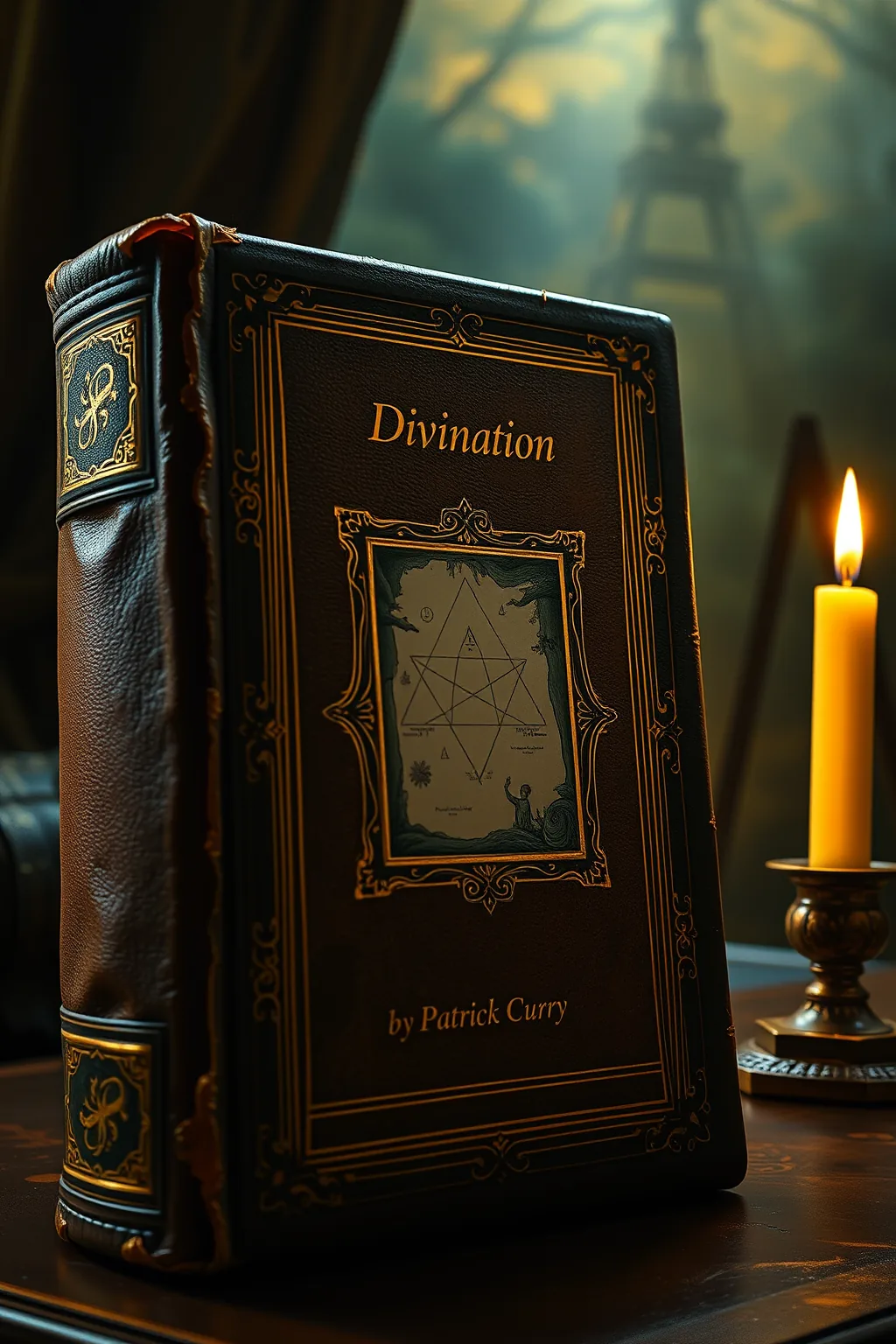
Patrick Curry's "Divination" challenges the common perception of divinatory practices as mere fortune-telling. He meticulously unpacks the historical and philosophical weight these methods carry, demonstrating their function as tools for understanding not just the future, but the present and past. The strength of the book lies in its academic rigor, presenting divination as a complex cultural and psychological phenomenon rather than a simple set of techniques. Curry’s exploration of the I Ching's philosophical dimensions, for instance, offers a nuanced perspective often absent in popular treatments. However, the book’s academic tone might alienate readers seeking practical instruction or a more overtly mystical exploration. While the 2016 publication date positions it within contemporary scholarship, some may find its historical focus limits engagement with newer psychospiritual interpretations. Ultimately, "Divination" serves as an essential scholarly resource for anyone wishing to understand the serious intellectual underpinnings of a widespread human practice.
📝 Description
78
Patrick Curry's 2005 book, Divination, examines how humans seek knowledge through supernatural means.
Patrick Curry's "Divination" offers a detailed study of practices and theories for gaining insight via supernatural or occult methods. The book moves past simple technique descriptions to engage with the intellectual history and philosophical basis of divination across different cultures and historical periods. It investigates the persistent human desire to understand the future or hidden truths, analyzing the varied forms this impulse has taken. This work is for readers who consider esoteric subjects analytically. It will interest students of history, anthropology, religious studies, and philosophy, along with those seriously interested in the history of magic and divination. It is not a practical guide but an academic look at the significance of these practices. Curry situates divination within larger historical movements, tracing its presence from ancient societies to modern times. He acknowledges its long presence worldwide, often tied to religious, political, and social systems. Curry presents divination not as simple superstition, but as a complex human effort to create order and meaning in an uncertain world.
This book places divination within the wider study of magical and occult traditions. It examines how practices like astrology, prophecy, and augury have functioned across history, not just as isolated beliefs but as integrated parts of social, religious, and political structures. Curry frames divination as a response to human needs for order and meaning, a consistent theme in esoteric thought. The work also addresses the historical critiques of divination, particularly from rationalist viewpoints, showing how these challenges have influenced its practice and perception.
💡 Why Read This Book?
• Understand divination's role in historical societies, such as its integration into ancient Greek political decision-making through oracles, providing context beyond simple superstition. • Grasp the philosophical arguments surrounding divination's validity, learning how thinkers have debated its efficacy and meaning since antiquity, offering critical frameworks for analysis. • Explore the diverse symbolic systems employed in divination, such as the complex cosmological framework of Chinese geomancy, revealing the intellectual depth behind these practices.
⭐ Reader Reviews
Honest opinions from readers who have explored this book.
❓ Frequently Asked Questions
When was Patrick Curry's "Divination" first published?
Patrick Curry's "Divination" was first published in 2016, positioning it as a contemporary academic exploration of the subject within modern scholarship.
Does "Divination" by Patrick Curry teach how to perform divination?
No, "Divination" by Patrick Curry is primarily an academic and historical examination of divination's practice and theory, not a practical guide for performing divinatory rituals.
What historical periods does "Divination" by Patrick Curry cover?
Curry's work covers a broad historical sweep, from ancient civilizations where divination was integral to societal structures, through various epochs, up to its more modern manifestations.
What is the main academic discipline Patrick Curry draws from in "Divination"?
Curry's "Divination" draws heavily from history, anthropology, religious studies, and philosophy to analyze the phenomenon of divination across cultures and time.
Is "Divination" by Patrick Curry suitable for beginners in occult studies?
While accessible to those with an analytical interest, it's geared towards readers seeking scholarly understanding rather than introductory occult instruction. Beginners with a critical mindset will find it informative.
What distinguishes Curry's approach to divination from popular books?
Curry's approach prioritizes intellectual history and philosophical analysis over practical instruction or New Age interpretations, offering a more critical and contextualized view.
🔮 Key Themes & Symbolism
The Anthropology of Foresight
Curry frames divination not merely as a tool for predicting the future, but as a fundamental aspect of human culture and psychology. The work explores how societies have historically utilized divinatory practices to make sense of uncertainty, legitimize authority, and navigate social complexities. It examines the cross-cultural prevalence of methods ranging from celestial observation to animal entrails, highlighting their shared function in providing order and meaning within diverse worldviews.
Philosophical Critiques and Defenses
A significant portion of "Divination" engages with the philosophical debates surrounding its subject. Curry analyzes historical skepticism towards divination, particularly from rationalist and scientific viewpoints that emerged during the Enlightenment and beyond. Conversely, he explores arguments that sought to legitimize or understand divination through symbolic interpretation, psychological projection, or as expressions of collective unconscious, tracing these intellectual currents through different eras.
Divination as Symbolic Language
The book investigates how various divinatory systems operate as complex symbolic languages. Whether through the patterns of thrown lots, the configurations of stars, or the interpretations of dreams, these methods employ a rich semiotics to convey meaning. Curry examines how the interpretation of these symbols reflects cultural assumptions and cognitive processes, positioning divination as a unique form of communication between individuals, society, and potentially, the unknown.
The Evolution of Oracular Traditions
Tracing the lineage of divinatory practices, Curry highlights the enduring significance of oracular sites and prophetic figures throughout history. He discusses how institutions like the Oracle of Delphi in ancient Greece, or the role of prophets in various religious traditions, served crucial social and political functions. This theme underscores how divination has been historically integrated into established power structures and belief systems, adapting its forms over millennia.
💬 Memorable Quotes
Direct passages from the work, attributed to the author.
“Divination is understood as a way of imposing order on chaos.”
— This statement captures the core argument that divination serves a fundamental human need to find patterns and meaning in an unpredictable world, acting as a psychological and cultural mechanism for coping with uncertainty.
“The practice of divination is deeply embedded in the historical development of Western thought.”
— This highlights that divination is not an isolated phenomenon but is interwoven with intellectual history, influencing and being influenced by philosophical, scientific, and religious movements throughout Western civilization.
“Skepticism towards divination often mirrors broader critiques of superstition and irrationality.”
— This interpretation suggests that historical opposition to divination is frequently linked to wider societal shifts towards rationalism and scientific methodology, viewing divination as a remnant of less empirical belief systems.
“Many divinatory systems rely on a complex symbolic grammar.”
— This points to the sophisticated nature of divination, emphasizing that its effectiveness or perceived meaning often stems from intricate systems of symbols and their interpretations, rather than random chance.
“The reception of divination has varied significantly across different cultural contexts.”
— This acknowledges that while divination exists globally, its acceptance, application, and societal role are not uniform, differing greatly depending on the specific cultural, religious, and historical environment.
🌙 Esoteric Significance
Tradition
Curry's work primarily engages with the history of Western thought and practice, touching upon various traditions where divination played a role, including Greco-Roman, Judeo-Christian, and later esoteric developments. While not strictly adhering to a single lineage like Hermeticism or Kabbalah, it analyzes how divination intersects with these streams by examining their historical manifestations and philosophical justifications, often contrasting them with rationalist critiques.
Symbolism
The book likely explores symbols inherent in various divinatory tools and practices. For instance, the patterns formed by casting lots (like Kleromancy) could be analyzed as microcosmic representations of cosmic order or chaos. Celestial bodies in astrology serve as potent symbols, their movements interpreted as divine messages or natural influences. The interpretation of natural signs (Augury) also draws on symbolic correspondences found within the natural world.
Modern Relevance
Contemporary thinkers and practitioners in fields like comparative religion, anthropology of belief, and the sociology of knowledge continue to draw on historical analyses of divination. Those exploring the psychology of belief, cognitive biases, and the human need for meaning find value in Curry's examination of divination's persistent appeal. Practices like modern astrology, tarot, and even certain forms of mindfulness meditation can be seen as descendants or re-interpretations of historical divinatory impulses.
👥 Who Should Read This Book
['• Students of cultural history and anthropology: Gain a deeper understanding of how divination has functioned as a societal tool across diverse cultures and historical periods.', '• Philosophy and religious studies scholars: Explore the intellectual debates and philosophical underpinnings surrounding divination, its epistemological status, and its relationship with belief systems.', '• Critical esoteric practitioners: Develop a more informed, historically contextualized perspective on divinatory practices, moving beyond superficial interpretations to appreciate their complex origins and meanings.']
📜 Historical Context
Published in 2016, Patrick Curry's "Divination" emerges within a field increasingly interested in the history of magic, occultism, and alternative epistemologies. The late 20th and early 21st centuries saw a rise in academic study of these areas, often challenging earlier dismissals of such practices as mere superstition. Curry’s work engages with this scholarly trend, situating divination within a lineage of human attempts to apprehend hidden knowledge. This period also saw continued fascination with Eastern philosophies, including the I Ching, which Curry might explore as a counterpoint to Western traditions. While not directly confronting figures like Aleister Crowley or the Theosophical Society, the book implicitly engages with the intellectual currents that made such movements possible. Reception has largely been positive within academic circles for its comprehensive historical survey and critical approach, though it likely faced minimal public controversy due to its scholarly nature.
📔 Journal Prompts
The historical prevalence of oracles and prophecy.
Arguments for and against the validity of divinatory practices.
The role of symbolism in methods like astrology or Kleromancy.
How societies have used divination to manage uncertainty.
The intersection of divination with religious or political authority.
🗂️ Glossary
Augury
A practice of divination, typically from the flight and behavior of birds, common in ancient Rome. It sought to interpret divine will based on natural signs.
Kleromancy
A form of divination by casting lots, dice, or other small objects, where the patterns or numbers formed are interpreted to provide answers or guidance.
Oracular Tradition
Refers to a system where divine or prophetic pronouncements are delivered through a designated intermediary or shrine, such as the Oracle of Delphi.
Prophecy
The foretelling or declaration of future events, often attributed to divine inspiration or supernatural insight, a common theme in religious and divinatory practices.
Scrying
A method of divination involving gazing into a reflective surface, such as a crystal ball, water, or mirror, to perceive visions or gain insights.
Enlightenment
An 18th-century intellectual and cultural movement emphasizing reason, individualism, and skepticism towards traditional authority and superstition, which heavily influenced critiques of divination.
Epistemology
The branch of philosophy concerned with the theory of knowledge, investigating its nature, origins, and limits, highly relevant to discussions about how divination claims to produce knowledge.
🔮 Readers Also Liked
Browse all →








More by Patrick Curry
All books →
More Free Divination & Tarot Books
View all →