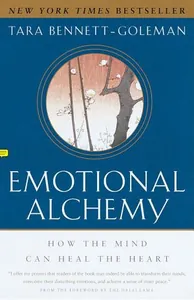
1891 Blunders And Forgeries by Protestants against Catholics Edward Bridgett
 73
73

1891 Blunders And Forgeries by Protestants against Catholics Edward Bridgett



Marcus Thorne, Esoteric Sciences Reviewer — Bridgett's '1891 Blunders And Forgeries' is a potent exposé, not merely of historical inaccuracies but of the energetic and symbolic machinations behind them. It illuminates the arcane strategies employed to distort sacred truths and manipulate collective consciousness. The author masterfully peels back layers of dogma to reveal the underlying currents of spiritual discord, offering invaluable insights for those who study the esoteric dimensions of religious conflict. This work is a crucial addition to any library focused on the hidden histories of faith and the psychological warfare waged through narrative. Essential for scholars of occult history and truth-seekers.
📝 Description
73
Edward Bridgett's 1891 work examines alleged Protestant forgeries against Catholics.
Published in 1891, Edward Bridgett's 'Blunders And Forgeries by Protestants against Catholics' scrutinizes historical religious polemics. The author examines specific instances where Protestant narratives, according to Bridgett, misrepresented Catholic doctrine or history. He attempts to uncover the motivations behind these alleged misrepresentations, suggesting they were not merely intellectual errors but also driven by deeper, potentially hidden agendas. Bridgett's analysis focuses on the construction of religious conflict and the way perceived historical truths can be shaped by adversarial forces.
The text argues that these perceived truths are often carefully built illusions. It invites readers to consider the symbolic language used in religious disputes and the philosophical consequences of distorted historical accounts of sacred matters. Bridgett presents his work not as a simple historical survey but as an examination of the underlying structures of religious contention.
This work enters esoteric discourse by suggesting that religious conflicts are not solely matters of theological difference but are influenced by deeper, less visible forces. Bridgett implies that the historical narratives surrounding religious schisms are deliberately constructed illusions, hinting at hidden architectures of contention. The focus on 'occult-driven motivations' and 'symbolic language of conflict' places it within traditions that look beyond surface events to uncover underlying patterns and psychological manipulations in historical and spiritual struggles.
💡 Why Read This Book?
This book is essential for anyone seeking to understand the esoteric roots of religious conflict and the deliberate distortion of sacred narratives. It offers a critical examination of how 'truths' are constructed and weaponized, revealing hidden patterns of manipulation. Ideal for seekers of hidden knowledge, scholars of occult philosophy, and practitioners interested in the energetic dynamics of belief systems.
⭐ Reader Reviews
Honest opinions from readers who have explored this book.
❓ Frequently Asked Questions
What is the primary focus of this book?
The book primarily focuses on exposing alleged historical fabrications and misrepresentations made by Protestants concerning Catholic doctrine and history, suggesting a deliberate manipulation of truth.
Does the book delve into occult themes?
Yes, the original notes and the nature of the critique suggest an exploration of the underlying, often occult-driven, motivations behind these historical 'blunders and forgeries'.
Who is the intended audience for this text?
The intended audience includes scholars of religious history, esotericists, those interested in the philosophical underpinnings of conflict, and individuals seeking a deeper understanding of spiritual warfare.
Is this book a neutral historical account?
No, this book presents a strong, critical perspective from a Catholic viewpoint, aiming to correct what it perceives as deliberate misrepresentations and forgeries by Protestants.
What historical period does the book primarily cover?
While published in 1891, the book likely examines historical events and polemics that span several centuries, focusing on the period of the Reformation and its aftermath.
🔮 Key Themes & Symbolism
The Alchemy of Deception
This theme explores how narratives are transmuted into 'truths' through deliberate manipulation and fabrication, akin to an alchemical process where base falsehoods are refined into potent ideological weapons. Bridgett's work dissects this 'alchemy,' revealing the techniques used to distort historical and theological realities and the wide impact on spiritual understanding and collective consciousness. It examines the psychological and symbolic dimensions of how 'lies' are forged to serve specific agendas.
Shadows of the Reformation
This theme looks at the esoteric and occult undercurrents that may have influenced the religious schisms of the Reformation era and beyond. It posits that beyond theological disputes, darker forces and symbolic manipulations were at play, shaping the perception of events and the demonization of opposing factions. Bridgett's analysis seeks to illuminate these 'shadows,' suggesting that the historical conflict was not merely intellectual but a manifestation of deeper spiritual battles.
The Architecture of Spiritual Warfare
This theme examines the strategic and symbolic construction of narratives designed to undermine and attack opposing spiritual traditions. It views religious conflict as a form of 'spiritual warfare,' where the battlefield is the mind and the weapons are misinformation and distorted history. Bridgett's critique reveals the underlying 'architecture' of these attacks, highlighting the deliberate design behind the 'blunders and forgeries' intended to destabilize and discredit the Catholic faith.
💬 Memorable Quotes
Direct passages from the work, attributed to the author.
“The seeds of discord are sown in minds unprepared for their harvest.”
— This highlights the psychological vulnerability of individuals and communities to manipulative ideologies, framing conflict as a consequence of susceptibility to falsehoods.
“Where reason falters, symbolism takes hold.”
— This points to the power of symbolic language and imagery in shaping belief, especially when logical arguments are absent or intentionally obscured, often used to bypass critical thought.
“The forge of history often burns with the fires of intent.”
— This metaphor implies that historical events are not accidental but are often shaped by deliberate motivations and agendas, suggesting a purposeful crafting of the past.
“To understand the lie is to begin to reclaim the truth.”
— This emphasizes the critical importance of identifying and dissecting falsehoods as a necessary precursor to uncovering and restoring genuine understanding and spiritual integrity.
💡 Key Ideas
Editorial paraphrase of the work's core concepts — not direct quotes.
Truth is not always what it appears, but what it is made to appear.
This quote suggests that historical narratives and religious doctrines can be consciously manipulated to create a false perception of reality, emphasizing the active role of fabrication.
🌙 Esoteric Significance
Tradition
This work engages with the esoteric underpinnings of historical conflict, aligning with traditions that explore the hidden motivations and symbolic warfare behind religious schisms. It touches upon Gnostic ideas of perceived spiritual deception and the manipulation of divine truth. The critique of 'forgeries' can be seen as an inquiry into how corrupted spiritual knowledge or 'gnosis' is disseminated to control consciousness.
Symbolism
The text implicitly deals with the symbolism of religious conflict, viewing it as a manifestation of archetypal battles between light and darkness, order and chaos. Allegations of 'forgery' can be interpreted as the symbolic corruption of sacred texts and traditions, akin to the poisoning of a spiritual wellspring. The 'blunders' themselves become symbolic of spiritual blindness or misdirection.
Modern Relevance
In an age saturated with information and misinformation, Bridgett's examination of narrative manipulation remains profoundly relevant. It offers a framework for understanding how historical accounts and belief systems can be deliberately distorted to serve agendas, urging readers to critically assess the 'truths' presented to them. The book's insights into spiritual warfare provide a lens for analyzing contemporary ideological conflicts and the power of propaganda.
👥 Who Should Read This Book
Scholars of religious history and comparative theology will find Bridgett's detailed critique useful for understanding historical polemics. Seekers of hidden knowledge and esoteric truths will appreciate the exploration of underlying motivations and symbolic dimensions of conflict. Practicing Catholics may find validation and a deeper understanding of their faith's historical narrative. Beginners to occult philosophy can use this as an entry point into understanding how belief systems are constructed and contested, offering a critical perspective on historical narratives.
📜 Historical Context
Published in 1891, 'Blunders And Forgeries' emerges from a late Victorian era marked by intense religious and political polarization, particularly concerning Catholic emancipation and the lingering animosity from the Reformation. This period saw a resurgence of interest in historical scholarship, but also a continuation of polemical writing, often fueled by nationalistic sentiments and deeply entrenched religious biases. Bridgett's work reflects the ongoing intellectual and spiritual battles of the time, where historical narratives were frequently weaponized in the ongoing dialogue and conflict between Protestant denominations and the Catholic Church. The book's critique of alleged fabrications speaks to a broader cultural debate about authenticity, authority, and the interpretation of sacred texts and history, resonating with the era's fascination with uncovering hidden truths and challenging established dogmas.
📔 Journal Prompts
How does the concept of 'spiritual warfare' manifest in contemporary societal conflicts?
Identify a modern-day 'forgery' or distorted narrative in media or public discourse and analyze its potential underlying agenda.
Reflect on personal experiences where a perceived 'truth' was later revealed to be fabricated or manipulated.
Explore the symbolic meaning of 'blunders' and 'forgeries' in your own life and spiritual journey.
How can one cultivate a discerning mind to navigate conflicting historical and religious narratives?
🗂️ Glossary
Polemic
A strong verbal or written attack on someone or something. In a religious context, it refers to forceful arguments and debates against opposing doctrines or beliefs.
Fabrication
The action or process of inventing or concocting something, especially a false story or piece of information. In this context, it refers to deliberately creating untrue accounts.
Esoteric
Intended for or likely to be understood by only a small number of people with a specialized knowledge or interest. Pertaining to hidden or secret knowledge.
Gnosticism
A collection of religious ideas and systems originating in the early Christian era, holding that the present world is the creation of a lesser divinity and that salvation is achieved through secret knowledge (gnosis).
Archetypal
Relating to an original model or type after which similar things are copied; fundamental or primitive.
This book appears in 4 collections
🔮 Readers Also Liked
Browse all →








From the “Occultism” Collection
View all →





More Free Occult Philosophy Books
View all →