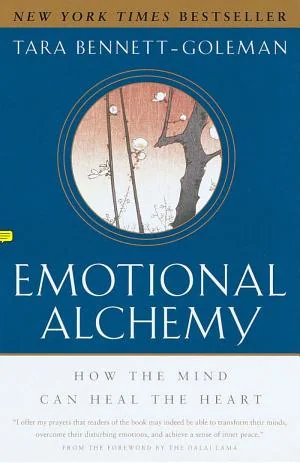
Emotional Alchemy
 78
78

Emotional Alchemy
Tara Bennett-Goleman’s "Emotional Alchemy" offers a compelling, albeit dense, blueprint for understanding and transforming negative emotional patterns. Its greatest strength lies in its rigorous synthesis of Buddhist psychology with cognitive neurology, providing a scientifically grounded explanation for phenomena often relegated to the spiritual realm. The detailed exposition of concepts like "emotional schemas" and the brain's "amygdala hijack" provides readers with tangible models for self-observation. However, the sheer volume of information, while comprehensive, can occasionally feel overwhelming, demanding significant reader engagement to fully absorb. The practical program, while clearly outlined, requires dedicated practice to yield its promised results. The book's exploration of how early life experiences shape our "emotional habits" is particularly insightful, offering a path toward understanding the roots of recurring distress. It’s a substantial work for those willing to engage deeply with the mechanics of their own minds.
📝 Description
78
Published in 2001, Emotional Alchemy connects Buddhist psychology and neuroscience to emotional self-mastery.
Tara Bennett-Goleman's 2001 book, Emotional Alchemy, bridges ancient contemplative practices and modern scientific understanding of the mind. It provides a practical framework, drawn from Buddhist psychology and cognitive neuroscience, designed to help individuals break negative emotional patterns and self-sabotage. The work offers accessible techniques for emotional regulation and insight, supported by research. It aims to guide general readers in understanding and managing their inner emotional lives.
The book is intended for those struggling with persistent distress like anxiety, depression, or anger, who feel conventional therapies are incomplete. It appeals to readers interested in the overlap of psychology and spirituality, particularly those drawn to Buddhist philosophy but desiring a secular, science-based approach. Mental health professionals and contemplative practitioners may also find it useful for integrating neuroscience with wisdom traditions.
Emotional Alchemy emerged during a period of increased interest in the mind-body connection and the scientific validation of contemplative practices. The book draws from Buddhist philosophy, particularly concepts related to the Four Noble Truths and the nature of suffering. It synthesizes these ideas with Western psychological frameworks such as cognitive behavioral therapy and contemporary neuroscience, contributing to the popularization of contemplative science.
💡 Why Read This Book?
• You will learn to identify and dismantle specific "emotional schemas"—deeply ingrained negative thought patterns—as described in the book's chapters on cognitive neurology, gaining tools to break cycles of self-defeating impulses. • You will understand the neurological basis of emotional reactivity, as explained through the concept of "affective neuroscience," empowering you to respond to triggers with greater self-awareness rather than immediate reaction. • You will gain practical techniques for "emotional mastery" rooted in Buddhist contemplative traditions, allowing you to cultivate resilience and transform distress into constructive action, a skill honed through the book's exercises.
⭐ Reader Reviews
Honest opinions from readers who have explored this book.
❓ Frequently Asked Questions
What is the core premise of Tara Bennett-Goleman's 'Emotional Alchemy'?
The book's central premise is that emotional suffering arises from deeply ingrained "emotional schemas" and habitual reactions, which can be understood and transformed through a blend of Buddhist psychology and modern cognitive neuroscience. It offers a practical program for achieving "emotional mastery."
How does 'Emotional Alchemy' integrate Buddhist teachings with psychology?
It synthesizes core Buddhist concepts, such as the nature of suffering and mindfulness, with Western psychological frameworks and findings from cognitive neurology. This integration aims to provide a scientifically informed approach to understanding and managing emotional patterns, referencing the Four Noble Truths.
What are 'emotional schemas' as defined in the book?
Emotional schemas are described as deeply ingrained, often unconscious, patterns of thinking, feeling, and behaving that shape our responses to life events. They are formed through past experiences and can lead to predictable negative emotional reactions if not understood and re-patterned.
Is 'Emotional Alchemy' suitable for beginners in psychology or Buddhism?
Yes, while comprehensive, the book is written to be accessible to a general audience. Bennett-Goleman explains complex concepts from both Buddhist psychology and neuroscience in a clear manner, making it valuable for those new to these fields seeking self-understanding.
What are the practical benefits of applying the principles in 'Emotional Alchemy'?
Readers can expect to gain increased "emotional intelligence," improved self-awareness, and practical strategies for managing difficult emotions like anxiety and anger. The aim is to foster greater emotional resilience and reduce self-defeating behaviors by understanding the mind's mechanisms.
When was 'Emotional Alchemy' first published and what was its impact?
The book was first published in 2001. Its impact was significant in popularizing the integration of contemplative practices with scientific research on the brain and emotions, contributing to the growing field of contemplative science and mindfulness-based approaches.
🔮 Key Themes & Symbolism
Emotional Schemas and Habits
The work meticulously details how "emotional schemas"—deep-seated cognitive frameworks formed by past experiences—dictate our reactions and perpetuate negative emotional states. Bennett-Goleman explains these as "emotional habits," akin to ingrained neural pathways. By understanding their formation, rooted in affective neuroscience, readers can begin to identify and consciously re-pattern these automatic responses, transforming destructive impulses into more adaptive behaviors. This theme underscores the book's core promise of transforming suffering by understanding its origins within the mind.
The Four Noble Truths in Modern Context
A central pillar of the book's approach is the reinterpretation of the Buddhist Four Noble Truths through the lens of cognitive neurology and psychology. The concept of suffering (dukkha) is mapped onto modern understandings of emotional distress, while the path to cessation is framed as a scientifically achievable process of cognitive and emotional re-regulation. This grounding in a foundational Buddhist teaching provides a philosophical anchor for the practical techniques offered, demonstrating the enduring relevance of ancient wisdom in contemporary self-development.
Affective Neuroscience and Emotional Intelligence
Emotional Alchemy bridges the gap between ancient contemplative insights and cutting-edge "affective neuroscience." It explains how the brain's emotional centers, like the amygdala, respond to stimuli, often leading to "hijack" states. By fostering "emotional intelligence"—the ability to recognize, understand, and manage one's own emotions and those of others—readers are equipped to navigate these neurological processes. This theme highlights the book's scientific rigor and its commitment to providing empirical validation for psychological transformation.
The Practice of Emotional Mastery
The ultimate goal presented is "emotional mastery," a state of being less reactive and more responsive to life's challenges. This is not presented as the absence of emotion, but as the ability to engage with emotions constructively. The book provides a program of exercises and reflections designed to cultivate "emotional awareness" and "emotional insight," enabling individuals to break free from cycles of self-defeating impulses and cultivate a more balanced and resilient inner life.
💬 Memorable Quotes
Direct passages from the work, attributed to the author.
“Our emotional habits are like deeply worn grooves in the brain.”
— This concise metaphor illustrates how repetitive emotional responses become ingrained through neural pathways, making them automatic and difficult to change without conscious effort and understanding of their neurological basis.
“Understanding the roots of our emotional reactivity is the first step toward changing it.”
— This highlights the importance of self-inquiry and cognitive insight, core to both Buddhist practice and cognitive therapy, in addressing emotional patterns. It suggests that diagnosis precedes effective treatment for emotional distress.
“The mind, when trained, can transform suffering into wisdom.”
— This expresses the transformative potential of contemplative practices. It suggests that through disciplined mental training, difficult experiences and emotions can become sources of insight and personal growth, rather than purely negative events.
“We are not prisoners of our biology; we can learn to work with our emotional brain.”
— This offers a message of hope and agency, emphasizing that while our neurobiology influences us, it does not fully determine our emotional experience. It points to the possibility of conscious intervention and skill-building.
“The goal is not to eliminate emotion, but to respond to it wisely.”
— This clarifies the objective of "emotional mastery." It distinguishes the book's approach from emotional suppression, advocating instead for a skillful and balanced engagement with the full spectrum of human feeling.
🌙 Esoteric Significance
Tradition
While not explicitly aligning with a single esoteric lineage, "Emotional Alchemy" draws heavily from the philosophical and psychological frameworks of Mahayana Buddhism, a tradition rich in contemplative practices aimed at understanding the nature of mind and reality. It departs from traditional esoteric interpretations by rigorously grounding its principles in empirical science, particularly cognitive neurology, rather than solely relying on scriptural authority or mystical experience. It positions Buddhist psychology as a sophisticated system of mental science, accessible and applicable through modern research methodologies.
Symbolism
The book itself functions symbolically, representing the alchemical transformation of base emotional "material" (negative patterns, reactivity) into "gold" (emotional wisdom, resilience). Key symbolic concepts include the "emotional schema" as a blueprint for suffering, and the "amygdala hijack" as a visceral, primal response that can be understood and managed. The overarching symbolism is one of inner alchemy—the deliberate transmutation of psychological "lead" into "gold" through knowledge and practice, echoing ancient Hermetic principles of "As Above, So Below" applied to the inner landscape.
Modern Relevance
Contemporary thinkers and practitioners in fields ranging from positive psychology to secular mindfulness continue to draw upon Bennett-Goleman's work. Her integration of neuroscience with contemplative wisdom has informed the development of numerous therapeutic modalities and wellness programs. Modern researchers exploring the neuroplasticity of emotion regulation and the efficacy of mindfulness-based interventions owe a debt to the groundwork laid by books like "Emotional Alchemy," which helped legitimize and popularize these approaches within both academic and public spheres.
👥 Who Should Read This Book
• Individuals seeking to understand and manage persistent negative emotions like anxiety, anger, or sadness, who are looking for practical, science-backed strategies beyond conventional self-help. • Practitioners of Buddhist meditation or contemplative traditions who wish to integrate their spiritual insights with contemporary psychological and neurological findings about the mind. • Mental health professionals and coaches aiming to deepen their understanding of emotional patterns and incorporate evidence-based techniques for emotional regulation and resilience into their practice.
📜 Historical Context
Published in 2001, Tara Bennett-Goleman's "Emotional Alchemy" emerged during a key period where the scientific community's interest in contemplative practices was rapidly accelerating. This era saw figures like Richard Davidson pioneering the field of "contemplative neuroscience," seeking empirical evidence for the effects of meditation and mindfulness on the brain and well-being. Bennett-Goleman's work resonated with this trend, synthesizing insights from Buddhist psychology—particularly its detailed maps of the mind and suffering—with contemporary cognitive neurology and psychology. It arrived at a time when popular psychology was increasingly embracing self-help models grounded in research, moving beyond purely anecdotal approaches. While figures like Jon Kabat-Zinn had already popularized mindfulness-based stress reduction, "Emotional Alchemy" offered a deeper dive into the mechanisms of emotional reactivity, directly linking them to brain function and Buddhist philosophical frameworks, thereby contributing significantly to the discourse on emotional intelligence and mental resilience.
📔 Journal Prompts
The "emotional schema" as a blueprint for habitual reactions.
Analyzing an "amygdala hijack" event and its triggers.
Cultivating "emotional awareness" in daily interactions.
Transforming a specific "emotional habit" through mindful observation.
The application of the Four Noble Truths to personal challenges.
🗂️ Glossary
Emotional Schema
A deeply ingrained pattern of thinking, feeling, and behaving that shapes an individual's perception and response to situations, often formed through early life experiences and leading to predictable emotional reactions.
Affective Neuroscience
A field of neuroscience that studies the biological underpinnings of emotion, examining how the brain processes feelings and emotional responses, including the roles of various neural circuits and neurotransmitters.
Amygdala Hijack
A term describing an immediate, overwhelming emotional response (like rage or terror) triggered by a perceived threat, where the amygdala, the brain's emotional center, bypasses rational processing in the prefrontal cortex.
Emotional Intelligence
The capacity to be aware of, control, and express one's emotions, and to handle interpersonal relationships judiciously and empathetically. It involves self-awareness, self-regulation, motivation, empathy, and social skills.
Emotional Habits
Repeated, often unconscious, patterns of emotional response that become automatic over time due to consistent neural pathway activation, making them difficult to alter without conscious intervention.
Emotional Mastery
The state of being able to understand, manage, and respond skillfully to one's own emotions and those of others, leading to greater resilience, balanced reactions, and reduced suffering.
Emotional Awareness
The ability to recognize and understand one's own emotions as they arise, including their intensity, triggers, and impact on thoughts and behavior. It is a foundational component of emotional intelligence.
This book appears in 1 collection
🔮 Readers Also Liked
Browse all →









From the “Meditation” Collection
View all →









More Free Occult Philosophy Books
View all →