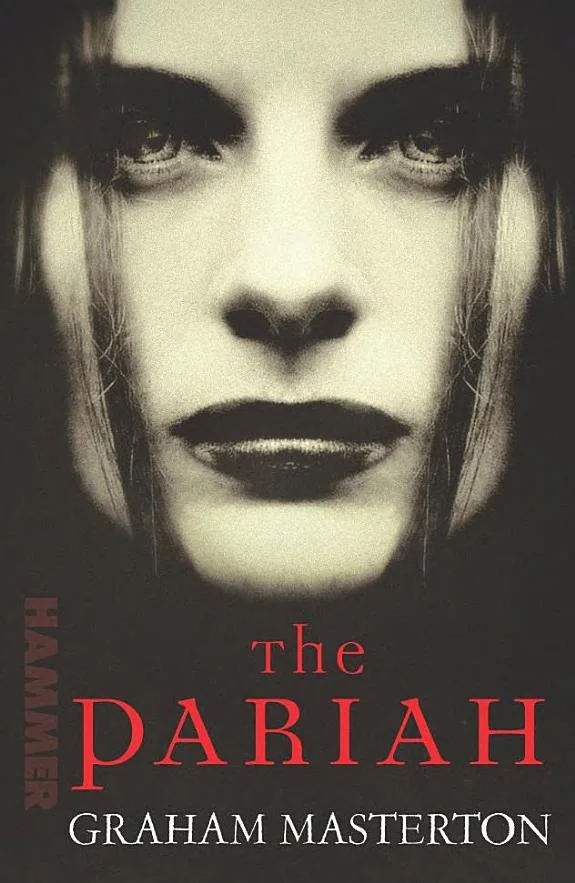
The Pariah
 74
74

The Pariah
Graham Masterton's "The Pariah" plunges readers into a chilling exploration of inherited damnation and societal revulsion. The novel’s strength lies in its relentless focus on Stephen's escalating terror and the visceral fear he inspires. Masterton excels at depicting the suffocating atmosphere of dread that surrounds the boy, making his isolation palpable. However, the narrative occasionally falters by leaning into predictable horror tropes, which, while effective, do not always offer fresh ground. A particularly striking passage involves the description of Stephen's aura, a tangible manifestation of his curse that warps reality and instills primal fear in those nearby. While the ending offers a grim resolution, it feels earned through the relentless torment inflicted upon the protagonist. "The Pariah" is a potent, if occasionally familiar, descent into the heart of fear and alienation.
📝 Description
74
Graham Masterton's 1992 novel, The Pariah, introduces Stephen, a boy born with a deadly aura.
Stephen's curse manifests as a palpable, lethal aura, making him an outcast from birth. His parents, consumed by fear, abandon him, and the community shuns him entirely. As Stephen grows, his isolation intensifies, and the uncontrolled nature of his power becomes a constant threat to himself and others. The narrative traces his internal struggle against the monstrous potential within and the external forces that push him towards it.
The novel examines the psychological toll of extreme alienation. Masterton focuses on how society's reaction to Stephen's perceived 'otherness' actively shapes his destiny. The story builds towards a breaking point where the protagonist's internal torment and the external persecution converge, leading to horrifying consequences. It is a stark look at how fear can create the very monsters it seeks to avoid.
Published in 1992, The Pariah taps into a vein of supernatural fiction that explores the concept of the innate curse or the 'marked' individual. This tradition often depicts characters whose very existence or nature sets them apart, making them objects of fear and superstition. The novel reflects a subgenre where the supernatural is not merely an external force but an intrinsic part of the protagonist, leading to a deep psychological exploration of what it means to be an outcast when that outcast status is literally deadly.
💡 Why Read This Book?
• Gain insight into the psychological impact of extreme isolation, as depicted through Stephen’s enforced separation from his family and community after his birth. • Understand how societal fear can manifest and amplify supernatural or perceived monstrous traits, as explored in the reactions of the villagers to Stephen. • Experience a visceral portrayal of inherited curses and their devastating consequences, a recurring motif in horror literature since the mid-20th century.
⭐ Reader Reviews
Honest opinions from readers who have explored this book.
❓ Frequently Asked Questions
What is the central supernatural element in Graham Masterton's The Pariah?
The central supernatural element is Stephen, a boy born with a curse that causes him to emit a deadly, terrifying aura. This aura affects those around him, making him an outcast and a source of profound fear.
When was The Pariah first published and by whom?
The Pariah was first published in 1992 by Sphere Books, preceding its later release in 2011.
What themes does The Pariah explore beyond supernatural horror?
The novel delves into themes of isolation, alienation, the psychological effects of being ostracized, and the inherent fear of the unknown or the 'other'.
Is The Pariah suitable for readers new to Graham Masterton's work?
Yes, The Pariah serves as a strong introduction to Masterton's style, showcasing his ability to blend supernatural elements with intense psychological horror and a focus on disturbing human conditions.
Does The Pariah involve graphic violence?
As is typical of Masterton's work, The Pariah contains graphic descriptions of violence and disturbing imagery, consistent with the psychological and supernatural horror genre.
What makes Stephen a 'pariah' in the book?
Stephen is deemed a pariah due to the terrifying, deadly aura he possesses from birth, which causes widespread fear and forces him into extreme isolation from society and even his own family.
🔮 Key Themes & Symbolism
The Monstrous Other
The Pariah centers on Stephen, a child whose very existence is a threat due to a supernatural curse. This theme explores the societal reaction to perceived monstrosity, where fear and superstition lead to immediate ostracization. Stephen's aura is not just a physical manifestation of his curse but a symbol of his inherent 'otherness,' making him an object of terror and revulsion, forcing him into a solitary existence devoid of human connection.
Inherited Curse and Fate
The novel grapples with the idea of an inescapable, inherited fate. Stephen is born with a curse that dictates his life and ultimately his destructive potential, suggesting that some individuals are marked from birth for a life of suffering and alienation. This concept challenges notions of free will, as Stephen's actions are often portrayed as consequences of his predestined condition rather than conscious choices.
Isolation and Psychological Horror
Masterton masterfully crafts a narrative steeped in psychological horror, stemming directly from Stephen's profound isolation. The book examines the intense psychological toll of being rejected by one's family and community. The horror arises not just from supernatural events but from the internal torment of a child understanding his destructive nature and the world's reaction to him.
Societal Fear and Rejection
The Pariah illustrates how collective fear can manifest into cruel rejection. The villagers' immediate response to Stephen's unusual nature is not curiosity or compassion but outright terror and condemnation. This reflects a primal human tendency to ostracize that which is not understood or that which poses a perceived threat, highlighting the dark side of community dynamics.
💬 Memorable Quotes
Direct passages from the work, attributed to the author.
“Stephen's presence warped the air around him.”
— This phrase captures the tangible, supernatural effect Stephen's curse has on his environment, indicating a force that actively repels and harms others.
“He was born a pariah, and would die one.”
— This conveys the sense of inescapable destiny and predestination that defines Stephen's existence, emphasizing his lifelong status as an outcast.
“The villagers saw not a child, but a harbinger of doom.”
— This highlights the extreme fear and prejudice Stephen faces, where his perceived nature overrides any recognition of his humanity.
“His curse was a shield and a prison.”
— This expresses the dual nature of Stephen's affliction: it isolates him, preventing harm from others, but also traps him in a state of perpetual loneliness and danger.
“Even his parents recoiled from the power he exuded.”
— This emphasizes the wide impact of Stephen's curse, showing that it is so potent it alienates him even from those closest to him, underscoring his complete isolation.
🌙 Esoteric Significance
Tradition
While "The Pariah" is primarily a work of horror fiction, its themes of inherited curses and malevolent supernatural influence can be loosely connected to certain folk magic traditions and darker interpretations of fate. It does not align with structured esoteric schools like Hermeticism or Kabbalah but rather taps into a primal fear of the 'cursed individual' found in ancient mythologies and superstitions, where individuals could be seen as vessels for destructive forces beyond their control.
Symbolism
The most prominent symbol is Stephen's 'aura,' which represents an invisible, potent force of destruction and alienation. This can be interpreted as a manifestation of primal fear or a corrupted life force. The concept of being a 'pariah' itself symbolizes complete social and spiritual exile, a state of being utterly cut off from community and divine grace, a motif found in various mythologies describing outcasts with supernatural burdens.
Modern Relevance
Contemporary horror and dark fantasy continue to explore the archetype of the cursed individual or the monstrous child. The themes of alienation and the societal fear of the 'other' in "The Pariah" remain relevant in discussions of prejudice and marginalization. Thinkers and artists exploring the psychological impact of trauma and inherited burdens might find resonance in Masterton's depiction of Stephen's inescapable fate and its societal ramifications.
👥 Who Should Read This Book
• Readers of intense psychological horror seeking tales of extreme isolation and fear. • Fans of Graham Masterton's signature blend of supernatural terror and visceral storytelling. • Individuals interested in exploring the dark side of societal reactions to perceived monstrosity and the concept of inherited curses.
📜 Historical Context
Published in 1992, Graham Masterton's "The Pariah" entered a literary landscape shaped by authors like Stephen King and Anne Rice, who had cemented the popularity of supernatural and psychological horror. The era saw a continued interest in exploring the darker aspects of human nature and the uncanny. Masterton’s work in this period often focused on visceral terror and the breakdown of ordinary lives under extraordinary circumstances. While not directly engaging with academic occultism, "The Pariah" tapped into a broader cultural fascination with curses and inherited doom, themes present in folklore and earlier gothic literature. The novel’s reception likely aligned with the general appetite for intense horror narratives, contributing to the genre's robust presence in late 20th-century publishing.
📔 Journal Prompts
Stephen's aura as a symbol of his inescapable curse.
The villagers' fear transforming into active rejection of Stephen.
Reflect on the psychological burden of being perceived as inherently dangerous.
The concept of an inherited doom and its impact on free will.
How isolation shapes an individual's capacity for destruction or resilience.
🗂️ Glossary
Pariah
An outcast; a person or animal that is intensely disliked, avoided, or rejected by society or a group.
Curse
A supernatural affliction or malevolent influence believed to be imposed on a person or place, often resulting in misfortune or harm.
Aura
In the context of the book, a palpable, supernatural emanation surrounding Stephen that causes fear and harm.
Ostracization
Exclusion from a society or group; the act of shunning or banishing.
Supernatural
Attributed to forces or powers beyond the scope of normal scientific understanding; paranormal.
Psychological Horror
A genre that uses mental and emotional states to create fear, dread, and unease in the audience.
Visceral
Relating to deep inward feelings rather than to the intellect; affecting the gut or internal organs, often used to describe a raw, instinctual emotional response.
This book appears in 1 collection
🔮 Readers Also Liked
Browse all →








From the “Apparitions” Collection
View all →





More Free Occult Philosophy Books
View all →