Recentering Seth
 74
74

Recentering Seth
Friedlander’s "Recentering Seth" offers a necessary re-evaluation of Jane Roberts’s prolific channeled material. It rightly pushes back against simplistic interpretations of "thought creates reality," highlighting the role of spontaneous manifestation and the limitations of pure will, a nuance often lost in popular discourse. The synthesis with traditions like Theosophy and nondual Buddhism provides a broader intellectual framework. However, the sheer breadth of influences sometimes leads to a density that may challenge readers unfamiliar with the originating Seth material or the diverse philosophical underpinnings. A particularly illuminating section discusses the "multipersonhood" concept, urging a more fluid understanding of selfhood. Ultimately, Friedlander’s work serves as a valuable, albeit demanding, corrective to a potentially oversimplified understanding of Seth’s complex cosmology.
📝 Description
74
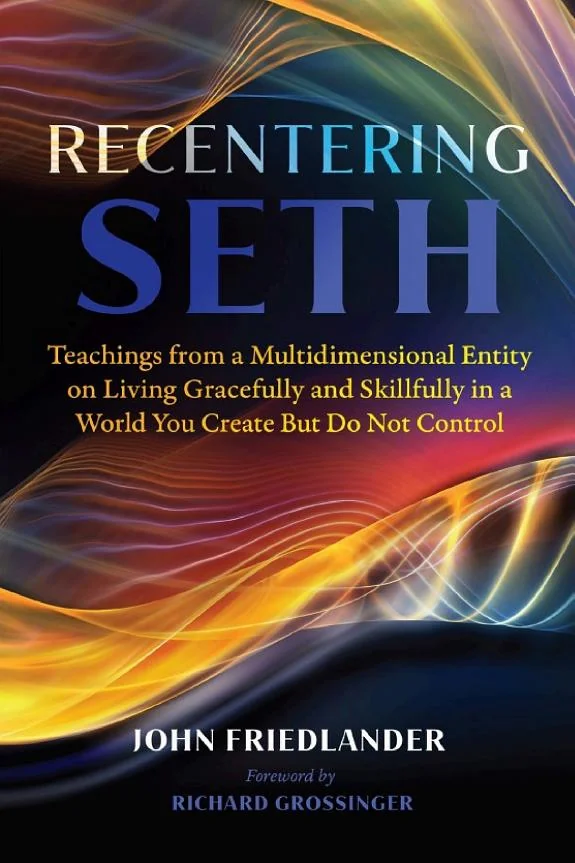
John Friedlander's 2022 book, "Recentering Seth," reinterprets Jane Roberts's channeled teachings.
This work examines the Seth material as channeled by Jane Roberts, proposing a reframing of her core ideas. Friedlander suggests that while our conscious beliefs influence our experience of reality, there is also an independent, spontaneous aspect of reality that operates beyond direct will. This means that not all desires can be willed into existence. The book is intended for those interested in consciousness studies, especially readers familiar with Roberts's work or similar metaphysical systems. It aims to provide a deeper understanding of how reality is created, the nature of consciousness, and the relationship between belief, intention, and spontaneous occurrence. It will also appeal to individuals interested in comparative esoteric thought.
Friedlander synthesizes Sethian concepts with influences from aura reading, interpersonal dynamics, Buddhist nondual awareness, multipersonhood, and Theosophy. A central focus is the critical examination of reality creation mechanisms. The book distinguishes between aspects of reality shaped by conscious intent and those that manifest spontaneously. This distinction is presented as a key area for discussion within consciousness studies.
Published in 2022, "Recentering Seth" engages with the legacy of Jane Roberts, whose Seth books began in 1970 and became a significant part of New Age and esoteric thought. Friedlander's work builds on concepts popularized by Roberts, alongside earlier figures like Helena Blavatsky and movements such as Theosophy. It addresses ongoing interest in consciousness studies by examining foundational ideas within this tradition.
💡 Why Read This Book?
• Gain a nuanced understanding of reality creation by distinguishing between conscious belief-driven manifestation and spontaneous, uncontrollable phenomena, as explored in Friedlander's analysis of Seth's teachings. • Understand the concept of "multipersonhood" and its implications for identity, moving beyond singular selfhood, a key theme synthesized from Sethian ideas and other esoteric traditions. • Appreciate the historical context of Jane Roberts's Seth material, contextualized within broader esoteric movements like Theosophy, offering a critical perspective on its 2022 reception.
⭐ Reader Reviews
Honest opinions from readers who have explored this book.
❓ Frequently Asked Questions
What is the primary focus of John Friedlander's "Recentering Seth"?
The book reframes Jane Roberts's Seth teachings, focusing on how consciousness expands in all directions and critically examines the creation of reality through beliefs versus spontaneous manifestation, challenging the idea that desires can be willed into being.
How does "Recentering Seth" differ from other books on Jane Roberts's Seth material?
It synthesizes Sethian concepts with a wide range of influences, including Buddhism, Theosophy, and nondual awareness, offering a more complex and nuanced interpretation than many earlier commentaries.
What is the concept of 'spontaneous reality' as discussed in the book?
Spontaneous reality refers to aspects of existence that arise independently of conscious belief or will. Friedlander uses this to explain why simply willing desires into existence isn't always effective, a key distinction from purely belief-centric reality creation models.
When was "Recentering Seth" first published?
The book was first published on February 1, 2022, placing it within contemporary esoteric literature that revisits foundational channeled works.
Who is Jane Roberts and why is her Seth material significant?
Jane Roberts (1935-1984) was an author who channeled a spiritual entity named Seth, producing over 25 books from 1970 to 1984. Her work significantly influenced New Age thought by exploring consciousness, reality creation, and multidimensional existence.
Does the book advocate for a specific spiritual practice?
While it discusses concepts like aura reading and nondual awareness, the book primarily focuses on philosophical and theoretical reframing of Seth's teachings rather than prescribing specific practices.
🔮 Key Themes & Symbolism
Consciousness Expansion
The work posits that consciousness inherently expands in all directions, a fundamental departure from linear or limited models of awareness. This expansion is not merely about gaining knowledge but about the very nature of being. Friedlander explores how this concept, central to Seth's teachings, implies a fluid and boundless subjective universe, resonating with ideas found in nondual traditions and pushing the boundaries of self-perception beyond conventional psychological frameworks.
Belief vs. Spontaneous Reality
A core argument revisits the relationship between conscious beliefs and the manifestation of reality. Friedlander distinguishes between realities shaped by deliberate belief systems and 'spontaneous reality'—phenomena that occur outside direct volitional control. This nuanced view challenges the simplistic notion that one can simply 'will' desired outcomes into existence, suggesting a more complex interplay of personal creation and universal, inherent processes.
Multipersonhood
The book looks at the Sethian concept of multipersonhood, suggesting that the self is not a singular, isolated entity but a composite of various aspects or 'persons' existing across different dimensions or probabilities. This perspective offers an alternative to ego-centric models of identity, drawing parallels with certain Gnostic ideas of fragmented divine sparks or the Theosophical concept of the monad.
Eclectic Synthesis
Friedlander synthesizes Sethian teachings with a diverse array of philosophical and esoteric influences. These include Buddhist concepts of emptiness and nondual awareness, Theosophical doctrines regarding planes of existence and spiritual evolution, and practical applications like aura reading and interpersonal engagement. This eclectic approach aims to provide a richer, multi-faceted understanding of Seth's original material.
💬 Memorable Quotes
Direct passages from the work, attributed to the author.
“All consciousness expands in all directions.”
— This phrase expresses the book's central reframing of Seth's teachings, emphasizing a boundless, non-linear nature of awareness that defies conventional, ego-centric limitations.
“We create our reality through our conscious beliefs, but no one controls spontaneous reality.”
— This highlights a key distinction made by Friedlander: while beliefs shape personal experience, certain aspects of reality operate independently, challenging the idea of absolute personal control over all outcomes.
“You cannot simply will your desires into being.”
— This statement directly addresses a common misinterpretation of manifestation principles, underscoring the book's focus on the limitations of pure willpower against the backdrop of spontaneous universal processes.
“Synthesizing Sethian teachings with Buddhism and Theosophy.”
— This indicates the book's methodology, drawing connections between Jane Roberts's channeled material and established esoteric and spiritual traditions to create a broader conceptual framework.
💡 Key Ideas
Editorial paraphrase of the work's core concepts — not direct quotes.
The self is understood as a multiperson entity.
This paraphrased concept points to Friedlander's exploration of the Sethian idea of multipersonhood, suggesting a complex, composite nature of identity rather than a singular, fixed ego.
🌙 Esoteric Significance
Tradition
This work situates itself within the lineage of channeled and consciousness-focused esoteric literature, primarily building upon the foundation laid by Jane Roberts’s Seth material. It critically engages with concepts of consciousness, reality, and selfhood that echo Gnostic and Theosophical ideas but offers a distinct interpretation by synthesizing them with modern psychological and philosophical thought, particularly nondual awareness.
Symbolism
While not overtly symbolic in the manner of Hermetic texts, the book implicitly engages with symbols of expansion and multiplicity. The concept of consciousness 'expanding in all directions' serves as a potent metaphor for boundlessness, challenging the symbolic representation of the self as a singular, contained unit. 'Multipersonhood' itself acts as a symbolic framework for understanding identity as a complex, interconnected web rather than a fixed point.
Modern Relevance
Friedlander's re-evaluation of Seth's teachings is relevant today for thinkers and practitioners exploring the limits of manifestation principles and the nature of the self. It provides conceptual tools for those engaged with contemporary consciousness research, comparative spirituality, and the integration of Eastern nondual philosophies with Western esoteric thought, offering a more sophisticated perspective than much popular self-help literature.
👥 Who Should Read This Book
• Students of Jane Roberts's Seth Material: Those familiar with the original 25 books will find a critical and synthesizing perspective that offers new angles on complex concepts like reality creation and multipersonhood. • Consciousness Researchers: Individuals interested in the theoretical underpinnings of consciousness studies, metaphysics, and the intersection of belief, psychology, and manifestation will find Friedlander's analysis valuable. • Comparative Esoteric Scholars: Readers exploring connections between different spiritual and philosophical traditions, such as Theosophy, Buddhism, and modern channeled works, will appreciate the eclectic synthesis presented.
📜 Historical Context
Published in 2022, "Recentering Seth" emerges decades after Jane Roberts's prolific channeling of Seth concluded in 1984. The original Seth material, beginning with "The Seth Material" in 1970, profoundly shaped the New Age movement, offering sophisticated theories on consciousness, creation, and multidimensional reality. Friedlander’s work engages with this legacy in an era marked by continued interest in consciousness studies, but also by a proliferation of often superficial 'manifestation' techniques. His approach provides a critical re-evaluation, placing Roberts’s complex ideas in dialogue with enduring traditions like Theosophy, founded by Helena Blavatsky, and Buddhist nondual philosophies. This contrasts with more direct, less synthesized interpretations that dominated earlier responses to the Seth books, positioning Friedlander as a contemporary voice offering a deeper, more comparative analysis.
📔 Journal Prompts
The concept of consciousness expanding in all directions: How does this differ from your current understanding of self and awareness?
Beliefs and spontaneous reality: Identify a situation where your beliefs seemed to shape outcomes versus one where events unfolded independently.
Multipersonhood: Reflect on the idea of the self as a composite entity. What aspects of 'self' do you experience beyond your primary ego identity?
The limitations of willing desires: Consider a desire that proved difficult to manifest. How might spontaneous reality have played a role?
Synthesizing influences: How do the ideas of Buddhism and Theosophy, as discussed in relation to Seth, inform your view of consciousness?
🗂️ Glossary
Seth Material
A body of work channeled by Jane Roberts between 1970 and 1984, comprising over 25 books that explore consciousness, the nature of reality, reincarnation, and multidimensional existence.
Spontaneous Reality
In the context of this book, refers to aspects of existence that manifest independently of direct conscious intent or belief, operating according to inherent universal principles.
Multipersonhood
A concept derived from the Seth teachings, suggesting that the individual self is not a singular entity but a composite of multiple 'persons' or aspects existing across various probabilities or dimensions.
Nondual Awareness
A philosophical and spiritual concept, prominent in traditions like Buddhism and Advaita Vedanta, that emphasizes the absence of a fundamental distinction between the self and the ultimate reality, or between subject and object.
Theosophy
An esoteric spiritual movement founded by Helena Blavatsky in the late 19th century, seeking to understand the underlying principles of all religions and philosophies, and exploring occultism, spiritual evolution, and hidden knowledge.
Aura Reading
The practice of perceiving and interpreting the energetic field or 'aura' that is believed to surround a living being, often associated with subtle energy systems and psychic perception.
Reality Creation
The metaphysical concept that individuals or consciousness, through beliefs, thoughts, and intentions, play an active role in shaping their personal experiences and the objective world.
This book appears in 1 collection
🔮 Readers Also Liked
Browse all →








From the “Aura Reading” Collection
View all →







More Free Occult Philosophy Books
View all →