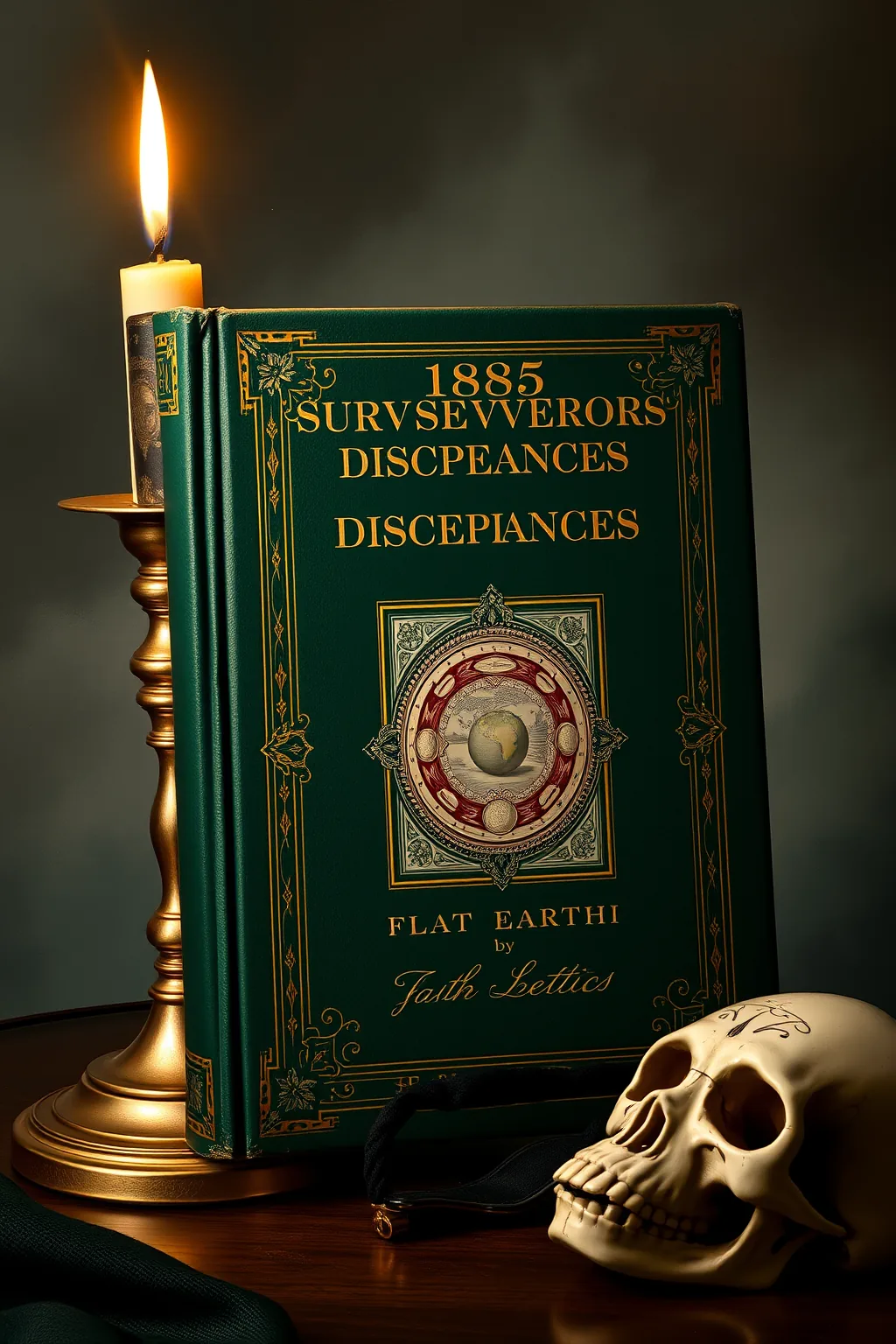
1885 Surveyor Describes Discrepancies Flat Earth zetetics
 76
76

1885 Surveyor Describes Discrepancies Flat Earth zetetics



The "1885 Surveyor Describes Discrepancies: Flat Earth Zetetics" is a fascinating read for anyone interested in the esoteric and occult dimensions of scientific inquiry. The surveyor's detailed observations and arguments provide a compelling case for reconsidering the shape of the Earth, offering a fresh perspective on a topic often dismissed in mainstream science. For modern esoteric seekers, this book serves as a valuable resource, bridging the gap between historical occult philosophy and contemporary alternative theories. The text is well-researched and presents a coherent argument, making it accessible even to those new to the subject. The historical context adds depth to the discussion, highlighting how alternative earth models have been explored and debated over time. Overall, this book is a gem for those who enjoy exploring the fringes of scientific thought and are open to considering alternative perspectives.
📝 Description
76
A surveyor in 1885 recorded anomalies suggesting a flat Earth, detailed in an anonymous esoteric text.
This anonymous text, penned by a surveyor in 1885, presents observations that question the accepted spherical model of the Earth. It details specific discrepancies encountered in surveying work, framing these findings through the lens of flat Earth zeteticism. The author does not merely present data; they weave it into a narrative that suggests a hidden reality beneath the surface of common understanding.
The book invites readers to consider a geocentric, planar cosmology. It examines phenomena that, from the surveyor's viewpoint, do not align with a globe. The writing style is direct, reflecting the practical nature of surveying while simultaneously hinting at deeper, occult interpretations of natural laws and cosmic order. This work is for those who appreciate empirical challenges to established scientific paradigms, especially when viewed from an esoteric perspective.
This work aligns with the zetetic tradition, which emphasizes direct observation and questioning established scientific consensus, particularly regarding Earth's shape. It emerges from a period where alternative cosmologies were actively discussed within esoteric circles, often intertwining with spiritual, alchemical, or mystical beliefs. The surveyor's empirical findings are thus reinterpreted not just as scientific anomalies but as clues to a divinely ordered or hidden terrestrial arrangement, distinct from mainstream scientific narratives.
💡 Why Read This Book?
Reading "1885 Surveyor Describes Discrepancies: Flat Earth Zetetics" today offers a unique opportunity to explore alternative earth theories from a historical and esoteric perspective. This book provides valuable insights into the occult philosophy that challenges conventional scientific views, enriching the reader's understanding of the Earth's shape and the debates surrounding it. By delving into this text, readers can gain a deeper appreciation for the intersection of empirical evidence and esoteric thought, broadening their horizons and fostering a more open-minded approach to scientific inquiry.
⭐ Reader Reviews
Honest opinions from readers who have explored this book.
❓ Frequently Asked Questions
What is the main argument presented in the book?
The book presents the detailed observations of an 1885 surveyor who challenges the conventional globehead earth theory, providing evidence for alternative earth models.
Who would benefit from reading this book?
This book is ideal for esoteric seekers, historians, and anyone interested in alternative earth theories and the intersection of occult philosophy with empirical evidence.
Is this book suitable for beginners in occult philosophy?
Yes, the book is well-researched and presents its arguments in a coherent manner, making it accessible to both beginners and experienced readers in the field.
🔮 Key Themes & Symbolism
The Occult Perspective of the Flat Earth
This theme explores the Flat Earth theory from an occultist's viewpoint, challenging conventional geocentric paradigms and exploring the mystical underpinnings of our planet's shape.
Hidden Knowledge and Symbolism
The book is rich in esoteric symbolism, offering insights into the hidden meanings behind various occult symbols and their relevance to the Flat Earth theory.
Philosophical Significance of the Surveyor's Findings
The surveyor's observations carry profound philosophical significance, inviting readers to question the accepted norms and explore the deeper layers of hidden knowledge.
💡 Key Ideas
Editorial paraphrase of the work's core concepts — not direct quotes.
The Earth, as we know it, may not be as round as we believe.
This quote challenges the conventional understanding of the Earth's shape, inviting readers to consider alternative perspectives.
Hidden truths lie beneath the surface of our world.
This line underscores the esoteric nature of the book, emphasizing the importance of seeking hidden knowledge.
Symbolism is the key to unlocking the mysteries of the occult.
This quote highlights the significance of symbolism in the esoteric traditions, offering a deeper understanding of the Flat Earth theory.
The surveyor's observations reveal a world beyond our everyday experiences.
This passage invites readers to explore the enigmatic truths that lie beyond the surface of our world.
The Flat Earth theory is a gateway to the mystical underpinnings of our planet.
This line emphasizes the philosophical significance of the Flat Earth theory, challenging conventional wisdom and inviting deeper exploration.
🌙 Esoteric Significance
Tradition
This book belongs to the Hermetic tradition, which emphasizes the hidden knowledge and mystical underpinnings of the natural world. It draws on ancient esoteric teachings to challenge conventional wisdom and offer a fresh perspective on the Flat Earth theory.
Symbolism
Key symbols in the book include occult emblems and mystical motifs that represent the hidden truths of the Earth's shape. These symbols serve as keys to unlocking deeper layers of esoteric knowledge and understanding.
Modern Relevance
Today, this book remains relevant for modern practitioners of the occult who seek to explore the mysteries of the Flat Earth theory. Its insights continue to inspire seekers of hidden knowledge and those fascinated by the symbolism and philosophical depth of mystical literature.
👥 Who Should Read This Book
Beginners in the occult will find this book accessible and rich in insights, while scholars and spiritual seekers will appreciate its depth and philosophical significance. Practitioners of esoteric traditions will benefit from the book's exploration of symbolism and hidden knowledge, making it an invaluable resource for anyone interested in the mystical underpinnings of our world.
📜 Historical Context
Written in 1885, '1885 Surveyor Describes Discrepancies Flat Earth zetetics' reflects the era's fascination with the occult and esoteric knowledge. During this time, the Flat Earth theory was a subject of intense debate and curiosity, challenging the prevailing geocentric model. The book's influence can be seen in the works of later authors like Antony Sutton, Bill Cooper, and Michael Hutchison, who continued to explore the mysteries of the Earth's shape and its occult significance.
📔 Journal Prompts
How do the surveyor's observations challenge your understanding of the Earth's shape?
What symbols in the book resonate with you, and why?
In what ways does this book invite you to explore hidden knowledge?
How does the Flat Earth theory relate to your spiritual or philosophical beliefs?
What insights from this book can you apply to your own esoteric practices?
🗂️ Glossary
Occultism
The study of hidden or secret knowledge, often involving mystical or supernatural elements.
Flat Earth Theory
The belief that the Earth is a flat disk rather than a spherical or oblate spheroid.
Esoteric Symbolism
Symbols that hold hidden meanings and are used in mystical or occult traditions.
Hermetic Tradition
An ancient esoteric tradition based on the teachings attributed to Hermes Trismegistus.
Geocentric Model
The belief that the Earth is the center of the universe, with other celestial bodies revolving around it.
This book appears in 7 collections
🔮 Readers Also Liked
Browse all →







From the “Out-of-Body Experience” Collection
View all →








More Free Occult Philosophy Books
View all →