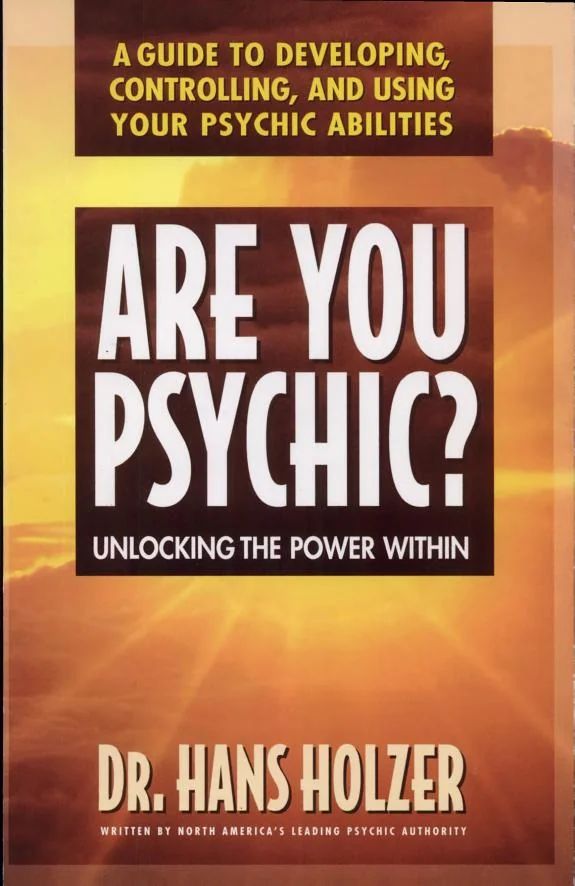
Are You Psychic?
 79
79

Are You Psychic?
Hans Holzer's "Are You Psychic?" offers a grounded approach to a topic often shrouded in mystique. What distinguishes this 1997 work is Holzer's consistent effort to connect psychic phenomena to everyday life, moving past the sensational to the relatable. He skillfully illustrates how common experiences, like a song appearing in one's mind just as it plays on the radio, might signal an underlying psychic current. The book's primary strength lies in its accessible language and its emphasis on personal observation. However, the work occasionally feels repetitive, revisiting similar examples without significantly deepening the analysis. A notable strength is Holzer's discussion of how societal skepticism can act as a block to recognizing one's own abilities, a point he revisits with clarity. Despite its limitations, "Are You Psychic?" remains a useful primer for those beginning to question their own intuitive capacities.
📝 Description
79
Hans Holzer's 1997 book asks readers to consider their own psychic potential.
Hans Holzer's "Are You Psychic?" examines everyday extrasensory perception, moving past sensationalism to focus on common experiences like intuition and telepathic flashes. He proposes that these aren't anomalies but aspects of human consciousness. The book appeals to those who have noticed strange synchronicities or accurate premonitions and question the mind's limits. It offers a rational yet open approach to psychic phenomena and provides practical thoughts for those wishing to develop their intuition.
Holzer, a prolific paranormal author since the 1960s, drew on his extensive research. Published in 1997, the book appeared as New Age ideas gained wider attention but were still often outside academic discussion. It follows a tradition of popular books aiming to explain psychic abilities to a general audience. The text explains concepts like intuition, precognition, and telepathy using familiar examples. Holzer suggests psychic ability is a spectrum within everyone, influenced by environment and belief, and encourages readers to observe their own experiences carefully.
Published in 1997, "Are You Psychic?" entered a cultural moment where New Age thought was becoming more visible. Hans Holzer, a long-time researcher of paranormal topics, connected popular interest in psychic abilities with established spiritualist traditions. The book fits within a lineage of works seeking to bridge the gap between esoteric concepts and a mainstream readership, presenting psychic phenomena as accessible aspects of human experience rather than fringe occurrences.
💡 Why Read This Book?
• Understand the spectrum of psychic ability as presented by Hans Holzer, moving beyond sensationalism to recognize intuition in everyday occurrences like those described in the book's introduction. • Explore the concept of psychic phenomena as an inherent human capacity, as Holzer suggests everyone possesses some level, rather than a rare gift. • Gain a framework for self-observation regarding intuitive flashes and synchronicities, drawing on Holzer's approach to understanding personal experiences first published in 1997.
⭐ Reader Reviews
Honest opinions from readers who have explored this book.
❓ Frequently Asked Questions
What is Hans Holzer's primary argument in "Are You Psychic?"
Holzer's main argument is that psychic ability is a natural, albeit often latent, human capacity present in everyone to varying degrees, rather than an exclusive gift for a select few.
When was "Are You Psychic?" first published?
The book "Are You Psychic?" by Hans Holzer was first published on June 1, 1997.
Does Holzer believe everyone has psychic powers?
Yes, Hans Holzer posits that everyone possesses some form of psychic ability, ranging from simple intuition to more pronounced telepathic or precognitive experiences.
What kind of examples does Holzer use to illustrate psychic phenomena?
He uses relatable, everyday examples such as thinking of a song just before hearing it, or anticipating a phone call from someone specific.
Is "Are You Psychic?" suitable for beginners in parapsychology?
Absolutely. The book is written in an accessible style, making it ideal for individuals new to exploring psychic phenomena and looking for an introduction.
What distinguishes Holzer's approach to psychic ability?
Holzer's approach is characterized by its focus on demystification and integration into everyday life, emphasizing observation over extraordinary claims.
🔮 Key Themes & Symbolism
Intuition as a Universal Faculty
Holzer argues that intuition is the most common and accessible form of psychic ability. He presents it not as mystical foresight but as a subtle knowing, often dismissed as mere coincidence. The book encourages readers to pay closer attention to these inner nudges, suggesting they are signals from a deeper level of consciousness. This perspective reframes everyday hunches and gut feelings as potential evidence of latent psychic potential inherent in all individuals.
The Psychology of Psychic Experience
The work looks at the mental and emotional states that might facilitate or inhibit psychic perception. Holzer touches upon how belief systems, societal conditioning, and even stress can act as barriers to recognizing one's innate abilities. He explores the idea that a mind open to possibility, yet grounded in observation, is more receptive to these subtle energies. The book aims to clarify the experience, making it understandable within a psychological framework.
Synchronicities and Meaningful Coincidences
"Are You Psychic?" examines coincidences that seem too meaningful to be random. Holzer uses examples like thinking of a person and then encountering them to illustrate these events. He posits that such occurrences might not be chance but rather manifestations of interconnectedness or precognitive awareness. The book invites readers to consider the significance of these 'meaningful coincidences' in their own lives as clues to their psychic nature.
Developing Latent Abilities
While not a step-by-step guide, the book provides a foundational understanding for those interested in exploring their psychic potential further. Holzer emphasizes observation, mindfulness, and trusting one's inner experiences. The core message is that awareness and a willingness to acknowledge subtle perceptions are the first steps toward recognizing and perhaps even cultivating one's psychic faculties.
💬 Memorable Quotes
Direct passages from the work, attributed to the author.
“Have you ever had an old tune pop into your head, only to turn on the radio and hear it being played?”
— This common experience serves as Holzer's entry point, suggesting that such seemingly random events might be more than mere coincidence, hinting at underlying psychic connections or precognitive awareness.
“Is it coincidence or is it something more?”
— This question directly challenges the reader to consider the possibility of psychic phenomena behind everyday occurrences, framing the central inquiry of the book.
“everybody has some psychic ability.”
— This core assertion democratizes psychic potential, proposing that it is an inherent human trait, not a rare gift, varying only in its intensity and manifestation.
“For some people, the ability might be as mild as intuition; for others, it might...”
— This highlights the spectrum of psychic experience, distinguishing between subtle forms like intuition and potentially stronger, less common manifestations.
“If you have ever wondered if you might be psychic, this book may hold the answer to this most intriguing question.”
— This serves as a direct invitation to the reader, promising exploration and potential self-discovery regarding their own psychic inclinations.
🌙 Esoteric Significance
Tradition
While not strictly adhering to a single esoteric lineage, Holzer's work draws heavily from the broader Western esoteric tradition's interest in consciousness, telepathy, and precognition. It echoes themes found in Spiritualism and early parapsychology, aiming to provide empirical grounding for phenomena often discussed in more mystical terms. It departs from rigid occult systems by focusing on accessible, personal experience rather than formal ritual or complex cosmology.
Symbolism
The book uses the concept of 'intuition' as a primary symbol for latent psychic ability, representing a direct, non-rational knowing. 'Coincidence' is treated symbolically, reinterpreted not as random chance but as potential evidence of underlying interconnectedness or telepathic communication. The very act of questioning, 'Are You Psychic?', symbolizes the reader's journey toward acknowledging and exploring the less understood aspects of their own mind.
Modern Relevance
Holzer's emphasis on intuition and everyday psychic experiences appeals to contemporary discussions in mindfulness, self-help, and even positive psychology, where cultivating inner awareness is encouraged. His work provides a historical anchor for modern explorations into intuition enhancement and the validation of subjective experiences, influencing contemporary authors who explore the paranormal for a general audience.
👥 Who Should Read This Book
['• Individuals curious about unexplained coincidences and intuitive feelings, seeking to understand if these point to psychic potential.', '• Readers interested in paranormal investigations and the history of psychic research, particularly works from the late 20th century.', '• Those beginning to explore their own intuitive capacities and looking for an accessible introduction to the concept of psychic abilities.']
📜 Historical Context
Hans Holzer's "Are You Psychic?", first published in 1997, arrived during a vibrant period for popular paranormal literature, building upon decades of his own prolific output. The late 20th century saw a continued public fascination with UFOs, ghosts, and psychic phenomena, often fueled by television programs and a growing New Age movement. Holzer’s work emerged alongside authors like Sylvia Browne, who also sought to make psychic abilities accessible. Unlike more academic parapsychology, Holzer’s approach was firmly geared towards the layperson, aiming to validate everyday experiences rather than adhering strictly to scientific methodology. The book’s reception likely aligned with the broader public’s enduring curiosity about the unexplained, situated within a cultural landscape where such topics were increasingly discussed, albeit often outside of mainstream academic acceptance.
📔 Journal Prompts
Reflections on unusual coincidences, like the tune heard on the radio after thinking of it.
Noting instances of intuition that proved accurate or inaccurate.
Exploring the feeling of knowing someone is about to call.
Considering how belief systems might influence the perception of psychic phenomena.
Mapping personal experiences that align with the concept of 'everybody has some psychic ability'.
🗂️ Glossary
Psychic Ability
The capacity to perceive or influence information or events through means beyond the known five senses, encompassing intuition, telepathy, precognition, and clairvoyance.
Intuition
A form of psychic perception characterized by a sudden, direct knowing or understanding without conscious reasoning; often experienced as a 'gut feeling'.
Telepathy
The direct communication of thoughts, feelings, or information between minds without the use of conventional sensory channels.
Precognition
The ability to foresee future events or gain knowledge of future occurrences through extrasensory means.
Coincidence
In the context of the book, events that seem randomly aligned but may suggest an underlying pattern or connection indicative of psychic influence.
Synchronicities
Meaningful coincidences that appear to be acausally related, often interpreted as significant by the individual experiencing them.
Extrasensory Perception (ESP)
A general term for perception that occurs through means other than the recognized sensory organs; includes telepathy, clairvoyance, and precognition.
This book appears in 1 collection
🔮 Readers Also Liked
Browse all →









From the “Clairsentience” Collection
View all →




More Free Occult Philosophy Books
View all →