Practical Occultism
 80
80

Practical Occultism



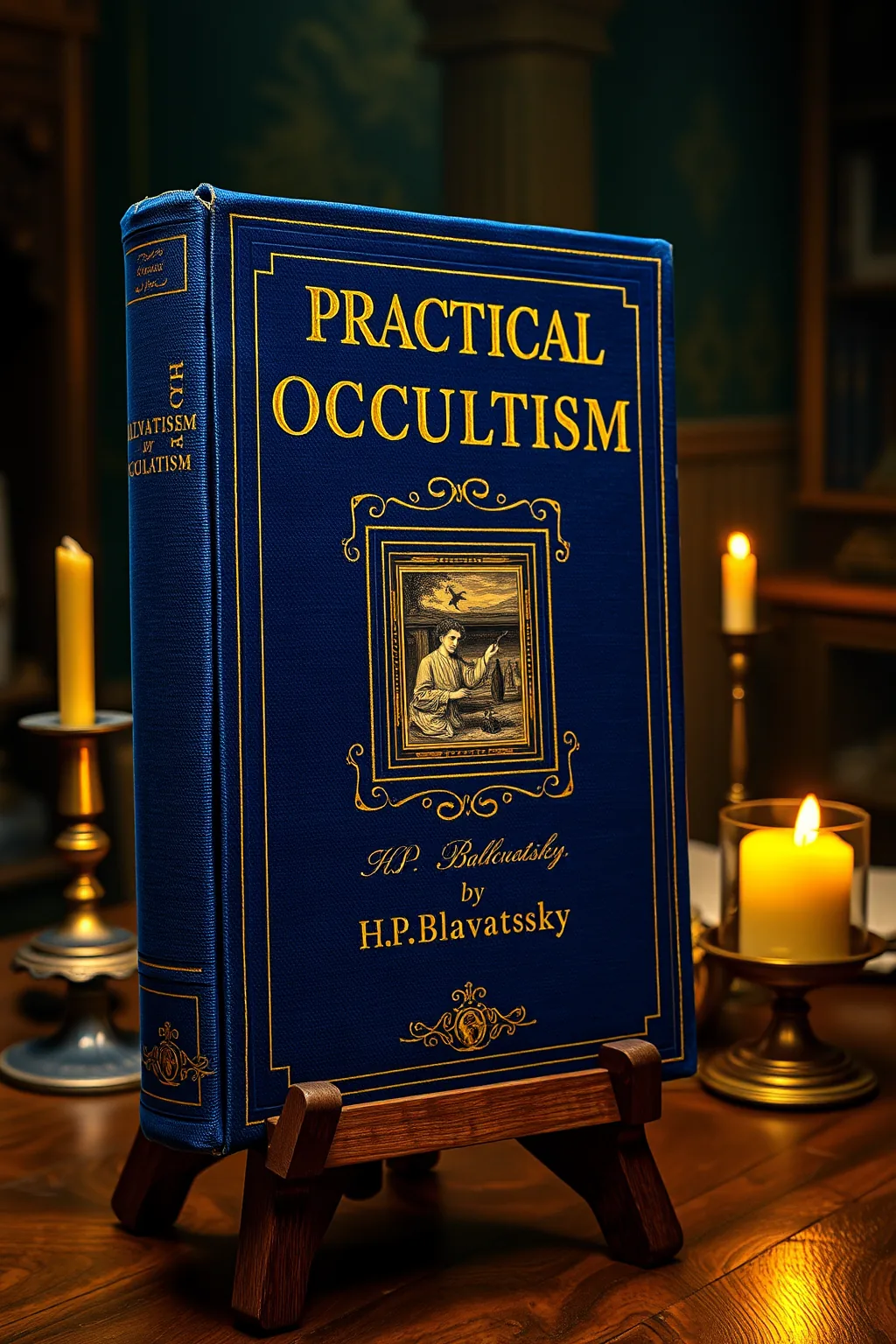
Practical Occultism by H.P. Blavatsky is a foundational text for anyone interested in the esoteric and occult sciences. Blavatsky's writing is both intellectually stimulating and spiritually enriching, making it a valuable resource for modern seekers. The book's exploration of occult philosophy provides a deep understanding of the mystical dimensions of existence. Blavatsky's ability to weave together ancient Eastern teachings with Western esoteric thought is particularly impressive. For contemporary readers, Practical Occultism offers a timeless guide to spiritual growth and self-discovery. The practical advice and philosophical insights make it an essential read for anyone on a spiritual journey. This book is a must-have for those interested in Theosophy and the occult.
📝 Description
80
H.P. Blavatsky's 1893 book, Practical Occultism, outlines methods for applying occult principles.
This 1893 text by H.P. Blavatsky addresses the practical application of occult principles for the individual. Blavatsky moves beyond theoretical discussions to suggest specific techniques and attitudes for those engaged in esoteric study. The book focuses on how to cultivate inner faculties and understand the energetic currents that influence daily life.
It discusses the importance of mental discipline, ethical conduct, and the careful observation of natural phenomena as integral to occult practice. Blavatsky aims to demystify certain aspects of occultism, presenting them as accessible through diligent effort and correct understanding, rather than solely through innate talent or external initiation. The work encourages a disciplined approach to spiritual development, emphasizing personal responsibility.
Practical Occultism emerged during a period of intense interest in spiritualism and esoteric philosophy in the late 19th century. It sits within the broader Theosophical framework Blavatsky herself co-founded, which sought to synthesize Eastern and Western mystical traditions. The book reflects a move within esoteric circles to translate abstract metaphysical concepts into actionable practices for personal transformation and understanding of the unseen world. It stands alongside other works from the era that sought to codify and disseminate occult knowledge beyond traditional secretive lineages.
💡 Why Read This Book?
Reading Practical Occultism today offers readers a unique opportunity to explore the depths of esoteric wisdom. This book provides practical guidance and philosophical insights that can enhance spiritual growth and self-discovery. Blavatsky's timeless teachings on the occult can help modern seekers navigate the complexities of spiritual practice and mysticism. Whether you are new to the occult or an experienced practitioner, this book offers valuable knowledge and inspiration.
⭐ Reader Reviews
Honest opinions from readers who have explored this book.
❓ Frequently Asked Questions
What is the main focus of Practical Occultism?
The main focus of Practical Occultism is the exploration of occult philosophy and mystical teachings. It delves into the hidden dimensions of reality and provides practical guidance for spiritual growth.
Who should read this book?
This book is ideal for anyone interested in esoteric and occult studies, spiritual growth, and Theosophy. It is suitable for both beginners and experienced practitioners.
What makes Practical Occultism a valuable resource?
Practical Occultism is valuable due to its deep exploration of occult philosophy and its ability to bridge Eastern and Western esoteric thought. It offers timeless insights and practical advice for spiritual seekers.
🔮 Key Themes & Symbolism
Hidden Knowledge
Practical Occultism looks at the area of hidden knowledge, revealing the secrets of the occult and esoteric traditions. Blavatsky's work uncovers the mystical wisdom that has been passed down through the ages, providing readers with a deeper understanding of the unseen forces that shape our reality.
Symbolism
The book explores the intricate world of symbolism, deciphering the meanings behind ancient and modern symbols. Blavatsky's insights into occult symbolism offer a unique perspective on the hidden language of the universe, making Practical Occultism an essential read for those interested in esoteric studies.
Spiritual Growth
Practical Occultism is a guide for spiritual seekers, offering techniques and insights for personal and spiritual growth. Blavatsky's work provides a roadmap for reading through the mystical realms, helping readers to unlock their inner potential and achieve spiritual enlightenment.
💬 Memorable Quotes
Direct passages from the work, attributed to the author.
“Symbols are the language of the gods, speaking to those who understand their mysteries.”
— Blavatsky emphasizes the importance of symbolism in understanding the divine and the mystical.
“The occult sciences offer a path to inner transformation and spiritual growth.”
— Blavatsky's work suggests that the study of the occult can lead to profound personal and spiritual development.
💡 Key Ideas
Editorial paraphrase of the work's core concepts — not direct quotes.
The world of spirit is not a distant realm but an integral part of our everyday existence.
This quote underscores the idea that the spiritual world is not separate from our physical reality but intertwined with it.
The seeker of truth must be willing to explore the shadows to find the light.
This quote highlights the necessity of examining the darker aspects of the occult to gain true enlightenment.
The universe is a vast collection of interconnected symbols and energies.
This quote emphasizes the idea of the universe as a complex web of symbols and energies that can be understood through occult knowledge.
🌙 Esoteric Significance
Tradition
Practical Occultism belongs to the Hermetic tradition, which emphasizes the unity of all things and the pursuit of hidden knowledge. This tradition draws on ancient Egyptian, Greek, and Jewish mystical teachings, providing a wide range of esoteric wisdom.
Symbolism
Key symbols in Practical Occultism include the Hermetic symbols of the caduceus, the ouroboros, and the rose cross. These symbols represent the interconnectedness of all things, the cycle of life and death, and the spiritual journey towards enlightenment.
Modern Relevance
Today, Practical Occultism remains relevant for modern practitioners who seek to understand the deeper layers of reality. Its insights into occult philosophy and symbolism continue to inspire seekers and scholars, providing a foundation for contemporary spiritual practices and metaphysical studies.
👥 Who Should Read This Book
Beginners interested in the occult will find Practical Occultism to be an accessible and enlightening introduction to the mysteries of the esoteric world. Scholars of occult philosophy will appreciate Blavatsky's clear insights and historical context. Spiritual seekers will benefit from the book's guidance on personal and spiritual growth. Practitioners of the occult will find valuable techniques and rituals to enhance their practices.
📜 Historical Context
Practical Occultism was written during a time of significant spiritual and intellectual ferment in the late 19th century. This era saw a renewed interest in esoteric and mystical traditions, as well as a growing fascination with the occult. Blavatsky's work was influential in shaping the modern understanding of occult philosophy, providing a bridge between ancient wisdom and contemporary thought. The book's impact can still be felt today, as it continues to inspire seekers and scholars of the occult and metaphysical sciences.
📔 Journal Prompts
Reflect on a personal experience that has shaped your understanding of the occult.
Explore the symbolism in Practical Occultism and how it relates to your spiritual journey.
Consider the role of hidden knowledge in your life and how it can be applied for personal growth.
Write about a mystical experience you have had and how it has influenced your beliefs.
Analyze the connection between ancient mystical traditions and modern occult practices.
🗂️ Glossary
Occult Philosophy
The study of hidden knowledge and esoteric traditions, often involving mystical and symbolic interpretations of reality.
Hermetic Tradition
A mystical tradition based on the teachings of Hermes Trismegistus, emphasizing the unity of all things and the pursuit of hidden knowledge.
Symbolism
The use of symbols to represent abstract ideas or spiritual concepts, often found in esoteric and mystical traditions.
Spiritual Growth
The process of personal and spiritual development, often achieved through the study of occult and metaphysical sciences.
Esoteric Wisdom
Knowledge that is hidden or concealed, often requiring initiation or deep study to understand.
This book appears in 6 collections
🔮 Readers Also Liked
Browse all →








From the “Occultism” Collection
View all →





More Free Occult Philosophy Books
View all →