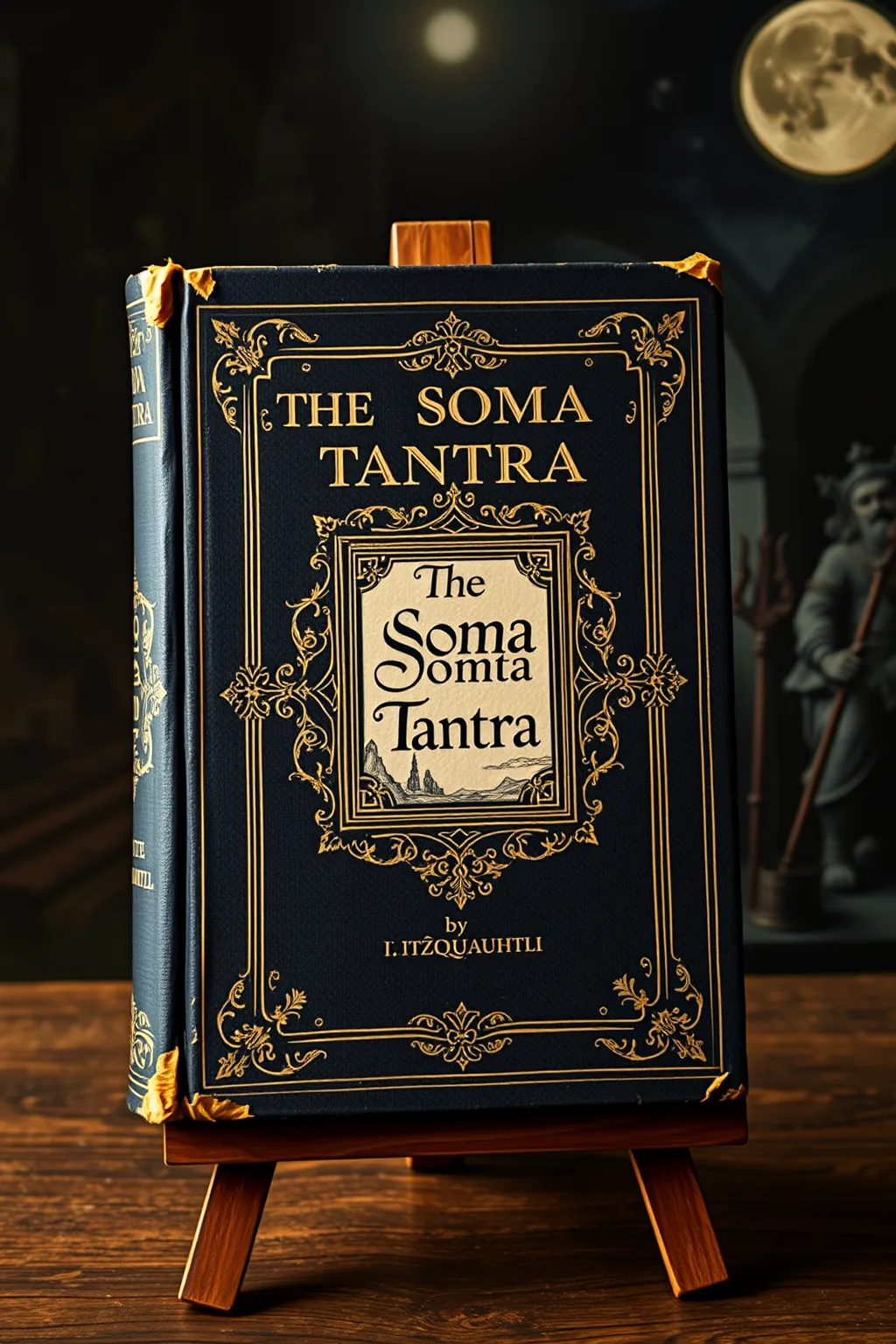
The Soma Tantra
 79
79

The Soma Tantra


Aurelia Blackwood (Occult Philosophy Critic) — 'The Soma Tantra' is a luminous addition to esoteric literature, a fictional yet deeply resonant exploration of Vedic cosmology. ItzQuauhtli, in this anonymous debut, demonstrates a remarkable command of mythological narrative, imbuing the classic conflict between gods and demons with potent spiritual undertones. The novel's strength lies in its subtle unfolding of dharma and the karmic consequences of divine actions, offering a compelling lens through which to view the eternal struggle between light and shadow. The rich symbolism, drawn from the foundational texts of Hinduism, serves not as mere decoration but as a vehicle for profound contemplation. This work is an essential read for seekers of ancient wisdom and practitioners interested in the philosophical underpinnings of spiritual development.
📝 Description
79
ItzQuauhtli's 'The Soma Tantra' retells Hindu myths of the moon god Soma Chandra's forbidden union.
This book examines the Hindu moon god Soma Chandra's forbidden union and its cosmic repercussions. The narrative draws inspiration from the Mahabharata and the Siva Purana, depicting a celestial conflict between the Devatas and Ashuras. This ancient animosity mirrors earthly strife, as described within the text. The story is not solely about divine beings but also addresses concepts like dharma and karma. ItzQuauhtli aims to reveal truths about creation, destruction, and the cycle of existence. The work invites readers to contemplate reality and divine will through its blend of myth and metaphysics.
The Soma Tantra is situated within Tantric traditions that often reinterpret Vedic and Puranic narratives. It engages with the cosmology of the Puranas, particularly the Siva Purana, and the epic scope of the Mahabharata. The book's focus on divine unions and cosmic warfare reflects a common practice in Tantra of allegorizing powerful deities and their relationships to explain universal principles. It connects these myths to concepts of dharma and karma, aligning with philosophical underpinnings found in various Indian spiritual traditions.
✍️ Author
💡 Why Read This Book?
Discover the hidden currents of cosmic law and divine purpose. 'The Soma Tantra' offers a unique fusion of epic mythology and spiritual philosophy, making it ideal for seekers of ancient wisdom, students of comparative religion, and practitioners drawn to the symbolic language of the cosmos. Unravel complex themes of dharma, karma, and the eternal interplay of opposing forces within a captivating narrative.
⭐ Reader Reviews
Honest opinions from readers who have explored this book.
❓ Frequently Asked Questions
What is the primary mythological inspiration for 'The Soma Tantra'?
The novel draws its primary inspiration from the epic 'Mahabharata' and the sacred 'Siva Purana,' reimagining classic narratives and characters within a new, compelling storyline that explores divine motivations and cosmic conflicts.
Is 'The Soma Tantra' a factual account of Hindu mythology?
No, 'The Soma Tantra' is a work of fiction. While deeply rooted in Hindu mythology and drawing heavily from its lore, it presents an original narrative that uses these traditions to explore deeper philosophical and spiritual themes.
What esoteric themes are explored in the book?
The book delves into themes of cosmic balance, the nature of divinity, the consequences of desire and defiance, the cyclical nature of existence, and the interplay between divine and demonic forces, offering a symbolic representation of spiritual truths.
Who is the author, ItzQuauhtli?
ItzQuauhtli is the pseudonym of the author, who wishes to remain anonymous. This debut work is their first published novel, signaling a potentially significant new voice in esoteric and mythological fiction.
What is the significance of 'Soma' in the context of the book?
Soma, the moon god, is a central figure whose actions drive the narrative. In Vedic tradition, Soma is associated with divine intoxication, spiritual insight, and lunar energies, and his role here is pivotal to the unfolding cosmic drama.
🔮 Key Themes & Symbolism
The Cosmic Dance of Dharma and Karma
'The Soma Tantra' masterfully illustrates the intricate interplay between dharma (righteous duty) and karma (the law of cause and effect) on a cosmic scale. The actions of celestial beings, driven by desire, defiance, or divine mandate, ripple through the universe, demonstrating how every choice, no matter how grand or seemingly insignificant, contributes to the grand collection of existence. The novel invites readers to contemplate the intricate web of consequences that bind all beings, from the most exalted gods to the humblest creatures, urging a deeper understanding of one's own role within this universal causality and the importance of righteous action.
The Eternal Conflict: Devatas vs. Ashuras
The rekindled conflict between the godly Devatas and the demonic Ashuras serves as a profound allegory for the perpetual struggle between light and darkness, order and chaos, consciousness and ignorance. ItzQuauhtli imbues this ancient dichotomy with new life, showing how this battle is not confined to heavenly spheres but resonates within the human psyche. The narrative explores the motivations behind both forces, suggesting that even within the 'demonic,' there can be a twisted form of cosmic purpose, and within the 'divine,' the seeds of flawed action can be sown. This theme encourages introspection into the shadows and light that reside within ourselves and the world.
Sacred Union and Cosmic Disruption
The audacious act of the moon god Soma Chandra—defying his brethren by abducting his guru's new wife—acts as the catalyst for monumental upheaval. This central event symbolizes the disruption of sacred order, the transgression of divine laws, and the potent consequences of unchecked desire. The narrative explores the sacredness of union, both divine and mortal, and how its violation can unravel the fabric of reality. It prompts contemplation on the nature of forbidden knowledge, the allure of transgression, and the profound spiritual implications that arise when the natural order is challenged, leading to inevitable cycles of conflict and resolution.
💬 Memorable Quotes
Direct passages from the work, attributed to the author.
“Where light casts shadows, the ancient war is reborn.”
— This speaks to the duality of existence and the cyclical nature of conflict, suggesting that the emergence of darkness is an inherent part of the cosmic order, always poised to reassert itself.
“Soma's thirst for the forbidden ignited the fires of Antarloka.”
— This vividly portrays the singular act of desire by the moon god Soma as the direct cause of celestial chaos, emphasizing the power of personal will in shaping universal events.
“The threads of karma bind even the gods in their celestial dance.”
— This profound statement underscores the universal law of karma, asserting that no being, however divine, is exempt from the consequences of their actions, linking all existence in a shared destiny.
💡 Key Ideas
Editorial paraphrase of the work's core concepts — not direct quotes.
The celestial spheres echo with the whispers of defiance.
This quote expresses the initial transgression that sets the cosmic drama in motion, highlighting the subtle yet powerful nature of divine dissent and its far-reaching consequences.
In the heart of myth, the soul seeks its own reflection.
This quote suggests that mythological narratives are not merely ancient tales but are designed to offer useful insights into the human condition and the spiritual journey of the soul.
🌙 Esoteric Significance
Tradition
The novel is deeply rooted in the esoteric traditions of Vedic and Tantric Hinduism. Esoterically, the moon god Soma is not just a celestial body but a symbol of the lunar consciousness, intuition, and the subtle energies that govern cycles of creation and dissolution. The Tantric aspect, suggested by the title, hints at practices and philosophies focused on harnessing primal energies for spiritual transformation, often involving the sacred union of opposing forces and the transcendence of mundane limitations. The narrative likely explores these concepts through allegory, symbolizing the inner journey of awakening and the complex path to divine realization.
Symbolism
Key symbols abound in 'The Soma Tantra.' The moon god Soma represents intuition, the subconscious, and the ebb and flow of cosmic tides. The Devatas and Ashuras symbolize the eternal duality of light and shadow, consciousness and unconsciousness, order and chaos, mirroring the internal struggles within the human psyche. The act of abduction and the subsequent war represent the disruption of divine order and the karmic repercussions of desire and transgression. The heavenly sphere of Antarloka itself symbolizes higher planes of existence and the intricate architecture of the cosmos, where divine dramas unfold with profound spiritual implications.
Modern Relevance
In an age often characterized by material pursuits and spiritual disconnection, 'The Soma Tantra' offers a powerful reminder of the interconnectedness of all things and the enduring relevance of ancient wisdom. The novel's exploration of dharma and karma provides a framework for understanding personal responsibility and the ripple effects of our actions in a globalized world. The allegorical battle between light and shadow speaks to contemporary societal conflicts and the universal human need to cultivate inner balance and ethical conduct. By engaging with these timeless themes through a compelling mythological narrative, the book encourages introspection and a deeper connection to spiritual truths that remain vital for navigating modern life.
👥 Who Should Read This Book
This book is a treasure for those who seek to deepen their understanding of spiritual philosophy and mythological narratives. Beginners to esoteric thought will find a captivating entry point through its accessible yet profound storytelling. Scholars of comparative religion and mythology will appreciate its nuanced engagement with Vedic traditions and its fresh narrative interpretations. Spiritual seekers will be drawn to its exploration of dharma, karma, and the cosmic dance, finding inspiration for their personal journeys. Practitioners interested in the symbolism of Hindu cosmology and the archetypal forces at play in the universe will discover rich material for contemplation and insight.
📜 Historical Context
While 'The Soma Tantra' is a fictional work, its narrative is deeply embedded in the wide range of ancient Indian mythology and philosophy, drawing specific inspiration from the Vedic and Puranic periods. These eras, spanning from roughly 1500 BCE to 500 CE, were foundational for the development of Hinduism, Buddhism, and Jainism. The 'Mahabharata,' one of the longest epic poems in the world, and the 'Siva Purana,' a major text dedicated to the deity Shiva, represent the zenith of this literary and philosophical output. These texts are not merely historical documents but living traditions, containing intricate cosmologies, complex ethical dilemmas, and profound spiritual teachings that have shaped Indian culture and thought for millennia. ItzQuauhtli's work, by engaging with these seminal texts, taps into a lineage of storytelling and spiritual inquiry that has continuously evolved, offering timeless wisdom through contemporary literary forms.
📔 Journal Prompts
Reflect on a time when a personal desire led to unexpected consequences. How does this relate to Soma's actions?
Consider the duality of light and shadow within yourself. How do you perceive the Devata and Ashura archetypes manifesting in your life?
What does 'dharma' mean to you in your daily life? How can you align your actions more closely with your understanding of righteous duty?
Explore the concept of cosmic balance. How can individual actions contribute to or detract from universal harmony?
Imagine the 'celestial spheres' as your inner world. What 'whispers of defiance' or calls to order are present within your consciousness?
🗂️ Glossary
Soma
In Vedic tradition, the moon god and a divine drink associated with immortality, inspiration, and spiritual intoxication. In the novel, he is a central character whose actions drive the plot.
Devatas
Divine beings or gods in Hindu mythology, often associated with cosmic order, light, and benevolent forces. They are contrasted with the Ashuras.
Ashuras
Demonic or anti-divine beings in Hindu mythology, often associated with chaos, darkness, and conflict. Their eternal struggle with the Devatas is a recurring theme.
Antarloka
Literally 'inner world' or 'intermediate realm,' often referring to the celestial spheres or higher planes of existence in Hindu cosmology where divine beings reside.
Dharma
A core concept in Indian religions, referring to one's duty, righteousness, cosmic order, moral law, and the path of living in accordance with the universe's principles.
This book appears in 3 collections
🔮 Readers Also Liked
Browse all →






From the “Tantra” Collection
View all →



More Free Spiritual Development Books
View all →