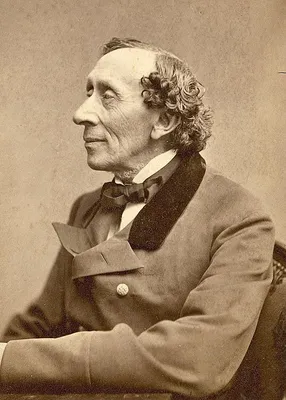
Hans Christian Andersen
Hans Christian Andersen was a Danish author renowned for his enduring fairy tales, which offered profound lessons to readers of all ages.
Hans Christian Andersen, a Danish writer born in 1805, is globally recognized for his literary fairy tales. While he also penned plays, novels, poems, and travelogues, his 156 fairy tales, translated into over 125 languages, have profoundly influenced Western culture. These stories, often seen as accessible to children, also contain deeper themes of virtue and resilience for adult audiences. Andersen's early life in Odense was marked by humble beginnings; his father, a tailor, introduced him to literature, while his mother was a washerwoman. After his father's death, Andersen pursued a career in acting in Copenhagen but was encouraged to focus on writing. A key figure in his development was Jonas Collin, who supported his education. Andersen's literary journey began with early works and travelogues, but it was his collection of fairy tales, starting in 1835, that cemented his legacy. Despite initial critical resistance to his unconventional style, his tales like 'The Emperor's New Clothes' and 'The Little Mermaid' gained international acclaim, inspiring numerous adaptations across various media.
Early Life and Education
Born in Odense, Denmark, in 1805, Hans Christian Andersen came from modest circumstances. His father, a tailor, fostered his early interest in literature by reading to him, while his mother worked as a washerwoman. Following his father's death, Andersen moved to Copenhagen at age 14 to pursue a career as an actor. Though his vocal talents led him to the Royal Danish Theatre, his voice changed, prompting a colleague to suggest he focus on writing. A significant turning point came with the support of Jonas Collin, director of the Royal Danish Theatre, who arranged for Andersen to attend grammar school, with royal funding contributing to his education. Despite these opportunities, Andersen later described his school years as particularly difficult, citing abuse at one institution and discouragement from writing by faculty, which led to periods of depression.
Literary Development and Fairy Tales
Andersen's writing career began with early tales such as "The Tallow Candle" and the successful short story "A Journey on Foot from Holmen's Canal to the East Point of Amager" in 1829. A travel grant in 1833 allowed him to explore Europe, influencing his first novel, "The Improvisatore" (1835), which received considerable acclaim. His most significant contribution, however, was his series of "Fairy Tales Told for Children," beginning in 1835. These tales, initially met with mixed reviews for their informal style, included iconic stories like "The Princess and the Pea," "Thumbelina," "The Little Mermaid," and "The Emperor's New Clothes." The latter, with its revised ending, became particularly famous. Despite some initial Danish criticism, Andersen's fairy tales eventually garnered international recognition, solidifying his reputation and leading to widespread translation and adaptation.
Travelogues and Later Career
Beyond his fairy tales, Andersen was a prolific writer of travelogues, novels, plays, and poems. His travel sketches, such as "In Sweden" (1851), "Shadow Pictures of a Journey to the Harz, Swiss Saxony, etc. etc. in the Summer of 1831," and "A Poet's Bazaar," were well-received. These works combined personal experiences with philosophical reflections on authorship and immortality. While his theatrical endeavors in the 1840s met with limited success, he continued publishing fairy tale collections. Andersen enjoyed widespread fame across Europe, though his homeland, Denmark, sometimes showed reservations about his literary ambitions. His connection to royalty, including the Danish monarchy and the Romanov dynasty through marriage, further cemented his status. Andersen lived in Copenhagen for many years, where a memorial plaque now marks his residence.
Key Ideas
- Fairy tales convey lessons of virtue and resilience.
- Stories are accessible to children but offer depth for adults.
- Literary travel writing can incorporate philosophical reflections.
Books by Hans Christian Andersen
16 free public domain books · Read online or download