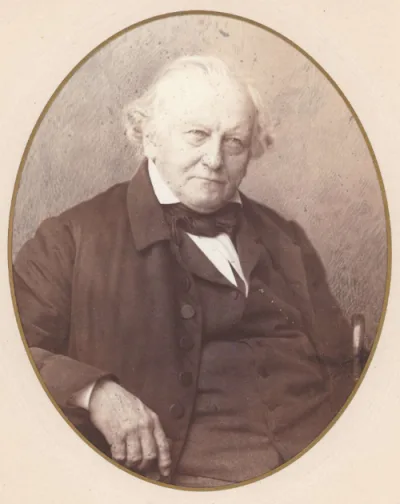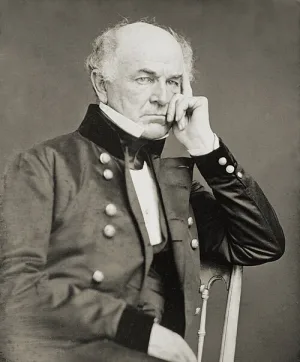
Ethan Allen Hitchcock
Ethan Allen Hitchcock was an American jurist and politician who served on the U.S. Supreme Court.
Ethan Allen Hitchcock (1835–1901) was an American lawyer, politician, and jurist. He served as Secretary of the Interior under President William McKinley. Prior to his political career, Hitchcock practiced law and held various judicial positions. He was appointed to the U.S. Supreme Court in 1898, serving until his death in 1901. His tenure on the Supreme Court was marked by his conservative judicial philosophy and his focus on property rights and the interpretation of federal law. Hitchcock was a respected figure in American legal and political circles during his time.
Early Life and Education
Ethan Allen Hitchcock was born in Mobile, Alabama, in 1835. He received his early education in his home state before attending Yale College, where he graduated in 1855. Following his studies at Yale, Hitchcock pursued a legal education and was admitted to the bar in Alabama in 1859. His early career was primarily focused on the practice of law, establishing himself within the legal community of his home state.
Legal and Political Career
Hitchcock's career extended into public service and politics. He served as a judge on the Alabama Supreme Court and later as a U.S. Representative for Alabama. His political ascent continued when he was appointed Secretary of the Interior by President William McKinley in 1898. In this role, he oversaw the management of federal lands, natural resources, and programs related to Native American affairs. His approach was characterized by a commitment to orderly administration and the protection of public interests.
U.S. Supreme Court Tenure
In 1898, President McKinley nominated Ethan Allen Hitchcock to the United States Supreme Court. He served as an Associate Justice until his death in 1901. During his brief time on the bench, Hitchcock contributed to the Court's decisions on a range of legal issues, often reflecting a conservative judicial outlook. His opinions tended to emphasize the importance of established legal precedent and the protection of individual liberties, particularly concerning property rights. His work on the Court, though short-lived, left a mark on American jurisprudence.
Books by Ethan Allen Hitchcock
9 free public domain books · Read online or download