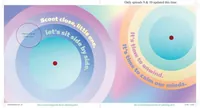
Dragonfly Effect

 83
83

Dragonfly Effect
Gordon Korman’s The Dragonfly Effect presents a compelling exploration of how individual actions can propagate through a community, a theme that resonates strongly in our hyper-connected age. The narrative skillfully illustrates the principle that no act is truly isolated, showcasing a chain reaction of consequences stemming from a central event. Korman’s strength lies in his ability to make these complex interpersonal dynamics accessible and engaging, particularly for younger readers, by grounding them in relatable character arcs. However, the book occasionally leans towards a simplified portrayal of cause and effect, sometimes presenting the "dragonfly effect" as almost deterministic rather than a complex interplay of factors. A particularly effective passage involves the initial seemingly minor decision that snowballs into widespread ramifications, highlighting the author's knack for building narrative momentum. Ultimately, The Dragonfly Effect offers a valuable, if somewhat direct, lesson in the profound interconnectedness of human actions.
📝 Description
83
Gordon Korman published The Dragonfly Effect in 2015, a novel about how small actions create large consequences.
The Dragonfly Effect, written by Gordon Korman and published in 2015, examines how individual actions can trigger chain reactions within a community. The narrative centers on the idea that a single person's choices, or even their presence, can lead to significant and unforeseen results for many others. It is a story about causality and the far reaching impact of human interactions.
This book will appeal to readers interested in social dynamics and the subtle ways people affect their surroundings. Those who enjoy stories where character actions have measurable effects, prompting reflection on personal responsibility and community engagement, will find it suitable. Readers who appreciate themes of interconnectedness and the power of minor events to shape larger outcomes will also find this work engaging.
While not explicitly occult, The Dragonfly Effect touches on principles that resonate with esoteric thought, particularly the concept of interconnectedness and the butterfly effect. Published in 2015, the novel emerged during a time of growing awareness about viral phenomena and how information spreads. Its exploration of how an event or idea can propagate through a group mirrors ideas found in systems thinking and chaos theory, which have long fascinated those interested in underlying universal patterns. Korman's work, though fiction, illustrates how seemingly minor occurrences can have disproportionate effects, a notion present in various spiritual and philosophical traditions that emphasize the significance of every element within a larger whole.
💡 Why Read This Book?
• You will learn to identify the subtle triggers that initiate widespread change, understanding how a single event, like the initial act of defiance by a character in the 2015 narrative, can alter community dynamics. • You will feel a heightened awareness of your own agency and its potential impact, recognizing how your choices, much like those of the characters facing consequences, contribute to a larger social fabric. • You will gain insight into the principles of emergent behavior, seeing how collective outcomes arise from numerous individual interactions, as depicted in the book's exploration of community response.
⭐ Reader Reviews
Honest opinions from readers who have explored this book.
❓ Frequently Asked Questions
When was Gordon Korman's 'The Dragonfly Effect' originally published?
Gordon Korman's 'The Dragonfly Effect' was first published in hardcover by Scholastic Press on July 26, 2016.
What is the central theme of 'The Dragonfly Effect'?
The central theme is the 'dragonfly effect,' which illustrates how a single, often small, action can have widespread and unforeseen consequences across a community.
Does 'The Dragonfly Effect' explore real-world scientific concepts?
While a fictional narrative, the book touches upon principles similar to chaos theory and the butterfly effect, examining how causality can propagate through interconnected systems.
Who is the target audience for 'The Dragonfly Effect'?
The book was initially published by Scholastic Press, suggesting a primary audience of young adults and readers interested in contemporary stories about social dynamics and personal influence.
What kind of impact does the book suggest individuals have?
It suggests that individuals possess significant, often underestimated, power to influence their surroundings, demonstrating how even minor choices can set off significant chain reactions.
Is 'The Dragonfly Effect' a standalone novel?
Yes, 'The Dragonfly Effect' by Gordon Korman is a standalone novel and was first published in 2015, with its hardcover release in July 2016.
🔮 Key Themes & Symbolism
Causality and Consequence
The narrative meticulously traces the consequences that ripple outward from a single initiating event. It emphasizes that actions, even those perceived as minor or isolated, are deeply interwoven into the fabric of a community. The book explores how these causal chains can lead to unexpected social shifts and personal transformations, prompting readers to consider the far-reaching impact of their own choices within any given social structure. This theme aligns with esoteric principles concerning karma and interconnectedness, suggesting a universe where every action has a reverberation.
Community Interdependence
A core element is the intricate web of relationships and dependencies within a community. The book illustrates how individuals, often unknowingly, rely on and influence one another. It showcases how shifts in one person's circumstances or decisions can cascade through the group, affecting norms, behaviors, and collective well-being. This theme echoes mystical traditions that view the collective as a single organism, where the health of the whole depends on the harmony and interaction of its parts.
The Power of Small Actions
The work powerfully argues that seemingly insignificant actions possess immense potential to effect change. It challenges the notion that only grand gestures matter, instead highlighting how subtle interventions, quiet decisions, or even accidental occurrences can be catalysts for significant transformations. This perspective speaks to esoteric teachings that often focus on the alchemical power of small, consistent efforts and the potent symbolism embedded in everyday events, suggesting that the microcosm reflects the macrocosm.
Perception vs. Reality
The book examines the discrepancy between how events are perceived and their actual underlying causes or consequences. Characters may misinterpret the origins of the changes around them, attributing them to incorrect sources. This theme encourages a deeper examination of appearances, inviting readers to look beyond the surface to understand the complex, often unseen, forces at play within social dynamics, a common practice in mystical discernment.
💬 Memorable Quotes
Direct passages from the work, attributed to the author.
“The ripples spread further than anyone imagined.”
— This interpretation of a potential narrative element highlights how consequences can extend far beyond initial expectations, emphasizing the unpredictable and expansive nature of cause and effect in human interactions.
“Unseen forces shape the community's reactions.”
— This interpretation points to the hidden dynamics and underlying causes that influence how a group responds to events, suggesting that reality is often more complex than surface appearances.
“The initial spark ignited a widespread fire.”
— This metaphorical interpretation conveys the idea that a small beginning event can lead to a large-scale, often dramatic, outcome, illustrating the core principle of the 'dragonfly effect'.
💡 Key Ideas
Editorial paraphrase of the work's core concepts — not direct quotes.
A single choice can alter the course of many lives.
This paraphrased concept captures the essence of the book's central theme: the profound and often underestimated power of individual decisions to create cascading effects within a social network.
Every person is a node in a vast network of influence.
This paraphrased idea underscores the book's focus on interconnectedness, suggesting that each individual plays a role in shaping the collective experience, whether consciously or not.
🌙 Esoteric Significance
Tradition
While not explicitly aligned with a single esoteric lineage, The Dragonfly Effect engages with concepts resonant across various mystical traditions, particularly those focused on causality, interconnectedness, and the subtle energies that influence collective reality. It touches upon principles akin to the Law of Cause and Effect found in Hermeticism and Buddhism, and the idea of a collective consciousness or interconnected web of existence explored in Theosophy and modern New Age thought. The work departs from traditional esoteric texts by framing these concepts within a secular, contemporary narrative, making them accessible without requiring prior knowledge of specific doctrines.
Symbolism
The 'dragonfly' itself serves as a potent symbol, often associated with transformation, adaptability, and the ability to see beyond illusion. In many cultures, dragonflies represent change and the realization of one's potential. The narrative's focus on how small actions create large ripples mirrors the dragonfly's agile flight, capable of covering significant distances and influencing its environment in subtle yet impactful ways. The concept of 'wings' or 'flight' within the narrative can also symbolize the expansion of influence and the transcendence of limitations, echoing motifs of spiritual ascension.
Modern Relevance
In contemporary times, The Dragonfly Effect's themes are highly relevant to discussions surrounding social media's impact, the spread of information (and misinformation), and the principles of emergent behavior in complex systems. Thinkers and practitioners in fields ranging from systems thinking to positive psychology can draw parallels to the book's depiction of interconnectedness. Its accessible narrative style makes it a valuable tool for introducing concepts of personal responsibility and collective impact to younger generations, aligning with modern pedagogical approaches that emphasize experiential learning and social-emotional development.
👥 Who Should Read This Book
• Young adult readers interested in social dynamics and the consequences of actions, who will gain a relatable narrative illustrating how individual choices impact a community. • Students of sociology or psychology, who can use the book as a starting point for examining theories of social contagion and network effects in a fictional context. • Individuals interested in the philosophical concept of causality and the butterfly effect, who will appreciate a narrative that makes these abstract ideas tangible and character-driven.
📜 Historical Context
Gordon Korman's The Dragonfly Effect, published in 2015, arrived during a period marked by increasing public fascination with viral phenomena and the power of social networks. While Korman is renowned for his prolific output in young adult literature, this work taps into contemporary anxieties and observations about interconnectedness, mirroring the burgeoning field of network theory and its application to social systems. The book's exploration of how a single event can trigger widespread, often unforeseen, consequences aligns with discussions surrounding the 'butterfly effect' in chaos theory, a concept that gained broader cultural traction throughout the late 20th and early 21st centuries. Though not directly engaging with academic discourse, the narrative implicitly reflects on principles explored by sociologists and psychologists studying collective behavior and social contagion. Its publication by Scholastic Press placed it within the mainstream YA market, a space that often serves as an accessible entry point for exploring complex societal dynamics, though it did not garner specific academic citations or face notable contemporary reception events that are publicly documented.
📔 Journal Prompts
The initial catalyst for change in the community: reflect on its nature.
Interconnectedness within the community: how are characters linked?
The spread of consequences: map the ripple effects from a specific event.
Personal agency: consider how your actions might create a 'dragonfly effect'.
Perception versus reality: analyze a character's misunderstanding of events.
🗂️ Glossary
Dragonfly Effect
A concept, explored in the book, where a single, often small, action or event initiates a chain reaction leading to widespread and unforeseen consequences within a community or system.
Causality
The relationship between cause and effect; the principle that every event is necessitated by antecedent events and conditions together with the laws of nature, as explored through character actions.
Ripple Effect
The continuing and spreading results of an event or action, akin to ripples spreading outward on the surface of water, symbolizing the propagation of consequences.
Interconnectedness
The state of being connected or related; the idea that individuals within a community are linked and influence each other, often in ways that are not immediately apparent.
Catalyst
An agent that provokes or speeds up a significant change or action, often a small event or person that triggers a larger series of developments.
Node
In the context of the book's themes, a node represents an individual within a network, serving as a point of connection and potential influence for the spread of actions and consequences.
Social Dynamics
The study of how individuals interact within groups and societies, including the forces and processes that shape relationships, behaviors, and community structures.
This book appears in 1 collection
🔮 Readers Also Liked
Browse all →









From the “Mesmerism” Collection
View all →





More Free Occult Philosophy Books
View all →