Clement Salaman
Hermeticism is an ancient tradition rooted in Hermes Trismegistus, encompassing alchemy, astrology, and theurgy, profoundly influencing Western esotericism.
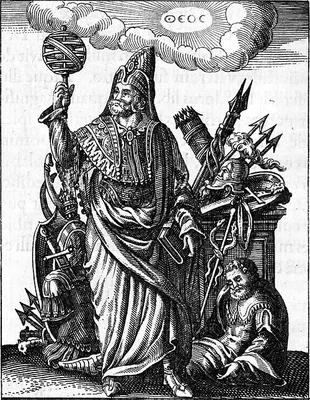
Hermeticism is a philosophical and religious tradition attributed to Hermes Trismegistus, a figure merging Greek and Egyptian deities. It encompasses a wide array of esoteric knowledge, including alchemy, astrology, and theurgy, significantly shaping mystical and occult traditions throughout history. The foundational texts, known as the Hermetica, were composed over many centuries and vary in content.
A specific religio-philosophical form of Hermeticism is represented by the Corpus Hermeticum and the Asclepius, dating from approximately the first to third centuries CE. The broader term 'Hermeticism' can also refer to any philosophy drawing from these writings or associated with Hermes, notably alchemy, often called 'the Hermetic art'. Renaissance Hermeticism, inspired by translations of the Corpus Hermeticum and figures like Paracelsus, marked a significant revival, linking Hermetic ideas to a concept of 'ancient theology'.
Origins and Early Development
Hermeticism emerged in Hellenistic Egypt, a blend of Greek, Egyptian, and Near Eastern traditions, centered on Hermes Trismegistus, a syncretic divine sage. Credited with a vast body of writings called the Hermetica, this tradition explored theology, cosmology, and spiritual practices. It developed alongside other significant movements of Late Antiquity, including early Christianity, Gnosticism, and Neoplatonism, often characterized by a balance between pure reason and faith. The Corpus Hermeticum, a collection of seventeen Greek treatises from around the second century CE, forms a core part of these early writings, focusing on divine unity, soul purification, and spiritual knowledge through dialogues.
Influence on Esoteric Traditions
Hermeticism significantly influenced early Christian thought, particularly in mysticism, with some Church Fathers viewing Hermes Trismegistus as a prophet. The Hermetic concept of a transcendent God and emanation resonated with Christian theologians. Its impact was even more pronounced on Gnostic traditions, sharing an emphasis on esoteric knowledge for salvation and the idea of the material world as a place of exile. Both traditions featured a spiritual journey of ascension through knowledge and purification, highlighting their interconnectedness within the broader esoteric landscape.
Core Texts and Concepts
The Hermetica, texts attributed to Hermes Trismegistus, form the bedrock of this tradition, primarily composed between 200 BCE and 300 CE. They are categorized into philosophical/theological Hermetica and technical Hermetica (alchemy, astrology, theurgy). The Corpus Hermeticum is the most influential philosophical collection, detailing doctrines through dialogues. The Emerald Tablet, a concise alchemical work, is central to Western alchemy, articulating the 'as above, so below' principle. The technical Hermetica provided practical methods for understanding and interacting with divine forces, contributing significantly to medieval and Renaissance occult sciences. Other key texts include 'Isis the Prophetess to Her Son Horus' and the 'Definitions of Hermes Trismegistus'.
Transmission and Renaissance Revival
The rediscovery and translation of the Hermetica during the Renaissance, particularly by Marsilio Ficino and Lodovico Lazzarelli, sparked a major revival of Hermetic philosophy. Renaissance thinkers like Giovanni Pico della Mirandola and Giordano Bruno saw Hermeticism as a source of ancient, harmonizable wisdom. The Hermetic emphasis on humanity's divine potential aligned with Renaissance ideals. The tradition's esoteric nature allowed for diverse interpretations, adapting to various cultural contexts and maintaining its enduring influence through philosophical, mystical, and practical (alchemical, magical) applications.
Key Ideas
- Syncretic figure of Hermes Trismegistus combining Greek and Egyptian deities.
- Esoteric knowledge encompassing alchemy, astrology, and theurgy.
- The Hermetica as foundational texts, divided into philosophical and technical categories.
- Concept of 'as above, so below' from the Emerald Tablet.
- Prisca theologia or 'ancient theology' as a universal divine wisdom.
- Perennial philosophy, the idea of divine truth across different traditions.
- God as 'the All' (to pan), both immanent and transcendent creator.
Books by Clement Salaman
3 free public domain books · Read online or download