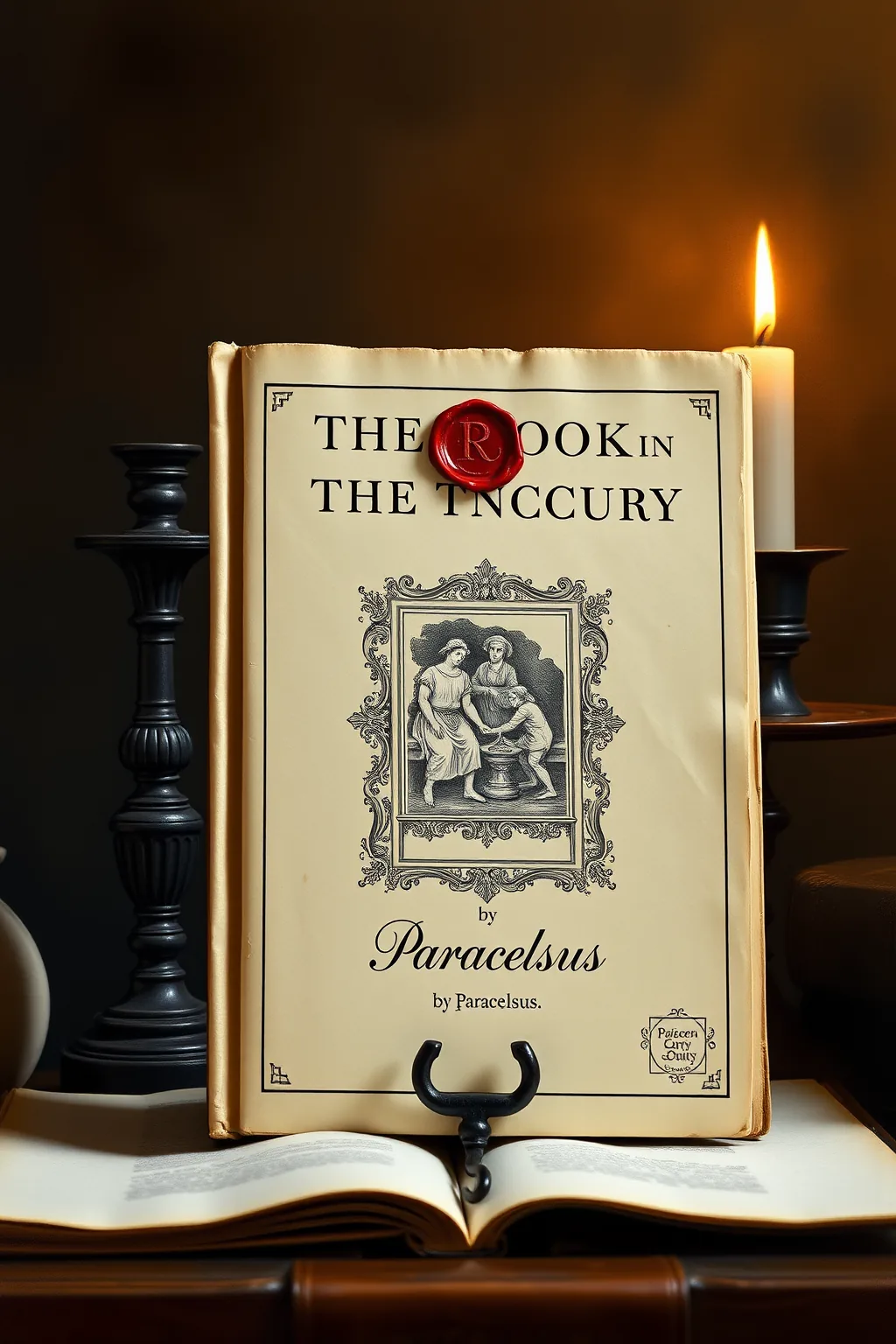
The Book Concerning The Tincture Of The Philosophers by Paracelsus
 71
71

The Book Concerning The Tincture Of The Philosophers by Paracelsus



Cassian Rothmann (Senior Critic, Ancient Wisdom) — Paracelsus's 'The Book Concerning The Tincture Of The Philosophers' remains an indispensable cornerstone of Hermetic literature. With characteristic boldness, he pierces through superficial alchemical dogma, guiding the reader towards the profound spiritual and philosophical underpinnings of the Great Work. His discourse on the Tincture transcends base matter, revealing it as a symbol of divine essence and perfected being. The text's strength lies in its direct, unvarnished approach to esoteric truths, challenging the uninitiated while illuminating the path for the dedicated aspirant. Essential for scholars of alchemy, mystics, and anyone seeking to understand the transformative power of spiritual metallurgy.
📝 Description
71
Paracelsus wrote 'The Book Concerning The Tincture Of The Philosophers' to explain the alchemical preparation of the tincture.
Paracelsus's 'The Book Concerning The Tincture Of The Philosophers' details the alchemical process for creating the Philosopher's Tincture. He presents this tincture not just as a physical substance, but as a symbol of spiritual renewal and divine knowledge. The text guides readers through the complex symbols and powerful energies that shape reality. It addresses those who desire a more thorough comprehension of the universe, the individual, and the life force present in all things. This work is more than a practical guide for changing materials; it is an invitation to a spiritual undertaking. It requires a pure heart and a steadfast dedication to Gnostic understanding. Engaging with this important text of Western esotericism has the potential to alter one's view of existence.
Within the Western esoteric tradition, Paracelsus's work stands as a bridge between medieval alchemy and early modern hermeticism. 'The Book Concerning The Tincture Of The Philosophers' reflects the Renaissance interest in natural philosophy and mystical theology. It draws upon earlier alchemical texts while infusing them with his unique medical and spiritual perspectives. The book's emphasis on the tincture as both material and spiritual aligns with the hermetic concept of 'as above, so below,' linking the microcosm of humanity to the macrocosm of the universe.
💡 Why Read This Book?
Embark on a transformative alchemical journey beyond mere material transmutation. Discover the profound spiritual and philosophical secrets of the Philosopher's Tincture. Connect with ancient wisdom and unlock deeper insights into the nature of existence. Ideal for spiritual seekers, occult scholars, and aspiring alchemists yearning for authentic esoteric knowledge.
⭐ Reader Reviews
Honest opinions from readers who have explored this book.
❓ Frequently Asked Questions
What is the Philosopher's Tincture according to Paracelsus?
Paracelsus views the Tincture not just as a physical substance for transmutation, but as a potent symbol of spiritual perfection, divine essence, and the ultimate goal of the alchemical and spiritual quest.
Who were the 'sophists' Paracelsus addresses?
The 'sophists' likely refer to alchemists and scholars of his time who he believed were merely pursuing material wealth or engaging in fraudulent practices, lacking the true spiritual and philosophical understanding.
Is this book a practical guide to making gold?
While it touches upon alchemical processes, the primary focus is on the spiritual and philosophical aspects of transmutation. It's a guide to inner transformation as much as material change.
What is the historical significance of this work?
It's a pivotal text in the history of alchemy and Hermeticism, reflecting Paracelsus's radical approach to medicine and philosophy, and influencing subsequent esoteric traditions.
What level of prior knowledge is recommended?
While accessible to earnest seekers, a basic familiarity with alchemical concepts and Paracelsus's broader philosophy can enhance understanding. However, the text invites study for all levels of interest.
🔮 Key Themes & Symbolism
The Divine Tincture: Beyond Material Gold
This theme explores the Tincture not as a mere alchemical agent for turning base metals into gold, but as a profound metaphor for spiritual perfection, divine grace, and the perfected state of being. Paracelsus guides the reader to understand that the true 'gold' sought is inner illumination and union with the divine, a transformation that transcends the material realm and elevates the human spirit towards its ultimate potential.
The War Against Sophistry and Ignorance
Paracelsus positions this work as a direct confrontation with the 'sophists' of his age – those he perceived as charlatans, pseudo-alchemists, and purveyors of false knowledge. This theme highlights his commitment to revealing genuine esoteric wisdom, challenging superficial understanding, and advocating for a rigorous, spiritually-grounded approach to the Great Work, urging readers to discern truth from deception.
The Microcosm and Macrocosm: Man as Alchemist
A central tenet of Paracelsian philosophy is the interconnectedness of the human being (microcosm) with the universe (macrocosm). This theme explores how the alchemical processes described are not external manipulations but reflections of internal transformations. The reader is encouraged to see themselves as the primary crucible, with the alchemical work being a journey of self-discovery, purification, and eventual spiritual enlightenment, mirroring the grand cosmic order.
💬 Memorable Quotes
Direct passages from the work, attributed to the author.
“The art of medicine is not in the Physician's hand, but in God's.”
— Paracelsus highlights divine providence and the ultimate source of healing and knowledge, underscoring that true mastery comes from alignment with higher powers.
“Wisdom is the daughter of experience.”
— This underscores the importance of practical, lived experience and direct observation in acquiring true knowledge, rather than relying solely on theoretical dogma.
“The wise man knows that all things are one.”
— This points to the Hermetic principle of unity, suggesting that all phenomena in the universe are interconnected and stem from a single, divine source.
“Do not think that the art is in the fire and the vessel, but in the man.”
— This reiterates the central theme of inner transformation; the alchemical work is primarily about the alchemist's internal state and spiritual development.
💡 Key Ideas
Editorial paraphrase of the work's core concepts — not direct quotes.
For the true Tincture is not to be sought in the filth of the earth.
This quote emphasizes that the ultimate alchemical goal, the Philosopher's Tincture, is not achieved through crude material manipulation but through spiritual purity and elevated understanding.
🌙 Esoteric Significance
Tradition
This work is a core part of the Hermetic and Paracelsian traditions, deeply rooted in Western esotericism. It embodies the alchemical quest for spiritual transformation, viewing the physical processes as symbolic representations of inner purification, divine union, and the attainment of Gnostic knowledge. It draws upon Neoplatonic ideas and the concept of the microcosm/macrocosm, emphasizing humanity's divine potential and interconnectedness with the cosmos.
Symbolism
The central symbol is the 'Tincture of the Philosophers,' representing not just the legendary elixir of life and transmutation, but also divine essence, perfected spirit, and ultimate wisdom. Other key symbols include fire (purification), water (spirit), earth (matter), and air (intellect), all viewed through the lens of their spiritual equivalents. The text utilizes cryptic language and allegories to veil profound truths, requiring deep contemplation to unravel its layered meanings.
Modern Relevance
In an age often characterized by materialism and spiritual disconnection, Paracelsus's emphasis on inner transformation and the divine spark within all beings offers a potent antidote. His critique of superficial knowledge speaks to contemporary challenges of misinformation. For modern seekers, the book provides a framework for understanding the universe as an interconnected, living entity and for beginning a personal journey of self-discovery and spiritual alchemy.
👥 Who Should Read This Book
This text is essential for serious students of Alchemy and Hermeticism seeking to understand its foundational philosophical underpinnings. Scholars of esoteric history will find it important for grasping Paracelsus's unique contributions. Spiritual seekers and mystics looking for a deeper understanding of transformation, divine essence, and the interconnectedness of all things will be profoundly enriched. Practitioners of esoteric arts may find inspiration and deeper symbolic meaning for their own contemplative practices.
📜 Historical Context
Penned in the tumultuous era of the Renaissance (circa 16th century), 'The Book Concerning The Tincture Of The Philosophers' emerges from a period of profound intellectual and spiritual upheaval. The Age of Enlightenment was dawning, challenging medieval scholasticism, yet the mysteries of alchemy and Hermeticism still held significant sway. Paracelsus himself was a revolutionary figure, a physician who broke from traditional Galenic medicine, advocating for a more empirical and chemical approach, often rooted in esoteric principles. His critique of 'sophists' reflects the burgeoning scientific inquiry clashing with older, more mystical traditions. This work stands as a evidence of the enduring quest for hidden knowledge amidst societal change, bridging the gap between medieval alchemy and the proto-scientific explorations of his time.
📔 Journal Prompts
Reflect on a time you felt you encountered 'sophistry' in your spiritual or intellectual pursuits. How did you discern truth from falsehood?
Paracelsus speaks of the 'Tincture' as a symbol of spiritual perfection. What does 'spiritual perfection' mean to you in your current life stage?
Consider the relationship between the 'microcosm' (yourself) and the 'macrocosm' (the universe). How do you see these two mirroring each other in your daily life?
If the true alchemical work is within, what 'impurities' do you need to purify in yourself to approach your own 'Tincture'?
How can the wisdom of the 'Tincture' inform your approach to healing, both for yourself and for others?
🗂️ Glossary
Tincture of the Philosophers
In alchemy, the legendary substance capable of transmuting base metals into gold and bestowing immortality. Paracelsus elevates this concept to a symbol of spiritual perfection and divine essence.
Sophists
In Paracelsus's context, individuals he believed were deluded practitioners of alchemy or philosophy, lacking true understanding and often driven by materialistic or fraudulent intentions.
Microcosm
The concept that the human being is a small-scale representation of the entire universe (macrocosm), possessing all the fundamental principles and elements within.
Macrocosm
The universe as a whole, considered as a complex, ordered, and often divinely animated entity, of which the microcosm is a reflection.
Hermeticism
A philosophical and religious tradition based on the purported teachings of Hermes Trismegistus, emphasizing divine wisdom, the interconnectedness of all things, and the potential for human spiritual ascent.
This book appears in 3 collections
🔮 Readers Also Liked
Browse all →









From the “Hermeticism” Collection
View all →







More Free Alchemy & Hermeticism Books
View all →