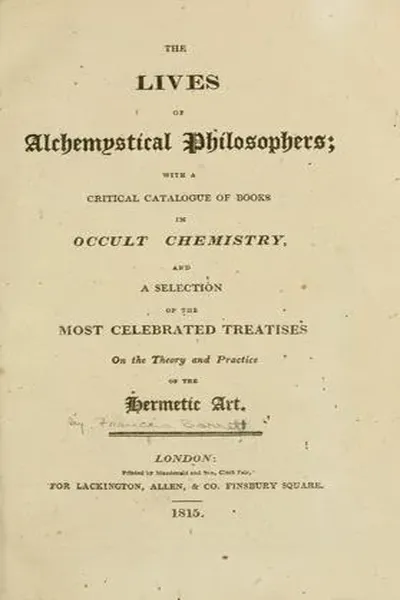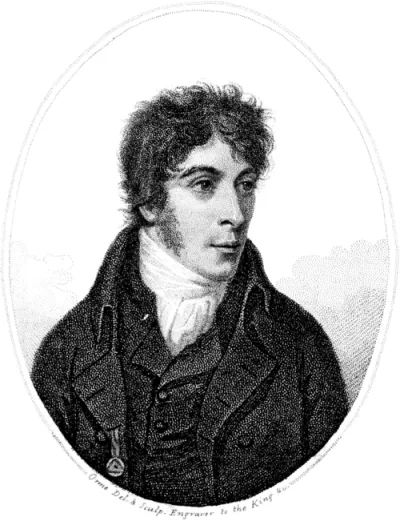
Francis Barrett
Francis Barrett was an English occultist who compiled a significant magical textbook and offered private instruction in the magical arts.
Francis Barrett, an English occultist likely born between 1770 and 1780, presented himself as a scholar of chemistry, metaphysics, and natural occult philosophy. He was known for his eccentric nature, conducting lessons in magic from his apartment and meticulously translating arcane texts, such as von Welling's "Philosophy of The Universe," into English. His parents were described as humble people. Barrett's primary contribution to occult literature was "The Magus," a compilation intended to rekindle interest in magical practices. This work heavily drew upon established texts like Agrippa's "Three Books of Occult Philosophy" and the "Heptameron" attributed to Peter of Abano, with Barrett updating the language and style. "The Magus" covered topics ranging from natural magic involving herbs and stones to alchemy, numerology, and biographical accounts of historical occult figures. Barrett also utilized "The Magus" as a means to recruit students for a magic circle and an associated, undisclosed school, which he advertised as a twelve-student institution focused on investigating nature's secrets and promoting spiritual and personal perfection.
Barrett's theological views distinguished him from some contemporary beliefs, as he did not attribute the power of witches to Satan, arguing that the Devil could directly influence individuals without intermediaries. He posited that magical power resided within the individual's inner self, suggesting that a connection between a person and external objects could be achieved through an appropriate inner disposition. His efforts to disseminate occult knowledge through teaching and publication marked him as a notable figure in the early 19th-century esoteric landscape.
The Magus and Esoteric Instruction
Francis Barrett's most significant published work was "The Magus," a textbook aimed at reviving interest in the occult arts. This comprehensive compilation largely consisted of selections from foundational occult texts, including Cornelius Agrippa's "Three Books of Occult Philosophy," the "Fourth Book of Occult Philosophy," and Robert Turner's translation of Peter of Abano's "Heptameron." Barrett undertook the task of modernizing the language and spelling of these older works. The content of "The Magus" explored a wide array of esoteric subjects, such as natural magic focusing on herbs and stones, magnetism, talismanic magic, alchemy, numerology, elemental theory, and biographies of renowned historical practitioners. Beyond its role as a compendium of magical knowledge, "The Magus" also served as a promotional tool for Barrett's own teachings. He included an advertisement seeking individuals interested in joining his magic circle and forming a specialized school.
Barrett's Occult School and Philosophy
The advertisement within "The Magus" detailed Barrett's intention to offer private instruction and lectures on various "sublime Sciences," including natural and occult philosophy, chemistry, and astrology. Students who joined this exclusive school, limited to twelve members, were promised initiation into "choicest operations" in natural philosophy, natural magic, Kabbalah, chemistry, talismanic arts, Hermetic philosophy, astrology, and physiognomy. The curriculum also aimed to impart knowledge of the "Rites, Mysteries, Ceremonies and Principles" of ancient philosophers, magi, Kabbalists, and adepts. Barrett articulated the school's purpose as the investigation of nature's hidden treasures, the contemplation of eternal wisdom, the pursuit of human perfection, the alleviation of suffering, and the promotion of morality and religion to ensure future felicity and general human welfare.
Views on Magic and Witchcraft
Francis Barrett expressed distinct views on the nature of magical power and the role of witchcraft. Regarding witches, he stated his disbelief that their alleged abilities to harm or kill through enchantment, touch, or the use of effigies originated from Satan. Barrett reasoned that if the Devil intended to eliminate a sinner, he would not require a witch as an intermediary. His understanding of magical power was rooted in the individual, suggesting that it resided within the "inward or inner man." He believed that a specific resonance existed between this inner self and the external world, allowing for the establishment of an appropriate connection between a person and an object when the individual was in the correct mental and spiritual state.
Key Ideas
- Magical power resides within the inner self.
- A connection between the individual and external objects can be achieved through appropriate disposition.
- Witchcraft's power does not necessarily stem from Satan.
Notable Quotes
“The magical power is in the inward or inner man. A certain proportion of the inner man longs for the external in all things. When the person is in the appropriate disposition an appropriate connection between man and object can be attained.”
Books by Francis Barrett
17 free public domain books · Read online or download