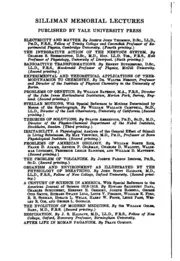
After Life in Roman Paganism: Lectures Delivered at Yale University on the ...
 81
81

After Life in Roman Paganism: Lectures Delivered at Yale University on the ...



Franz Cumont's 'After Life in Roman Paganism' is a treasure trove for modern esoteric seekers. The book's detailed exploration of ancient Roman beliefs about the afterlife provides a fascinating glimpse into the occult practices and spiritual rituals that permeated Roman society. Cumont's scholarly approach and extensive research make this text a reliable source for understanding the esoteric dimensions of Roman paganism. For those interested in the historical context of witchcraft and paganism, this book is an essential read. It bridges the gap between ancient beliefs and modern esoteric practices, offering insights that can enrich one's spiritual journey. The lectures, originally delivered at Yale University, are meticulously documented and provide a comprehensive overview of the subject matter. This book is a must-have for anyone delving into the mysteries of the afterlife and the occult.
📝 Description
81
Franz Cumont's 1920 lectures at Yale explored Roman pagan beliefs about the afterlife.
Franz Cumont's 1920 lectures, collected in "After Life in Roman Paganism," examine the complex beliefs surrounding death and immortality in the Roman world. Cumont details the doctrines that informed Roman views of the soul's passage through the cosmos, from celestial ascents to infernal journeys. The book discusses the persistence of consciousness, the soul's nature, and the rituals developed to manage the transition from life to what was conceived as eternity.
Cumont's analysis focuses on how these beliefs were not abstract concepts but were integrated into daily life and religious practices. He illustrates how the Romans perceived the afterlife not as an end but as a continuation, often fraught with peril and requiring specific rites. This work provides insight into a civilization's efforts to understand existence beyond death, revealing the symbolic systems and mythologies they constructed to address this fundamental human concern.
Cumont's work belongs to the study of ancient religions, specifically focusing on the esoteric dimensions of Roman paganism. It probes beliefs that were not always public dogma but often involved secret doctrines and mystery cults concerning death and rebirth. The lectures investigate how these currents of thought sought to provide frameworks for understanding existence beyond the physical, touching on ideas of spiritual continuity and transformation that resonate with broader esoteric traditions concerned with the fate of the soul.
💡 Why Read This Book?
Reading 'After Life in Roman Paganism' today offers a unique opportunity to understand the foundational beliefs that shaped Western esotericism. This book provides valuable insights into ancient Roman pagan practices, which can enrich your spiritual and intellectual pursuits. By exploring the esoteric dimensions of Roman paganism, you gain a deeper appreciation for the mystical traditions that have influenced modern occult practices. Whether you are a student of history, a practitioner of witchcraft, or simply curious about the afterlife, this book offers a wealth of knowledge that can enhance your understanding of the esoteric world.
⭐ Reader Reviews
Honest opinions from readers who have explored this book.
❓ Frequently Asked Questions
What is the main focus of 'After Life in Roman Paganism'?
The main focus of this book is the exploration of ancient Roman beliefs about the afterlife, including rituals, magic, and occult practices.
Who is the intended audience for this book?
This book is intended for historians, occult enthusiasts, and anyone interested in the esoteric dimensions of Roman paganism.
Why is this book important for modern esoteric seekers?
This book provides a historical context for modern esoteric practices, offering insights into ancient beliefs that can enrich spiritual journeys.
🔮 Key Themes & Symbolism
The Celestial Journey and Soul's Ascent
Look at the intricate cosmology of Roman paganism, where the soul’s post-mortem journey was not a passive awaiting but an active ascent through celestial spheres. Cumont illuminates the symbolic pathways, the trials faced, and the ultimate destinations envisioned for the departed. This theme explores the profound connection between earthly life, stellar observations, and the human yearning for spiritual transcendence, revealing how the stars and heavens served as both a map and a promise for the immortal soul.
The Persistence of Consciousness and the Nature of the Soul
This book critically examines the Roman pagan understanding of consciousness after death. Cumont investigates the philosophical and religious debates concerning the soul's substance, its potential immortality, and its relationship to the physical body. It uncovers the varied perspectives, from the belief in a separable soul that continues to exist and perceive, to doctrines of dissolution and eventual reintegration, offering a wide range of ancient thought on what it means to endure beyond the mortal coil.
Rituals, Mysteries, and the Propitiation of the Dead
Explore the practical and ritualistic dimensions of Roman afterlife beliefs. Cumont details the ceremonies, prayers, and mystery cults designed to guide, protect, and appease the souls of the departed, as well as to prepare the living for their own inevitable transition. This theme highlights the symbiotic relationship between the living and the dead, and how the manipulation of symbolic forces was believed to ensure a favorable outcome in the eternal journey.
💬 Memorable Quotes
Direct passages from the work, attributed to the author.
“The stars were guides for the immortal soul.”
— Highlights the astrological and cosmological significance in ancient Roman beliefs about the afterlife, where celestial bodies served as markers or pathways for the soul's journey.
“Our earthly life is but a prelude to eternity.”
— This reflects the profound emphasis on the eternal aspect of existence within pagan thought, framing mortal life as a preparatory phase for a greater, unending reality.
“The mysteries offered a secret knowledge of salvation.”
— Points to the role of mystery cults in providing esoteric guidance and a promise of a more favorable afterlife, accessible through initiation and secret rites.
“To know the fate of the soul is to conquer death.”
— Emphasizes the intellectual and spiritual pursuit of understanding the afterlife as a means to diminish the fear of death and attain a form of spiritual liberation.
💡 Key Ideas
Editorial paraphrase of the work's core concepts — not direct quotes.
The dead are not annihilated but transformed.
This quote captures the fundamental pagan belief in a continuation of existence, suggesting a metamorphosis rather than an end, a core tenet of their spiritual worldview.
🌙 Esoteric Significance
Tradition
This work delves deeply into the esoteric currents of Greco-Roman paganism, particularly its Hellenistic manifestations. It explores the mystical traditions that influenced Roman beliefs about the soul's journey, including Pythagoreanism, Orphism, Stoicism, and the various mystery cults like those of Eleusis, Mithras, and Isis. Cumont reveals how these traditions offered secret doctrines and ritualistic paths for achieving spiritual salvation and a favorable afterlife, aligning with broader esoteric principles of hidden knowledge and transformative practice.
Symbolism
The book is rich with the symbolism of Roman pagan afterlife beliefs. Key symbols include celestial bodies (planets, stars) representing divine realms and guides, underworld imagery (rivers, gates, judges) signifying trials and judgment, and transformative elements like purification rites and ecstatic journeys. Cumont deciphers how these symbols functioned not merely as artistic motifs but as potent conduits for spiritual understanding, mapping the soul's path from material existence to eternal states of being, and reflecting an ancient understanding of cosmic order.
Modern Relevance
In an age increasingly seeking alternative spiritual frameworks and a deeper understanding of humanity's relationship with the unseen, Cumont's work offers profound resonance. It provides a historical foundation for contemporary explorations of consciousness, reincarnation, and the nature of the soul, drawing parallels between ancient esoteric quests and modern spiritual inquiries. For practitioners of witchcraft, paganism, and other earth-based traditions, understanding these historical roots offers invaluable context and insight into the enduring human desire for connection to the divine and the eternal.
👥 Who Should Read This Book
This scholarly yet evocative work is essential for several audiences. **Academics and historians** will find it a foundational text for understanding the religious and philosophical field of Roman paganism. **Spiritual seekers and practitioners** of witchcraft, paganism, or related esoteric paths will discover rich historical context for their beliefs about the soul, death, and the afterlife, gaining insights into ancient rituals and symbolism. **Students of comparative religion** will appreciate its meticulous analysis of diverse afterlife concepts. Even **curious general readers** drawn to the mysteries of ancient civilizations and the perennial human quest for meaning beyond life will find this book deeply informative.
📜 Historical Context
Franz Cumont's 'After Life in Roman Paganism' emerged from lectures delivered at Yale University in the early 20th century, a period of intense scholarly interest in the religious and philosophical underpinnings of antiquity. This era saw a burgeoning desire to understand the non-Christian spiritual landscape that profoundly influenced Western civilization. Cumont, a leading figure in the study of Hellenistic religions and mystery cults, situated his work within a broader academic movement that sought to excavate the esoteric dimensions of ancient faiths. His lectures drew upon a rich body of archaeological evidence, epigraphic discoveries, and textual analysis, reflecting the sophisticated methodologies of classical scholarship at the time. The book's exploration of Roman afterlife beliefs speaks to the period's fascination with the perennial human questions of mortality, immortality, and the soul’s destiny, offering a crucial counterpoint to the dominant Christian narratives.
📔 Journal Prompts
Reflect on the Roman concept of the soul's journey; how does it compare to modern spiritual beliefs about reincarnation or ascension?
Consider the role of celestial bodies in ancient afterlife beliefs. How do stars and planets influence your own sense of cosmic connection or destiny?
Explore the idea of 'secret knowledge' within mystery cults. What 'mysteries' in your own life have offered profound understanding or transformation?
How did the Roman focus on appeasing and guiding the dead shape their relationship with ancestors and the spirit world?
Contemplate the Roman fear of annihilation versus their hope for eternal existence. Where do your own deepest fears and hopes about death reside?
🗂️ Glossary
Hellenistic Period
The historical period spanning from the death of Alexander the Great (323 BCE) to the rise of the Roman Empire, characterized by the widespread dissemination of Greek culture and ideas throughout the Mediterranean and Near East.
Orphism
An ancient Greek religious movement attributed to the mythical poet Orpheus, emphasizing the soul's divine origin, reincarnation, and the need for purification to achieve salvation and escape the cycle of rebirth.
Mystery Cults
Ancient Greco-Roman religious groups that offered secret rites and initiations, promising adherents a deeper spiritual understanding, divine favor, and often a more desirable afterlife.
Celestial Spheres
In ancient cosmology, the concentric, transparent spheres believed to surround the Earth, carrying the planets, stars, and other heavenly bodies, often seen as realms inhabited by deities or spirits.
Eschatology
The branch of theology and philosophy concerned with death, judgment, and the final destiny of the soul and of the human race; the study of beliefs about the end times or afterlife.
This book appears in 2 collections
🔮 Readers Also Liked
Browse all →





More by Franz Valery Marie Cumont
All books →


From the “Witchcraft” Collection
View all →






More Free Witchcraft & Paganism Books
View all →