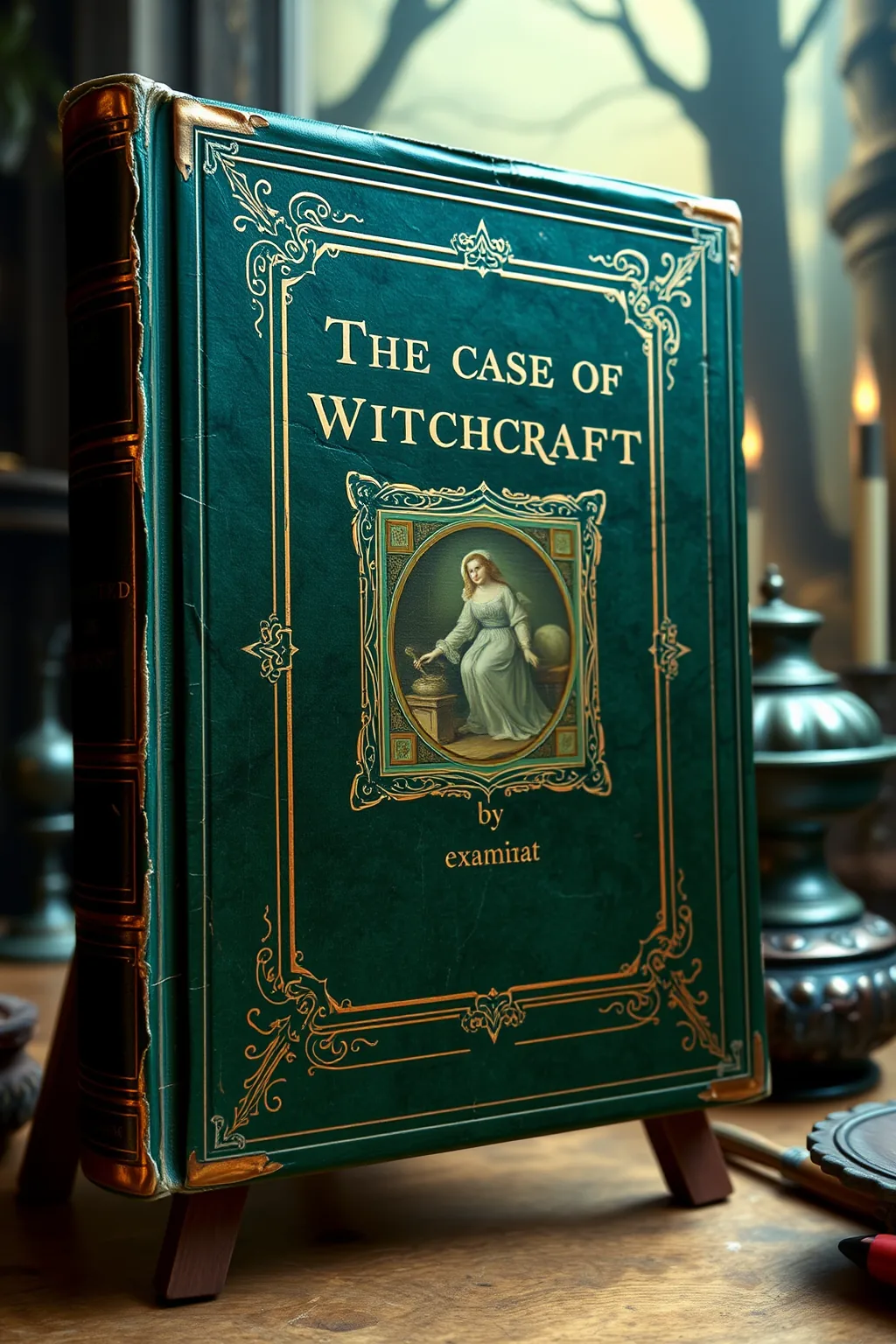
The case of the Hertfordshire witchcraft consider'd. Being an examination of a book, entitl'd, A full and impartial account of the discovery of sorcery & witchcraft, practis'd by Jane Wenham of Walkern ... 1712
 72
72

The case of the Hertfordshire witchcraft consider'd. Being an examination of a book, entitl'd, A full and impartial account of the discovery of sorcery & witchcraft, practis'd by Jane Wenham of Walkern ... 1712



Review by Alaric Kestrel (Metaphysical Studies Reviewer) — 'The Case of the Hertfordshire Witchcraft Consider’d' is a fascinating exploration of the occult and its societal impact. This book offers profound insights into the esoteric traditions of the 18th century, making it a must-read for anyone interested in the mystical arts. The author's examination of Jane Wenham's trial provides a rich tapestry of symbolism and hidden knowledge, revealing the philosophical significance of witchcraft trials in shaping our understanding of the supernatural. The intended audience, which includes scholars, spiritual seekers, and practitioners of the occult, will find this work invaluable in their quest for deeper understanding.
📝 Description
72
This 1738 examination scrutinizes the 1712 trial of Jane Wenham of Walkern, Hertfordshire.
Published in 1738, 'The Case of the Hertfordshire Witchcraft Consider’d' directly addresses a specific witchcraft accusation. The anonymous author dissects the published account of Jane Wenham's trial, which occurred in 1712. The work questions the evidence presented and the societal beliefs that led to her condemnation. It is not a simple retelling but a critical analysis of how such accusations were processed and understood in early 18th-century England.
The author engages with the philosophical and religious underpinnings of the belief in witchcraft. The text examines the nature of proof, the potential for deception, and the role of superstition in a society grappling with religious and social change. It invites contemplation on the boundaries between perceived supernatural events and rational explanations, particularly within the context of legal proceedings and public opinion.
This work engages with the broader tradition of demonological and skeptical literature prevalent in the centuries following the peak of witch trials. While not a grimoire or a manual of magical practices, it reflects a period where belief in witchcraft was being increasingly scrutinized, even as occult traditions persisted. The text situates itself within debates about the supernatural, reason, and religious interpretation, common themes in esoteric thought that explored the hidden forces shaping the world.
💡 Why Read This Book?
Read this book to gain a deeper understanding of the historical and esoteric significance of witchcraft trials. Ideal for seekers of hidden knowledge, scholars of the occult, and practitioners of the mystical arts, 'The Case of the Hertfordshire Witchcraft Consider’d' offers a unique perspective on the intersection of law, religion, and the supernatural. Discover the enduring allure of witchcraft and its philosophical implications in this meticulously crafted examination.
⭐ Reader Reviews
Honest opinions from readers who have explored this book.
❓ Frequently Asked Questions
What is the significance of Jane Wenham's trial?
Jane Wenham's trial is significant for its examination of the legal and religious frameworks surrounding witchcraft accusations in the 18th century.
Is this book suitable for beginners in the occult?
While the book provides valuable insights, it is more suited for those with some prior knowledge of occult studies and historical context.
What are the key themes explored in this book?
The key themes include the nature of evidence, the role of religion in society, and the philosophical significance of witchcraft and sorcery.
How does this book contribute to modern esoteric studies?
This book offers historical context and symbolism that are still relevant to modern practitioners of the occult, providing a deeper understanding of the mystical arts.
Can I read this book online for free?
Yes, you can read this book online for free on various digital libraries and platforms that specialize in esoteric literature.
🔮 Key Themes & Symbolism
The Nature of Evidence
This book explores the philosophical debate surrounding the nature of evidence in witchcraft trials, questioning the validity of supernatural claims and the legal framework that supported them. It invites readers to consider the esoteric implications of these trials and their impact on our understanding of the mystical arts.
Religion and Society
The role of religion in shaping societal views on witchcraft and sorcery is a central theme. The book examines how religious beliefs and practices influenced the persecution of alleged witches and the societal attitudes towards the occult.
Symbolism and Hidden Knowledge
Symbolism plays a central role in this examination of witchcraft. The book explores the hidden knowledge and mystical symbolism that were integral to the trials and their philosophical significance, providing readers with a deeper understanding of the esoteric traditions of the 18th century.
💡 Key Ideas
Editorial paraphrase of the work's core concepts — not direct quotes.
The boundaries between reality and the supernatural were perilously thin.
This quote highlights the blurred lines between the natural and supernatural worlds during the 18th century.
The nature of evidence in witchcraft trials remains a philosophical debate.
This passage underscores the ongoing debate about the validity of supernatural evidence in legal contexts.
Religious beliefs shaped societal views on the occult.
This quote emphasizes the influence of religion on societal attitudes towards witchcraft and sorcery.
Symbolism was integral to the trials and their philosophical significance.
This line underscores the importance of mystical symbolism in understanding the esoteric traditions of the time.
The enduring allure of witchcraft challenges our understanding of the supernatural.
This quote highlights the timeless fascination with witchcraft and its philosophical implications.
🌙 Esoteric Significance
Tradition
This book belongs to the Hermetic tradition, focusing on the hidden knowledge and mystical symbolism that were central to the occult practices of the 18th century. It explores the esoteric significance of witchcraft trials and their impact on our understanding of the supernatural.
Symbolism
Key symbols in this work include the use of supernatural evidence, the role of religious iconography, and the mystical significance of witchcraft rituals. These symbols provide a deeper understanding of the esoteric traditions and their philosophical implications.
Modern Relevance
This book remains relevant to modern practitioners of the occult, offering insights into the historical context and symbolism of witchcraft trials. Contemporary scholars and spiritual seekers can draw on this work to deepen their understanding of the mystical arts and their enduring allure.
👥 Who Should Read This Book
Beginners in the occult may find this book challenging but rewarding, as it provides a historical context for modern esoteric practices. Scholars of the occult will appreciate the depth of analysis and the philosophical debates it presents. Spiritual seekers and practitioners of the mystical arts will find valuable insights into the hidden knowledge and symbolism that shape our understanding of the supernatural. Those interested in the intersection of law and mysticism will also benefit from this meticulous examination of a central historical event.
📜 Historical Context
Published in 1712, 'The Case of the Hertfordshire Witchcraft Consider’d' emerged during a time when witchcraft trials were still a matter of public and legal concern. The era was marked by a struggle between emerging rationalism and entrenched religious beliefs, creating a fertile ground for the examination of occult practices. This book was important for its critical analysis of the evidence presented in Jane Wenham's trial, challenging the prevailing views on sorcery and witchcraft. Its influence extended beyond the legal sphere, inspiring philosophical debates about the nature of evidence and the role of religion in society.
📔 Journal Prompts
How do the philosophical debates in this book influence your understanding of the supernatural?
What role does symbolism play in the occult practices described in the book?
How does the historical context of Jane Wenham's trial shape your views on modern esoteric traditions?
What insights can you draw from the examination of evidence in witchcraft trials?
How does the influence of religion on societal attitudes towards the occult resonate with contemporary beliefs?
🗂️ Glossary
Hermetic Tradition
A school of thought focused on hidden knowledge and mystical symbolism, often associated with alchemy and the occult.
Supernatural Evidence
Evidence presented in legal contexts that claims to demonstrate the existence of supernatural phenomena.
Occult Practices
Mystical and esoteric rituals and beliefs that are often hidden from public view.
Witchcraft Trials
Legal proceedings in which individuals were accused of practicing witchcraft and sorcery.
Esoteric Symbolism
Symbols and iconography that hold hidden or mystical meanings, often associated with the occult.
This book appears in 2 collections
🔮 Readers Also Liked
Browse all →





From the “Witchcraft” Collection
View all →


More Free Witchcraft & Paganism Books
View all →