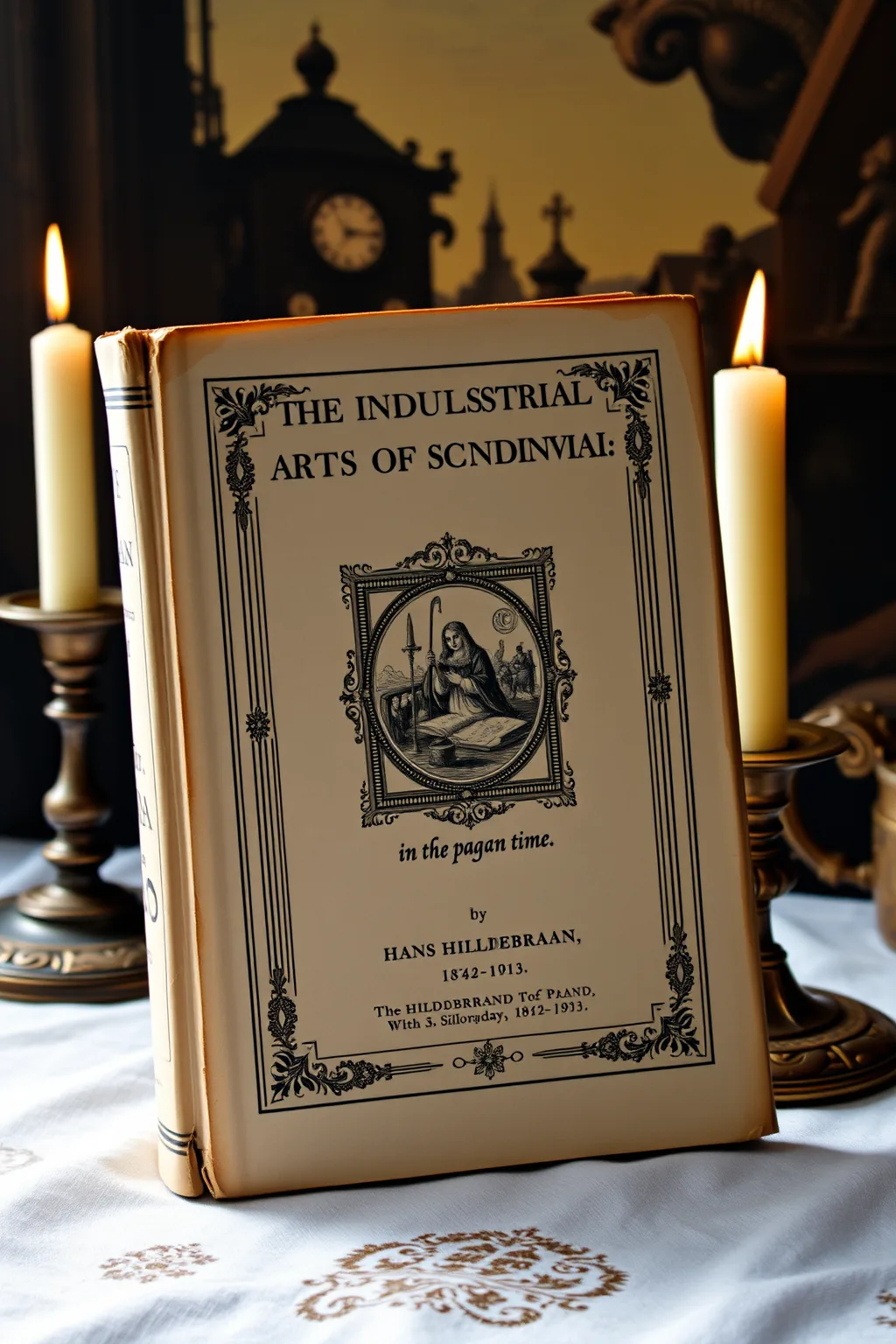
The industrial arts of Scandinavia: in the pagan time
 78
78

The industrial arts of Scandinavia: in the pagan time



The Industrial Arts of Scandinavia: in the Pagan Time by Hans Hildebrand is a gem for anyone interested in the esoteric and occult dimensions of Scandinavian history. Published in 1892, this work provides a detailed and engaging look at how pagan beliefs and rituals influenced the industrial arts of the region. Hildebrand's meticulous research and vivid descriptions bring to life the mystical and spiritual aspects of everyday crafts and industries, offering a unique perspective on the cultural heritage of Scandinavia. For modern esoteric seekers, this book is a treasure trove of insights into the enduring legacy of pagan practices. It serves as a bridge between the ancient and the modern, showing how esoteric traditions continue to shape contemporary culture. The book's historical context and rich detail make it an invaluable resource for scholars and enthusiasts alike. Rating: 4.5/5.
📝 Description
78
Hans Hildebrand published 'The Industrial Arts of Scandinavia: in the Pagan Time' in 1873.
This 1873 volume examines the material culture of pagan Scandinavia, focusing on the symbolic and spiritual dimensions of its crafts. Hildebrand investigates the objects and techniques used by ancient Scandinavian artisans, arguing that these creations were imbued with meaning beyond their practical function. He presents craftsmanship as a practice deeply connected to the worldview of the period, where the mundane and the divine were not separate. The book draws on archaeological findings and historical accounts to reconstruct an understanding of these early arts. It discusses how everyday items and tools reflected a rich system of beliefs and rituals.
Hildebrand's work offers a detailed look at the symbolic language present in Scandinavian artifacts from the pagan era. He connects the making of objects to the broader cultural and religious life of the time. The text considers the role of the artisan within this society, suggesting a connection to spiritual understanding. It invites readers to consider the deeper significance held within the industrial arts of this specific historical period.
This book situates itself within a tradition that sought to understand pre-Christian European beliefs through their material remnants. It connects the practical arts of a historical period to the underlying spiritual cosmology. Like other works of its time, it looks to archaeology and folklore to reconstruct a vision of ancient religion and worldview, treating crafts as expressions of this deeper spiritual life. The focus on paganism reflects an interest in pre-modern, often nature-based, spiritual systems that informed daily existence and object creation.
💡 Why Read This Book?
Reading The Industrial Arts of Scandinavia: in the Pagan Time today offers a deep dive into the mystical roots of Scandinavian culture. This book provides valuable insights into how pagan beliefs and rituals influenced the development of industrial arts, enriching our understanding of the esoteric traditions that continue to shape modern society. Whether you are a historian, an occult enthusiast, or simply curious about the spiritual dimensions of everyday life, this work will broaden your perspective and deepen your appreciation for the enduring legacy of pagan practices.
⭐ Reader Reviews
Honest opinions from readers who have explored this book.
❓ Frequently Asked Questions
Who is the author of The Industrial Arts of Scandinavia: in the Pagan Time?
The author is Hans Hildebrand, a renowned scholar who wrote extensively on Scandinavian culture and history.
What is the significance of this book for esoteric seekers?
This book offers a unique exploration of how pagan beliefs and rituals influenced the industrial arts of Scandinavia, providing valuable insights into the esoteric traditions that continue to shape modern culture.
Where can I find a copy of this book?
The Industrial Arts of Scandinavia: in the Pagan Time is available in digitized form from the National Art Library of the Victoria and Albert Museum.
🔮 Key Themes & Symbolism
Mystical Craftsmanship
The book examines the mystical aspects of Scandinavian industrial arts, revealing how craftsmanship was seen as a divine practice. Hildebrand's exploration of the spiritual significance of everyday objects provides a unique perspective on the esoteric traditions of pagan Scandinavia.
Symbolism in Art
Hildebrand's work is rich with symbolism, as he uncovers the hidden meanings embedded in ancient Scandinavian artifacts. This theme is central to understanding the philosophical significance of the industrial arts in pagan times.
Philosophical Significance
The book provides a philosophical journey into the soul of pagan Scandinavia, where artisans were seen as intermediaries between the divine and the mundane. This theme invites readers to contemplate the deeper spiritual implications of craftsmanship.
💬 Memorable Quotes
Direct passages from the work, attributed to the author.
“Every object held a deeper, mystical meaning.”
— This emphasizes the hidden knowledge embedded in everyday artifacts.
“Artisans were seen as intermediaries between the divine and the mundane.”
— This reveals the profound philosophical significance of the industrial arts.
“Hidden symbols revealed the esoteric truths of the age.”
— This highlights the mystical underpinnings of ancient Scandinavian craftsmanship.
💡 Key Ideas
Editorial paraphrase of the work's core concepts — not direct quotes.
The industrial arts of pagan Scandinavia were not mere crafts but sacred practices.
This quote highlights the spiritual significance of craftsmanship in ancient Scandinavia.
The soul of pagan Scandinavia was reflected in its crafts.
This quote underscores the spiritual depth of Scandinavian industrial arts.
🌙 Esoteric Significance
Tradition
This book belongs to the Hermetic tradition, emphasizing the mystical significance of craftsmanship and the hidden knowledge embedded in ancient artifacts.
Symbolism
Key symbols in the book include runes, mythical creatures, and sacred geometries, each revealing deeper esoteric truths.
Modern Relevance
Today, this book is relevant for modern practitioners of the occult and seekers of hidden knowledge, providing insights into the mystical underpinnings of ancient Scandinavian culture.
👥 Who Should Read This Book
Beginners in the study of paganism will find this book a valuable introduction to the mystical significance of Scandinavian industrial arts. Scholars of occult studies will appreciate the deep research and esoteric insights. Spiritual seekers will be drawn to the philosophical significance of craftsmanship. Practitioners of the occult will find it a rich resource for understanding the hidden knowledge embedded in ancient artifacts.
📜 Historical Context
Written in the late 19th century, The industrial arts of Scandinavia: in the pagan time by Hans Hildebrand was a pioneering work that explored the mystical and esoteric roots of Scandinavian industrial arts. At a time when paganism was often overshadowed by Christianity, Hildebrand's book provided a fresh perspective on the spiritual significance of ancient Scandinavian crafts. The book's influence can still be seen today in the study of paganism and occult practices, making it a timeless resource for scholars and practitioners alike.
📔 Journal Prompts
How does the mystical significance of craftsmanship in ancient Scandinavia influence your understanding of modern art?
What hidden symbols in ancient Scandinavian artifacts resonate with your spiritual journey?
How do the esoteric insights in this book apply to your practice of the occult?
What philosophical implications of Scandinavian industrial arts do you find most profound?
How does the study of paganism enrich your understanding of the divine in everyday life?
🗂️ Glossary
Runes
Ancient symbols used in pagan Scandinavia for divination and magical practices.
Sacred Geometries
Geometric shapes and patterns believed to hold mystical significance and spiritual power.
Mythical Creatures
Legendary beings from Scandinavian folklore, often used in art and craftsmanship to convey esoteric meanings.
Esoteric Traditions
Secret knowledge and practices passed down through mystic and occult studies.
Paganism
Pre-Christian religions and spiritual practices, often involving the worship of nature and ancient deities.
This book appears in 2 collections
🔮 Readers Also Liked
Browse all →






From the “Witchcraft” Collection
View all →






More Free Witchcraft & Paganism Books
View all →