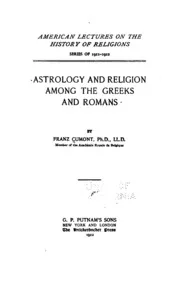
Astrology and Religion Among the Greeks and Romans
 79
79

Astrology and Religion Among the Greeks and Romans

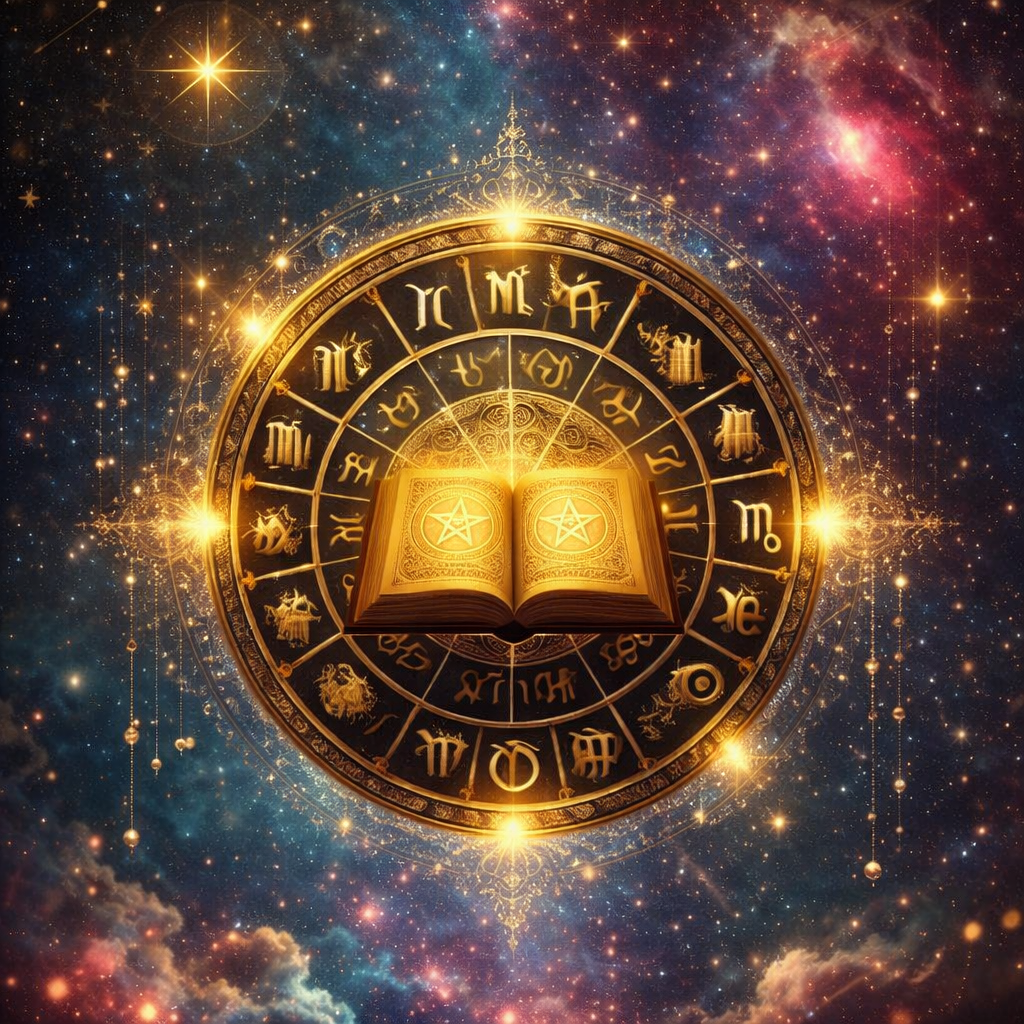

'Astrology and Religion Among the Greeks and Romans' by Franz Cumont is a foundational text for anyone interested in the esoteric and occult traditions of the ancient world. Cumont's detailed research and scholarly approach make this book a must-read for modern seekers of esoteric knowledge. The author's ability to weave together historical data with spiritual insights provides a rich tapestry of understanding. Cumont's work is particularly valuable for its exploration of how astrology and religion were inseparable in the lives of ancient Greeks and Romans. This book not only educates but also inspires readers to look deeper into the mystical connections that have shaped human spirituality. The depth of historical context and the clarity of Cumont's writing make this a five-star read for those fascinated by the occult and the enduring influence of astrology.
📝 Description
79
Franz Cumont's 1912 study examines the entanglement of astrology and religion in Greek and Roman culture.
Published in 1912, Franz Cumont's study, 'Astrology and Religion Among the Greeks and Romans,' examines the deep connections between celestial observation and religious thought in antiquity. Cumont traces how astrological beliefs influenced theological concepts and practices across Hellenistic and Roman societies. He details the rise of astrological interpretations of divine will and cosmic order. The work investigates how these ideas permeated various aspects of life, from imperial ideology to personal piety.
Cumont's research reveals the intricate ways in which the heavens were perceived as a reflection of divine powers and a guide to understanding fate. He discusses the spread of Babylonian astrological systems into the Mediterranean world and their assimilation by Greek and Roman thinkers. The book looks at specific deities and cults that incorporated astrological symbolism. It shows how the understanding of the cosmos shaped religious cosmology and ritual life.
Franz Cumont's work is a significant scholarly treatment of astrology's role within the broader religious landscape of the ancient Mediterranean. It situates astrological practices not as fringe beliefs but as integral components of classical religions and philosophies. The book connects these celestial interpretations to wider esoteric traditions that sought meaning in cosmic patterns and divine correspondences. It provides a historical foundation for understanding how ancient peoples viewed the universe as imbued with spiritual significance and how this worldview shaped their religious lives.
💡 Why Read This Book?
Reading 'Astrology and Religion Among the Greeks and Romans' today offers a unique window into the spiritual and esoteric practices of the ancient world. Modern readers will gain a deeper understanding of how astrology and religion were intertwined, influencing the cultural and spiritual landscape of ancient Greece and Rome. This book provides valuable insights into the enduring influence of astrology on human culture and spirituality, making it an essential read for anyone interested in the occult and esoteric traditions.
⭐ Reader Reviews
Honest opinions from readers who have explored this book.
❓ Frequently Asked Questions
Who is the author of 'Astrology and Religion Among the Greeks and Romans'?
The author is Franz Valery Marie Cumont, a renowned scholar in the fields of history and religion.
What is the primary focus of this book?
The primary focus is the exploration of how astrology and religious practices were intertwined in ancient Greek and Roman societies.
Is this book suitable for modern esoteric seekers?
Yes, this book is an excellent resource for modern esoteric seekers, providing deep insights into the historical and spiritual connections between astrology and religion.
🔮 Key Themes & Symbolism
Celestial Influences on Religion
This theme explores how the ancient Greeks and Romans viewed the stars as divine entities that influenced their religious beliefs and practices. Cumont explores the esoteric symbology of the sidereal world, revealing the hidden connections between the celestial and the divine.
Astrological Symbolism
The book delves deeply into the symbolic meanings of astrological signs and their relevance to ancient theology. Cumont's research uncovers the mystical significance of the stars, providing insights into the esoteric traditions of the past.
Ancient Religious Practices
This theme examines the religious rituals and practices of the Greeks and Romans that were influenced by astrology. Cumont's work reveals how the ancients integrated celestial observations into their spiritual lives, creating a collection of mystical beliefs and practices.
💡 Key Ideas
Editorial paraphrase of the work's core concepts — not direct quotes.
The stars, in their eternal dance, whisper secrets to those who listen.
This quote highlights the mystical connection between the celestial and the divine, emphasizing the hidden knowledge that can be gained from observing the stars.
Astrology is the language of the gods, spoken through the heavens.
This line underscores the idea that astrology serves as a divine communication tool, bridging the gap between the mortal and the immortal.
The ancients saw the cosmos as a living entity, breathing life into their spiritual beliefs.
This passage emphasizes the ancient perception of the cosmos as a living, breathing entity, influencing their religious and spiritual practices.
The symbology of the stars holds the key to unlocking the mysteries of the divine.
This quote suggests that the esoteric symbology of the stars can reveal hidden truths about the divine, making it a valuable tool for spiritual seekers.
In the stars, we find the reflection of our own souls.
This line underscores the idea that the celestial world mirrors the inner world of the individual, providing a pathway to self-discovery and spiritual enlightenment.
🌙 Esoteric Significance
Tradition
This book belongs to the Hermetic tradition, which emphasizes the mystical and esoteric connections between the celestial and the divine. It draws on ancient wisdom and symbolism to reveal the hidden knowledge that can be gained from observing the stars and their influence on religious practices.
Symbolism
Key symbols in this work include the astrological signs and their associated celestial bodies, which are seen as divine entities influencing human affairs. Cumont's exploration of these symbols reveals their mystical significance and their role in ancient religious practices.
Modern Relevance
This book remains relevant today for modern practitioners of astrology and esoteric traditions. Its insights into the celestial influences on religion provide a foundation for understanding the mystical connections between the stars and the divine, making it a valuable resource for spiritual seekers and scholars alike.
👥 Who Should Read This Book
This book is ideal for beginners seeking an introduction to the mystical and esoteric traditions of ancient astrology. Scholars of ancient religions will find it a comprehensive resource for understanding the celestial influences on theological beliefs. Spiritual seekers will benefit from the useful insights into the symbolic connections between the stars and the divine. Practitioners of astrology will appreciate the detailed exploration of astrological symbolism and its relevance to ancient religious practices.
📜 Historical Context
Written in the late 19th and early 20th centuries, 'Astrology and Religion Among the Greeks and Romans' emerged during a time of renewed interest in the mystical and esoteric traditions of antiquity. Cumont's work was key in bridging the gap between historical research and spiritual inquiry, providing a comprehensive exploration of how the ancients perceived the stars and their influence on religious practices. The book's influence can be seen in the subsequent development of astrological studies and the resurgence of interest in the occult and mystical traditions.
📔 Journal Prompts
How do the celestial influences on ancient religions resonate with your own spiritual beliefs?
What insights can you gain from the esoteric symbology of the stars?
How does the perception of the cosmos as a living entity influence your understanding of the divine?
In what ways can astrology serve as a tool for self-discovery and spiritual enlightenment?
How can the mystical connections between the stars and the divine be applied to modern spiritual practices?
🗂️ Glossary
Sidereal
Relating to the stars, particularly in the context of astrology and celestial observations.
Theology
The study of the nature of the divine and religious beliefs, often explored through esoteric and mystical traditions.
Hermetic
Relating to the mystical and esoteric teachings of Hermes Trismegistus, emphasizing the connections between the celestial and the divine.
Gnostic
Relating to the ancient mystical tradition that emphasizes hidden knowledge and the divine spark within each individual.
Kabbalistic
Relating to the Jewish mystical tradition that explores the esoteric meanings of the Torah and the divine.
This book appears in 1 collection
🔮 Readers Also Liked
Browse all →






More by Franz Valery Marie Cumont
All books →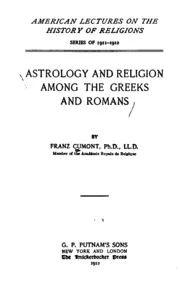


From the “Astrology” Collection
View all →
![[ Stephen Arroyo] Astrology](/img/thumb/stephen-arroyo-astrology.webp)



![Bayer, George ( 1936 38) A Treasure House Of Bayer [ 78 P.]](/img/thumb/bayer-george-1936-38-a-treasure-house-of-bayer-78-p.webp)



More Free Astrology & Cosmology Books
View all →