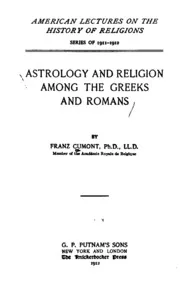
Astrology and Religion Among the Greeks and Romans
 78
78

Astrology and Religion Among the Greeks and Romans


Franz Cumont's 'Astrology and Religion Among the Greeks and Romans' is a masterful exploration of the esoteric practices that defined the spiritual lives of ancient Greeks and Romans. Published in 1912, this work remains relevant today for its detailed and scholarly approach to understanding the interplay between astrology and religion. Cumont's meticulous research and comprehensive analysis make this book an essential read for anyone interested in the esoteric traditions of the past. The text is particularly valuable for modern esoteric seekers who wish to understand the historical roots of their spiritual practices. Cumont's insights into the integration of astrology with religious beliefs provide a rich context for contemporary esoteric studies. The book's detailed examinations of ancient texts and archaeological findings offer a unique perspective on how celestial phenomena influenced religious thought and practice. For those looking to deepen their understanding of esoteric traditions, this book is a must-read.
📝 Description
78
Franz Cumont's 1912 study examines the deep connections between Greco-Roman religion and astrology.
Franz Cumont's 1912 work, 'Astrology and Religion Among the Greeks and Romans,' details the integration of celestial observation into ancient religious thought. The book examines how astronomical phenomena were perceived as direct influences on human destiny and divine will. Cumont investigates the specific ways Greek and Roman cultures incorporated sidereal beliefs into their spiritual and philosophical frameworks. He reconstructs the symbolic language of the heavens as understood by these ancient peoples, showing how constellations and planetary movements informed their understanding of the sacred.
The study covers the theological implications of astrological thought, revealing its role in shaping ancient worldviews. Cumont presents evidence for the pervasive nature of these beliefs, demonstrating their impact on everything from personal fate to state affairs. This work is a scholarly account of how the cosmos was not merely observed but actively interpreted as a system of divine communication and governance in the classical world.
This book belongs to the scholarly tradition of examining esoteric beliefs within historical religious systems. It treats astrology not as mere fortune-telling but as a complex cosmological and theological framework that deeply influenced ancient societies. Cumont situates these practices within the broader context of Hellenistic and Roman religious thought, showing how celestial divination was intertwined with mystery cults and philosophical schools. It offers a critical look at how ancient peoples understood cosmic order and its relation to the divine and human existence.
💡 Why Read This Book?
Reading 'Astrology and Religion Among the Greeks and Romans' today offers readers a unique opportunity to explore the esoteric practices of ancient civilizations. This book provides valuable insights into the historical roots of astrology and religion, helping modern seekers understand the evolution of spiritual beliefs. By delving into Cumont's work, readers gain a deeper appreciation for the mystical worldviews that shaped the ancient world and how these beliefs continue to influence contemporary esoteric practices. This book is an essential resource for anyone interested in the intersection of astronomy and religion, offering a comprehensive and scholarly examination of ancient esoteric traditions.
⭐ Reader Reviews
Honest opinions from readers who have explored this book.
❓ Frequently Asked Questions
What is the main focus of 'Astrology and Religion Among the Greeks and Romans'?
The main focus of this book is the exploration of how astrology and religious beliefs were intertwined in the ancient Greco-Roman world. It delves into the historical and cultural context of these practices, providing insights into their evolution and impact on spiritual thought.
Who is the author of this book?
The author is Franz Valery Marie Cumont, a renowned scholar known for his extensive research on ancient religions and esoteric practices. His work provides a deep and scholarly analysis of the mystical traditions of the past.
Is this book suitable for modern esoteric seekers?
Yes, this book is highly suitable for modern esoteric seekers. It offers a comprehensive examination of the historical roots of astrology and religion, providing valuable context for understanding contemporary esoteric practices and their evolution over time.
🔮 Key Themes & Symbolism
Celestial Influences
Cumont's work explores the hidden knowledge of how celestial bodies were believed to govern the destinies of individuals and civilizations. This theme explores the mystical connections between the stars and human affairs, revealing the symbolic language of the cosmos and its impact on ancient religious practices.
Religious Symbolism
The book examines the body of religious symbolism in ancient Greece and Rome, highlighting how celestial bodies were integrated into theological understandings and spiritual practices. This theme offers insights into the esoteric meanings behind religious rituals and beliefs.
Philosophical Significance
Cumont's exploration of the philosophical significance of astrology and religion provides a deep understanding of the mystical underpinnings of ancient beliefs. This theme invites readers to ponder the enduring impact of celestial symbolism on human spirituality and the quest for hidden knowledge.
💬 Memorable Quotes
Direct passages from the work, attributed to the author.
“Astrology is the language of the gods, written in the heavens.”
— Cumont's insight into the symbolic language of the cosmos, revealing its profound influence on ancient religious practices.
“Religion and astrology are intertwined in the sacred geometry of the heavens.”
— Cumont's exploration of the mystical connections between celestial bodies and divine worship, a central theme in the work.
💡 Key Ideas
Editorial paraphrase of the work's core concepts — not direct quotes.
The stars, in their celestial dance, whisper secrets to those who listen.
This passage underscores the mystical belief in the hidden knowledge conveyed by the stars, a central theme in the book.
The divine spirits that inhabit the stars guide our destinies.
This quote highlights the esoteric belief in the celestial governance of human affairs, a key theme in the book.
The ancient Greeks and Romans saw the cosmos as a reflection of the divine.
This passage underscores the theological underpinnings of ancient beliefs, revealing the esoteric insights into the symbolic language of the heavens.
🌙 Esoteric Significance
Tradition
This book belongs to the Hermetic tradition, which emphasizes the mystical connections between the celestial and terrestrial realms. It explores the esoteric insights into the symbolic language of the heavens and their influence on ancient religious practices.
Symbolism
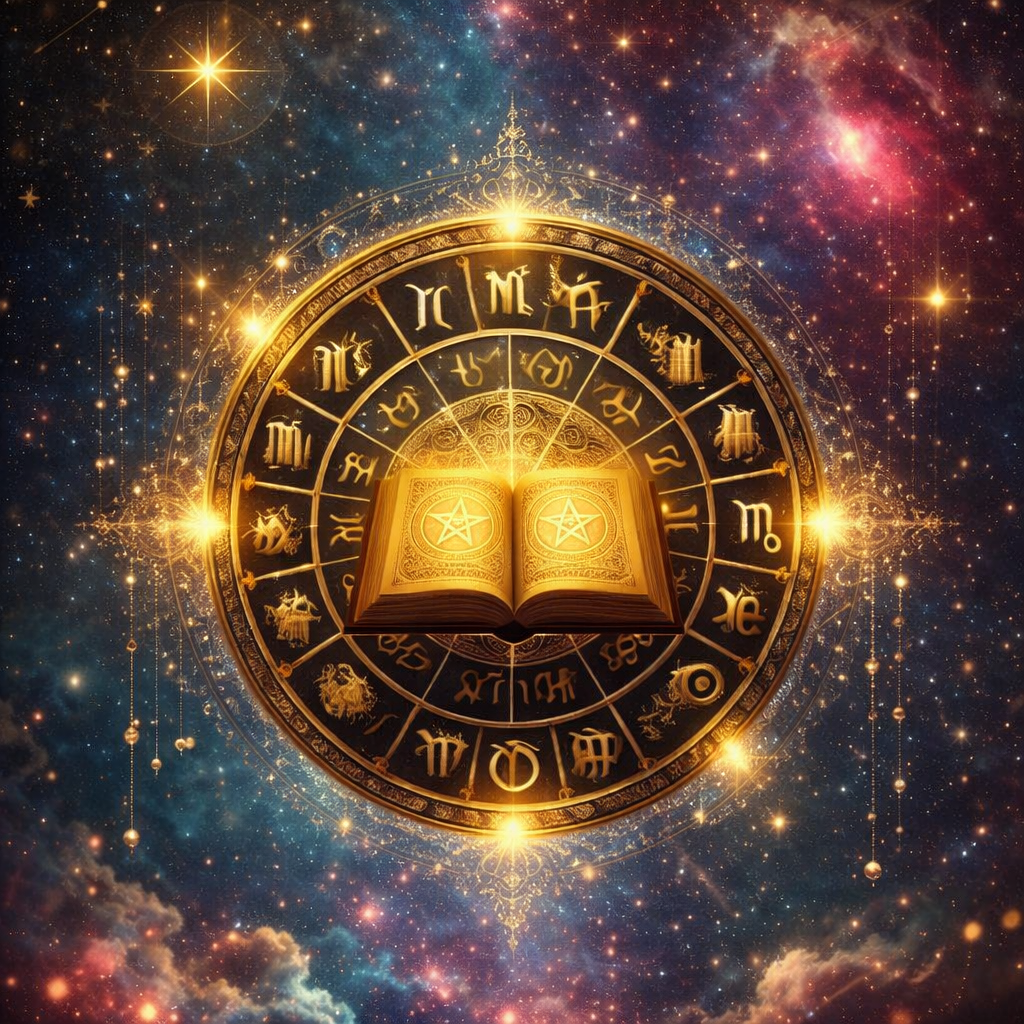
Key symbols in the book include the zodiac, celestial bodies, and divine spirits. These symbols represent the hidden knowledge of sidereal influences and their impact on human affairs, revealing the profound influence of celestial bodies on ancient beliefs.
Modern Relevance
The book's exploration of celestial symbolism and theological underpinnings remains relevant to modern practitioners of astrology and those interested in the occult sciences. Its insights into the mystical connections between astrology and religion offer valuable perspectives for contemporary seekers of hidden knowledge.
👥 Who Should Read This Book
This book is ideal for scholars of esoteric studies who wish to deepen their understanding of the mystical connections between astrology and religion. Spiritual seekers interested in the occult and mystical traditions of ancient civilizations will find it enlightening. Practitioners of astrology will benefit from the book's insights into celestial symbolism and its impact on human affairs. Beginners may find the book challenging but rewarding, as it delves deeply into complex symbolic and theological concepts.
📜 Historical Context
Written in the early 20th century, 'Astrology and Religion Among the Greeks and Romans' by Franz Cumont emerged during a time of renewed interest in the occult and esoteric sciences. The book was important for its comprehensive exploration of the mystical connections between astrology and religion in ancient civilizations, offering a fresh perspective on the symbolic language of the cosmos. Cumont's work influenced subsequent scholarship in the field of esoteric studies, providing a foundation for understanding the hidden knowledge of sidereal influences and their impact on human spirituality.
📔 Journal Prompts
Reflect on how the symbolic language of the cosmos has influenced your understanding of spirituality.
Consider the ways in which celestial bodies have governed human affairs in ancient and modern times.
Explore the esoteric insights into the mystical connections between astrology and religion in your own spiritual journey.
Ponder the theological underpinnings of ancient beliefs and their relevance to contemporary spirituality.
Reflect on the hidden knowledge of sidereal influences and its impact on your personal quest for hidden wisdom.
🗂️ Glossary
Sidereal
Relating to the stars or celestial bodies, often used in astrology to describe influences and alignments.
Celestial Symbolism
The use of celestial bodies and their movements to represent esoteric meanings and spiritual truths.
Hermetic Tradition
A mystical and philosophical tradition that emphasizes the unity of the celestial and terrestrial realms.
Divine Spirits
Spiritual entities believed to inhabit the celestial bodies and influence human affairs.
Theological Underpinnings
The foundational beliefs and principles that shape religious and spiritual practices.
This book appears in 1 collection
🔮 Readers Also Liked
Browse all →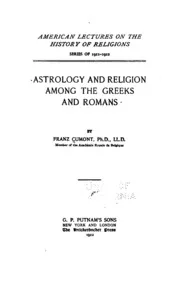









More by Franz Valery Marie Cumont
All books →


From the “Astrology” Collection
View all →
![Anonymous [notes on astrology in medical practice], undated](/img/thumb/anonymous-notes-on-astrology-in-medical-practice-undated.webp)






More Free Astrology & Cosmology Books
View all →