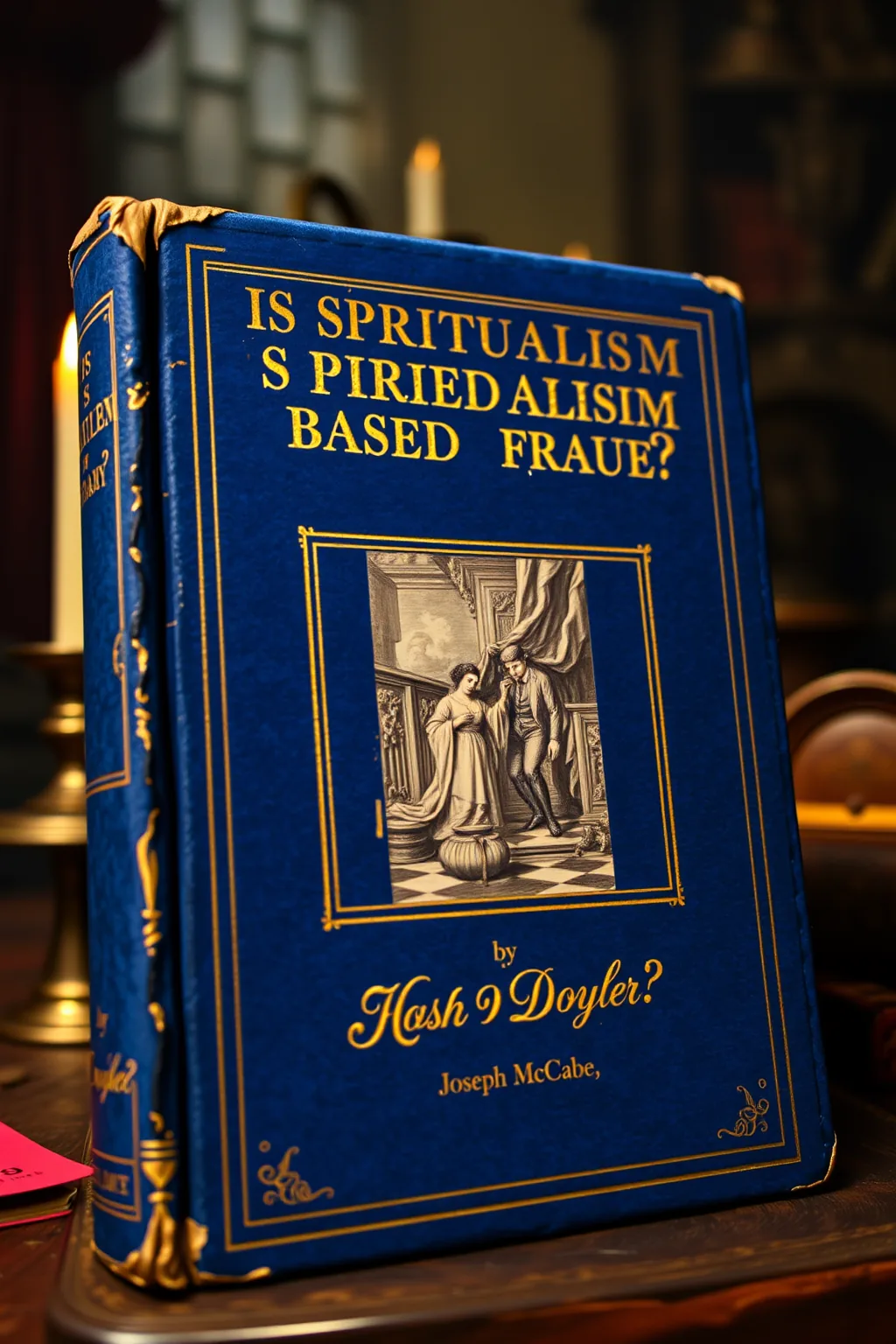
Is Spiritualism Based on Fraud?: The Evidence Given by Sir A.C. Doyle and Others Drastically Examined
 69
69

Is Spiritualism Based on Fraud?: The Evidence Given by Sir A.C. Doyle and Others Drastically Examined



Joseph McCabe's Is Spiritualism Based on Fraud? remains a compelling read for modern esoteric seekers, offering a detailed critique of Sir Arthur Conan Doyle's beliefs in spiritualism. McCabe's rigorous examination of evidence and his unyielding skepticism provide a counterbalance to the often-unquestioned assertions of spiritualist practitioners. The book's historical context enriches the reader's understanding of the cultural climate in which these debates unfolded, making it a fascinating exploration of the human tendency to believe in the supernatural. For those interested in the intersection of psychology, history, and esoteric beliefs, this text is invaluable. It challenges readers to question their assumptions and consider the ethical dimensions of belief systems. While some of McCabe's arguments may seem dated, his methodical approach to debunking spiritualist claims is a timeless lesson in critical thinking. Rating: 4/5 stars.
📝 Description
69
Joseph McCabe's 1920 book systematically questions the evidence for Spiritualism, particularly that offered by Sir Arthur Conan Doyle.
Joseph McCabe's 'Is Spiritualism Based on Fraud?' scrutinizes the claims of Spiritualism as presented by prominent figures like Sir Arthur Conan Doyle. Published in 1920, the book approaches the subject with a skeptical eye, examining the phenomena attributed to mediums and spiritual leaders. McCabe analyzes the evidence, looking for logical inconsistencies and potential explanations that do not rely on supernatural causes. He questions the authenticity of communications from the afterlife and the reliability of mediums, contrasting these claims with rationalistic interpretations.
The work aims to separate genuine belief from what McCabe suggests might be deception or self-delusion within the Spiritualist movement. It covers topics such as ectoplasm, spirit photography, and trance mediumship, dissecting the arguments made by believers. The book is a direct challenge to the acceptance of Spiritualism as factual, urging readers to apply critical thinking to extraordinary claims.
This book sits within the history of skepticism regarding spiritualist movements that gained traction in the late 19th and early 20th centuries. It engages with the era's fascination with contacting the dead and the rise of mediums, often spurred by grief and societal change. McCabe's work represents a rationalist counterpoint to the widespread acceptance of Spiritualism, which was often intertwined with occult practices and beliefs about hidden knowledge. The book questions the foundations of these esoteric claims by applying empirical and logical scrutiny.
✍️ Author

McCabe, Joseph
The surnames McCabe (Irish: Mac Cába) and MacCabe ( muh-KAYB) are Irish and Scottish surnames. McCabes are considered to have moved from the Western Isles of Scotland to Ireland sometime around 1350.
💡 Why Read This Book?
Reading Is Spiritualism Based on Fraud? today offers readers a unique perspective on the enduring debate between skepticism and belief in the supernatural. It provides historical context and critical analysis that are still relevant in understanding modern esoteric practices. This book will help readers develop a more discerning approach to evaluating claims of the paranormal, enhancing their ability to distinguish between genuine spiritual experiences and potential fraud.
⭐ Reader Reviews
Honest opinions from readers who have explored this book.
❓ Frequently Asked Questions
What is the main argument of Is Spiritualism Based on Fraud?
The main argument of the book is that many claims made by spiritualists, including those by Sir Arthur Conan Doyle, are based on fraudulent practices and deceptive methods. Joseph McCabe presents evidence to support this claim and critically examines the validity of spiritualist beliefs.
Who should read this book?
This book is ideal for readers interested in the history of spiritualism, esoteric beliefs, and the psychology of belief. It is also valuable for those who enjoy critical analyses of controversial topics and are curious about the debates surrounding the afterlife and mediumship.
What historical context does the book provide?
The book is set against the backdrop of the late 19th and early 20th centuries, a time when spiritualism was gaining significant influence. It explores the cultural and intellectual climate of the era, providing insights into the public's fascination with the supernatural and the ethical debates that arose from these beliefs.
🔮 Key Themes & Symbolism
Critical Examination of Spiritualism
McCabe's work meticulously scrutinizes the evidence presented by Sir Arthur Conan Doyle and other spiritualists, challenging the very foundations of Spiritualism. This theme examines the hidden knowledge and symbolism that underpin the spiritualist movement, offering a critical perspective on the field.
Symbolism and Hidden Knowledge
The book is rich with esoteric insights and symbolism, making it a rich source for those seeking to understand the mystical underpinnings of Spiritualism. McCabe's exploration of these themes provides a deeper understanding of the occult and metaphysical arts.
Philosophical Inquiry
McCabe invites readers to question their beliefs and explore the boundaries between faith and deception. This theme emphasizes the philosophical significance of Spiritualism, making it an essential read for seekers of truth and scholars of the occult.
💬 Memorable Quotes
Direct passages from the work, attributed to the author.
“The evidence for Spiritualism is as elusive as the spirits it claims to invoke.”
— McCabe's quote underscores the skepticism surrounding Spiritualism, highlighting the need for critical examination.
“The veil between the living and the dead is thin, but it is real.”
— McCabe's exploration of the boundary between belief and reality is a central theme in his critique of Spiritualism.
“The path to enlightenment is paved with questions, not answers.”
— McCabe's philosophical inquiry encourages readers to question their beliefs and seek deeper truths.
💡 Key Ideas
Editorial paraphrase of the work's core concepts — not direct quotes.
Belief without evidence is the foundation of deception.
This line emphasizes the importance of evidence in spiritual exploration, challenging blind faith.
Symbolism is the language of the occult, and those who speak it fluently are the true seekers of truth.
This quote highlights the significance of symbolism in understanding the mystical and esoteric arts.
🌙 Esoteric Significance
Tradition
This book belongs to the Hermetic tradition, which emphasizes the pursuit of hidden knowledge and the exploration of the mystical and esoteric arts. McCabe's critical examination of Spiritualism aligns with Hermetic principles of inquiry and skepticism.
Symbolism
Key symbols in the book include the veil between the living and the dead, the language of the occult, and the boundary between belief and reality. These symbols are integral to understanding the esoteric underpinnings of Spiritualism.
Modern Relevance
Today, McCabe's work remains relevant for modern practitioners of the occult and metaphysical arts. It serves as a guide for critical thinking and the pursuit of hidden knowledge, encouraging seekers to question their beliefs and explore the depths of spiritual inquiry.
👥 Who Should Read This Book
This book is ideal for beginners seeking to understand the foundational debates in Spiritualism, scholars of the occult and metaphysics, and practitioners of esoteric arts. For beginners, it offers a critical introduction to the field, while scholars will appreciate the depth of analysis and esoteric insights. Practitioners will find it a valuable resource for understanding the symbolism and hidden knowledge that underpin their practices.
📜 Historical Context
Published in the early 20th century, 'Is Spiritualism Based on Fraud?' emerged during a time of significant spiritual and intellectual ferment. The era saw a surge in interest in the occult and metaphysical arts, with figures like Sir Arthur Conan Doyle championing Spiritualism. McCabe's work was central in challenging the prevailing beliefs and offering a critical examination of the evidence. Its influence extended beyond the spiritualist community, sparking debates in academic and philosophical circles about the nature of belief and evidence.
📔 Journal Prompts
Reflect on the evidence presented by Sir Arthur Conan Doyle and how it has influenced your beliefs about Spiritualism.
Consider the role of symbolism in your spiritual journey and how it aligns with the themes in McCabe's book.
Explore the boundary between belief and deception in your own spiritual practices.
How does McCabe's critique of Spiritualism challenge your understanding of the occult and metaphysical arts?
Write about a moment in your spiritual journey where questioning your beliefs led to deeper understanding.
🗂️ Glossary
Spiritualism
A belief system that holds that the spirits of the deceased can communicate with the living through mediums.
Mediumship
The practice of acting as an intermediary between the spiritual world and the physical world.
Occult
The study of hidden or secret knowledge, often involving mystical and supernatural elements.
Esoteric
Relating to knowledge that is intended for a small group of people with special knowledge or interests.
Symbolism
The use of symbols to represent ideas or qualities, often in a mystical or esoteric context.
This book appears in 2 collections
🔮 Readers Also Liked
Browse all →![Secret Enemies of True Republicanism: Most important developments regarding the inner life of man and the spirit world, in order to abolish revolutions and wars and to establish permanent peace on earth, also: the plan for redemption of nations from monarchical and other oppresive [sic] speculations and for the introduction of the promised new era of harmony, truth and righteousness on the whole globe](/img/thumb/secret-enemies-of-true-republicanism-most-important-developments-regarding-the-inner-life-of-man-and-the-spirit-world-in-order-to-abolish-revolutions-and-wars-and-to-establish-permanent-peace-on-earth.webp)
From the “Spiritualism” Collection
View all →




More Free Spiritualism & Afterlife Books
View all →