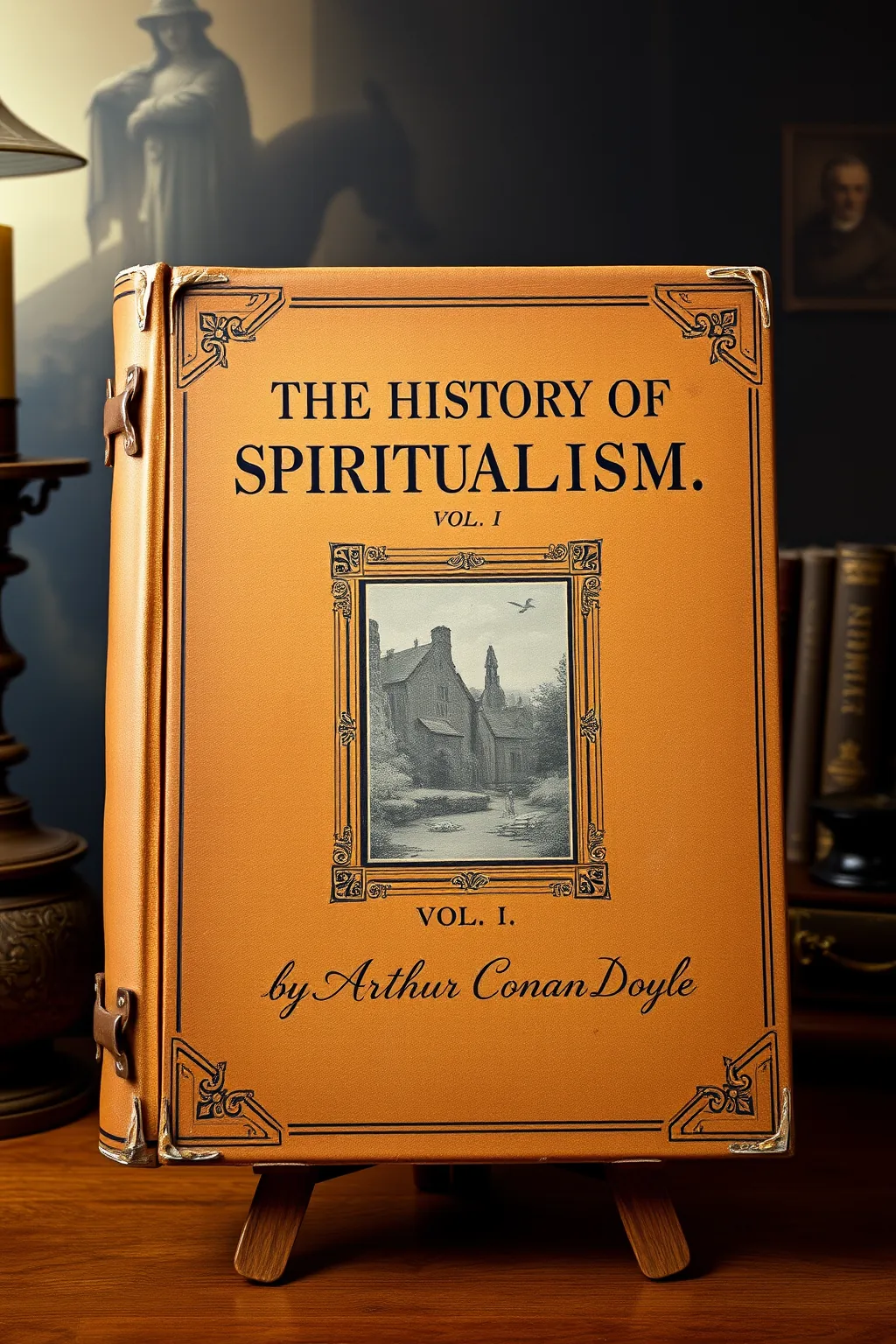
The History of Spiritualism, Vol. I
 80
80

The History of Spiritualism, Vol. I



Arthur Conan Doyle's 'The History of Spiritualism, Vol. I' is a foundational text for any serious student of the paranormal. Doyle approaches the subject with both a scholar's rigor and a believer's conviction, meticulously charting the movement's evolution. His narrative captivates with compelling accounts of mediums and their phenomena, while also engaging with the scientific skepticism of the era. For those seeking to understand the roots of modern spiritualism and its enduring appeal, this volume provides an indispensable, richly detailed, and thought-provoking account. It is essential reading for understanding the historical landscape of consciousness exploration.
📝 Description
80
Arthur Conan Doyle published 'The History of Spiritualism, Vol. I' in 1926, detailing spiritualism's rise.
Arthur Conan Doyle's 'The History of Spiritualism, Vol. I,' released in 1926, examines the origins and growth of the spiritualist movement. Doyle, who investigated paranormal phenomena, chronicles key individuals and case studies from the Victorian era's séance culture. He traces spiritualism's roots to earlier mystics and seers, documenting the intellectual debates within early psychical research. The book addresses humanity's ongoing search for contact with the afterlife and the belief in life after death. It presents a perspective from its era, acknowledging the controversial nature of its subject matter and the author's own fervent convictions.
This volume covers the period leading up to the early 20th century, focusing on the development of spiritualist ideas and practices. Doyle includes accounts of mediums, séances, and the societal reception of these phenomena. The work reflects the intense interest and debate surrounding spiritualism during the time it was written, offering a detailed look at a significant cultural and intellectual movement.
This book sits within the tradition of spiritualism, a movement that gained significant traction in the 19th and early 20th centuries. It posits that spirits of the deceased can communicate with the living, often through mediums. Doyle's work documents this period, including the scientific and public debates it engendered. It reflects a specific esoteric current concerned with life after death, consciousness, and evidence for a non-material reality, often intersecting with spiritualist churches, séances, and the investigation of alleged supernatural phenomena.
✍️ Author
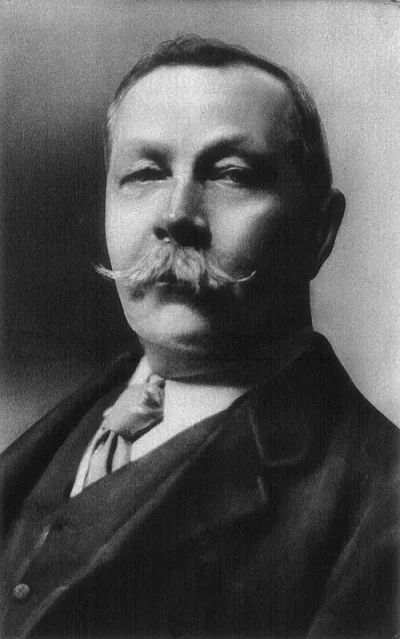
Arthur Conan Doyle
British writer and physician, creator of Sherlock Holmes.
💡 Why Read This Book?
Uncover the fascinating origins of spiritualism, from ancient visions to 19th-century séances. Explore compelling case studies and understand the historical debates surrounding life after death. Ideal for seekers of hidden knowledge, paranormal enthusiasts, and scholars of esoteric history who wish to delve into a foundational text of modern spiritualist thought.
⭐ Reader Reviews
Honest opinions from readers who have explored this book.
❓ Frequently Asked Questions
What is the primary focus of Volume I of 'The History of Spiritualism'?
Volume I meticulously traces the historical development of spiritualism, beginning with early visionary figures and progressing through the significant surge in mediumship and séance culture during the nineteenth century.
Who was Arthur Conan Doyle and what was his stance on Spiritualism?
Arthur Conan Doyle was the celebrated author of Sherlock Holmes. He became a fervent believer in Spiritualism after personal experiences and dedicated much of his later life to advocating for and documenting the movement.
What kind of evidence does Doyle present?
Doyle presents a combination of biographical accounts of prominent mediums, contemporary case studies of purported phenomena, and discussions of the debates and skepticism surrounding psychical research at the time.
Is this book suitable for skeptics?
While written from a believer's perspective, the book's detailed historical accounts and documentation of debates can be informative for skeptics seeking to understand the movement's historical context and appeal.
When was 'The History of Spiritualism, Vol. I' first published?
The History of Spiritualism, Vol. I was first published in 1926.
🔮 Key Themes & Symbolism
The Evolution of Mediumship
This volume meticulously charts the emergence and evolution of mediumship, from the subtle whisperings of ancient oracles to the dramatic manifestations of Victorian séances. Doyle explores the varied abilities of mediums, the societal reactions they provoked, and the attempts to codify and understand these extraordinary channels of communication. It explores the personal journeys of individuals who claimed to bridge the veil, highlighting their struggles, triumphs, and the lasting impact they had on the spiritual field of their time.
Bridging the Mortal and Ethereal Realms
Fundamentally, this work is a proof of the enduring human desire to connect with those who have passed beyond the physical form. Doyle investigates the methods and philosophies that sought to prove the continuity of consciousness, examining the techniques employed in séances and the reported evidence of spirit communication. It is an exploration of the persistent belief in an afterlife and the myriad ways humanity has sought tangible proof of realms unseen, touching upon universal questions of existence and the soul's eternal journey.
The Intersection of Science and the Supernatural
Doyle does not shy away from the controversies and debates that surrounded Spiritualism. This volume critically examines the clash between emerging scientific inquiry and the burgeoning spiritualist movement. It documents the pioneering efforts in psychical research, the challenges faced by investigators, and the often-heated discussions that arose from claims of paranormal phenomena. The book provides a fascinating look at a historical period where the boundaries of empirical knowledge were being tested by experiences that defied conventional explanation.
💬 Memorable Quotes
Direct passages from the work, attributed to the author.
“The dead do not die; they merely change their form and location.”
— A core tenet of spiritualism, this statement asserts the continuity of life and consciousness beyond physical death, suggesting a transition rather than an cessation.
“Mediumship is the key that unlocks the door to the unseen.”
— This highlights the key role of mediums in spiritualist belief, positioning them as essential conduits for accessing and understanding the spirit world.
“Truth is often found in the whispers of the departed.”
— This suggests that profound spiritual truths and insights can be gained through communication with spirits, implying a source of wisdom beyond the material realm.
💡 Key Ideas
Editorial paraphrase of the work's core concepts — not direct quotes.
The world is not what it seems; there are more things in heaven and earth than are dreamt of in your philosophy.
This quote captures the book's central theme: the existence of realities beyond our ordinary perception, hinting at a deeper, spiritual dimension waiting to be discovered.
The evidence for the afterlife grows with every honest investigation.
Reflecting Doyle's own conviction, this quote underscores the belief that dedicated inquiry and study will ultimately reveal the verifiable reality of life after death.
🌙 Esoteric Significance
Tradition
This work is deeply rooted in the Western Esoteric Tradition, particularly its manifestation in 19th and early 20th-century Spiritualism. It engages with concepts like mediumship, spirit communication, and the survival of consciousness, which align with Hermeticism, Theosophy, and various forms of occultism that sought to explore hidden realities and tap into unseen forces. The book documents a period where these esoteric pursuits moved from niche circles into broader public discourse.
Symbolism
The séance room itself becomes a potent symbol, representing a liminal space where the veil between worlds is thinned. Candles, protective circles, and symbolic gestures often employed in séances can be seen as archetypal tools for focusing intention and creating a sacred environment for spiritual contact. The phenomena described – ectoplasm, spirit voices, materializations – serve as symbolic manifestations of the spirit world's presence and influence in the material plane.
Modern Relevance
In an age still grappling with mortality, consciousness, and the nature of reality, Doyle's historical account remains profoundly relevant. It provides a crucial understanding of the origins of modern beliefs in the afterlife and paranormal phenomena. For those exploring consciousness studies, transpersonal psychology, or seeking alternative frameworks for understanding existence, this book offers a foundational perspective on humanity's ongoing quest for spiritual knowledge and connection beyond the material.
👥 Who Should Read This Book
This volume is essential for paranormal investigators, spiritualists, and historians of religion and esotericism. Seekers of profound philosophical insights into life, death, and consciousness will find it useful. While practitioners of modern occult arts may find historical context for their practices, beginners should approach with an open mind, prepared for detailed historical accounts and the fervent advocacy of its author. Scholars will appreciate its documentation of a significant cultural and intellectual movement.
📜 Historical Context
Published in 1926, 'The History of Spiritualism, Vol. I' emerges from a period of immense societal change and intellectual ferment. The aftermath of World War I, with its staggering loss of life, fueled a widespread yearning for solace and connection with departed loved ones, propelling Spiritualism into mainstream consciousness. The Victorian and Edwardian eras had already laid the groundwork with their fascination for the occult, the rise of scientific inquiry, and the development of photography and other technologies that seemed to capture the ephemeral. Doyle's work sits at the confluence of these trends, documenting a movement that sought to reconcile spiritual beliefs with a rapidly modernizing world, challenging established religious doctrines and scientific paradigms alike.
📔 Journal Prompts
Reflect on a personal experience that made you question the boundaries of ordinary reality. How does Doyle's account resonate with this experience?
Consider the concept of 'mediumship.' What are the ethical implications and potential benefits of channeling or communicating with unseen entities?
Doyle presents evidence from his time. How has scientific understanding of consciousness and the afterlife evolved since 1926? What remains a mystery?
Explore the societal impact of Spiritualism during the early 20th century. How did it offer comfort or challenge established norms?
Imagine attending a séance described in this book. What would be your primary feelings and questions upon entering such an environment?
🗂️ Glossary
Spiritualism
A religious movement that asserts the possibility of communicating with the spirits of the dead, often through mediums, and believes in the continuity of life after death.
Mediumship
The practice or ability of a person claimed to be able to communicate with spirits of the dead or other beings in the spiritual realm, acting as an intermediary.
Séance
A meeting at which people attempt to make contact with the spirit world, typically involving a medium and often occurring in a darkened room.
Psychical Research
The interdisciplinary study of alleged psychic phenomena and other paranormal claims, often involving investigation into telepathy, clairvoyance, and mediumship.
Ectoplasm
A term used in Spiritualism to describe a supposed physical substance or 'spirit material' emanating from the body of a medium during a trance state.
This book appears in 2 collections
🔮 Readers Also Liked
Browse all →

More by Arthur Conan Doyle
All books →




From the “Spiritualism” Collection
View all →



More Free Spiritualism & Afterlife Books
View all →