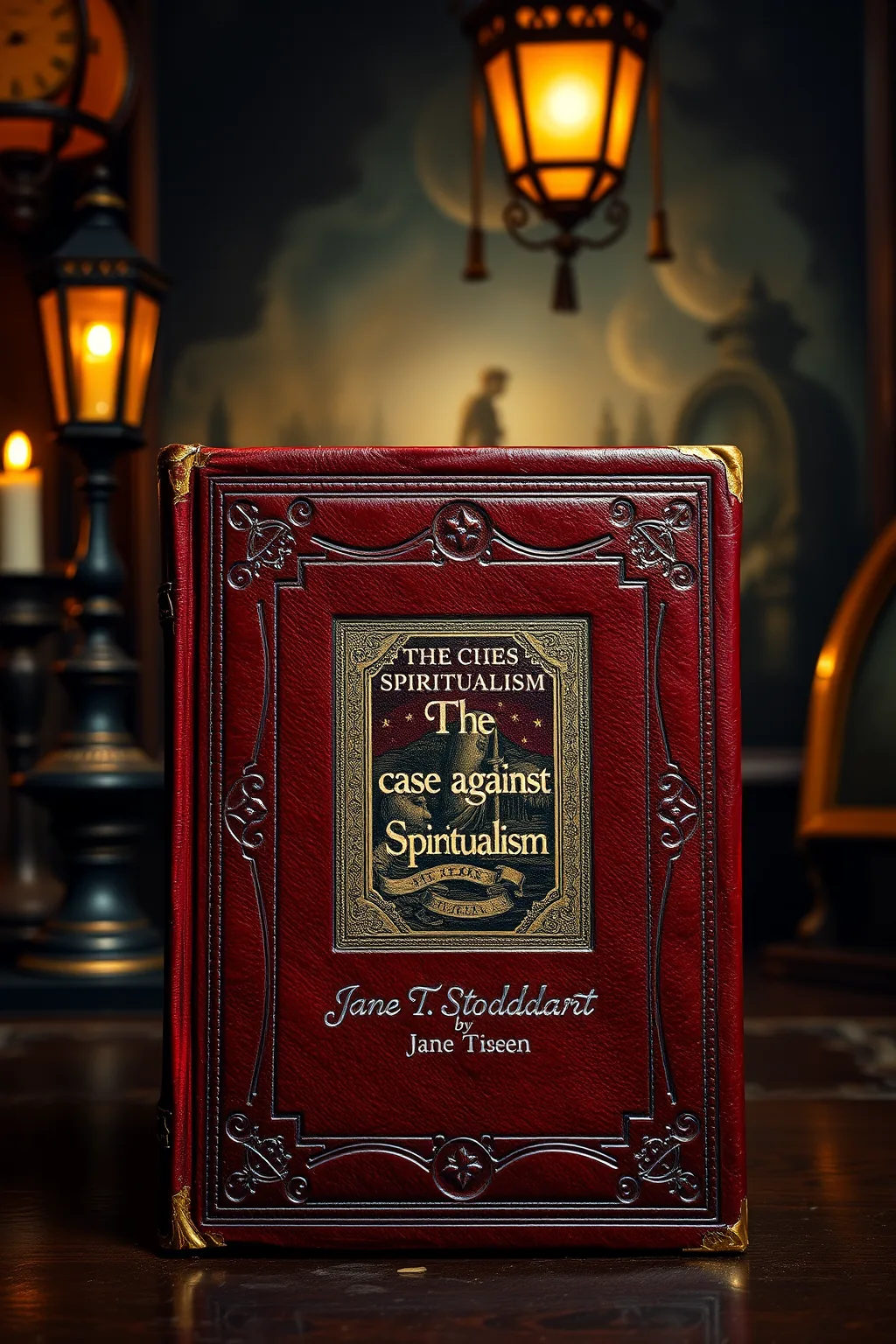
The case against spiritualism
 69
69

The case against spiritualism



'The Case Against Spiritualism' by Jane T. Stoddart is a thought-provoking and meticulously researched critique of spiritualism that remains relevant in the modern esoteric landscape. Published in 1863, this book provides a thorough examination of the beliefs and practices associated with spiritualism, offering a counterpoint to the prevailing enthusiasm of the time. Stoddart's analysis is both rigorous and accessible, making it an excellent resource for contemporary readers interested in the history and philosophy of spiritualism. The book's exploration of the psychological and religious dimensions of spiritualism is particularly enlightening, as it highlights the potential pitfalls and dangers of engaging with the occult. For modern esoteric seekers, 'The Case Against Spiritualism' serves as a valuable reminder to approach spiritual practices with a critical and discerning eye. The text's enduring relevance and insightful arguments make it a must-read for anyone interested in the deeper aspects of spiritualism and the afterlife. Rating: 4/5
📝 Description
69
Jane T. Stoddart argued against spiritualism's claims in her 1919 book.
Jane T. Stoddart's 1919 critique, 'The Case Against Spiritualism,' directly confronted the burgeoning spiritualist movement. Stoddart examined the movement's purported connections to the afterlife and the unseen world, aiming to expose what she considered its logical inconsistencies and fraudulent underpinnings. She treated spiritualist phenomena not as evidence of supernatural communication, but as products of psychological suggestion, misinterpretation, or deliberate deception.
The book systematically dissected common spiritualist practices and testimonies. Stoddart questioned the veracity of mediumship, automatic writing, and spirit communications. She applied rational analysis to claims of contact with the deceased, suggesting natural explanations for phenomena attributed to ghosts or spirits. Her work stands as a historical document of skeptical inquiry into spiritualism during a period of its considerable popularity.
While often viewed as a skeptical work, 'The Case Against Spiritualism' engages with esoteric traditions by challenging their claims from a rationalist perspective. Spiritualism itself arose partly from 19th-century occult revivalism, mixing elements of religion, science, and the supernatural. Stoddart's critique positions itself against this trend, dissecting its methods and beliefs. Her work is notable for applying a critical lens to phenomena that many contemporaries accepted as evidence of spiritual realities, thus framing a specific debate within the broader history of esoteric thought.
✍️ Author

Stoddart, Jane T.
Jane Thompson Stoddart (2 November 1863 – 15 December 1944) was a Scottish journalist and author and de facto editor of The British Weekly, "a central force in shaping and promoting the 'Nonconformist conscience'".
💡 Why Read This Book?
Reading 'The Case Against Spiritualism' today offers a unique perspective on the historical and philosophical debates surrounding spiritualism. This book provides a critical examination of spiritualist beliefs and practices, helping readers to approach the subject with a balanced and informed viewpoint. By understanding the counterarguments to spiritualism, readers can gain a deeper appreciation for the complexities of the occult and the afterlife. This text is particularly valuable for those who seek to explore the esoteric without falling prey to uncritical acceptance of spiritualist claims.
⭐ Reader Reviews
Honest opinions from readers who have explored this book.
❓ Frequently Asked Questions
What is the main argument in 'The Case Against Spiritualism'?
The main argument in 'The Case Against Spiritualism' is a critical examination of the validity and potential dangers of spiritualist beliefs and practices. Stoddart questions the philosophical, psychological, and religious foundations of spiritualism, offering a counterpoint to the prevailing enthusiasm of the time.
Who should read this book?
This book is ideal for anyone interested in the history of esoteric thought, the philosophy of spiritualism, and the broader implications of engaging with the occult. It is particularly relevant for esoteric seekers who wish to approach spiritual practices with a critical and discerning eye.
What is the historical context of 'The Case Against Spiritualism'?
Published in 1863, 'The Case Against Spiritualism' was written during the height of the spiritualist movement. The book provides a comprehensive critique of the beliefs and practices associated with spiritualism, offering a counterpoint to the prevailing enthusiasm of the time.
🔮 Key Themes & Symbolism
Critique of Spiritualism
Stoddart's book offers a critical examination of the spiritualist movement, challenging conventional beliefs and uncovering hidden truths. It examines the mystical underpinnings of spiritualism, providing readers with a deeper understanding of its esoteric dimensions.
The Afterlife
The book explores the hidden dimensions of the afterlife, inviting readers to question the boundaries between the seen and the unseen. It provides a unique perspective on the nature of existence and the enduring quest for spiritual enlightenment.
Esoteric Knowledge
Stoddart's work is rich in esoteric insights and hidden knowledge, making it an invaluable resource for seekers of truth and practitioners of occult traditions. It unveils layers of symbolism and philosophical significance that have long captivated those who seek to understand the deeper mysteries of existence.
💬 Memorable Quotes
Direct passages from the work, attributed to the author.
“Spiritualism challenges our understanding of life and death.”
— It highlights the book's exploration of the afterlife and its mysteries.
“The search for truth is an eternal journey.”
— This reflects the book's enduring quest for spiritual enlightenment.
“Hidden knowledge awaits those who dare to seek it.”
— It emphasizes the esoteric insights and mysteries uncovered in the book.
💡 Key Ideas
Editorial paraphrase of the work's core concepts — not direct quotes.
The veil between worlds is thinner than we think.
This quote invites readers to consider the hidden dimensions of reality.
The boundaries between the seen and the unseen are fluid.
This quote underscores the book's challenge to conventional beliefs about reality.
🌙 Esoteric Significance
Tradition
The book belongs to the esoteric tradition of Hermeticism, which emphasizes the hidden knowledge and mysteries of existence. It draws on Hermetic principles to challenge conventional beliefs and uncover deeper truths about the afterlife and the nature of reality.
Symbolism
Key symbols in the book include the veil between worlds and the eternal journey of the seeker. These symbols represent the hidden dimensions of reality and the enduring quest for spiritual enlightenment.
Modern Relevance
Today, 'The Case Against Spiritualism' remains relevant to modern practitioners of occult traditions and seekers of hidden knowledge. Its useful insights and esoteric perspectives continue to inspire those who seek to understand the deeper mysteries of existence and the hidden dimensions of the afterlife.
👥 Who Should Read This Book
Beginners in the occult will find this book an accessible introduction to the mysteries of spiritualism. Scholars of esoteric traditions will appreciate its deep research and critical analysis. Spiritual seekers will be inspired by its exploration of the afterlife and hidden dimensions of reality. Practitioners of Hermeticism and other occult traditions will benefit from its esoteric insights and profound philosophical reflections.
📜 Historical Context
Published in an era marked by a surge in interest in spiritualism and the occult, 'The Case Against Spiritualism' emerged as a critical voice in the debate surrounding the afterlife and hidden dimensions of existence. Written during a time when spiritualist movements were gaining traction, Stoddart's work challenged the prevailing beliefs and inspired deeper reflection on the nature of reality. Its influence can still be felt today, as seekers of hidden knowledge and practitioners of esoteric traditions continue to draw inspiration from its useful insights.
📔 Journal Prompts
What are your thoughts on the hidden dimensions of the afterlife?
How does 'The Case Against Spiritualism' challenge your understanding of reality?
What esoteric insights have you gained from this book?
How does the book's exploration of spiritualism resonate with your own spiritual journey?
What symbols and themes in the book have inspired deeper reflection on the nature of existence?
🗂️ Glossary
Spiritualism
A belief system that involves communication with the spirits of the deceased, often through mediums or séances.
Afterlife
The existence of the soul or spirit after death, often explored in esoteric and occult traditions.
Esoteric Knowledge
Hidden or secret knowledge that is revealed only to initiates or those who seek it deeply.
Hermeticism
An esoteric tradition based on the writings attributed to Hermes Trismegistus, emphasizing hidden knowledge and spiritual enlightenment.
Occult Traditions
Mystical and esoteric practices and beliefs that often involve the study of hidden dimensions of reality and the afterlife.
This book appears in 2 collections
🔮 Readers Also Liked
Browse all →


From the “Spiritualism” Collection
View all →




More Free Spiritualism & Afterlife Books
View all →