What is Ectoplasm?
Ectoplasm, in spiritualist contexts, refers to a substance purportedly exuded by mediums during séances, often described as a gaseous or semi-liquid material. It was believed to coalesce into forms, apparitions, or even physical objects. Early investigations, such as those by the Seybert Commission in 'Preliminary Report of the Commission Appointed by the University of Pennsylvania...' (1887), sought to scientifically verify these phenomena, often concluding fraud. The term itself gained prominence in the late 19th and early 20th centuries.
Best Books for Complete Beginners
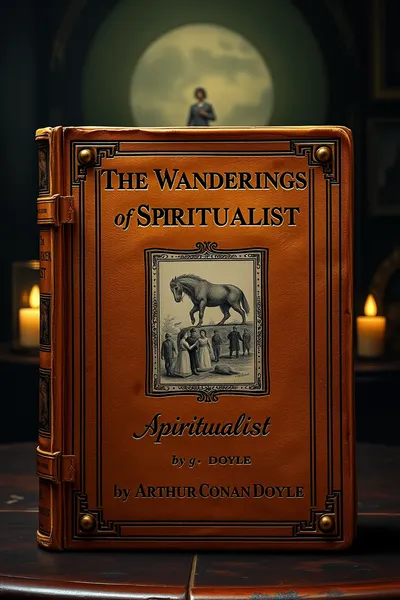
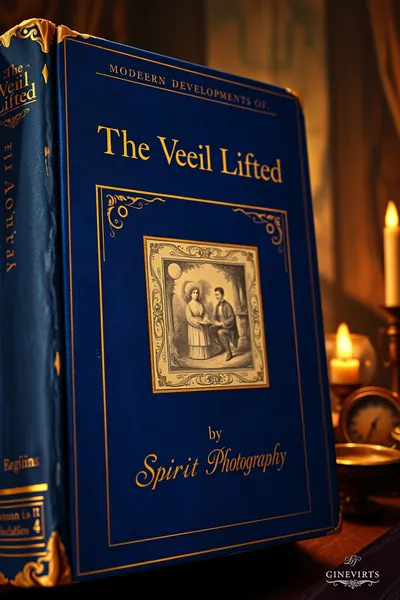
For those new to the subject, start with foundational accounts of spiritualism. Arthur Conan Doyle's 'The Wanderings of a Spiritualist' (1921) offers a firsthand, albeit biased, perspective on séances and purported manifestations. 'The Veil Lifted: Modern Developments of Spirit Photography' provides an accessible look at early visual evidence. 'WHO YOU GONNA CALL? (Ghostbusters) Luxury Lined Notebook' by Jay Wheeler, while a novelty, taps into the cultural fascination with ectoplasm, offering a light entry point into the concept's popular imagination.
Intermediate Reading
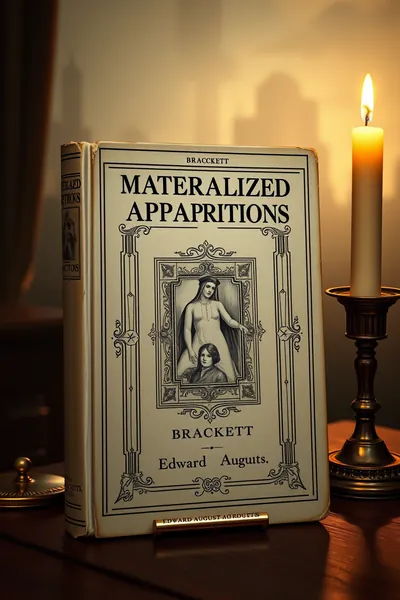
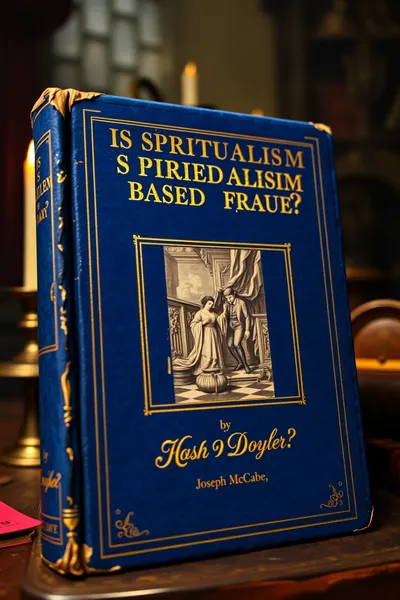
Moving beyond introductory accounts, study critical analyses and broader explorations. Joseph McCabe's 'Is Spiritualism Based on Fraud?' (1920) systematically dissects claims made by prominent spiritualists. Edward Augustus Brackett's 'Materialized apparitions : if not beings from another life, what are they' (1882) questions the nature of observed phenomena. 'The Fantasy Ectoplasm' by Hunter Laurence offers a modern, perhaps fictionalized, take on the substance's potential. Deborah Noyes' 'The Magician and the Spirits' (2009) contextualizes spiritualist phenomena within broader historical performance practices.
Classical / Advanced Texts
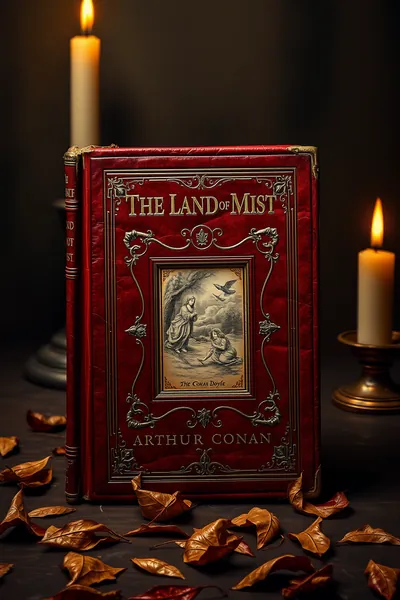
Serious students should engage with primary investigative reports and detailed examinations. The 'Preliminary Report of the Commission Appointed by the University of Pennsylvania to Investigate Modern Spiritualism' (1887) is a crucial document for understanding early skepticism. Dr. Douglas M. Baker's 'The Phenomena of Materialisation' (1920) presents detailed observations from a spiritualist perspective. Arthur Conan Doyle's 'The Land of Mist' (1926) further explores spiritualism in a fictional narrative, reflecting contemporary debates. C. L'Estrange Ewen's 'Séances and Statutes' (1948) examines the legal dimensions surrounding spiritualist activities.
Reading Order — Step by Step
Begin with popular accounts to grasp the core narratives. Month 1: Read Arthur Conan Doyle's 'The Wanderings of a Spiritualist' for an insider's view, followed by 'The Veil Lifted' for visual context. Month 2: Engage with critical perspectives like Joseph McCabe's 'Is Spiritualism Based on Fraud?' and the Seybert Commission's 'Preliminary Report'. Month 3: Explore scholarly and artistic interpretations with Serena Keshavjee's 'The Art of Ectoplasm', and study primary material analysis like Baker's 'The Phenomena of Materialisation'.
Frequently Asked Questions
Which ectoplasm book should I read first?
For a direct introduction to the topic, begin with Arthur Conan Doyle's 'The Wanderings of a Spiritualist'. It provides a personal account of séances and purported ectoplasmic manifestations from a well-known figure.
Are there books that debunk ectoplasm claims?
Yes, Joseph McCabe's 'Is Spiritualism Based on Fraud?' offers a thorough critique of spiritualist evidence, including ectoplasm. The Seybert Commission's 'Preliminary Report' also provides an early, skeptical investigation.
Where can I find information on ectoplasm in art history?
Serena Keshavjee's 'The Art of Ectoplasm' is a key resource for understanding how ectoplasm has been represented and interpreted in visual arts.
What is the difference between ectoplasm and a materialization?
Ectoplasm is considered the substance from which materialized forms are allegedly created by mediums during séances. Materialization refers to the manifestation of a physical form, which may or may not be composed of ectoplasm.
Were there scientific investigations into ectoplasm?
Indeed, early scientific and quasi-scientific bodies, like the Seybert Commission, conducted investigations. Their findings, documented in reports, often pointed to fraud or misinterpretation rather than genuine paranormal phenomena.
Can I find fictional accounts involving ectoplasm?
Certainly. Arthur Conan Doyle's novel 'The Land of Mist' integrates spiritualism and ectoplasm into its narrative. Daniel Stashower's Sherlock Holmes stories, such as 'The Further Adventures of Sherlock Holmes: The Ectoplasmic Man', also feature ectoplasm.
What does 'spirit photography' have to do with ectoplasm?
Spirit photography was one method used to capture purported evidence of the afterlife, sometimes claiming to show spirits or phenomena like ectoplasm. Books like 'The Veil Lifted' discuss these early photographic attempts.