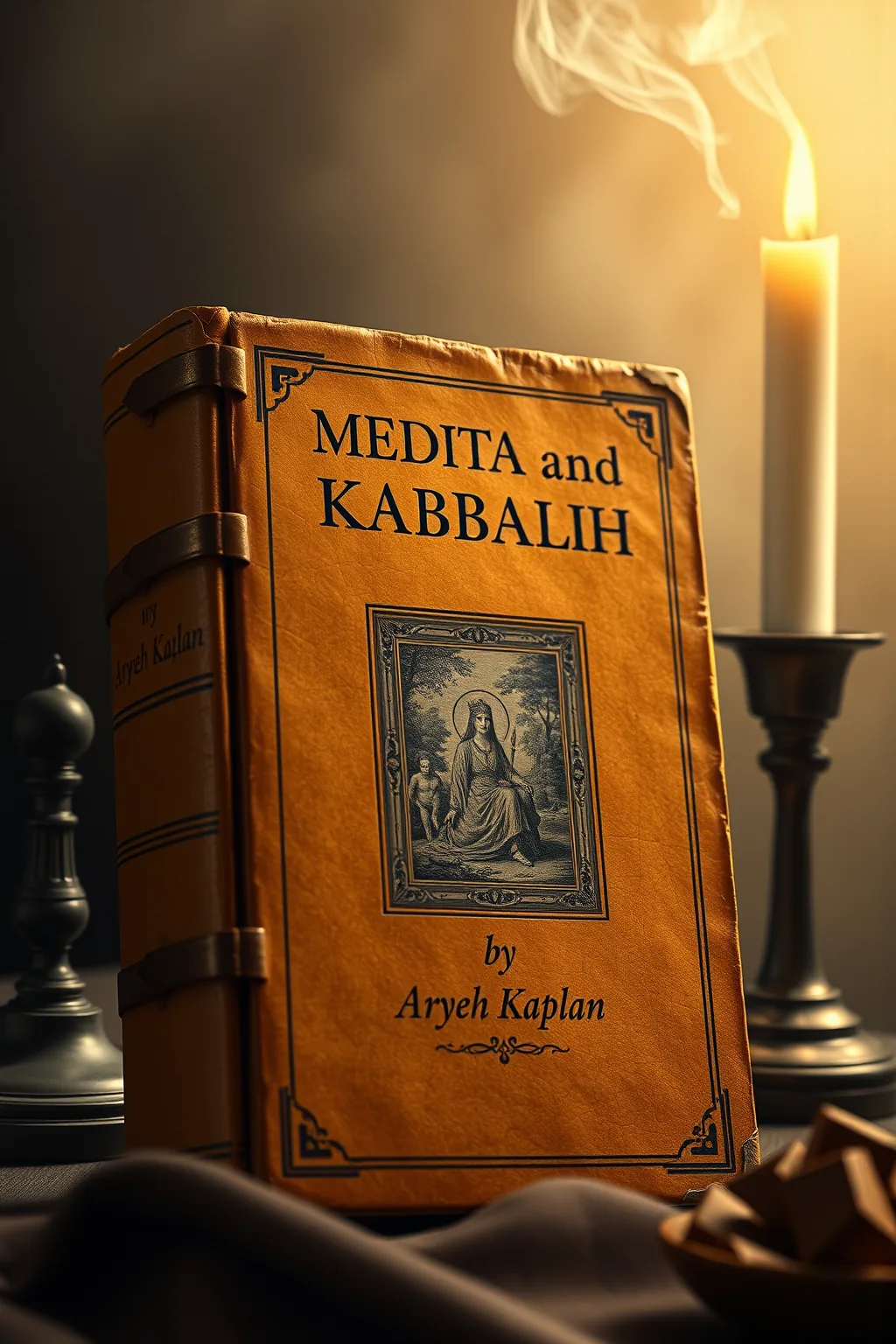
Meditation and Kabbalah
 79
79

Meditation and Kabbalah
Aryeh Kaplan’s "Meditation and Kabbalah" offers a rare, systematic approach to the contemplative practices embedded within Jewish mysticism. The strength lies in its clear articulation of complex Kabbalistic ideas, making them actionable for personal practice. Kaplan doesn't shy away from detailing techniques for visualizing the Sefirot or employing divine names, drawing directly from historical sources. One particularly effective section details the meditative use of Hebrew letters, explaining their symbolic and energetic properties. However, the book’s extensive reliance on traditional terminology, while accurate, can present a steep learning curve for those without prior exposure to Kabbalistic literature. A clearer glossary or more introductory explanations for foundational terms might have enhanced accessibility. Nevertheless, for dedicated students of Jewish mysticism seeking experiential depth, Kaplan provides a vital bridge between theory and practice.
This work is an essential guide for those wishing to engage with Kabbalah on a meditative level.
📝 Description
79
Aryeh Kaplan's 1985 book, Meditation and Kabbalah, details how to apply Jewish mystical concepts to meditative practice.
Published in 1985, Aryeh Kaplan's Meditation and Kabbalah offers a guide to using Kabbalistic principles in Jewish meditative practices. The book explains how to apply ancient Kabbalistic ideas for spiritual growth and a deeper connection to the divine. Kaplan presents methods for achieving altered states of consciousness through these practices.
This work is intended for those with a basic knowledge of Kabbalah and Jewish mysticism who want to engage with its contemplative aspects. It is also useful for practitioners looking to incorporate Kabbalistic meditation techniques into their spiritual routines. Scholars of comparative religion and those interested in the overlap between esoteric traditions and psychology will find value here.
Kaplan's book appeared during a time of increased interest in Kabbalah, following decades where practical Kabbalah was often kept private. It provided accessible techniques drawn from classic sources like the Zohar and the writings of Isaac Luria. Unlike purely theoretical approaches, Kaplan focused on direct experience.
Aryeh Kaplan's work emerged in the mid-1980s, a period marked by growing interest in Kabbalah both within and outside Jewish circles. Its publication came after decades where practical Kabbalah was less accessible, often restricted to select students. Kaplan's approach offered clear methods derived from foundational texts such as the Zohar and the Lurianic tradition. This contrasted with more academic or abstract studies, emphasizing personal, experiential engagement with Kabbalistic concepts.
💡 Why Read This Book?
• You will learn specific techniques for using the Hebrew alphabet as a meditative tool, as detailed in Kaplan's 1985 publication, allowing for a unique approach to spiritual concentration. • You can discover how to apply the concept of Kavanah (intention) in your meditation, a central tenet discussed throughout the book, enhancing the focus and efficacy of your practice. • You will gain practical methods for visualizing the Sefirot, the ten divine emanations central to Kabbalah, offering a structured path for contemplating divine attributes and achieving altered states.
⭐ Reader Reviews
Honest opinions from readers who have explored this book.
❓ Frequently Asked Questions
What is the primary focus of Aryeh Kaplan's 'Meditation and Kabbalah'?
The book focuses on integrating Kabbalistic principles and Jewish mystical concepts into practical meditative techniques. It aims to guide readers in using these ancient methods for spiritual growth and deeper understanding.
Is prior knowledge of Kabbalah required to read this book?
While some familiarity with Kabbalistic concepts is beneficial, Kaplan strives to explain complex ideas. However, readers new to the subject might find it more accessible with supplementary introductory material on Kabbalah.
What historical period does 'Meditation and Kabbalah' draw from?
The work draws heavily from classical Kabbalistic texts and traditions, particularly those from medieval Spain and the Lurianic Kabbalah of the 16th century, offering timeless practices.
What are the 'Sefirot' mentioned in the book?
The Sefirot are the ten divine emanations or attributes through which God is said to manifest and interact with the universe, as explained in detail within Kabbalistic cosmology.
How does 'Meditation and Kabbalah' differ from other meditation guides?
It uniquely grounds its meditative techniques in the specific theological framework and symbolism of Jewish Kabbalah, offering a distinct esoteric and spiritual perspective not found in secular meditation texts.
When was 'Meditation and Kabbalah' originally published?
The original publication date for 'Meditation and Kabbalah' by Aryeh Kaplan was 1985, marking its entry into the discourse on practical mysticism.
🔮 Key Themes & Symbolism
The Sefirotic Tree as a Meditative Map
The book elaborates on the Sefirot, the ten divine emanations central to Kabbalah, presenting them not merely as theological concepts but as a dynamic structure for spiritual ascent. Kaplan details methods for meditating on each Sefirah, exploring its unique qualities and its connection to the divine and human consciousness. This approach transforms the Kabbalistic Tree of Life into a practical, experiential pathway for contemplation, allowing practitioners to navigate internal landscapes and connect with higher spiritual realms.
Hebrew Letters as Energetic Keys
A significant theme is the mystical power attributed to the Hebrew alphabet. Kaplan explains how each letter is not just a phonetic symbol but also a carrier of divine energy and a blueprint for creation. The work provides guidance on using specific letters and combinations, particularly divine names, in meditative practices. This involves visualization and focused intent to harness their transformative potential, aiming for spiritual illumination and a deeper communion with the divine source.
Kavanah and Intent in Practice
Central to Kaplan's exposition is the concept of Kavanah, or focused intention. He stresses that the efficacy of Kabbalistic meditative practices hinges on the practitioner's state of mind and the clarity of their spiritual purpose. The book distinguishes between superficial techniques and profound spiritual work, emphasizing that genuine progress requires deep sincerity and a directed will towards connection with the divine. This principle underpins all exercises, from contemplating divine names to visualizing the cosmic structure.
Levels of the Soul
Kaplan explores the Kabbalistic understanding of the human soul, typically described in multiple levels (Nefesh, Ruach, Neshamah, Chayah, Yechidah). He connects these distinct aspects of the soul to different stages of meditative awareness and spiritual development. Understanding these levels allows practitioners to identify where their consciousness resides and how to elevate it. This framework provides a nuanced map for self-exploration and spiritual evolution within the Kabbalistic cosmology.
💬 Memorable Quotes
Direct passages from the work, attributed to the author.
“The Sefirotic Tree is a map of the divine mind, and also a map of the human soul.”
— This statement highlights the dual function of the Sefirot in Kabbalah. It serves as a cosmological model for understanding God's attributes and creation, and simultaneously as a psychological map for the inner journey of the human spirit.
“True meditation requires not just technique, but absolute Kavanah (intention).”
— This concept underscores Kaplan's emphasis on the crucial role of focused will and spiritual purpose in Kabbalistic practice. It differentiates deep mystical work from mere relaxation or concentration exercises.
“Each level of the soul corresponds to a different stage of consciousness.”
— This interpretation points to the Kabbalistic doctrine of the soul's complex nature. It suggests that by understanding these levels, one can better grasp the spectrum of human consciousness and spiritual potential.
💡 Key Ideas
Editorial paraphrase of the work's core concepts — not direct quotes.
Hebrew letters are not mere symbols, but the very building blocks of reality.
This paraphrase emphasizes the Kabbalistic belief in the fundamental creative power of the Hebrew alphabet. It suggests that letters possess inherent energetic and spiritual properties that manifest the universe, making them potent tools for mystical work.
The goal of Kabbalistic meditation is to achieve a higher state of awareness and union with the Divine.
This paraphrase captures the ultimate aim of the practices described. It frames the meditative journey as a path towards spiritual elevation and a direct, experiential connection with the Godhead.
🌙 Esoteric Significance
Tradition
This work is firmly rooted in the Kabbalistic tradition, specifically drawing from the Lurianic and earlier medieval schools of Jewish mysticism. Kaplan meticulously grounds his meditative techniques in classical Kabbalistic texts and concepts, such as the Sefirot and divine names. He departs from purely theoretical or philosophical expositions by focusing on the experiential and practical application of these teachings for personal spiritual transformation, aligning with the historical emphasis on direct communion with the Divine found within esoteric Kabbalah.
Symbolism
The book extensively explores key Kabbalistic symbols. The Sefirot, represented by the Tree of Life, function as a primary symbolic map for spiritual ascent and understanding divine attributes. Hebrew letters are presented as potent symbolic and energetic keys, believed to be fundamental building blocks of creation. Divine names, often composed of specific letter combinations, are also treated as powerful symbolic tools for invoking divine presence and facilitating altered states of consciousness.
Modern Relevance
Kaplan's approach to Kabbalistic meditation remains highly relevant for contemporary practitioners and scholars of Western Esotericism. His clear articulation of techniques for working with the Sefirot and Hebrew letters influences modern contemplative Jewish practices and broader mindfulness movements seeking structured, symbolic systems. Thinkers and practitioners interested in the intersection of psychology, mysticism, and ancient wisdom traditions often reference his work for its blend of scholarly rigor and practical guidance.
👥 Who Should Read This Book
• Students of Jewish mysticism seeking to move beyond theoretical study into practical application of Kabbalistic principles. • Meditative practitioners interested in exploring esoteric systems and incorporating structured, symbolic techniques into their practice. • Scholars of comparative religion and Western Esotericism looking for a detailed guide to the experiential dimensions of Kabbalah.
📜 Historical Context
Aryeh Kaplan's "Meditation and Kabbalah," published in 1985, arrived during a significant resurgence of interest in Kabbalah, both within and outside Jewish scholarship. The mid-20th century had seen the groundbreaking academic work of Gershom Scholem, which brought Kabbalistic studies to the forefront of religious and historical discourse. However, practical Kabbalah, especially meditative techniques, had often been shrouded in secrecy or deemed inaccessible. Kaplan's book offered a bridge, providing a systematic, accessible framework for engaging with these practices, drawing from classical sources like the Zohar and the writings of Isaac Luria. It emerged in an era where many were seeking experiential spiritual paths, and it provided a methodologically grounded approach within the Jewish mystical tradition. While academic studies were expanding knowledge, Kaplan's work focused on direct application, differentiating it from purely theoretical explorations. His prolific output in the late 20th century contributed significantly to making these esoteric traditions more widely understood and practiced.
📔 Journal Prompts
The Kabbalistic concept of Kavanah as applied to your daily intentions.
Visualizing the pathway through the Sefirot during a meditative state.
The energetic significance of specific Hebrew letters in your personal experience.
Connecting the levels of the soul (Nefesh, Ruach, Neshamah) to your current state of awareness.
The role of divine names in achieving spiritual focus and union.
🗂️ Glossary
Sefirot
The ten divine emanations or attributes through which God reveals Himself and creates the universe, forming the central structure of Kabbalistic cosmology.
Kavanah
Focused intention or concentration, a crucial element in Jewish prayer and mystical practice, directing the mind and spirit towards a specific spiritual goal.
Nefesh
The lowest level of the soul, often associated with the physical body, instincts, and basic life force.
Ruach
The middle level of the soul, corresponding to emotions, intellect, and the capacity for speech and thought.
Neshamah
The highest level of the soul, associated with spiritual intuition, divine wisdom, and direct connection to the higher realms.
Gematria
A Kabbalistic system of numerology where Hebrew letters are assigned numerical values, used to find hidden meanings and connections between words.
Ein Sof
The Kabbalistic concept of God as infinite, unknowable, and beyond all comprehension or description; the 'Without End'.
🔮 Readers Also Liked
Browse all →








More by Aryeh Kaplan
All books →




More Free Spiritual Development Books
View all →