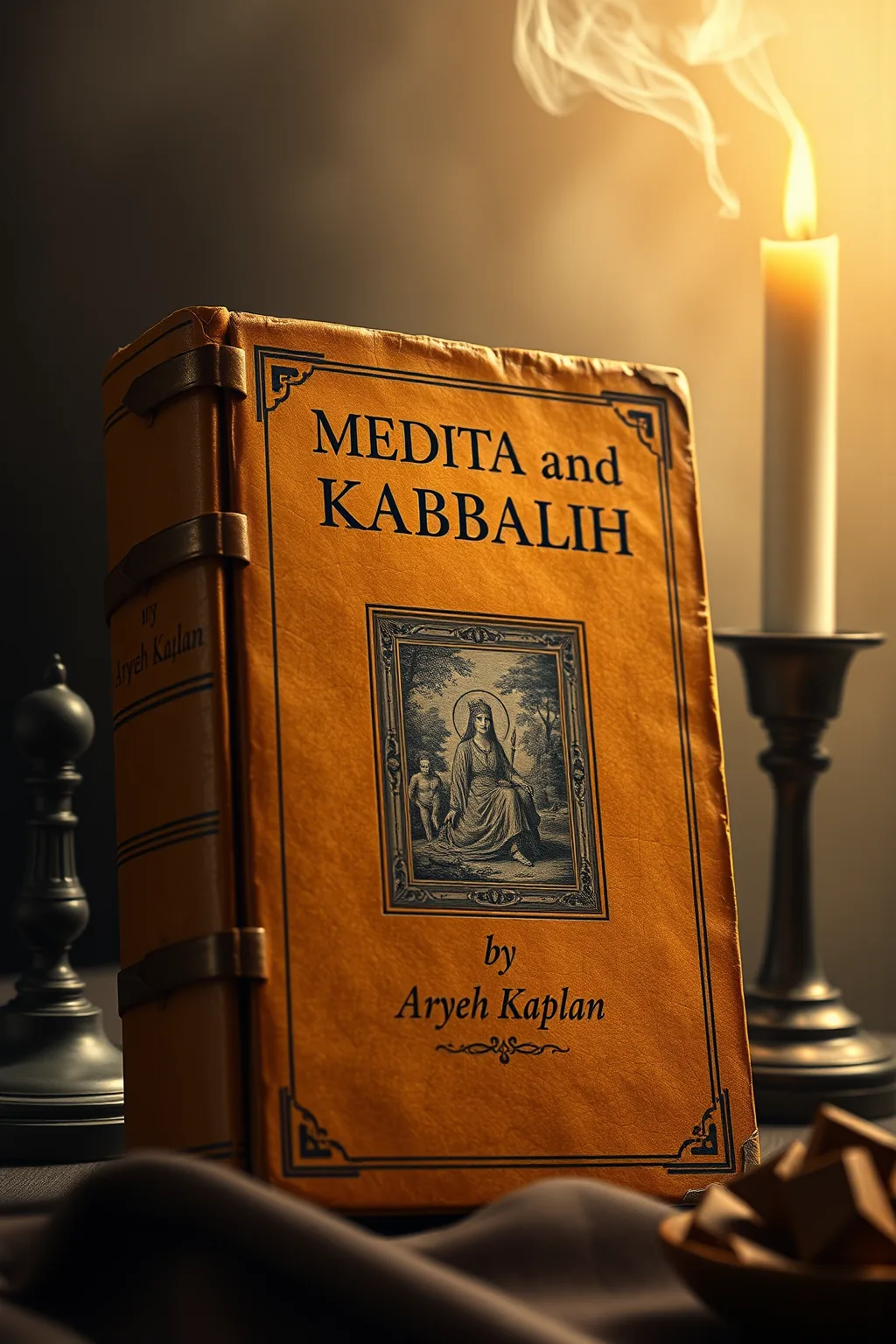
Meditation and Kabbalah
 83
83

Meditation and Kabbalah
Aryeh Kaplan’s *Meditation and Kabbalah* is an essential, if dense, compendium for anyone seeking to understand the active contemplative life within Jewish mysticism. Its strength lies in its meticulous detail and the author’s clear commitment to presenting the material with historical accuracy, drawing from a broad range of primary texts. Kaplan doesn't shy away from the technical aspects, providing a valuable resource for those who wish to move beyond abstract concepts. However, the sheer volume of information and the specialized terminology can present a steep learning curve for newcomers to Kabbalah. A particularly illuminating section discusses the use of Hebrew letters as meditative focal points, demonstrating how even the building blocks of language are imbued with spiritual potential. It is an indispensable, though demanding, guide to a less-explored facet of Kabbalistic practice.
📝 Description
83
Aryeh Kaplan's 1986 book details Kabbalah's contemplative practices, moving beyond theory to experiential methods.
Published in 1986, Meditation and Kabbalah by Aryeh Kaplan reconstructs the practical, experiential dimensions of Jewish mysticism. Kaplan moves past theoretical discussions to illuminate how Kabbalistic traditions engaged in contemplative practices for spiritual ascent and communion. He draws on a wide array of historical sources to detail specific techniques. This work is intended for serious students of Kabbalah interested in its meditative aspects, rather than solely its philosophical or magical applications. It is also useful for practitioners of other contemplative traditions who want to understand the unique methodologies within Jewish mysticism. Researchers in religious studies and comparative mysticism will find it a valuable reference.
Kaplan's book emerged when academic and popular interest in Kabbalah was growing. While much earlier scholarship concentrated on texts like the Zohar or theoretical frameworks, Kaplan's 1986 publication was an early, systematic examination of the experiential and meditative components. This focus distinguished it from contemporary works that might have prioritized historical development or textual analysis. The book explores techniques such as the visualization of divine names, controlled breathing, and ecstatic prayer as aids for spiritual development. Kaplan stresses that these practices are integrated within Jewish law and thought, serving as a means to greater understanding and connection with the Divine, not as ends in themselves.
This book situates itself within the long history of Jewish mysticism, specifically Kabbalah, which seeks direct experience of the Divine. While Kabbalah is often studied through its theological or cosmological systems, Kaplan focuses on the practical methods developed over centuries for achieving altered states of consciousness and spiritual union. These methods, including visualization and specific meditative states, are presented as integral to the Kabbalistic path, connecting the human to the divine through disciplined practice rooted in Jewish tradition.
💡 Why Read This Book?
• You will learn specific Kabbalistic meditation techniques, such as visualization of divine names and breath control, as detailed in Kaplan's work, offering a practical approach to Jewish mysticism not commonly found elsewhere. • Gain an understanding of the historical development and integration of these meditative practices within Jewish tradition, specifically referencing the period and textual sources Kaplan examines, providing crucial context. • Discover how Hebrew letters are utilized as meditative tools, a unique concept presented by Kaplan, which illuminates a distinct method of spiritual concentration within Kabbalah.
⭐ Reader Reviews
Honest opinions from readers who have explored this book.
❓ Frequently Asked Questions
What are the main branches of Kabbalah discussed in the book?
The book divides Kabbalah into three primary branches: the theoretical, the meditative, and the magical. It focuses primarily on the meditative aspects, which have historically received less attention in comparative mystical literature.
What specific meditative techniques does Aryeh Kaplan describe?
Kaplan describes techniques including visualization of divine names and Hebrew letters, breath control exercises, and ecstatic prayer. These methods are presented as tools for spiritual development and communion with the Divine.
When was Meditation and Kabbalah first published?
Meditation and Kabbalah by Aryeh Kaplan was first published on January 15, 1986, making it a significant work in the late 20th-century exploration of Jewish mysticism.
Is this book suitable for beginners in Kabbalah?
While valuable, the book is quite detailed and technical. It is best suited for those with some foundational knowledge of Kabbalah or a serious intent to study its meditative practices in depth.
Does the book cover the magical aspects of Kabbalah?
The book acknowledges the magical branch of Kabbalah as one of its three divisions but primarily concentrates on the meditative and experiential dimensions, rather than practical spellcraft or ritual magic.
What makes this book different from other Kabbalah texts?
Its distinction lies in its in-depth focus on the practical, meditative methods of Kabbalists. Many other texts explore the theoretical or philosophical aspects, leaving the experiential techniques less elaborated.
🔮 Key Themes & Symbolism
Meditative Techniques
Kaplan meticulously details ancient Kabbalistic methods for achieving altered states of consciousness and spiritual communion. These include visualization practices centered on Hebrew letters and divine names, controlled breathing exercises, and specific forms of prayer designed to induce mystical experiences. The emphasis is on the practical application of these techniques for spiritual ascent, moving beyond purely intellectual understanding.
Kabbalistic Cosmology
The book frames its meditative practices within the context of Kabbalistic cosmology, explaining how techniques like visualizing the Sephirot or divine names are intended to align the practitioner with the structure of reality. Understanding the emanatory process and the divine realms is presented as foundational to effective meditation, providing a map for the inner journey.
Integration with Jewish Practice
A crucial theme is that Kabbalistic meditation is not separate from Jewish observance but an integral part of it. Kaplan stresses that these practices are meant to deepen one's connection to God within the framework of Torah and Halakha. The goal is not escapism but a more profound engagement with the Divine in all aspects of life.
The Three Branches
Kaplan categorizes Kabbalah into theoretical, meditative, and magical branches. While acknowledging all three, the book's primary focus is on the meditative aspect, presenting it as the bridge between abstract knowledge and direct spiritual experience. It highlights how these methods were historically employed to achieve specific spiritual states and insights.
💬 Memorable Quotes
Direct passages from the work, attributed to the author.
“The Kabbalah is divided into three branches—the theoretical, the meditative, and the magical.”
— This foundational statement from the original blurb sets the stage for Kaplan's work, indicating that while Kabbalah encompasses various dimensions, this book will specifically illuminate the often-overlooked meditative practices.
“While many books... have explored the theoretical Kabbalah, very little has been published regarding the meditative methods.”
— This highlights the scholarly gap that Kaplan aimed to fill with his research, emphasizing the rarity and importance of a detailed exposition on Kabbalistic meditation techniques.
“Kaplan reveals the methodology of the ancient Kabbalists and stresses the meditative technique.”
— This interpretation underscores the book's core purpose: to unveil the practical 'how-to' of Kabbalistic contemplation and reaffirm its central role in the tradition.
“The Kabbalah is divided into three branches—the theoretical, the meditative, and the magical.”
— This statement from the original blurb establishes the book's scope, signaling its intent to focus on the experiential and contemplative aspects of Jewish mysticism rather than solely its philosophical or esoteric magical elements.
“Kaplan’s landmark work, reveals the methodology of the ancient Kabbalists and stresses the meditative technique.”
— This interpretation emphasizes the book's significance as a guide to the practical methods used by historical Kabbalists, highlighting its role in bringing these often-secret techniques to a wider audience.
🌙 Esoteric Significance
Tradition
This work is firmly rooted in the Kabbalistic tradition, a lineage of Jewish mysticism. Kaplan's contribution lies in extracting and systematizing the meditative practices within this tradition, presenting them as a distinct path for spiritual development. It bridges the gap between theoretical Kabbalah and its practical application, fitting within the broader spectrum of Western esotericism by offering a unique contemplative methodology.
Symbolism
Key symbols include the Hebrew letters, which are presented not just as linguistic units but as potent meditative objects capable of inducing specific spiritual states. Divine names, particularly the Tetragrammaton, are also central, used in visualizations and contemplative prayer to facilitate communion with the Divine. The Sephirot, the ten emanations of God, are often visualized as a framework for understanding the structure of both the cosmos and the practitioner's inner world.
Modern Relevance
Contemporary practitioners of contemplative prayer, mindfulness, and various forms of Western esotericism can draw upon Kaplan's work. Thinkers interested in the intersection of psychology and spirituality, and those exploring comparative mysticism, find value in his detailed explanations. The book serves as a primary source for understanding a practical, experiential dimension of Kabbalah that continues to inform modern spiritual seekers.
👥 Who Should Read This Book
• Students of Jewish mysticism seeking to understand the practical, contemplative aspects of Kabbalah beyond theoretical discussions. • Practitioners of meditation and contemplative prayer from any tradition interested in exploring the specific methodologies and symbolic frameworks of Kabbalistic practice. • Researchers in religious studies and comparative esotericism looking for a detailed, source-based examination of Jewish mystical techniques.
📜 Historical Context
Published in 1986, Aryeh Kaplan's *Meditation and Kabbalah* arrived at a time of burgeoning Western interest in Jewish mysticism, often filtered through New Age spirituality or academic study. While figures like Gershom Scholem had revolutionized Kabbalistic scholarship decades earlier, much of the focus remained on textual analysis and historical origins of texts like the Zohar. Kaplan’s work distinguished itself by concentrating on the experiential and practical meditative techniques, drawing from a wider array of less-studied sources. It addressed a perceived lacuna in existing literature, which often presented Kabbalah as primarily theoretical or esoteric magical practice. This book offered a direct, methodological approach to the contemplative traditions within Judaism, providing a counterpoint to purely academic or heavily esoteric interpretations prevalent at the time.
📔 Journal Prompts
The use of Hebrew letters as meditative objects: Explore a single letter's visual form and potential symbolic meanings.
Visualization of divine names: Consider the concept of invoking divine presence through concentrated mental imagery.
Breath control in Kabbalistic practice: Reflect on the connection between physical regulation and spiritual awareness.
The theoretical vs. meditative branches of Kabbalah: How might intellectual study prepare one for deeper contemplative work?
Kaplan's emphasis on integrating meditation with Jewish practice: Examine how spiritual disciplines can be woven into daily life.
🗂️ Glossary
Kabbalah
A system of Jewish mysticism that explores the nature of God, the creation of the universe, and the spiritual purpose of humanity through esoteric interpretations of the Torah.
Sephirot
The ten divine emanations or attributes through which God reveals Himself and interacts with the created world, forming a central symbolic structure in Kabbalah.
Tetragrammaton
The four-letter Hebrew name of God (YHWH), considered profoundly sacred and often used in Kabbalistic meditation and mystical contemplation.
Gematria
A system of Jewish numerology that assigns numerical values to Hebrew letters, used to find hidden meanings and connections within religious texts.
Yichudim
Kabbalistic meditative practices involving the 'unification' of divine names or concepts, aimed at spiritual communion and cosmic harmony.
Shekhinah
The divine feminine presence of God, often understood as God's immanence in the world, a concept explored in Kabbalistic thought and meditation.
Ayin
Literally 'nothingness' or 'non-being'; in Kabbalah, it refers to the absolute divine mystery beyond human comprehension, the ultimate source of creation.













![Kabbalah Dictionary [Hebrew To English].pdf (PDFy mirror)](/img/thumb/kabbalah-dictionary-hebrew-to-english-pdf-pdfy-mirror.webp)