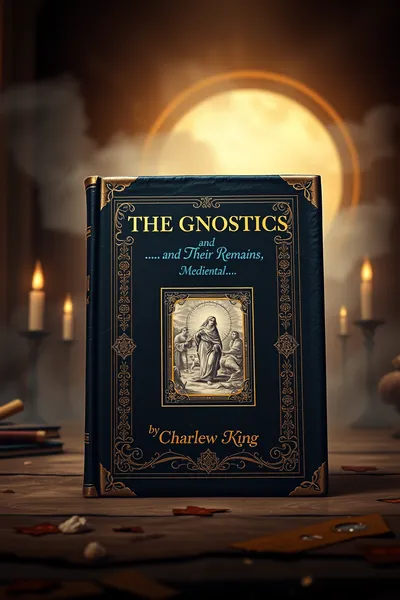
The Gnostics and their remains, ancient and mediaeval

 79
79

The Gnostics and their remains, ancient and mediaeval
Charles William King's "The Gnostics and their Remains" offers a formidable, if dated, excavation of Gnostic thought and its material manifestations. Its strength lies in King's deep engagement with archaeological evidence, particularly the extensive cataloging of Gnostic gems and sigils, which he uses to illuminate abstract theological concepts. For instance, his detailed descriptions of the Ophis symbol, a serpent often intertwined with divine figures, provide a concrete anchor for understanding Gnostic cosmology. However, the scholarship, while pioneering for its 1864 publication, reflects the biases and interpretive frameworks of its time. The author's tendency to categorize Gnostic groups and their beliefs can feel overly rigid to a modern reader accustomed to more fluid understandings of ancient religious movements. Despite these limitations, the book remains a vital, if challenging, primary source for anyone serious about the historical study of Gnosticism, particularly its visual and symbolic language. It serves as an indispensable, albeit challenging, foundation for understanding the Gnostic worldview through its surviving artifacts.
📝 Description
79
Charles William King first published "The Gnostics and their Remains" in 1864, examining Gnostic artifacts and texts.
First appearing in 1864, Charles William King's "The Gnostics and their Remains" is a detailed study of Gnostic movements and their material evidence. King, a specialist in gems and antiquities, organizes a survey of Gnostic beliefs, symbols, and rituals as seen through their physical remnants. The book moves through early Christian heresies, explaining the complex cosmologies and dualistic philosophies central to Gnosticism. It also tracks the influence of these ideas on later esoteric traditions.
The work is intended for academics studying early Christianity, comparative religion, and Western esotericism. Readers interested in Gnosticism's philosophical basis, its distinct symbolic language, and its historical development will find King's analysis thorough. The book suits those who want a scholarly but understandable look at Gnostic thought, focusing on primary evidence and historical research over simplified interpretations.
Published in the mid-19th century, King's work emerged during a time of growing academic interest in ancient religions and early Christian history. Fields like archaeology and textual criticism offered new methods for understanding Gnostic groups, previously known mainly through critiques by Church Fathers. King's research helped establish Gnosticism as a significant force in the ancient world, separate from later movements like Manichaeism. This period also saw explorations into similar ancient traditions by figures like Helena Blavatsky, though King's focus remained on historical scholarship.
✍️ Author
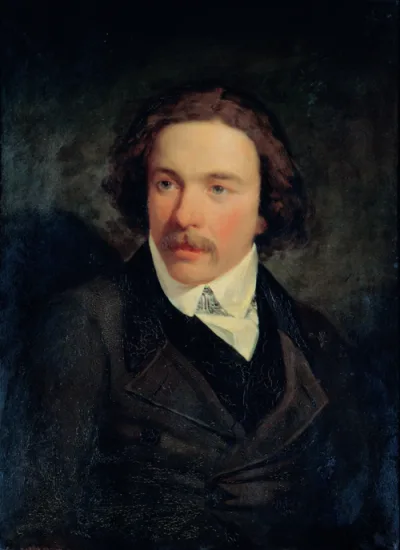
Charles William King
Charles William King was an English antiquarian, numismatist, and author, known for his works on gems and classical art.
💡 Why Read This Book?
• Understand the Gnostic concept of the Demiurge and its implications for creation, a foundational idea that distinguishes Gnostic thought from orthodox Christianity. This offers a unique lens on dualistic philosophies. • Analyze the visual language of Gnosticism through King's extensive discussion of ancient gems and sigils, providing a concrete method for interpreting esoteric symbolism beyond textual analysis. • Trace the historical lineage of Gnostic ideas, moving beyond abstract philosophy to see how these concepts were embodied and expressed across centuries, as detailed in the book's examination of both ancient and medieval remains.
⭐ Reader Reviews
Honest opinions from readers who have explored this book.
❓ Frequently Asked Questions
What is the primary focus of Charles William King's "The Gnostics and their Remains"?
The book primarily focuses on the Gnostic movement, examining its beliefs, symbols, and practices through ancient and medieval artifacts and texts. It details their complex cosmologies, dualistic philosophies, and the iconography found on gems and amulets.
When was "The Gnostics and their Remains" first published, and is it still relevant?
It was first published in 1864. While its scholarship reflects its era, the book remains relevant for its detailed examination of Gnostic material culture and its foundational role in the historical study of Gnosticism.
What kind of evidence does King use to support his analysis of Gnosticism?
King heavily relies on archaeological evidence, particularly Gnostic gems, sigils, and other artifacts. He also analyzes early Christian texts, especially those written by Church Fathers who condemned Gnostic teachings.
Does the book discuss Gnostic influence on later esoteric traditions?
Yes, the book explores how Gnostic ideas and symbols may have influenced subsequent esoteric movements. It traces the trajectory of these concepts through medieval periods, offering insights into their enduring legacy.
Who would benefit most from reading "The Gnostics and their Remains"?
Scholars of early Christianity, comparative religion, and Western esotericism, as well as those interested in Gnostic philosophy, symbolism, and historical development, will find this work particularly valuable.
What is the significance of the "remains" mentioned in the title?
The "remains" refer to the physical and textual evidence left by Gnostic groups, including inscriptions, gems, amulets, and early writings that scholars use to reconstruct their beliefs and practices.
🔮 Key Themes & Symbolism
Gnostic Cosmology and Theogony
The work meticulously reconstructs the complex emanationist cosmologies of various Gnostic sects. King details the hierarchy of divine beings (Aeons) descending from an unknowable supreme God, culminating in figures like Sophia whose fall precipitates the creation of the material world. This intricate divine architecture, often involving a flawed Demiurge, is presented as a core Gnostic doctrine, contrasting sharply with mainstream creation narratives and offering a framework for understanding the perceived imperfections of existence.
Iconography of Gnostic Gems
A significant portion of King's analysis is dedicated to the interpretation of Gnostic symbols found on ancient engraved gems and amulets. These artifacts served not only as talismans but as visual catechisms, depicting deities, mythological scenes, and arcane inscriptions. King deciphers motifs such as the Abraxas, the Ophis (serpent), and various composite figures, linking them to specific Gnostic myths and theological concepts, thereby providing tangible evidence of their belief systems.
Dualism and Salvation
The fundamental Gnostic principle of radical dualism—the stark separation between the spiritual, divine realm and the material, inherently flawed cosmos—is a recurring theme. King explores how Gnostics perceived humanity as containing a divine spark trapped within a corruptible body and material world. Salvation, therefore, was achieved through gnosis (knowledge), a direct, mystical apprehension of the divine, enabling the liberation of this spark from material bondage.
Gnosticism's Historical Trajectory
King traces the historical presence of Gnosticism from its roots in the early centuries CE through its persistence into the medieval period. He examines the interactions and conflicts between Gnostic groups and early Christian orthodoxy, as documented by Church Fathers. The book also considers the potential survival and reinterpretation of Gnostic ideas within later mystical and esoteric traditions, highlighting its long-term impact on Western thought.
💬 Memorable Quotes
“The gems of the Gnostics are the most valuable illustrations of their doctrines.”
— This statement highlights King's thesis that the physical artifacts, particularly engraved gems, are crucial for understanding the abstract theological and cosmological systems of Gnosticism, serving as direct visual evidence of their beliefs.
“Abraxas, the name of the Supreme Being, whose effigy is stamped on countless amulets.”
— This refers to a prominent Gnostic deity or name, often depicted with a composite body and the head of a rooster. King emphasizes its prevalence on talismans, signaling its importance in Gnostic worship and protective practices.
“The serpent Ophis was a symbol of the material world and its creator.”
— This paraphrase captures the Gnostic symbolism of the serpent, often associated with the Demiurge and the flawed material creation, contrasting with its more positive or neutral interpretations in other traditions.
“Gnosticism represented a profound challenge to the developing doctrines of the early Church.”
— This interpretation reflects King's acknowledgment of Gnosticism as a significant alternative religious and philosophical current that competed with and was often suppressed by emerging orthodox Christianity.
“Sophia's fall from divine grace led to the creation of the material universe.”
— This encapsulates a key Gnostic myth where the desire or error of a divine emanation, Sophia (Wisdom), results in the unintended creation of the imperfect material cosmos and its ruler, the Demiurge.
🌙 Esoteric Significance
Tradition
This work firmly belongs to the scholarly examination of Western Esotericism, specifically focusing on Gnosticism. It fits within the lineage of historical and archaeological scholarship that seeks to understand the origins and development of Gnostic thought, a tradition characterized by its dualistic cosmology, emphasis on inner knowledge (gnosis), and complex mythologies. King's meticulous cataloging of Gnostic artifacts places his work as a foundational text for understanding the material culture associated with these ancient mystical currents.
Symbolism
Key symbols explored include the Ophis (serpent), often representing the material world or the Demiurge, and Abraxas, a composite deity frequently found on Gnostic amulets, symbolizing cosmic power or a supreme being. King also analyzes the significance of compound figures and specific Greek or Hebrew letters used in Gnostic iconography, interpreting them as encapsulations of complex theological ideas about creation, divine emanations, and the path to liberation.
Modern Relevance
Contemporary Gnostic revival movements, such as those inspired by the works of scholars like Elaine Pagels or the writings of figures like Samael Aun Weor, often draw upon the historical and symbolic data presented by King. His detailed analysis of Gnostic gems and cosmology continues to inform modern practitioners and researchers interested in the practical application of Gnostic principles, symbolic interpretation, and the recovery of ancient wisdom traditions within contemporary spiritual frameworks.
👥 Who Should Read This Book
• Students of comparative religion and early Christian history seeking a detailed examination of Gnostic beliefs and their historical context, moving beyond theological critiques. • Esoteric practitioners and scholars of Western occult traditions interested in the origins of Gnostic symbolism, cosmology, and its influence on later mystical movements. • Collectors and enthusiasts of ancient amulets, gems, and sigils who wish to understand the esoteric significance and historical background of Gnostic artifacts.
📜 Historical Context
Published in 1864, Charles William King's "The Gnostics and their Remains" emerged during a Victorian era fascinated by ancient civilizations and esoteric knowledge. This period saw significant archaeological discoveries and a growing academic interest in early Christian heresies, moving beyond the polemics of Church Fathers. King's work was a pioneering effort to systematically analyze Gnostic beliefs through material evidence, especially the vast array of Gnostic gems. It contributed to a scholarly re-evaluation of Gnosticism, presenting it not merely as a fringe aberration but as a complex philosophical and religious system. This contrasted with earlier, purely theological condemnations. While figures like Madame Blavatsky were beginning to synthesize Eastern and Western esoteric traditions around the same time, King's approach remained rooted in historical scholarship and artifact analysis, providing a critical foundation for later occult studies.
📔 Journal Prompts
The Gnostic concept of the Demiurge and its implications for the nature of reality.
Analysis of the symbolism on a specific Gnostic gem discussed by King.
Sophia's role in Gnostic cosmogony and its relation to divine wisdom.
The practice of collecting and interpreting Gnostic remains in the 19th century.
Comparing Gnostic dualism with other dualistic philosophical systems.
🗂️ Glossary
Gnosis
A Greek term meaning 'knowledge', central to Gnosticism. It refers to a special, intuitive, or revealed knowledge of the divine and the nature of reality, considered essential for spiritual liberation.
Demiurge
In Gnosticism, the creator of the material world, often identified with the God of the Old Testament. Typically depicted as ignorant, flawed, or even malevolent, distinct from the true, transcendent Supreme Being.
Aeons
Emanations or divine beings originating from the supreme, unknowable God in Gnostic cosmology. They form a hierarchy that constitutes the Pleroma (fullness) from which the material world indirectly arises.
Sophia
A prominent Aeon, often translated as 'Wisdom'. In many Gnostic myths, Sophia's desire or error leads to the creation of the Demiurge and the material universe, making her a pivotal figure in the Gnostic drama.
Abraxas
A mystical word and name of a Gnostic deity, often depicted with the head of a rooster, the body of a man, and serpents for legs. It appears frequently on Gnostic gems and amulets.
Pleroma
The spiritual realm or 'fullness' inhabited by the Supreme God and the Aeons in Gnostic theology. It represents the perfect, divine world from which the material cosmos is a fallen or distant emanation.
Sigil
An inscribed symbol or sign, often used in magical or esoteric contexts. In relation to Gnosticism, sigils commonly refer to the symbols and names inscribed on gems and amulets.