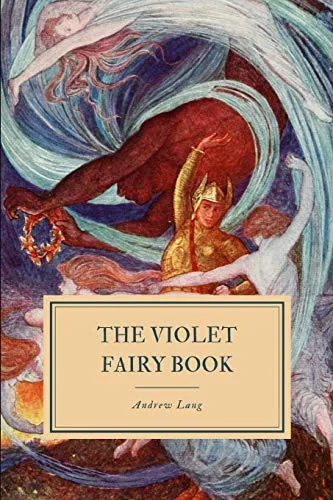
The Violet Fairy Book (Large Print)
 75
75

The Violet Fairy Book (Large Print)
Andrew Lang's "The Violet Fairy Book" offers a broad panorama of global folklore, a significant undertaking for its time. The sheer volume and variety of tales are its primary strength, presenting narratives often absent from more common Western anthologies. The large print format, while practical, does little to elevate the prose itself. A notable limitation is the lack of deep contextualization for many stories; they are presented as pure narrative without extensive folkloric analysis, which a more academic reader might desire. For instance, the recurring motif of the enchanted animal companion, seen in tales like "The Story of the Mandarin Ducks," feels more like a narrative device than a symbol explored in depth within the text itself. Lang’s curation provides a valuable resource, though its scholarly apparatus is minimal. It remains a foundational collection for appreciating the breadth of mythic storytelling.
📝 Description
75
Andrew Lang's The Violet Fairy Book, published in 1929, collects global fairy tales for large print readers.
Andrew Lang's The Violet Fairy Book is an anthology of fairy tales drawn from various worldwide sources, originally published in 1929. This large print edition makes these traditional narratives accessible. The collection draws from European and other folklore traditions, acting as a record of mythic storytelling that reflects the shared imagination of different cultures. It is a compilation suited for those interested in comparative mythology, folklore studies, and the origins of narrative archetypes. Readers seeking to understand the foundational stories that have influenced Western and Eastern storytelling will find value here. The large print format is also a benefit for older readers or those with visual impairments who want to read classic tales without difficulty. It offers a wealth of narrative material for both academic study and general enjoyment.
The book emerged in the early 20th century, a time of increased interest in collecting and studying folklore. Lang, a Scottish poet and critic, was part of a movement aiming to document oral traditions. His series of "Fairy Books," starting in 1889, gained considerable popularity and influenced many readers and scholars. This volume, published after his death, continues his effort to share these stories. The collection examines common themes found in fairy tales, such as the hero's quest, the victory of good over evil, the function of magical aids, and the meaning of transformations. These stories often feature classic character types like the wise mentor, the trickster, and the innocent hero facing challenges. The underlying ideas frequently relate to fundamental human desires, fears, and moral teachings.
Andrew Lang's fairy tale collections, including The Violet Fairy Book, tap into a tradition of folkloric scholarship that emerged in the late 19th and early 20th centuries. This period saw a significant effort to document and understand oral traditions and mythologies from around the world. While not strictly esoteric in the occult sense, these collections engage with the archetypal patterns and symbolic language embedded within traditional narratives, which have been a subject of interest in various esoteric traditions. Lang's work, by preserving and disseminating these stories, indirectly contributes to the broader study of universal human symbols and narratives.
💡 Why Read This Book?
• Gain exposure to diverse folkloric traditions not typically found in mainstream Western collections, such as the tales compiled by Andrew Lang for "The Violet Fairy Book" (1929). • Understand the archetypal patterns and moral lessons embedded within global fairy tales, exemplified by recurring motifs like the magical helper found across various narratives. • Appreciate the historical significance of folklore preservation efforts in the early 20th century, recognizing Lang's contribution to cataloging these stories for future generations.
⭐ Reader Reviews
Honest opinions from readers who have explored this book.
❓ Frequently Asked Questions
When was Andrew Lang's "The Violet Fairy Book" first published?
Andrew Lang's "The Violet Fairy Book" was first published in 1929, several years after his passing, continuing his extensive series of fairy tale collections.
What is the significance of the large print format for "The Violet Fairy Book"?
The large print format enhances accessibility, making the collection easier to read for individuals with visual impairments or those who prefer larger text for extended reading sessions.
Are the stories in "The Violet Fairy Book" original to Andrew Lang?
No, Andrew Lang collected and retold stories from various global folklore traditions; he did not invent the tales themselves, but curated them for his "Fairy Books" series.
What kind of tales can I expect in "The Violet Fairy Book"?
You can expect a wide array of fairy tales drawn from European and other international sources, featuring common folklore elements like magic, mythical creatures, and moral lessons.
Is "The Violet Fairy Book" part of a series?
Yes, "The Violet Fairy Book" is part of Andrew Lang's renowned "Fairy Books" series, which includes titles such as "The Blue Fairy Book" and "The Red Fairy Book."
What is the primary focus of Andrew Lang's fairy tale collections?
Lang's primary focus was the collection and dissemination of traditional fairy tales from diverse cultures, aiming to preserve and share these narratives with a wider audience.
🔮 Key Themes & Symbolism
Archetypal Narratives
The collection explores stories populated by recognizable archetypes: the innocent protagonist facing adversity, the wise mentor offering guidance, and the antagonist embodying primal fears. These figures, common across cultures, serve as vehicles for exploring fundamental human experiences. For example, the recurring motif of the unjustly treated hero or heroine who ultimately triumphs reflects a deep-seated human hope for justice and vindication. The stories often present these archetypes in clear moral dichotomies, providing a framework for understanding societal values and personal conduct.
Magical Transformation and Agency
A significant theme is the concept of magical transformation, both literal and metaphorical. Characters often undergo changes, whether through spells, curses, or self-discovery, leading to new identities or circumstances. This theme explores the potential for change and the fluidity of identity. Alongside transformation, the tales frequently highlight the importance of agency, even for seemingly powerless characters. Through wit, courage, or the aid of magical elements, protagonists assert their will and influence their destinies, demonstrating that even within a world of enchantment, personal action holds power.
Folklore as Cultural Mirror
The diverse origins of the tales in "The Violet Fairy Book" underscore their function as mirrors of different cultures and historical periods. Each story, drawn from specific regional traditions, offers glimpses into the beliefs, anxieties, and aspirations of the people who told them. The collection implicitly showcases how universal human concerns are expressed through unique cultural lenses. It serves as an early example of comparative mythology, revealing shared narrative structures and symbolic languages that connect seemingly disparate societies through the enduring power of storytelling.
The Power of the Spoken Word
Implicit in the collection is the enduring power of the spoken word and oral tradition. Andrew Lang's effort to compile these stories acknowledges their origins in oral performance and communal storytelling. The narratives themselves often feature the power of incantations, prophecies, and persuasive speech. This highlights a belief in the transformative and binding nature of language. The very act of collecting and printing these tales is a proof of the value placed on preserving these narratives, ensuring their continued influence beyond their original spoken contexts.
💬 Memorable Quotes
Direct passages from the work, attributed to the author.
“Many a tale begins with a simple wish or a dire need.”
— This highlights the common narrative starting point where a character's fundamental desire or urgent problem propels the story forward, setting the stage for adventure or conflict.
“The cleverness of the smallest creature can overcome the mightiest foe.”
— This captures the frequent theme of intelligence and resourcefulness triumphing over brute force, emphasizing that size and strength are not the only determinants of success.
“Lost things are often found in unexpected places.”
— This interpretation points to the narrative trope where solutions or desired objects appear in settings or through means that defy conventional logic or expectation.
“Journeys taken for love or duty often lead to self-discovery.”
— This concept underscores the transformative aspect of quests, suggesting that the path undertaken, whether for another or for a cause, ultimately reshapes the protagonist's inner world.
💡 Key Ideas
Editorial paraphrase of the work's core concepts — not direct quotes.
The world is full of magic things, shown to us by the fairy folk.
This paraphrased concept suggests that fairy tales reveal a hidden layer of reality, one imbued with wonder and enchantment, accessible through the narratives themselves.
🌙 Esoteric Significance
Tradition
While not explicitly aligned with a single esoteric lineage like Hermeticism or Theosophy, Lang's "Fairy Books" tap into a pan-cultural stream of mythic consciousness that underpins many esoteric traditions. The archetypal characters and narrative structures echo Gnostic myths of creation and fall, Neoplatonic ideas of emanation, and Jungian concepts of the collective unconscious. The collection serves as a foundational text for understanding the symbolic language common to both folk belief and esoteric philosophy, providing a accessible entry point to deeper symbolic interpretation.
Symbolism
Key symbols abound, such as the enchanted forest, representing the unconscious mind or a liminal space where transformation occurs. The recurring motif of the magical animal companion often symbolizes instinctual wisdom, a guide from the deeper self. Water bodies frequently symbolize the source of life, emotion, or the unknown, with crossings often signifying significant transitions. These symbols, while common in folklore, resonate with similar imagery found in alchemical texts and shamanic traditions, pointing to a shared symbolic grammar.
Modern Relevance
Contemporary thinkers in depth psychology, particularly those influenced by Carl Jung, often reference Lang's collections as evidence of the collective unconscious and its archetypal patterns. Modern fantasy literature and storytelling continue to draw heavily on the archetypes and narrative structures popularized by Lang. Furthermore, practitioners of modern paganism and witchcraft sometimes engage with these tales as source material for understanding ancient myth cycles and symbolic systems relevant to their spiritual practices.
👥 Who Should Read This Book
• Aspiring writers and storytellers seeking to understand the foundational structures and archetypes of narrative across cultures. • Students of comparative mythology and folklore interested in a broad survey of global fairy tales compiled by a significant early collector. • Readers of all ages looking for accessible, classic tales that explore universal themes of courage, transformation, and the overcoming of adversity.
📜 Historical Context
Andrew Lang's "The Violet Fairy Book" (1929) emerged from a vibrant late Victorian and Edwardian intellectual milieu fascinated by folklore and comparative mythology. Lang, a prolific Scottish writer and critic, was a key figure in popularizing these studies, following in the footsteps of scholars like the Brothers Grimm. His series of fairy books, beginning in 1889, aimed to present a comprehensive, albeit curated, collection of global tales. This period saw a burgeoning interest in national identities often tied to folklore, and Lang's work contributed to this cultural moment. He engaged with contemporary anthropological theories, though his approach was primarily literary rather than strictly scientific. His collections were widely read and admired, even as more rigorous academic folklorists began to critique the subjective nature of his retellings and selections. The sheer popularity of Lang's fairy books established a benchmark for children's literature and folklore anthologies.
📔 Journal Prompts
The recurring motif of the enchanted forest in these tales, what does it represent to you?
Consider the trickster figures; how do they challenge societal norms within their respective stories?
Reflect on the role of magical objects, like the talking mirror or the enchanted sword, in advancing the plot.
How does the theme of 'justice' manifest differently across various cultural settings presented in the book?
The transformation of characters, from human to animal or vice versa; what does this symbolize in your interpretation?
🗂️ Glossary
Archetype
A recurring symbolic character, pattern of behavior, or universal concept found in the literature of many cultures, often believed to originate in the collective unconscious.
Folklore
The traditions, customs, beliefs, and stories of a community, passed down through generations, often orally, including myths, legends, and fairy tales.
Myth
A traditional story, especially one concerning the early history of a people or explaining some natural or social phenomenon, and typically involving supernatural beings or events.
Anthropology
The scientific study of humanity, concerned with human behavior, human biology, cultures, societies, and linguistics, in both the present and past.
Liminal Space
A threshold or transitional state, often depicted in stories as a place between two worlds or states of being, where significant change or revelation can occur.
Oral Tradition
The passing down of cultural knowledge, stories, history, and beliefs through spoken language rather than written records.
Comparative Mythology
The study of the similarities and differences in myths and mythologies from various cultures and religions worldwide.
🔮 Readers Also Liked
Browse all →







More by Andrew Lang
All books →


More Free Occult Philosophy Books
View all →