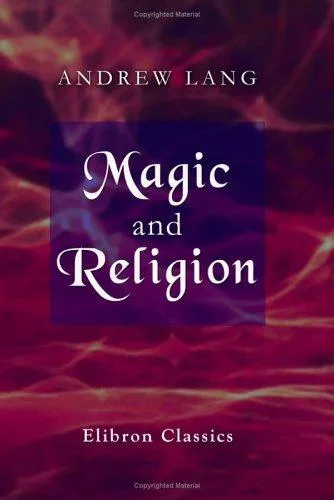
Magic and religion
 65
65

Magic and religion



Evander Ashcroft (Alchemy & Hermeticism Editor) — Andrew Lang's 'Magic and Religion' remains a foundational text for understanding the deep currents connecting primitive belief and organized faith. Lang's genius lies in his ability to meticulously dissect seemingly disparate practices, revealing their shared origins in human psychology and the quest for control over the unknown. He navigates the labyrinth of early mythologies with scholarly rigor, offering profound insights into the symbolic language that underpins both shamanic ritual and nascent theological frameworks. For the discerning reader, this work illuminates the perennial human desire to bridge the seen and unseen, making it indispensable for scholars of comparative religion, anthropology, and the esoteric arts. Its enduring relevance lies in its illumination of the universal archetypes that continue to resonate within us.
📝 Description
65
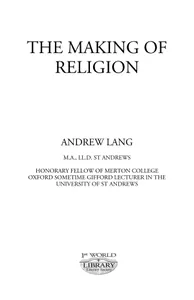
Andrew Lang's 1901 book argues magic and religion share primal human roots.
Published in 1901, Andrew Lang's 'Magic and Religion' investigates the connection between early magical practices and the formation of religious beliefs. Lang posits that these phenomena stem from a common human impulse to understand and interact with forces beyond the ordinary. He examines myths, rituals, and early societal structures to trace how humans have sought meaning and order.
The author looks at the ways early peoples perceived the sacred and the supernatural. He uses anthropological observations and an understanding of symbolic expression to show how spiritual questions arose. The book reveals the shared human desires and imaginative leaps that led to both religious doctrines and magical traditions. Lang's work connects these seemingly disparate fields by focusing on the underlying human needs that shaped them.
Andrew Lang's work fits within the late 19th and early 20th-century academic interest in comparative mythology and folklore. This period saw scholars examining the roots of religion and magic across cultures, often looking for universal patterns in human thought. Lang, in particular, engaged with these ideas through a lens that acknowledged the psychological and anthropological dimensions of belief, bridging the gap between folkloristic study and nascent religious studies.
💡 Why Read This Book?
Delve into the primal origins of belief and ritual. 'Magic and Religion' offers a profound exploration of humanity's earliest attempts to comprehend the cosmos and wield its forces. Ideal for seekers of hidden knowledge, scholars of mythology and anthropology, and practitioners interested in the foundational principles of spiritual inquiry. Uncover the shared roots of magic and religion and gain a deeper understanding of the human spiritual journey.
⭐ Reader Reviews
Honest opinions from readers who have explored this book.
❓ Frequently Asked Questions
What is the primary focus of Andrew Lang's 'Magic and Religion'?
The book primarily focuses on the interconnectedness and shared origins of magic and religion in early human societies, exploring how they arose from similar psychological and social needs to understand and influence the world.
What does Lang mean by 'organised common sense' in relation to science?
Lang suggests that science, much like early forms of organized belief, attempts to make sense of the world through systematic observation and reasoning, albeit with different methodologies and aims than magical or religious systems.
What cultures or mythologies does Lang draw upon?
Lang draws upon a wide array of global mythologies and anthropological studies, including those from Indigenous Australian cultures, African tribes, and ancient European traditions, to illustrate his theories.
Is this book suitable for beginners in esotericism?
Yes, while scholarly, the book provides a foundational understanding of how spiritual and magical beliefs developed, making it accessible and enlightening for beginners interested in the historical roots of esoteric thought.
How does this book relate to divination and tarot?
By exploring the ancient human impulse to divine the future and understand hidden forces, the book provides essential context for practices like divination and tarot, revealing their deep anthropological and psychological underpinnings.
🔮 Key Themes & Symbolism
The Symbiotic Dance of Magic and Religion
Lang meticulously unravels the intricate relationship between what we perceive as magic and religion, arguing they are not opposing forces but rather two sides of the same primal human coin. He illustrates how early societies utilized both to work through the mysteries of existence, from appeasing unseen forces to understanding natural phenomena. This theme emphasizes the shared impulse to seek order, meaning, and control in a world often perceived as unpredictable and governed by powers beyond immediate comprehension. The book reveals the deep psychological roots of these practices, suggesting they stem from a universal need for comfort, explanation, and agency.
The Architecture of Primitive Belief
This theme studies the foundational structures of early spiritual and magical systems. Lang examines the common threads found in diverse global mythologies, highlighting recurring archetypes, creation narratives, and ritualistic practices that reflect a shared human consciousness. He explores the role of shamans, priests, and sorcerers as intermediaries between the mundane and the sacred, and how their actions shaped the collective understanding of reality. The focus is on deconstructing the symbolic language and conceptual frameworks that underpinned these early worldviews, offering a glimpse into the very genesis of human spirituality and its inherent search for connection.
Myth as the Crucible of Consciousness
Andrew Lang posits myth not merely as fanciful tales, but as the very crucible in which human consciousness was forged and expressed. Through the analysis of ancient stories and folklore, he demonstrates how myths served as vehicles for transmitting knowledge, social norms, and cosmological understanding across generations. This theme explores how these narratives provided frameworks for interpreting the world, grappling with existential questions, and establishing a sense of identity and belonging. The book emphasizes the power of storytelling and symbolism in shaping perception, revealing how the imaginative faculty is fundamental to both spiritual and scientific endeavors.
💬 Memorable Quotes
Direct passages from the work, attributed to the author.
“The savage does not distinguish between natural and supernatural.”
— This illustrates Lang's argument that for early peoples, the lines between the mundane and the miraculous were blurred, with all phenomena potentially imbued with spiritual or magical significance, shaping their worldview.
“Myth is the earliest form of history.”
— This suggests that before written records, myths served as the primary means of preserving and transmitting cultural memory, collective experiences, and cosmological understandings, acting as a foundational record of human thought.
“Belief is the most potent force in the world.”
— This underscores the power of conviction and faith, particularly in the context of magic and religion, suggesting that the strength of belief itself can shape reality and influence human actions and outcomes.
“We are all children of the same ancient wonder.”
— This evocative statement speaks to the universal human experience of awe and curiosity, connecting modern individuals to the primal impulses that drove our ancestors to explore the mysteries of existence through myth and ritual.
💡 Key Ideas
Editorial paraphrase of the work's core concepts — not direct quotes.
Science is 'organised common sense.'
This quote highlights Lang's foundational view of science as a systematic, rational approach to understanding the world, setting a benchmark against which he often implicitly compares the less structured, yet equally potent, systems of magic and religion.
🌙 Esoteric Significance
Tradition
Lang's work is foundational to the study of comparative mythology and anthropology within esoteric traditions. It provides a historical and psychological framework for understanding the universal archetypes and symbolic languages that underpin various magical and spiritual systems. Esotericism often seeks to recover ancient wisdom, and Lang's meticulous examination of early beliefs offers crucial insights into the enduring patterns of human spiritual and magical expression, linking them to a shared, deep-seated psychic heritage.
Symbolism
The book illuminates the symbolic nature of early myths and rituals, demonstrating how natural phenomena, animal behavior, and human actions were imbued with profound meaning. Lang shows how these symbols were not arbitrary but served as a universal language to communicate complex ideas about creation, life, death, and the divine. Understanding this symbolic lexicon is vital for deciphering esoteric texts and practices, as it reveals the underlying psychological and spiritual truths that these symbols represent across diverse cultures and time periods.
Modern Relevance
In an age often dominated by secularism and scientific materialism, Lang's work serves as a vital reminder of the persistent human need for meaning, wonder, and connection to something beyond the ordinary. It offers a lens through which to understand contemporary spiritual seeking, the resurgence of interest in ancient practices, and the enduring power of myth and ritual in shaping individual and collective identity. Its insights into the psychology of belief remain profoundly relevant for anyone exploring the human condition.
👥 Who Should Read This Book
This profound exploration is essential for scholars of comparative religion, mythology, and anthropology seeking to understand the deep roots of human belief. Esoteric practitioners and seekers will find invaluable context for the origins of ritual, symbolism, and the human impulse to engage with the unseen. Beginners curious about the evolution of spiritual thought will discover a clear, yet deeply insightful, introduction. Anyone fascinated by the enduring questions of existence and the universal threads connecting diverse cultures through myth and early belief systems will find 'Magic and Religion' a compelling and useful read.
📜 Historical Context
Published at the cusp of the 20th century, Andrew Lang's 'Magic and Religion' emerged during a period of intense scholarly interest in anthropology, folklore, and the comparative study of religion. The Victorian era was characterized by a drive to understand 'primitive' cultures, often through the lens of evolutionary theory, and to trace the development of civilization from its supposed earliest stages. Lang, a prolific scholar and folklorist, engaged with the burgeoning ethnographic data from across the British Empire and beyond. His work reflected both the academic rigor of the time and a deep, almost poetic, fascination with the enduring human quest for meaning. It stood as a significant contribution to the debate on the origins of religion and the nature of belief, challenging prevailing notions and highlighting the psychological depth of early spiritual practices.
📔 Journal Prompts
Reflect on a personal experience where you felt a blurred line between the 'natural' and the 'supernatural' or magical. How did this experience shape your understanding of the world?
Consider a myth or folktale from your own cultural background. What core beliefs or values does it seem to convey about humanity's relationship with the cosmos or unseen forces?
How does the concept of 'organized common sense' apply to modern-day belief systems, whether scientific, religious, or otherwise? Where do you see overlaps or divergences?
Explore the role of ritual in your own life, whether formal or informal. What purpose do these rituals serve for you, and how might they connect to ancient practices?
In what ways do you believe the human need for meaning and control, as discussed by Lang, continues to manifest in contemporary society and personal lives?
🗂️ Glossary
Animism
The belief that spirits inhabit natural objects and phenomena, such as trees, rocks, and rivers, and that these spirits can influence human affairs.
Shamanism
A practice characterized by a practitioner's alleged ability to consciously enter into a trance state, during which they can interact with the spirit world to heal, divine, or mediate.
Totemism
A spiritual belief system in which a person or social group is believed to be related to or descended from a particular animal or plant, which is then revered as a totem.
Numinous
The quality of being divine or sacred, often associated with a feeling of awe, mystery, and fascination that evokes a sense of the supernatural or transcendent.
Mythopoeia
The creation of myths, or the tendency to perceive or interpret the world through mythic structures and narratives.
This book appears in 3 collections
🔮 Readers Also Liked
Browse all →








More by Andrew Lang
All books →



From the “Tarot” Collection
View all →








More Free Divination & Tarot Books
View all →