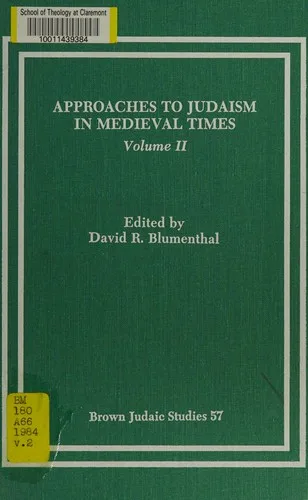
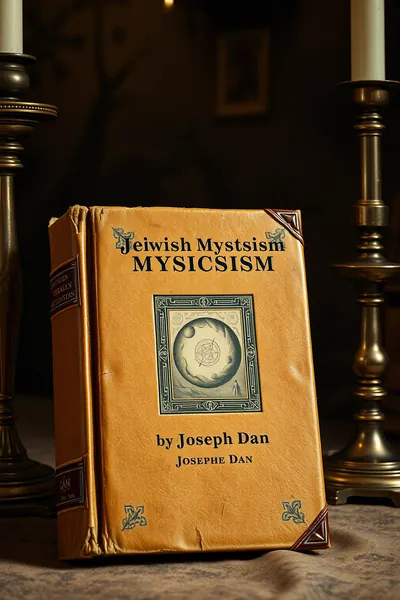
Understanding Jewish mysticism

 61
61

Understanding Jewish mysticism

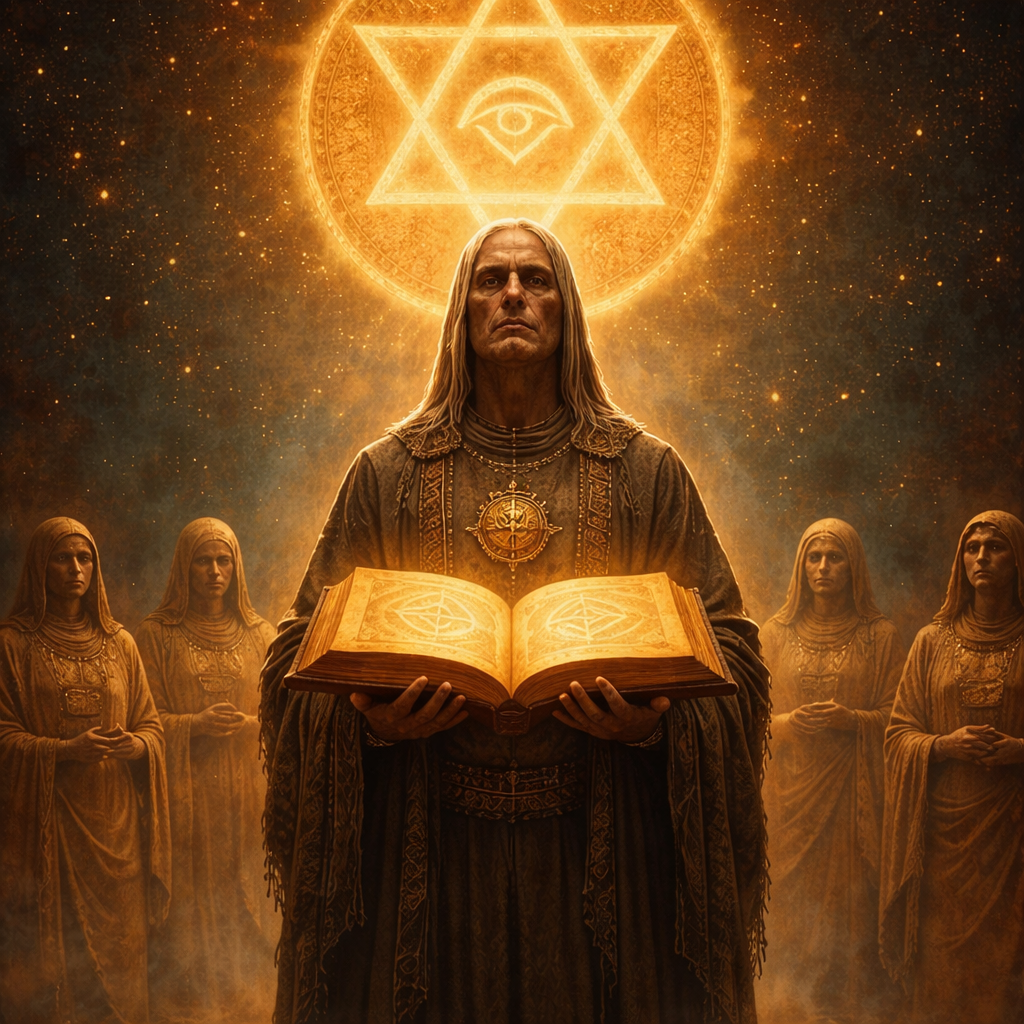

Evander Ashcroft (Alchemy & Hermeticism Editor) — David R. Blumenthal's 'Understanding Jewish Mysticism' stands as a beacon for those navigating the intricate pathways of Kabbalistic thought. With scholarly precision and an evident reverence for the subject, Blumenthal illuminates the foundational texts and concepts, demystifying complex ideas for a Western audience. His exploration of Hekhalot literature and the Sefer Yetzirah offers unique insights into early Jewish mystical cosmology and ecstatic practices. This work is indispensable for serious students of esotericism, providing a robust intellectual and spiritual framework for understanding one of history's most enduring mystical traditions. Highly recommended for practitioners and scholars alike seeking deeper comprehension.
📝 Description
61
Delve into the luminous depths of Jewish mysticism with David R. Blumenthal's seminal work, 'Understanding Jewish Mysticism'. This profound exploration unveils the esoteric currents that have shaped Jewish spiritual thought for millennia. Uncover the hidden pathways of Kabbalah, traversing the mystical landscapes of the Sefer Yetzirah and the celestial ascents described in Hekhalot literature. Blumenthal masterfully deciphers ancient symbols, arcane rituals, and the profound philosophical underpinnings of a tradition seeking direct communion with the Divine. This volume is an essential guide for the dedicated seeker, the curious scholar, and anyone drawn to the rich tapestry of mystical experience, offering a gateway to a universe of divine secrets and spiritual transformation. Prepare to embark on a journey of inner revelation, where the earthly realm echoes with celestial whispers and the very fabric of reality is imbued with sacred meaning.
✍️ Author
David R. Blumenthal
Misotheism is the "hatred of God" or "hatred of the gods" (from the Greek adjective misotheos (μισόθεος) "hating the gods" or "God-hating" – a compound of, μῖσος, "hatred" and, θεός, "god"). A related concept is dystheism (Ancient Greek: δύσ θεός, "bad god…
💡 Why Read This Book?
Unravel the profound symbolism and esoteric wisdom embedded within Jewish mystical traditions. 'Understanding Jewish Mysticism' offers a clear, accessible entry point into the complex world of Kabbalah, Hekhalot, and the Sefer Yetzirah. Ideal for seekers of spiritual knowledge, students of comparative religion, and practitioners exploring ancient contemplative practices, this book illuminates the path to divine understanding and inner transformation.
⭐ Reader Reviews
Honest opinions from readers who have explored this book.
❓ Frequently Asked Questions
What is Kabbalah?
Kabbalah is the esoteric or mystical tradition within Judaism, seeking to understand the nature of God and the universe through symbolic interpretation of scripture and divine revelation.
What is the Sefer Yetzirah?
The Sefer Yetzirah, or 'Book of Formation,' is an ancient Hebrew text considered a foundational work of Jewish mysticism, focusing on creation through letters and numbers.
What is Hekhalot literature?
Hekhalot literature describes mystical ascents through heavenly palaces (hekhalot) to achieve direct vision of God, a key element of early Jewish mysticism.
Is this book for beginners?
Yes, while scholarly, the book is designed to be accessible to those new to Jewish mysticism, providing a solid foundation for further study.
Does the book discuss practical Kabbalah?
The book primarily focuses on the theoretical and philosophical aspects of Jewish mysticism, providing the essential groundwork for understanding its practical applications.
🔮 Key Themes & Symbolism
The Ascent of the Soul
This theme explores the core mystical practice of ascending through celestial realms, as detailed in Hekhalot literature. It examines the techniques, visions, and ultimate goal of achieving divine proximity or ecstatic union with the Infinite. The texts reveal a profound yearning to transcend earthly limitations and experience the ineffable presence of the Divine, offering a glimpse into the ecstatic dimensions of early Jewish spiritual life.
Cosmic Creation and Divine Emanation
Central to Jewish mysticism is the understanding of creation, particularly as articulated in the Sefer Yetzirah. This theme delves into the concept of God as the ultimate artificer, using letters, numbers, and divine energies to bring forth existence. It explores the intricate divine emanations that structure reality and the interconnectedness of all created things, revealing a universe imbued with divine intention and order.
Symbolism and Interpretation
Jewish mysticism is rich with symbolic language and allegorical interpretation. This theme focuses on how mystics unlock hidden meanings within scripture, rituals, and even the very structure of the cosmos. It examines the power of symbols to represent abstract spiritual concepts and the methods employed by mystics to decode these divine messages, leading to deeper spiritual insight and a more profound connection with the sacred.
💬 Memorable Quotes
“The path to God is paved with contemplation.”
— This emphasizes the internal, meditative journey as the primary means of approaching the Divine, highlighting the active role of the seeker's consciousness.
“Letters are the building blocks of reality.”
— Reflecting the Sefer Yetzirah's core tenet, this suggests that the fundamental elements of existence are not material but linguistic and conceptual, imbued with divine power.
“The heavens are not distant, but within.”
— This points to the immanence of the Divine and the possibility of spiritual experience in the present moment, challenging the notion of a physically remote God.
“To know the Name is to know the essence.”
— This highlights the mystical significance of divine names and titles as keys to understanding God's true nature and power.
“The mystic journeys inward to find the outward.”
— This paradoxical statement suggests that the deepest exploration of the self leads to an understanding of the external world and its divine underpinnings.
🌙 Esoteric Significance
Tradition
This book is deeply rooted in the esoteric tradition of Kabbalah, the mystical dimension of Judaism. It explores the theoretical framework, symbolic language, and contemplative practices that aim to reveal the hidden nature of God, the creation of the universe, and the soul's journey towards divine union.
Symbolism
The esoteric significance lies in its decoding of profound Jewish mystical symbolism, including divine emanations (sefirot), the creative power of Hebrew letters and numbers, celestial palaces (hekhalot), and the mystical union with the Divine. These symbols serve as a language for articulating ineffable spiritual realities.
Modern Relevance
Understanding Jewish mysticism offers profound insights into enduring human questions about existence, consciousness, and the Divine. Its emphasis on inner transformation, symbolic interpretation, and the interconnectedness of all things resonates with contemporary spiritual seekers and provides a rich intellectual and contemplative resource for personal growth.
👥 Who Should Read This Book
This book is an invaluable resource for a diverse audience. **Beginners** seeking an accessible introduction to the complex world of Jewish mysticism will find a clear and guiding narrative. **Scholars** of religion and philosophy will appreciate its scholarly rigor and insightful analysis of primary texts. **Spiritual seekers** drawn to esoteric traditions and contemplative practices will discover a profound pathway to understanding the Divine. **Practitioners** of meditation or mystical disciplines will find rich conceptual frameworks and inspirational material for their own inner journeys.
📜 Historical Context
This work emerges from a period of intense spiritual and intellectual ferment within Judaism, particularly from the late antique to the medieval eras. The development of Kabbalah and the continued study of early mystical texts like the Sefer Yetzirah and Hekhalot literature occurred against a backdrop of theological debate, philosophical inquiry, and profound societal changes. These mystical traditions offered solace, meaning, and a direct connection to the Divine in times of uncertainty, often serving as a counterpoint to more rationalistic or legalistic interpretations of religious life. The desire to understand the divine mysteries and the structure of creation fueled a rich body of esoteric literature that continues to influence spiritual thought today.
📔 Journal Prompts
Reflect on a moment when you felt a sense of profound connection to something larger than yourself. How can the concepts of divine emanation relate to this experience?
Consider the Hebrew alphabet as a symbolic system. What new meanings or insights can you derive from the shapes and sounds of letters?
Imagine you are ascending through celestial palaces. What would you encounter, and what spiritual lessons would you learn?
How does the concept of 'hidden knowledge' in mysticism compare to your own pursuit of understanding?
Explore the idea of the universe being a divine creation. What does this imply about your place within it?
🗂️ Glossary
Kabbalah
The esoteric and mystical tradition within Judaism, focused on understanding the nature of God and the universe through symbolic interpretation and divine revelation.
Sefer Yetzirah
An ancient Hebrew text considered a foundational work of Jewish mysticism, discussing creation through letters, numbers, and divine forces.
Hekhalot
Literally 'palaces,' referring to the heavenly realms through which mystics ascended in ecstatic visions to encounter the Divine.
Sefirot
The ten divine emanations or attributes through which God manifests and interacts with the created universe in Kabbalistic thought.
Ein Sof
The Kabbalistic concept of the 'Infinite' or 'Endless,' representing God in His absolute, unknowable, and transcendent essence before any manifestation.