History of Jewish mysticism
 62
62

History of Jewish mysticism


Lorelei Sage, Contemplative Literature Editor — Ernst Müller's 'History of Jewish Mysticism' is an indispensable illumination of a spiritual tradition rich with hidden knowledge. Müller masterfully navigates the labyrinthine paths of Kabbalistic thought, presenting complex concepts with clarity and reverence. The book is a treasure trove of esoteric insights, offering profound contemplation on creation, divine emanations, and the human soul's quest for union. Its strength lies in its authoritative yet accessible presentation, making it ideal for both seasoned scholars and sincere seekers ready to embark on a journey into the heart of Jewish mystical experience.
📝 Description
62
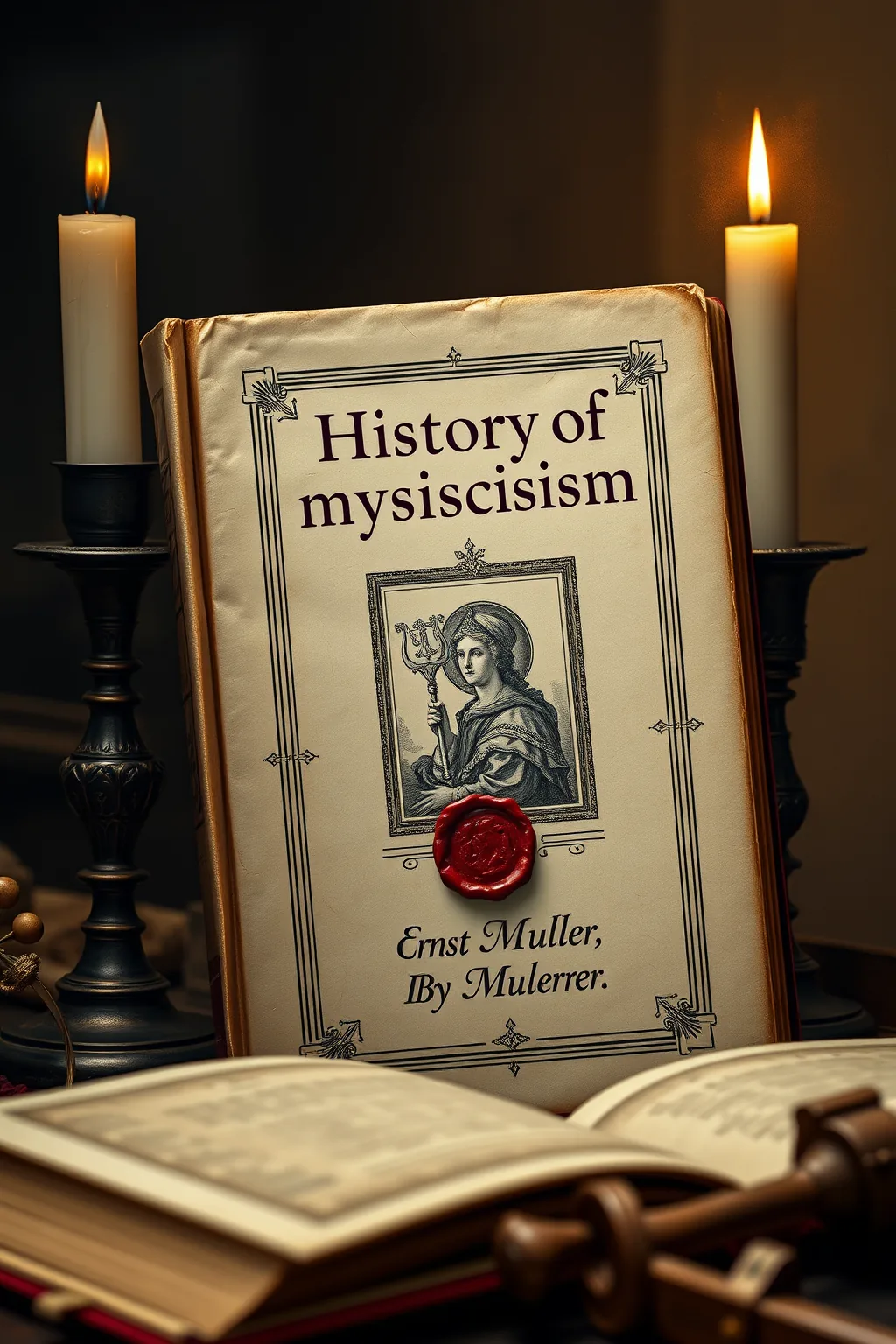
Ernst Müller's 'History of Jewish Mysticism' examines Kabbalah's development from ancient practices.
Ernst Müller's history traces Jewish mysticism from its earliest roots. The book details the evolution of Kabbalah, discussing its complex symbolic language and origins. Müller covers ancient contemplative methods and their connection to later mystical thought. The text also addresses the pursuit of divine union and the esoteric interpretations of creation found within these traditions. It explores the concept of spiritual ascent and its role in Jewish mystical practice. Müller aims to illuminate the deeper currents of Jewish spirituality and its rich symbolic universe. The work is structured for those who wish to understand these historical and philosophical dimensions of Jewish mysticism. It covers the drive for connection with the divine and the understanding of the cosmos through mystical lenses.
This book situates Jewish mysticism, particularly Kabbalah, within the broader spectrum of esoteric traditions. It focuses on the historical development of these practices and ideas, showing how they aimed to achieve direct experience of the divine or understand hidden realities. Müller's work connects the specific practices and texts of Jewish mysticism to universal themes of spiritual seeking and cosmic understanding. It highlights the unique ways Jewish tradition conceptualized the relationship between the human and the divine, and the structure of reality itself, through mystical frameworks.
💡 Why Read This Book?
Embark on a profound spiritual journey into the heart of Jewish mysticism. This book unveils the esoteric dimensions of Judaism, revealing hidden wisdom, symbolic language, and the quest for divine connection. Ideal for seekers of spiritual truth, scholars of comparative religion, and practitioners of contemplative arts who wish to explore the profound depths of Kabbalah and its timeless teachings.
⭐ Reader Reviews
Honest opinions from readers who have explored this book.
❓ Frequently Asked Questions
What is Kabbalah?
Kabbalah is the esoteric tradition of Jewish mysticism, focusing on divine wisdom, creation, and the nature of God. It uses symbolic language and allegorical interpretations to reveal deeper spiritual truths about existence and the human connection to the divine.
Is this book suitable for beginners?
Yes, while it delves into complex topics, Müller's approach is designed to be accessible. It serves as an excellent introduction for those new to Jewish mysticism, providing a solid foundation for further exploration.
What are the main themes explored?
The book explores themes such as divine emanation, the structure of the cosmos, the nature of the soul, the interpretation of sacred texts, and methods of spiritual ascent and contemplation within Jewish mystical traditions.
Does it cover historical figures?
Absolutely. The history is brought to life through detailed explorations of key figures, mystical texts, and movements that shaped Jewish mysticism throughout the ages, offering a rich historical context.
Can this book be used for personal spiritual practice?
Many readers find inspiration and guidance for their personal spiritual journeys. The contemplative aspects and symbolic interpretations can offer profound insights for meditation and self-reflection.
🔮 Key Themes & Symbolism
The Divine Emanations (Sefirot)
This section meticulously unpacks the concept of the Sefirot, the ten divine attributes or emanations through which Ein Sof (the Infinite) manifests in the created world. Müller explores their symbolic representations, their interconnectedness within the Tree of Life, and their role in both cosmic creation and the human soul's journey towards divine consciousness. Understanding the Sefirot is foundational to grasping the architecture of reality as perceived by Kabbalists, offering a map of the divine presence within all existence.
The Nature of the Soul and Spiritual Ascent
Müller examines the intricate Kabbalistic understanding of the soul, its various levels, and its ultimate purpose: reunification with the divine source. The text illuminates the practices and philosophical underpinnings of spiritual ascent, exploring how mystics sought to transcend the material world through contemplation, prayer, and the study of divine mysteries. This theme addresses the human yearning for transcendence and the esoteric paths laid out for achieving spiritual perfection and divine communion.
Symbolism and Interpretation of Sacred Texts
A core part of Jewish mysticism is its unique approach to interpreting sacred texts, particularly the Torah. This theme focuses on the esoteric layers of meaning, the use of gematria (numerical value of Hebrew letters), notarikon (acronyms), and temurah (letter substitution) to unlock hidden messages. Müller reveals how symbols, metaphors, and allegories within scripture are not mere literary devices but keys to understanding the divine blueprint of the universe and the path to spiritual enlightenment.
💬 Memorable Quotes
Direct passages from the work, attributed to the author.
“To know God is to know oneself, and to know oneself is to know the divine.”
— This captures the mystical concept of the interconnectedness between the microcosm (human being) and the macrocosm (divine universe), suggesting self-discovery as a path to spiritual realization.
“The Tree of Life is the blueprint of all existence.”
— This refers to the central Kabbalistic diagram, representing the divine emanations and the structure of reality, implying that understanding its patterns is key to comprehending the universe.
“Silence is the fertile ground where divine whispers take root.”
— This emphasizes the importance of contemplative stillness and inner quietude in the mystical practice, as it creates the receptivity needed to perceive subtle spiritual truths.
“Every letter in the Torah is a vessel for divine light.”
— This points to the profound reverence for the Hebrew alphabet and sacred texts, where each element is seen as imbued with spiritual energy and meaning, waiting to be unlocked.
💡 Key Ideas
Editorial paraphrase of the work's core concepts — not direct quotes.
The divine whispers secrets in the language of symbols.
This quote highlights the core belief in Jewish mysticism that the deepest truths about God and creation are not conveyed through literal language but through symbolic representation, requiring a deeper, intuitive understanding.
🌙 Esoteric Significance
Tradition
This work is primarily concerned with the esoteric tradition of Kabbalah, the mystical dimension of Judaism. It examines its core concepts, historical development, and diverse schools of thought, presenting it as a path of profound spiritual insight and divine communion. The book also touches upon related esoteric practices and contemplative methodologies within the Jewish spiritual landscape.
Symbolism
Central to the esoteric significance is the body of symbolism employed within Jewish mysticism. This includes the Sefirot (divine emanations), the Tree of Life, Hebrew letters as cosmic building blocks, divine names, and allegorical interpretations of biblical narratives. These symbols are not merely decorative but are considered keys to unlocking the hidden architecture of reality and the divine presence within creation.
Modern Relevance
The esoteric insights presented remain profoundly relevant today. In an age often characterized by materialism and spiritual disconnection, the exploration of consciousness, divine interconnectedness, and the search for deeper meaning offers a vital counterpoint. The contemplative practices and symbolic language can provide tools for personal growth, ethical reflection, and a renewed appreciation for the sacred dimensions of existence.
👥 Who Should Read This Book
This book is a vital resource for anyone drawn to the profound currents of Jewish spirituality. Beginners will find it an accessible yet comprehensive introduction to the complex world of Kabbalah. Scholars of religion and philosophy will appreciate its rigorous historical and textual analysis. Seekers of deeper spiritual meaning and practitioners of contemplative disciplines will discover rich insights into divine communion, self-discovery, and the esoteric dimensions of existence. It is for those who yearn to explore the soul of Judaism's most profound and hidden teachings.
📜 Historical Context
Ernst Müller's 'History of Jewish Mysticism' emerges from a rich intellectual and spiritual milieu spanning centuries, from the mystical currents of ancient Israel through the flourishing of Kabbalah in medieval Spain and its subsequent diffusion. The work grapples with the historical context of Jewish communities facing exile, persecution, and intellectual challenges, often finding solace and meaning in esoteric interpretations of tradition. It situates the development of mystical thought within broader philosophical and religious movements, acknowledging the influence of Neoplatonism and Gnosticism while highlighting the unique Jewish framework. The book reflects the ongoing human quest for spiritual transcendence, a quest that intensified during periods of existential uncertainty, leading to the creation of profound theological and contemplative systems.
📔 Journal Prompts
Reflect on the concept of divine emanation: Where do you perceive divine presence in your own life and the world around you?
Consider the symbolism of the Tree of Life. How do its interconnected spheres resonate with your understanding of personal growth and spiritual journey?
Explore the idea of 'hidden knowledge.' What does this term mean to you, and how might it be accessed beyond conventional learning?
The text emphasizes the soul's journey towards reunification with the divine. What does this reunification signify in your personal spiritual framework?
How can the esoteric principles discussed in this book inform your daily practices and your perception of everyday reality?
🗂️ Glossary
Kabbalah
The esoteric tradition of Jewish mysticism, focused on understanding the divine nature, creation, and the path to spiritual union with God, often expressed through symbolic language and mystical interpretation of scripture.
Sefirot
The ten divine emanations or attributes through which God manifests and interacts with the created universe, often visualized as the 'Tree of Life' in Kabbalistic cosmology.
Ein Sof
The Kabbalistic term for the Infinite, Unknowable, and Absolute God, the primordial source from which all existence emanates, beyond human comprehension.
Zohar
The foundational text of Kabbalah, a collection of mystical commentaries on the Torah, written in Aramaic, revered for its useful insights into divine mysteries and creation.
Gematria
A system of Jewish numerology that assigns numerical values to Hebrew letters, used to find hidden meanings and connections within sacred texts by comparing the numerical values of words or phrases.
This book appears in 1 collection
🔮 Readers Also Liked
Browse all →









From the “Kabbalah” Collection
View all →









More Free Kabbalah & Jewish Mysticism Books
View all →