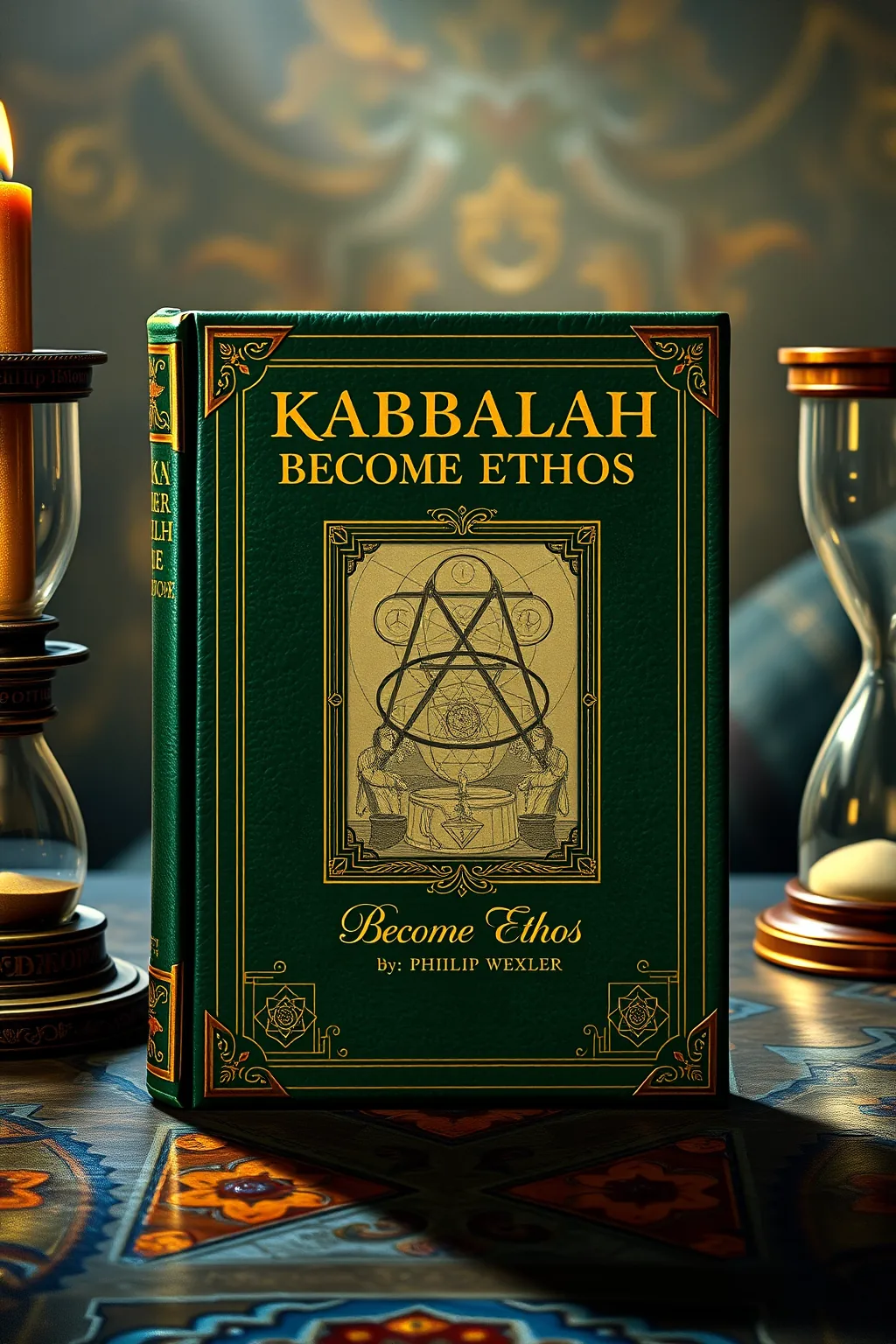
Kabbalah Become Ethos
 61
61

Kabbalah Become Ethos


Silas Hawthorne (Hermetic Studies Editor) — Philip Wexler's 'Kabbalah Become Ethos' is a revelation, a meticulously crafted key to unlocking the profound secrets of Kabbalistic wisdom. Wexler navigates the complex labyrinth of esoteric doctrine with unparalleled clarity, illuminating the symbolic language and practical applications of this ancient tradition. He bridges the chasm between theoretical understanding and lived experience, offering readers not just knowledge, but a roadmap for spiritual integration. This work is indispensable for anyone serious about exploring the mystical dimensions of Judaism, or indeed, any path seeking deeper communion with the Divine. A truly illuminating contribution.
📝 Description
61
Dive into the profound depths of the Kabbalah with Philip Wexler's 'Kabbalah Become Ethos.' This seminal work transcends mere academic study, unlocking the esoteric heart of Jewish mysticism. Wexler masterfully deciphers the ancient symbols and hidden pathways of Kabbalistic thought, revealing a cosmic blueprint for spiritual transformation. Experience the electrifying resonance of divine emanations, the intricate dance of the Sefirot, and the mystical journey from the Ain Soph to the manifest world. This book is a sacred invitation to those yearning to understand the universe's interwoven spiritual fabric, to grasp the language of the divine, and to awaken the latent potential within their own souls. For the earnest seeker and the seasoned practitioner alike, 'Kabbalah Become Ethos' offers a potent elixir of wisdom, illuminating the path towards a more conscious and divinely aligned existence. Prepare for an intellectual and spiritual odyssey that will forever alter your perception of reality.
✍️ Author
Philip Wexler
Philip Wexler (1943–2023) was a professor emeritus at the Hebrew University of Jerusalem. He was first appointed in 2002 as Professor of Sociology of Education and then Unterberg Chair in Jewish Social and Educational History.
💡 Why Read This Book?
Embark on a transformative journey into the heart of Jewish mysticism. 'Kabbalah Become Ethos' offers a rare opportunity to grasp the profound symbolism and esoteric principles of the Kabbalah, revealing its relevance to modern spiritual seeking. Ideal for those who crave deeper understanding of the universe's sacred architecture and wish to integrate ancient wisdom into their personal growth and practice. Discover hidden pathways to self-realization and divine connection.
⭐ Reader Reviews
Honest opinions from readers who have explored this book.
❓ Frequently Asked Questions
What is the primary focus of 'Kabbalah Become Ethos'?
The book's primary focus is to elucidate the esoteric principles and symbolic language of Kabbalah, presenting it not just as a theological system but as a practical framework for spiritual growth and understanding the cosmos.
Is prior knowledge of Kabbalah required to read this book?
While some familiarity can enhance the experience, Wexler's lucid prose and comprehensive explanations make 'Kabbalah Become Ethos' accessible to dedicated beginners eager to explore its profound teachings.
What are the 'Ethos' aspects mentioned in the title?
The 'Ethos' refers to the practical, lived experience and ethical implications of Kabbalistic principles, suggesting how these mystical insights can shape one's character and actions in the world.
How does this book differ from other Kabbalah introductions?
Wexler's approach emphasizes the experiential and transformative aspects of Kabbalah, moving beyond purely academic or historical analysis to reveal its potent spiritual and psychological dimensions.
Can 'Kabbalah Become Ethos' be used for personal spiritual practice?
Absolutely. The book is designed to inspire contemplation and guide readers towards a deeper personal connection with the divine, offering insights that can be integrated into daily life and meditation practices.
🔮 Key Themes & Symbolism
The Tree of Life: A Cosmic Map
Wexler meticulously unpacks the Sefirot, the ten divine emanations that form the Kabbalistic Tree of Life. This sacred diagram is presented as a multidimensional map of creation, consciousness, and the path of the soul's return to its divine source. Each Sefirah is explored for its unique energetic signature, symbolic representation, and role in the divine unfolding of reality. Understanding this central metaphor unlocks a deeper comprehension of the interconnectedness of all things and the architecture of the spiritual realms.
Symbolism and Divine Language
The book delves into the rich tapestry of Kabbalistic symbolism, from the Hebrew alphabet's profound mystical meanings to the allegorical narratives found in ancient texts. Wexler reveals how these symbols are not mere decorations but potent keys to unlocking higher states of awareness and communicating with the divine. He demonstrates how to interpret these sacred signs, showing how they act as a universal language of the soul, accessible to those who approach them with reverence and a quest for hidden knowledge.
Spiritual Transformation and Ethical Living
Beyond theoretical contemplation, 'Kabbalah Become Ethos' emphasizes the practical application of Kabbalistic principles for personal growth and ethical development. Wexler illustrates how engaging with these teachings can lead to a profound transformation of consciousness, fostering inner harmony, compassion, and a heightened sense of purpose. The 'Ethos' aspect highlights the integration of mystical insights into daily life, encouraging readers to embody divine wisdom in their actions and interactions.
💬 Memorable Quotes
“The Kabbalah is not a doctrine, but a divine science.”
— This quote underscores the book's perspective that Kabbalah is a practical and observable system of spiritual truths, akin to scientific principles governing reality, rather than mere abstract dogma.
“Within the seed of every symbol lies the blueprint of the cosmos.”
— This highlights the profound interconnectedness and latent potential within Kabbalistic symbols, suggesting they contain the fundamental patterns of all existence and can reveal universal truths.
“To know the self is to glimpse the Divine.”
— This emphasizes the introspective and self-discovery aspect of Kabbalistic practice, positing that deep self-understanding is a direct pathway to experiencing or recognizing the divine presence within.
“The journey inward is the ultimate ascent.”
— This quote points to the spiritual practice of introspection and meditation as the most profound method for spiritual progress, suggesting that true enlightenment is found within rather than through external pursuits.
“Wisdom is the light that dispels the shadows of ignorance.”
— This classic metaphor illustrates the transformative power of knowledge, especially esoteric wisdom, in overcoming confusion and illusion, leading to clarity and spiritual awakening.
🌙 Esoteric Significance
Tradition
This book is deeply rooted in the Kabbalistic tradition, a mystical interpretation of Judaism that seeks to understand the divine nature and the creation of the universe. It draws heavily from Sefer Yetzirah, the Zohar, and the Lurianic Kabbalah, presenting these esoteric teachings as a coherent system for spiritual ascent and cosmic comprehension. The focus is on the practical application of these mystical insights for personal transformation and gnosis.
Symbolism
The core of the book's esoteric significance lies in its masterful interpretation of Kabbalistic symbolism. Key symbols like the Tree of Life (Olamot, Sefirot, Keter, Chokhmah, Binah, etc.), the Hebrew alphabet, and divine names are presented not as abstract concepts but as living, dynamic forces. Wexler elucidates how these symbols function as conduits of divine energy and as keys to unlocking the hidden architecture of reality and consciousness, revealing the interconnectedness of the macrocosm and microcosm.
Modern Relevance
In an age often marked by disconnection and spiritual seeking, 'Kabbalah Become Ethos' offers a profound and relevant framework for understanding the self and the universe. Wexler demonstrates how ancient Kabbalistic wisdom can provide solace, guidance, and a pathway to deeper meaning. Its emphasis on inner transformation, ethical living, and the inherent divinity within all beings resonates powerfully with contemporary desires for personal growth, spiritual fulfillment, and a more conscious existence.
👥 Who Should Read This Book
This book is a treasure trove for the earnest spiritual seeker yearning to understand the deeper currents of existence. Scholars of comparative religion and mysticism will find Wexler's insightful interpretations invaluable. Practitioners of contemplative disciplines, from meditation to ritual, will discover potent tools and profound perspectives for their path. Beginners curious about the foundational concepts of Jewish mysticism will appreciate the clarity and depth with which Wexler unveils these ancient secrets, making the seemingly complex accessible and inspiring.
📜 Historical Context
Philip Wexler's 'Kabbalah Become Ethos' emerges from a rich tradition of Jewish mysticism that flourished for centuries, particularly in medieval Spain and later in Safed. The book engages with the intellectual and spiritual currents that shaped Kabbalistic thought, from the philosophical explorations of Maimonides to the ecstatic visions of the Zohar and the practical Kabbalah of Isaac Luria. Written in an era of renewed interest in esoteric studies and interfaith dialogue, Wexler's work seeks to bridge ancient wisdom with contemporary spiritual needs. It reflects a broader historical movement to demystify and democratize access to these profound teachings, making them relevant to a global audience grappling with existential questions and seeking a deeper connection to the sacred.
📔 Journal Prompts
Reflect on your personal 'Ethos' – how does your inner spiritual understanding manifest in your daily actions and interactions?
Consider one Sefirah from the Tree of Life that currently resonates most with your life's journey. What lessons does it hold for you?
How can the symbolic language of Kabbalah be applied to understand a personal challenge or aspiration you are currently facing?
Explore the concept of divine emanation in your own creative processes or moments of inspiration.
Meditate on the idea of 'The journey inward is the ultimate ascent.' What does this mean for your personal spiritual practice?
🗂️ Glossary
Sefirot
The ten divine emanations or attributes of God in Kabbalistic cosmology, forming the structure of the Tree of Life. They represent stages of creation and divine manifestation.
Ein Sof
The Kabbalistic concept of the 'Infinite' or 'Limitless,' referring to God in His absolute, unknowable, and transcendent essence before any manifestation or emanation occurred.
Olamot
The Kabbalistic concept of the 'Worlds' or 'Realms' of existence, often understood as distinct planes of reality or consciousness, emanating from the Divine.
Kavanah
Intention, concentration, or devotion in Jewish prayer and ritual. In Kabbalah, it refers to the focused mental and spiritual intention directed towards God or a specific spiritual purpose.
Tzimtzum
The Kabbalistic concept of 'contraction' or 'withdrawal,' referring to God's self-limitation or withdrawal to create a 'vacant space' for creation to exist.