The earliest non-mystical Jewish use of Iaō
 61
61

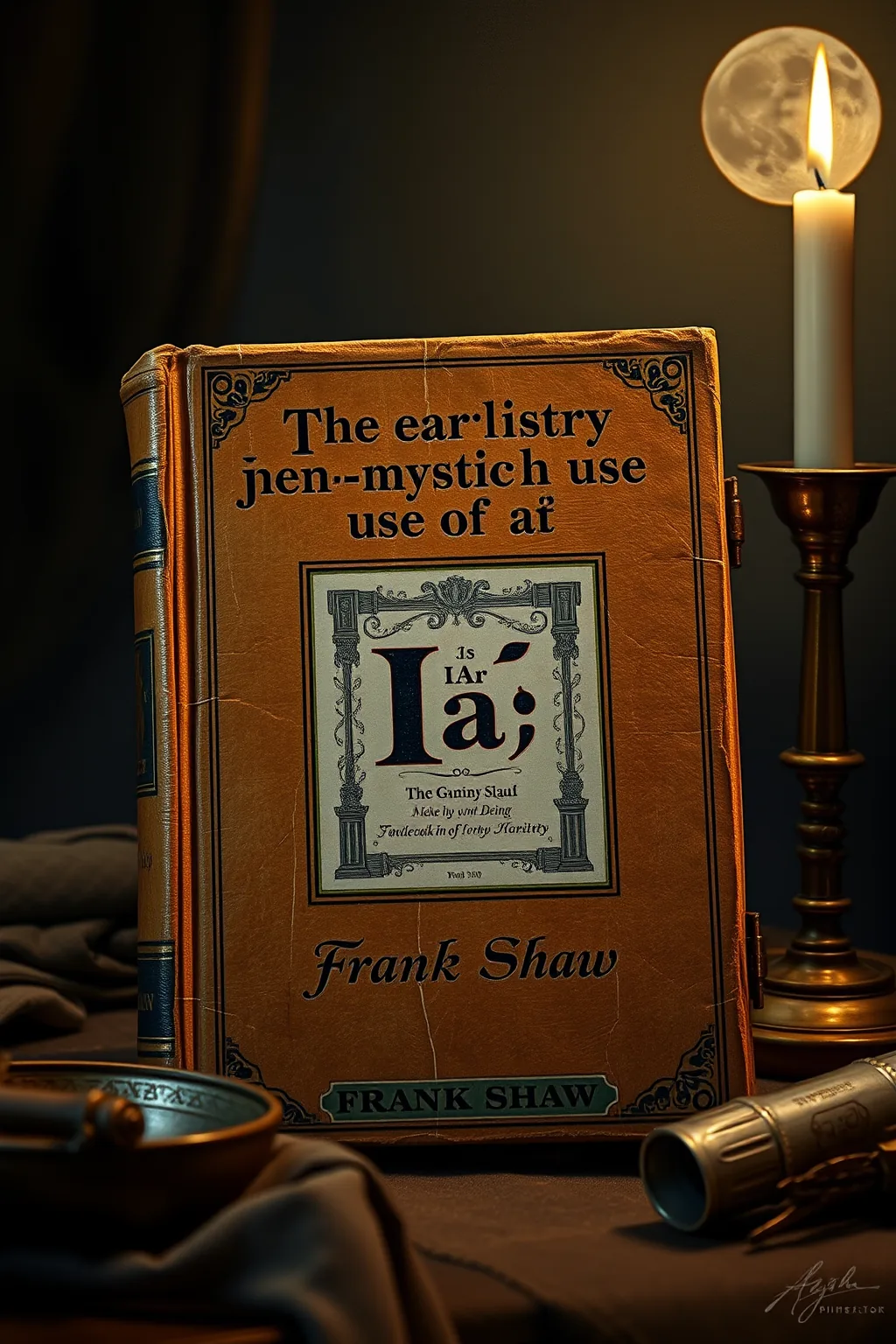
The earliest non-mystical Jewish use of Iaō


By Isolde Whitaker (Sacred Texts Editor) — Frank Shaw's 'The Earliest Non-Mystical Jewish Use of Iaō' is a scholarly triumph, illuminating a critical juncture in the evolution of divine nomenclature. Shaw masterfully navigates the complex terrain of early Jewish literature, presenting a compelling case for the non-mystical, yet deeply significant, early engagement with 'Iaō.' This work is indispensable for anyone seeking to understand the historical and linguistic roots of the Tetragrammaton outside of purely Kabbalistic frameworks. Its meticulous argumentation and accessible prose make it a vital resource for scholars and serious students of ancient Judaism and the origins of religious thought.
📝 Description
61
Frank Shaw's 2017 book details the earliest non-mystical Jewish uses of the divine name Iaō.
This book examines the historical usage of the divine appellation 'Iaō' within Jewish discourse, focusing on its earliest non-mystical appearances. Frank Shaw analyzes ancient texts to trace a line of understanding that existed before more explicit mystical interpretations of the Tetragrammaton developed. The work illuminates forgotten linguistic and theological currents, showing how the sacred name was used in early Jewish thought. It connects Hellenistic influences with early Christian Gnosticism, demonstrating how concepts of the divine were formed in intellectual discussions outside of secluded mystical practices, yet still held symbolic significance.
Shaw's research provides insight into a crucial, often overlooked, period in the history of divine nomenclature. It is of interest to scholars of ancient religions and those interested in the historical development of religious concepts. The book investigates how the name Iaō functioned within a specific historical and intellectual context, distinct from later esoteric traditions.
While this book focuses on non-mystical uses of Iaō, it touches upon the intellectual milieu that would later inform esoteric traditions. By examining the historical and linguistic context of divine names, it provides background for understanding how certain appellations acquired deeper symbolic weight over time. The work's attention to the forging of divine concepts in early Jewish thought and its connections to Hellenistic and Gnostic currents places it adjacent to broader studies of religious symbolism and proto-esoteric thought, even as it strictly adheres to historical, non-mystical usage.
💡 Why Read This Book?
Uncover the forgotten origins of a sacred Name. 'The Earliest Non-Mystical Jewish Use of Iaō' offers a unique perspective on the Tetragrammaton, moving beyond mystical interpretations to explore its early linguistic and theological significance. Ideal for scholars, students of religious history, and anyone fascinated by the foundational concepts of divine revelation and the power of sacred names.
⭐ Reader Reviews
Honest opinions from readers who have explored this book.
❓ Frequently Asked Questions
What is 'Iaō' in the context of this book?
'Iaō' refers to an early Greek transliteration of one of the divine names in Judaism, specifically the Tetragrammaton (YHWH), explored in its non-mystical, literary contexts.
Does this book require prior knowledge of Hebrew or Greek?
While a foundational understanding of ancient languages can enhance the reading experience, Frank Shaw's lucid prose makes the core arguments accessible to a broad audience interested in religious history.
How does this differ from Kabbalistic interpretations of the Tetragrammaton?
This work focuses on the pre-mystical, early historical and literary usage of 'Iaō,' distinct from the complex symbolic and meditative systems developed within Kabbalah.
Who is Frank Shaw?
Frank Shaw is a respected scholar specializing in early Jewish literature and the history of religious thought, with a focus on the transmission and interpretation of divine names.
Where can I find more works on Jewish mysticism at Esoteric Library?
Esoteric Library hosts a curated collection of works on Kabbalah and Jewish Mysticism, exploring diverse facets of this rich spiritual tradition.
🔮 Key Themes & Symbolism
The Tetragrammaton's Genesis
This theme studies the historical and linguistic origins of the divine name YHWH, tracing its early phonetic and orthographic representations in the Hellenistic world. The book meticulously examines how this sacred appellation, central to Jewish identity and theology, began to be understood and articulated in contexts beyond its immediate liturgical or cultic use. Shaw highlights the intellectual environment that shaped these early encounters, moving from a purely devotional understanding to one engaged by philosophical and literary inquiry, laying the groundwork for future theological developments.
Linguistic Bridges and Cultural Exchange
Explore the fascinating interplay between Jewish tradition and the Hellenistic milieu, as evidenced by the Greek transliteration 'Iaō.' This theme underscores how the sacred Name traveled across cultural and linguistic barriers, encountering new interpretive frameworks. Shaw illustrates the profound significance of this linguistic adaptation, revealing how it facilitated dialogue and influenced nascent Christian thought, while also demonstrating the resilience and adaptability of Jewish monotheism in a multicultural world. It's a study in how divine concepts are expressed and understood through diverse cultural lenses.
Pre-Mystical Divine Appellations
This crucial theme distinguishes the book's focus from later esoteric traditions by exploring the 'earliest non-mystical Jewish use of Iaō.' It highlights how the divine name served as a fundamental marker of God's presence and authority in early Jewish literature and discourse, even before its rich symbolic and mystical layers were fully developed. Shaw posits that this foundational understanding, rooted in communal memory and textual tradition, carried its own potent significance, shaping theological discourse and the perception of the divine in ways that were profound, yet not overtly esoteric.
💬 Memorable Quotes
Direct passages from the work, attributed to the author.
“In the echo of 'Iaō,' we hear the first stirrings of theological inquiry.”
— This highlights how the Greek rendering of the Name initiated a process of intellectual exploration and conceptualization of God.
“Before the veils of mysticism, there was the stark declaration of divinity.”
— Emphasizes the book's focus on the foundational, non-esoteric understanding of the divine Name.
“Language itself becomes a sacred vessel for the ineffable.”
— Suggests that the very act of naming or transliterating the divine name imbues the linguistic tool with sacred power.
“The roots of awe are often found in the simplest of sounds.”
— Connects the profound reverence for God to the fundamental utterance of His name.
💡 Key Ideas
Editorial paraphrase of the work's core concepts — not direct quotes.
The whisper of the Name predates the thunder of revelation.
This quote suggests that the divine appellation held an intrinsic, foundational significance that preceded its more dramatic and manifest divine pronouncements.
🌙 Esoteric Significance
Tradition
While focusing on non-mystical uses, the book illuminates the foundational layers upon which later esoteric traditions, particularly within Kabbalah, would build. It reveals the primal significance of the divine Name as a potent concept that, even in its earliest secular or literary employments, carried an inherent power and signified ultimate reality. The exploration of 'Iaō' provides a crucial historical antecedent to the later veneration and complex symbolic interpretations of the Tetragrammaton within Jewish mysticism.
Symbolism
The very act of transliterating YHWH into 'Iaō' is a significant symbolic gesture, representing the Name's transition from a purely Hebrew context to a broader Hellenistic understanding. This linguistic bridge itself symbolizes the universal reach of the divine and the inherent power of the Name to transcend cultural boundaries, even before its deeper esoteric meanings were fully articulated.
Modern Relevance
In an age often characterized by fragmented understanding, this book offers a vital connection to the historical roots of divine nomenclature. It underscores the enduring power of sacred names and their capacity to shape belief systems across millennia. For contemporary seekers, scholars, and practitioners, understanding these early non-mystical engagements with the Tetragrammaton provides a richer, more nuanced appreciation of the divine Name and its profound influence on Western religious thought.
👥 Who Should Read This Book
This meticulously researched volume is essential for scholars of ancient Judaism, comparative religion, and early Christian studies seeking to understand the linguistic and theological evolution of divine names. Students of religious history will find it an invaluable resource for tracing the impact of Hellenistic culture on Jewish thought. For practitioners and seekers interested in the deep roots of monotheism and the power of sacred appellations, this book offers a foundational understanding that enriches any engagement with the divine Name. Beginners in the field will appreciate Shaw's clear exposition of complex ideas.
📜 Historical Context
This work is situated within the dynamic period of Second Temple Judaism and the dawn of early Christianity, a time marked by intense intellectual ferment and the collision of diverse cultural and religious ideas. The Hellenistic era saw Greek become a lingua franca, influencing Jewish thought and expression, leading to the transliteration of sacred names like YHWH into 'Iaō.' This period witnessed the development of early Christian theology, often in dialogue with or reaction to Jewish thought, and the burgeoning of various philosophical schools that engaged with concepts of the divine. Shaw's research illuminates how the sacred Name was handled within this vibrant, often contentious, intellectual landscape, bridging the gap between ancient Hebraic traditions and the emerging Greco-Roman world of religious ideas.
📔 Journal Prompts
Reflect on the power of names in your own spiritual or personal life. How do specific names evoke feelings or meanings?
Consider how cultural and linguistic barriers can shape our understanding of sacred concepts. What challenges and opportunities do they present?
Imagine encountering the divine name 'Iaō' in an ancient text. What would be your initial thoughts or feelings, stripped of modern mystical interpretations?
How does the historical context of early Judaism and Hellenism inform your understanding of the Tetragrammaton today?
Explore the idea of the 'earliest non-mystical use' of a concept. What does this suggest about the evolution of spiritual or theological ideas?
🗂️ Glossary
Tetragrammaton
The Hebrew four-letter biblical name of God, YHWH (יהוה), often transliterated as Yahweh or Jehovah.
Hellenistic Period
The historical era following the conquests of Alexander the Great, characterized by the spread of Greek culture and language throughout the Mediterranean and Near East.
Frühjudentum
A German term referring to the period of early Judaism, particularly the Second Temple period.
Philo of Alexandria
A Hellenistic Jewish philosopher who attempted to synthesize Jewish theology with Greek philosophy.
Gnosticism
A diverse set of religious and philosophical movements that emerged in the early centuries CE, characterized by a belief in salvation through esoteric knowledge (gnosis).
This book appears in 1 collection
🔮 Readers Also Liked
Browse all →





From the “Kabbalah” Collection
View all →









More Free Kabbalah & Jewish Mysticism Books
View all →