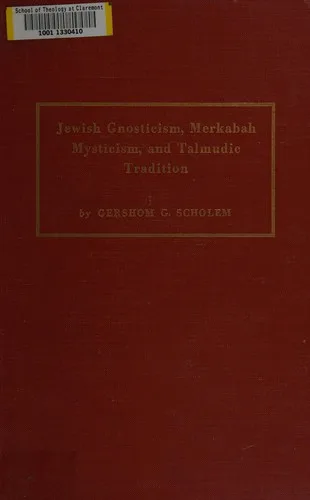
Jewish gnosticism, Markavah mysticism and Talmudic tradition
 63
63

Jewish gnosticism, Markavah mysticism and Talmudic tradition

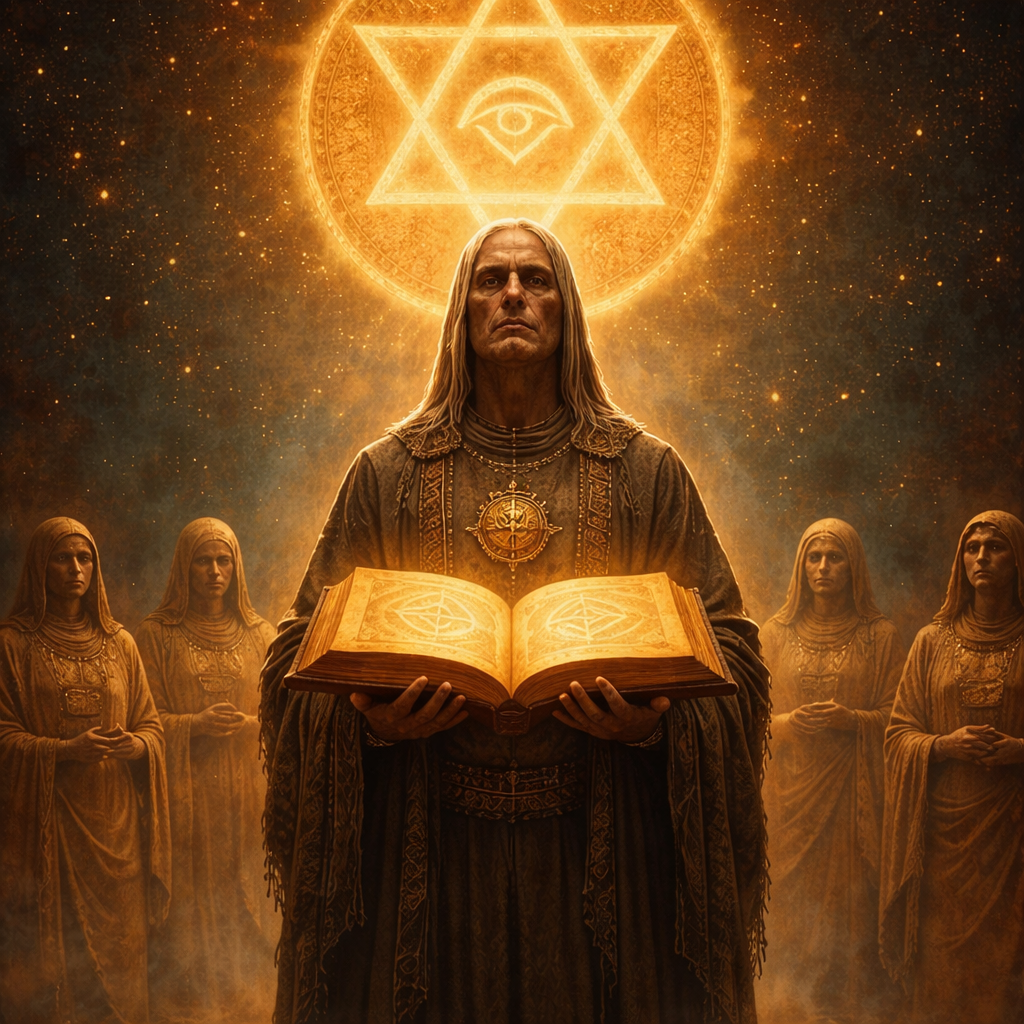

Isolde Whitaker, Sacred Texts Editor: Gershom Scholem's 'Jewish Gnosticism, Merkavah Mysticism and Talmudic Tradition' remains an indispensable cornerstone for understanding the esoteric underpinnings of Judaism. Scholem's scholarly rigor, coupled with his profound intuition for mystical currents, unveils the intricate connections between early Gnostic thought, the visionary ascents of Merkavah mystics, and the often-overlooked mystical dimensions of Talmudic study. He masterfully deciphers complex symbolism and illuminates the experiential nature of these traditions. This work is not merely academic; it is a portal for serious students and practitioners seeking to grasp the profound spiritual heritage of the Jewish people. Its enduring relevance lies in its ability to make ancient, often obscure, mystical paths accessible.
📝 Description
63
Gershom Scholem's 1960 work examines the esoteric connections between Gnosticism, Merkavah mysticism, and Talmudic thought.
In 'Jewish Gnosticism, Merkavah Mysticism and Talmudic Tradition,' Gershom Scholem investigates the historical and conceptual links between early Jewish mysticism and related esoteric traditions. He traces the influence of Gnostic ideas on Jewish mystical thought and details the practices and beliefs associated with Merkavah mysticism, the "chariot" ascent traditions. Scholem also analyzes how these mystical currents interacted with and were sometimes preserved within the framework of Rabbinic Judaism and Talmudic discourse.
The book presents Scholem's argument that these seemingly disparate elements form a coherent, albeit often hidden, thread within Jewish spiritual history. He illuminates the symbolic language, visionary experiences, and contemplative techniques employed by these mystics. The work is characterized by its scholarly approach, examining primary sources and theological concepts with a focus on historical development and intellectual connections.
This book situates Jewish mystical traditions within the broader spectrum of ancient esoteric thought. Scholem demonstrates how Jewish mysticism, particularly Merkavah mysticism, shared conceptual and symbolic elements with Gnosticism. It also shows how these mystical practices developed alongside and were integrated into Rabbinic Judaism, often through esoteric interpretations of scripture and Talmudic texts. The work highlights a lineage of spiritual practice focused on divine ascent and hidden knowledge that existed within Judaism.
💡 Why Read This Book?
Uncover the secret doctrines and ecstatic visions that shaped Jewish mysticism. Explore the hidden meanings within Talmudic texts and understand the ancient practice of Merkavah ascension. Essential for scholars, spiritual seekers, and anyone interested in the profound esoteric traditions of Judaism, this book offers unparalleled insights into the quest for divine experience and cosmic knowledge.
⭐ Reader Reviews
Honest opinions from readers who have explored this book.
❓ Frequently Asked Questions
What is Merkavah mysticism?
Merkavah mysticism refers to a body of early Jewish esoteric literature and practice focused on visionary ascents to the divine chariot (Merkavah), as described in Ezekiel's vision. It involves ecstatic experiences and contemplation of celestial realms.
How does Gnosticism relate to Jewish mysticism in this book?
Scholem explores the potential influences and parallels between early Jewish mystical traditions and Gnostic thought, examining shared themes of cosmic creation, divine emanations, and the pursuit of hidden knowledge, even while highlighting distinct Jewish characteristics.
Is this book suitable for beginners?
While Scholem's scholarship is rigorous, the book provides foundational insights. Beginners interested in Jewish mysticism should approach it with an open mind, perhaps alongside introductory texts, to fully grasp the complex concepts presented.
What is the significance of the Talmudic tradition in this context?
The book demonstrates that the Talmud, often viewed as purely legalistic, also contains seeds of mystical thought and contemplative practices, revealing a deeper, esoteric dimension within rabbinic Judaism that Scholem meticulously excavates.
What kind of 'hidden knowledge' does the book discuss?
It discusses knowledge related to the structure of the cosmos, the nature of the divine, methods for achieving altered states of consciousness, and the interpretation of symbolic narratives that reveal spiritual truths beyond literal understanding.
🔮 Key Themes & Symbolism
The Celestial Chariot and Divine Ascent
This theme explores the core of Merkavah mysticism, exploring the visionary journeys to the divine throne room. Scholem elucidates the symbolic language and ecstatic practices employed by ancient mystics to achieve direct apprehension of God's glory. It examines the profound psychological and spiritual implications of ascending through heavenly palaces and encountering angelic hosts, revealing a deeply experiential path to transcendence rooted in biblical prophecy and rabbinic contemplation.
Gnostic Echoes in Jewish Esotericism
Scholem meticulously investigates the intricate relationship between early Jewish mystical traditions and the broader Gnostic movements of the ancient world. This theme focuses on identifying shared cosmological concepts, dualistic tendencies, and the pursuit of secret gnosis (knowledge). It highlights how certain Jewish circles may have engaged with, adapted, or diverged from Gnostic ideas, offering a nuanced understanding of spiritual currents flowing within the late antique religious landscape.
Talmudic Foundations of Mystical Thought
This crucial theme reveals the often-overlooked esoteric dimensions embedded within the Talmud. Scholem demonstrates that beyond its legalistic framework, the Talmud contains narratives, allegories, and discussions that hint at profound mystical experiences and theological speculation. It unearths the seeds of later Kabbalistic and Merkavah traditions within the very fabric of rabbinic discourse, showing how the 'wisdom of the sages' extended into the field of the ineffable and the divine.
💬 Memorable Quotes
Direct passages from the work, attributed to the author.
“The ascent to the Merkabah is a perilous journey.”
— This highlights the demanding spiritual discipline and inner fortitude required for deep mystical experience, implying potential dangers and the need for guidance.
“Gnosis is the knowledge that liberates.”
— Reflecting Gnostic ideals, this suggests that esoteric understanding holds the key to spiritual freedom and salvation, transcending ordinary worldly concerns.
“The Talmud holds secrets for those who can read them.”
— This points to the hidden layers of meaning within rabbinic texts, accessible only to those with the interpretive tools and spiritual insight to discern the mystical from the exoteric.
“Wisdom is the light that guides through the cosmic darkness.”
— This evokes the power of spiritual knowledge and insight to read through the complexities and challenges of existence, clear the path towards understanding and enlightenment.
💡 Key Ideas
Editorial paraphrase of the work's core concepts — not direct quotes.
The divine world is not a place, but a state of consciousness.
This quote emphasizes the subjective and experiential nature of mystical attainment, suggesting that true connection with the divine is achieved through inner transformation rather than external location.
🌙 Esoteric Significance
Tradition
This book is central to the esoteric tradition of Kabbalah and Jewish mysticism. It provides a critical historical and interpretive framework for understanding the development and core tenets of these traditions, particularly focusing on the early stages of Merkavah mysticism and its conceptual links to Gnosticism and the broader Jewish religious landscape. It maps the evolution of esoteric thought within Judaism, from visionary experiences to complex symbolic systems.
Symbolism
The work unpacks rich and complex symbolism inherent in Jewish esotericism. Key symbols include the Merkavah (divine chariot) representing God's presence and cosmic order, celestial palaces (hekhalot) signifying stages of spiritual ascent, angelic hierarchies, and the divine name. Scholem interprets these symbols not merely as decorative elements but as vital conduits for understanding the mystical experience and the structure of the divine realm.
Modern Relevance
Scholem's meticulous analysis of Jewish Gnosticism, Merkavah mysticism, and Talmudic tradition offers profound relevance for contemporary spiritual seekers and scholars. It provides a historical grounding for understanding modern Kabbalistic practices, interfaith dialogue concerning mysticism, and the enduring human quest for transcendence. By clear ancient paths to divine connection, the book inspires contemplation on consciousness, cosmology, and the perennial search for meaning in a complex world.
👥 Who Should Read This Book
This book is indispensable for academics and students specializing in religious studies, Jewish history, and comparative mysticism. Spiritual seekers and practitioners interested in the esoteric dimensions of Judaism, particularly Kabbalah and Merkavah traditions, will find it a profound and clear resource. Those with a background in philosophy or comparative religion seeking to understand the evolution of mystical thought across ancient cultures will also benefit immensely. While challenging, it is highly rewarding for anyone dedicated to exploring the deepest strata of spiritual inquiry.
📜 Historical Context
Gershom Scholem's work emerged in the mid-20th century, a period of intense scholarly re-evaluation of Jewish mystical traditions, particularly following the devastation of the Holocaust and the establishment of the State of Israel. Scholem, a pioneer in the academic study of Kabbalah, sought to move beyond hagiography and superficial interpretations to establish a rigorous, historical-critical approach to Jewish mysticism. His research placed these traditions within their broader Hellenistic, Gnostic, and medieval philosophical contexts, challenging previous assumptions and revealing the deep intellectual and spiritual currents that shaped Jewish thought for centuries. This era was marked by a renewed interest in the esoteric dimensions of religious heritage, and Scholem's scholarship provided foundational texts and methodologies for understanding these complex, often hidden, spiritual pathways.
📔 Journal Prompts
Reflect on the concept of 'divine ascent' in your own spiritual journey. What are your personal 'heavenly palaces' or stages of inner growth?
Consider the interplay between exoteric (public) and esoteric (hidden) knowledge in your own religious or philosophical tradition. Where do you see these boundaries blurred or maintained?
Scholem discusses the symbolism of the Merkavah. How do you interpret the symbolism of divine presence or power in your own life or spiritual practice?
Explore the idea of 'gnosis' as liberating knowledge. What insights or understandings have been truly liberating for you?
If the Talmud contains mystical elements, what does this suggest about the potential for hidden wisdom within seemingly mundane or legalistic texts?
🗂️ Glossary
Merkavah
Hebrew for 'chariot.' Refers to the divine chariot described in Ezekiel's vision, and the mystical tradition focused on visionary ascent to witness it and the divine throne.
Hekhalot
Hebrew for 'palaces' or 'temples.' In Merkavah mysticism, these refer to the celestial palaces or chambers that the mystic ascends through on their journey to the divine realm.
Gnosticism
A diverse set of religious and philosophical movements in the ancient world characterized by a belief in salvation through secret knowledge (gnosis) and often featuring dualistic cosmologies.
Talmudic Tradition
The body of rabbinic literature, particularly the Babylonian and Jerusalem Talmuds, which contain legal discussions, ethical teachings, and narrative accounts, including elements of mystical speculation.
Gnosis
Greek for 'knowledge.' In Gnosticism and related mystical traditions, it refers to a special, intuitive, or revealed knowledge that leads to salvation or spiritual enlightenment.
This book appears in 1 collection
🔮 Readers Also Liked
Browse all →









More by Gershom Scholem
All books →




From the “Kabbalah” Collection
View all →





More Free Kabbalah & Jewish Mysticism Books
View all →