A history of Jewish mysticism

 61
61

A history of Jewish mysticism


Balthazar Finch (Senior Critic, Occult Philosophy) — Ernst Müller's 'A History of Jewish Mysticism' is an indispensable addition to any serious occult library. It navigates the labyrinthine corridors of Kabbalistic thought with scholarly precision and a palpable reverence for its subject matter. Müller excels at demystifying complex concepts, revealing the profound esoteric insights that lie at the core of this lineage. His exploration of symbolism and meditative techniques offers a rare glimpse into the practical application of these ancient wisdoms. This work is a treasure for both neophytes seeking an accessible entry and seasoned practitioners yearning for a comprehensive historical and philosophical anchor. Highly recommended for its depth and clarity.
📝 Description
61
Ernst Müller published 'A History of Jewish Mysticism' to trace Kabbalistic thought.
Ernst Müller's 'A History of Jewish Mysticism' examines Kabbalistic thought, starting from its earliest origins and continuing through its various historical manifestations. The author details the methods and symbolism employed by mystics who sought a direct connection with the Divine. Key elements discussed include the use of numerology, symbolic interpretation of sacred texts, and various contemplative techniques.
The book also addresses the mystical cosmology that attempts to describe the Infinite. It covers the significance of divine names and their role in spiritual practice. Müller's work aims to provide a thorough overview for those interested in the philosophical and spiritual dimensions of Judaism.
This book situates Kabbalah within the broader history of Jewish mystical traditions. It traces the development of Kabbalistic ideas, which concern the nature of God, creation, and the human soul's relationship to the Divine. Unlike purely philosophical or legalistic Judaism, Kabbalah emphasizes experiential knowledge and direct spiritual encounter, often employing symbolic language and esoteric interpretations of religious texts. Müller's work provides a historical survey of these currents.
💡 Why Read This Book?
Uncover the hidden spiritual dimensions of Judaism, tracing the lineage of Kabbalah from its mystical origins to its profound philosophical expressions. This book is ideal for seekers yearning for deeper meaning, scholars investigating esoteric traditions, and practitioners looking to enrich their understanding of ancient contemplative practices and divine symbolism. Gain access to a rich world of hidden knowledge and transformative insights.
⭐ Reader Reviews
Honest opinions from readers who have explored this book.
❓ Frequently Asked Questions
What is Kabbalah?
Kabbalah is the esoteric tradition of Jewish mysticism, seeking to understand the nature of God, the universe, and humanity's connection to the divine through symbolic interpretation of sacred texts and contemplative practices.
What are the key symbols in Jewish mysticism?
Key symbols include the Tree of Life (Sefirot), Hebrew letters (each possessing numerical and mystical significance), divine names, and various cosmological diagrams that map the structure of reality.
Who was Moses de Leon?
Moses de Leon was a Spanish Kabbalist of the 13th century, widely credited with authoring the Zohar, the foundational text of Kabbalah, which explores deep mystical concepts and divine secrets.
What is the Lurianic Kabbalah?
Lurianic Kabbalah, developed by Isaac Luria in the 16th century, introduced concepts like Tzimtzum (divine contraction), Shevirat HaKelim (shattering of the vessels), and Tikkun (rectification), offering a unique cosmology of cosmic repair and redemption.
Is this book suitable for beginners?
Yes, while it offers depth for scholars, Müller's clear prose and structured approach make it accessible for beginners eager to explore the foundational concepts and historical development of Jewish mysticism.
🔮 Key Themes & Symbolism
The Tree of Life (Sefirot)
This central symbol in Kabbalah represents the ten divine emanations through which God manifests in the universe. Müller meticulously unpacks the interconnectedness of these Sefirot, illustrating their role in creation, divine will, and the human soul's journey. Understanding the Tree of Life is paramount to grasping the Kabbalistic worldview, revealing pathways of spiritual ascent and the divine architecture of existence. Its intricate design offers a map for contemplative practice and a framework for understanding the subtle energies that govern reality.
Gematria and the Power of Hebrew Letters
Ernst Müller examines the ancient practice of Gematria, the system of assigning numerical values to Hebrew letters. This section highlights how mystics used these correspondences to uncover hidden meanings within sacred texts, revealing profound connections between seemingly disparate concepts and divine revelations. The Hebrew alphabet is presented not merely as a writing system but as a mystical code, a divine blueprint through which the universe was formed, offering seekers a key to unlock deeper spiritual truths and the very language of creation.
Contemplative Practices and Divine Union
Beyond theoretical exploration, this book illuminates the practical, contemplative disciplines employed by Jewish mystics throughout history. Müller examines various meditative techniques, prayerful intentions, and visualization exercises aimed at achieving *devekut* (cleaving to God) and direct spiritual experience. It emphasizes the goal of mystical union, where the individual soul transcends its limitations to merge with the divine consciousness, offering a path to transformation and profound spiritual insight for the dedicated practitioner.
💬 Memorable Quotes
Direct passages from the work, attributed to the author.
“Every letter is a universe, every number a divine decree.”
— This speaks to the Kabbalistic belief in the inherent power and sacredness of the Hebrew alphabet and numerical systems, viewing them as fundamental building blocks of reality and divine communication.
“To know God is to know oneself, reflected in the divine light.”
— This highlights the central mystical tenet of self-discovery through divine connection, suggesting that understanding the divine mirrors and illuminates the true nature of the human soul.
“The veil between worlds is thin for the pure of heart.”
— This emphasizes the importance of inner purity and spiritual discipline as prerequisites for experiencing higher realms or perceiving hidden spiritual realities.
“Creation is a continuous unfolding, a divine breath exhaled.”
— This evocative metaphor illustrates the dynamic and ongoing nature of creation from a mystical perspective, portraying it as a living process rather than a singular event.
💡 Key Ideas
Editorial paraphrase of the work's core concepts — not direct quotes.
The deepest truths are often whispered, not shouted.
This quote underscores the esoteric nature of mystical knowledge, suggesting that profound spiritual insights are not readily apparent but require diligent seeking and attentive listening to subtle divine communications.
🌙 Esoteric Significance
Tradition
This work delves deeply into the Kabbalistic tradition, one of the most profound and influential esoteric lineages within Judaism. Kabbalah offers a complex cosmological system, a mystical interpretation of scripture, and practical methods for spiritual development aimed at achieving communion with the divine. It explores concepts like divine emanations (Sefirot), the nature of the soul, and the hidden meanings within the Torah, providing a framework for understanding the universe and humanity's place within it from a deeply mystical perspective.
Symbolism
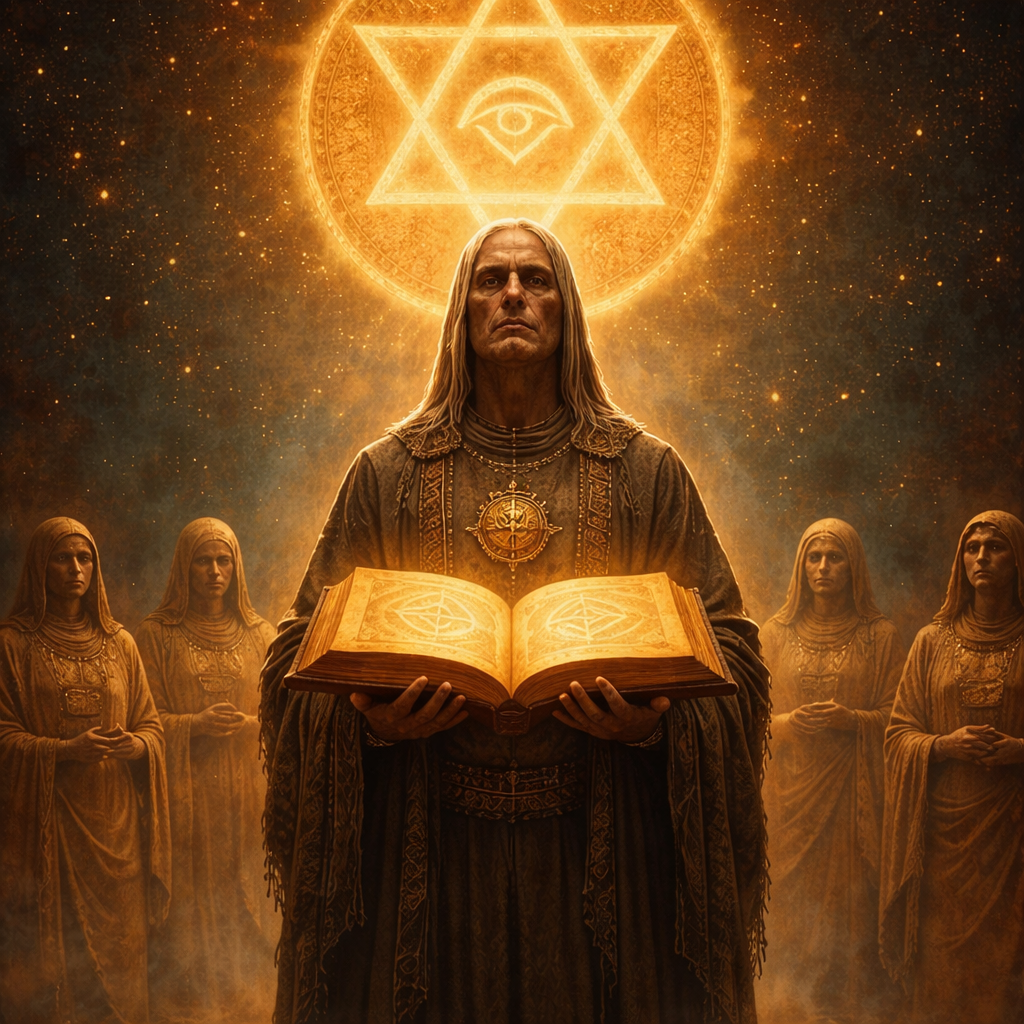
The esoteric significance of Jewish mysticism is intrinsically linked to its rich and multi-layered symbolism. Müller meticulously unpacks symbols such as the Tree of Life, which maps the divine emanations; the Hebrew letters, each imbued with numerical and spiritual power; divine names, believed to hold creative force; and various cosmological diagrams. These symbols are not mere representations but are seen as living conduits of divine energy, tools for contemplation, and keys to unlocking the hidden architecture of reality and the divine will behind creation.
Modern Relevance
Despite its ancient origins, Jewish mysticism holds profound modern relevance. Its explorations of consciousness, the nature of reality, and the human search for meaning resonate deeply in a contemporary world often characterized by spiritual seeking and existential questions. The Kabbalistic emphasis on interconnectedness, personal transformation, and the ethical implications of spiritual awareness offers valuable insights for individuals navigating modern life. Furthermore, its sophisticated symbolic language and contemplative practices continue to inspire spiritual practitioners and scholars across diverse backgrounds.
👥 Who Should Read This Book
This comprehensive history is a vital resource for a diverse readership. **Beginners** will find an accessible yet profound introduction to the foundational concepts and historical trajectory of Jewish mysticism. **Scholars** of religious studies, philosophy, and comparative mysticism will appreciate the meticulous research and insightful analysis. **Seekers** drawn to the esoteric and the spiritual dimensions of Judaism will discover a body of wisdom and practice. **Practitioners** of contemplative traditions, whether Jewish or otherwise, can gain invaluable context and deepen their understanding of ancient paths to divine connection and self-realization.
📜 Historical Context
Ernst Müller's 'A History of Jewish Mysticism' emerges from a rich intellectual and spiritual landscape, tracing its lineage through centuries of Jewish intellectual ferment. Its roots lie in the esoteric interpretations of the Torah during the Talmudic era and the early medieval period, culminating in the explosion of Kabbalistic literature in medieval Spain and Provence. The rise of figures like Isaac Luria in Safed during the 16th century, a period of immense spiritual upheaval and messianic fervor, is crucial. This era saw Kabbalah move from a relatively secluded practice to a more widespread, albeit still esoteric, mystical system, deeply influencing Jewish religious and philosophical thought, and laying the groundwork for subsequent mystical movements and their enduring impact on Western esotericism.
📔 Journal Prompts
Reflect on a symbol from this book that particularly appeals to you. What deeper meaning might it hold in your personal journey?
How does the concept of divine emanation (Sefirot) challenge or expand your current understanding of God and creation?
Consider the role of Hebrew letters or Gematria. In what ways might hidden numerical or symbolic patterns influence our perception of reality?
Explore the idea of 'devekut' (cleaving to God). What practices or shifts in perspective could foster a greater sense of divine connection in your daily life?
What parallels or divergences do you observe between Jewish mysticism and other spiritual or philosophical traditions you are familiar with?
🗂️ Glossary
Kabbalah
The esoteric and mystical tradition within Judaism that seeks to understand the divine nature, creation, and the relationship between God and humanity through symbolic interpretation and contemplative practices.
Sefirot
The ten divine emanations or attributes through which God reveals himself and creates the universe, often visualized as the Tree of Life in Kabbalistic cosmology.
Gematria
A system of numerology used in Kabbalah where Hebrew letters are assigned numerical values to uncover hidden meanings and connections within sacred texts.
Devekut
A Hebrew term meaning 'cleaving' or 'attachment,' referring to the state of intense communion or spiritual union with God sought by Jewish mystics.
Zohar
The foundational text of Kabbalah, a mystical commentary on the Torah, believed to have been compiled by Moses de Leon in the 13th century, rich in symbolic language and esoteric teachings.
This book appears in 1 collection
🔮 Readers Also Liked
Browse all →









From the “Kabbalah” Collection
View all →







More Free Kabbalah & Jewish Mysticism Books
View all →