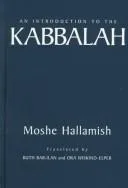
An introduction to the Kabbalah
 62
62

An introduction to the Kabbalah


Lorelei Sage, Contemplative Literature Editor: Mosheh Ḥalamish's 'An Introduction to the Kabbalah' is a lucid and authoritative guide, demystifying a tradition often shrouded in esoteric jargon. Sage expertly navigates the reader through the personal journey of the Kabbalist, from rigorous preparation to the very act of divine communion. The exploration of core doctrines like the Sefirot and Sitra Ahra is particularly insightful, presented with a clarity that honors their profound complexity. This work is an invaluable resource for both neophytes yearning for foundational knowledge and seasoned practitioners seeking a deeper, more nuanced understanding of Kabbalistic principles. It truly illuminates the path to hidden wisdom.
📝 Description
62
Mosheh Ḥalamish's 1996 'An Introduction to the Kabbalah' demystifies Jewish mysticism.
This book explains the core concepts of Kabbalah for a general audience. Ḥalamish details the role of the Kabbalist, the traditions of teaching and preparation, and the potential dangers and benefits of mystical practice. The text covers methods for understanding hidden meanings and the origins of divine insights.
Ḥalamish examines key Kabbalistic ideas such as the Sefirot, or divine emanations, and the concept of the Sitra Ahra, or the 'Other Side.' It addresses the ongoing tension between spiritual forces. The book aims to make complex mystical ideas accessible to those interested in Jewish esoteric traditions.
Kabbalah, a system of Jewish mysticism, developed over centuries, seeking to understand the divine nature and the creation of the universe. It employs methods of interpretation, meditation, and mystical contemplation. Key texts like the Zohar and the writings of Isaac Luria form its historical bedrock. Ḥalamish's work engages with these traditions, presenting them in a structured manner for contemporary readers. It addresses the practical and theoretical dimensions of this esoteric path.
💡 Why Read This Book?
This book is essential for unlocking the secrets of Jewish mysticism. It offers a clear, accessible path for seekers and scholars alike to understand the Kabbalist's path, the sacred transmission of knowledge, and the core tenets of Kabbalistic philosophy. If you are drawn to the profound symbolism of the Sefirot or the dualistic forces within existence, this introduction provides the foundational insights needed to begin your exploration into this ancient and powerful tradition.
⭐ Reader Reviews
Honest opinions from readers who have explored this book.
❓ Frequently Asked Questions
What is the primary focus of this introduction?
This book primarily focuses on acquainting readers with the world of Kabbalah, detailing the personal journey and qualifications of a Kabbalist, alongside the fundamental doctrines and symbolism within Jewish mysticism.
Who is the intended audience for this book?
The book is ideal for beginners curious about Kabbalah, students of comparative religion and mysticism, and anyone seeking a structured understanding of Jewish mystical traditions.
Does the book cover practical Kabbalistic practices?
While it discusses techniques for uncovering mysteries and the sources of revelations, the emphasis is on foundational understanding and the personal disposition of the Kabbalist, rather than explicit practical instruction.
What are the 'Sefirot' and 'Sitra Ahra'?
The Sefirot are divine emanations or attributes central to Kabbalistic cosmology, representing stages of creation. Sitra Ahra, the 'Other Side,' refers to the realm of forces antithetical to holiness, often associated with evil and impurity.
Is prior knowledge of Judaism required to read this book?
While some familiarity with Jewish concepts may enhance understanding, the book is designed as an introduction, explaining key terms and concepts to make it accessible to a broad audience interested in mysticism.
🔮 Key Themes & Symbolism
The Kabbalist's Path and Preparation
This section explores the transformative journey of the individual Kabbalist. It examines the sacred art of transmitting esoteric knowledge through personal mentorship and the rigorous spiritual and intellectual discipline required. Readers will learn about the essential qualities, prerequisites, and early preparations that forge a Kabbalist, understanding the profound dedication needed to approach divine mysteries. The text also addresses the inherent risks and profound spiritual achievements associated with this path, offering a compelling insight into the personal commitment demanded by Kabbalistic study and practice.
The Doctrine of the Sefirot
Central to Kabbalistic cosmology, the Sefirot represent the ten divine emanations through which God created and sustains the universe. This theme explores their intricate structure, symbolic meanings, and interrelationships, forming the blueprint of creation. Understanding the Sefirot is crucial for comprehending the divine flow of energy, the nature of reality, and the path of spiritual ascent. Halamish illuminates how these archetypal vessels channel divine light, influencing both the cosmic order and the human soul's journey towards unification with the Divine.
The Sitra Ahra: The Other Side of Creation
This theme confronts the enigmatic field of the 'Other Side,' the forces that stand in opposition to divine order and purity. Halamish explores the Kabbalistic understanding of duality, the interplay between good and evil, and the spiritual challenges posed by this cosmic imbalance. The Sitra Ahra is presented not merely as a force of destruction, but as an integral part of the created order, whose existence highlights the preciousness of divine light and the importance of spiritual discernment. Understanding this dynamic is key to reading through the complexities of existence and striving for spiritual integrity.
💬 Memorable Quotes
Direct passages from the work, attributed to the author.
“Mysteries unfold not through force, but through purification.”
— This highlights the internal, spiritual work required in Kabbalah, suggesting that divine secrets are revealed through inner cleansing and readiness.
“The Sefirot are the divine fingerprints on the collection of existence.”
— This poetic metaphor illustrates the Sefirot as the divine structural elements that shape and organize all of reality, from the smallest detail to the grandest cosmic design.
“To know the Sitra Ahra is to better cherish the light.”
— This suggests that understanding the forces of opposition and shadow provides a crucial contrast, deepening one's appreciation for and connection to divine goodness and purity.
“Revelation is a whisper heard by a prepared soul.”
— This emphasizes the active role of the seeker in Kabbalah, where divine insights are not passively received but are consciously accessed by a soul attuned through discipline and intention.
💡 Key Ideas
Editorial paraphrase of the work's core concepts — not direct quotes.
The Kabbalist walks a path illuminated by ancient light.
This quote emphasizes the historical and spiritual lineage of Kabbalistic practitioners, highlighting the illuminated nature of their quest for hidden knowledge.
🌙 Esoteric Significance
Tradition
This work is steeped in the esoteric tradition of Kabbalah, a mystical interpretation of Judaism that seeks to understand the divine nature, the creation of the universe, and the relationship between God and humanity. It is a profound system of symbolic theology, cosmology, and spiritual practice that aims to reveal hidden meanings within the Torah and the fabric of existence, offering a path to direct experience of the divine.
Symbolism
Kabbalah is rich in symbolism, and this introduction explores key elements. The Sefirot, the ten divine emanations, are primary symbols representing the structure of reality and the pathways of divine energy. The Tree of Life, formed by the Sefirot, is a foundational diagram of creation and spiritual ascent. Other potent symbols include divine names, letters of the Hebrew alphabet imbued with mystical power, and the interplay between light and shadow (represented by Sitra Ahra). These symbols serve as keys to unlocking deeper levels of spiritual understanding.
Modern Relevance
In contemporary times, Kabbalah continues to resonate deeply, offering useful insights into consciousness, spirituality, and the human condition. Halamish's work makes this ancient wisdom accessible, providing tools for personal growth, ethical development, and a deeper understanding of the interconnectedness of all things. The exploration of divine emanation and the quest for spiritual fulfillment remain highly relevant for individuals seeking meaning, purpose, and a more profound connection to the sacred in a complex world.
👥 Who Should Read This Book
This book is an indispensable resource for a wide spectrum of readers. **Beginners** will find a clear and guided entry point into the complex world of Jewish mysticism, clarifying core concepts. **Scholars** of religion and philosophy will appreciate its scholarly approach and insightful analysis of Kabbalistic doctrines. **Spiritual seekers** drawn to esoteric traditions will discover profound wisdom and a framework for understanding the divine. **Practitioners** of contemplative practices may find new dimensions to their spiritual journey by understanding the theoretical underpinnings of Kabbalistic thought and its symbolic language.
📜 Historical Context
Mosheh Ḥalamish's 'An Introduction to the Kabbalah' emerges from a body of Jewish mystical thought that spans centuries, with its most significant developments occurring during the medieval period. The Kabbalah, meaning 'reception' or 'tradition,' gained prominence in Provence and Spain from the 12th century onwards, profoundly influencing Jewish spiritual life. Key texts like the Zohar, compiled in the late 13th century, became foundational, elaborating on complex cosmological theories, divine emanations (Sefirot), and the nature of the divine presence. This tradition was not static; it evolved through various schools and interpretations, responding to historical shifts and persecutions, often serving as a source of solace, meaning, and spiritual resilience for Jewish communities. Halamish situates this introduction within this lineage, providing a bridge from ancient esoteric practices to contemporary understanding, making the profound wisdom of Kabbalah accessible.
📔 Journal Prompts
Reflect on the qualities described for a Kabbalist. Which qualities resonate most with your own spiritual aspirations?
Consider the concept of the Sefirot. How might you visualize or understand the flow of divine energy in your daily life?
How does the idea of 'Sitra Ahra' (the Other Side) inform your understanding of challenges or duality in your personal experience?
What 'mysteries' are you currently seeking to uncover in your life, and what 'preparations' might be necessary?
How can the symbolic language of Kabbalah offer a new perspective on your existing spiritual beliefs or practices?
🗂️ Glossary
Kabbalah
A mystical tradition within Judaism, meaning 'reception' or 'tradition,' focused on understanding divine mysteries and the nature of creation through symbolic interpretation and esoteric practices.
Sefirot
The ten divine emanations or attributes through which God created and sustains the universe, forming the structure of the Kabbalistic Tree of Life.
Sitra Ahra
Literally 'the Other Side,' referring to the forces of opposition, impurity, and evil in Kabbalistic cosmology, often seen as a necessary counterbalance to divine holiness.
Torah
The first five books of the Hebrew Bible, considered by Kabbalists to contain profound mystical secrets and allegorical meanings beyond the literal text.
Mysticism
A spiritual discipline and often an experience of direct, intuitive knowledge of ultimate reality or divine presence, typically achieved through meditation, contemplation, or ecstatic states.
This book appears in 1 collection
🔮 Readers Also Liked
Browse all →







From the “Kabbalah” Collection
View all →








More Free Kabbalah & Jewish Mysticism Books
View all →