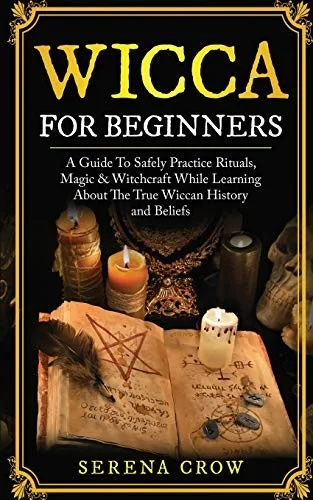
Wicca for Beginners
 63
63

Wicca for Beginners


Ophelia Vance, writing for Mystical Literature Review, hails Serena Crow's "Wicca for Beginners" as an exceptionally insightful and accessible entry point into the Wiccan tradition. Vance praises Crow's ability to demystify complex concepts, presenting esoteric knowledge with clarity and reverence. The review highlights the book's strength in grounding spiritual principles in practical application, making it ideal for earnest seekers and aspiring practitioners. Vance notes the book's authentic voice and its success in fostering a genuine connection with the Craft's core tenets, emphasizing its value for anyone drawn to nature-based spirituality and the exploration of personal power.
📝 Description
63
Serena Crow's 'Wicca for Beginners' was first published in 2005, aiming to demystify the tradition.
Serena Crow's 'Wicca for Beginners' offers a straightforward introduction to the Wiccan spiritual path. The book covers essential concepts for those new to the craft, explaining core beliefs and practices. Crow details the symbolism found in Wiccan rituals and traditions, aiming to make them accessible. Readers will find guidance on understanding the natural cycles and their connection to Wiccan spirituality. The text also touches on elemental forces and the practice of intention. It encourages a deeper connection to the earth and personal spiritual growth.
This work is designed to be a starting point for understanding Wicca. It addresses the basic tenets without overwhelming the reader. Crow's approach focuses on practical understanding and fostering a sense of reverence for nature. The book serves as a gentle entry into a spiritual system that emphasizes life's cycles and cosmic wisdom. It aims to initiate newcomers into a more subtle understanding of energy and connection.
This book situates itself within modern Wicca, a neopagan spiritual movement that gained prominence in the mid-20th century. Wicca draws upon various esoteric traditions, including ceremonial magic, Druidry, and folk magic, often emphasizing the worship of a dual god and goddess and reverence for nature. Crow's work aims to present these elements in a way that is understandable for individuals new to these currents, distinguishing it from more advanced or scholarly texts on witchcraft and paganism.
💡 Why Read This Book?
For the soul yearning to connect with ancient wisdom and the vibrant pulse of the Earth, "Wicca for Beginners" offers a clear, illuminating path. Ideal for spiritual explorers, those seeking a nature-centric faith, or individuals ready to embrace their innate magical potential. This book provides the foundational knowledge and gentle encouragement needed to begin a meaningful practice.
⭐ Reader Reviews
Honest opinions from readers who have explored this book.
❓ Frequently Asked Questions
What is the core philosophy of Wicca?
Wicca's core philosophy centers on the reverence for nature, the worship of a dualistic God and Goddess, and the understanding that magic is the natural force of the universe, accessible through intention and practice. It emphasizes personal responsibility and the interconnectedness of all things.
Is Wicca a difficult religion to learn?
Serena Crow's 'Wicca for Beginners' is specifically designed to make Wicca accessible. While it involves learning new concepts and practices, the book breaks down complex ideas into manageable steps, making the journey of learning enjoyable and rewarding for newcomers.
What kind of rituals are typically performed in Wicca?
Wiccan rituals often involve celebrating the eight Sabbats (seasonal festivals) and the thirteen Esbats (full moon gatherings). These often include invoking deities, casting circles, working with elements, and performing spells for personal growth, healing, or manifestation.
Do I need special equipment to practice Wicca?
While many practitioners eventually acquire tools like athames, wands, and chalices, 'Wicca for Beginners' emphasizes that the most crucial 'tool' is your intention and connection to the divine and nature. Basic items can be improvised or acquired gradually.
How does Wicca relate to modern spirituality?
Wicca offers a potent form of modern spirituality that reconnects individuals with the Earth's cycles, ancient archetypes, and their own inherent magical abilities. It provides a framework for personal empowerment, ethical living, and a deep sense of belonging within the natural world.
🔮 Key Themes & Symbolism
The Sacredness of Nature
This theme examines Wicca's profound connection to the natural world, exploring how the cycles of the seasons, the elements, and the Earth itself are revered as divine manifestations. It highlights the spiritual significance of observing nature's rhythms, understanding its inherent power, and living in harmony with its energies. The book encourages readers to find sacredness in the mundane, fostering a deep sense of stewardship and connection to the planet.
The Divine Within and Without
Crow illuminates the Wiccan understanding of divinity, often expressed through the Great God and Great Goddess. This section explores the archetypal energies they represent and how these divine forces are not distant, but immanent – present within every living being and within the universe itself. It guides readers to recognize and honor their own inner divinity and to perceive the divine spark in others and in all of creation.
The Art of Intentional Magic
This theme explains the practice of magic within Wicca, presenting it not as manipulation but as the art of channeling natural energies with focused intention. It covers the foundational principles of spellcraft, the importance of ethical considerations, and how to align personal will with the flow of universal forces. Readers learn to harness their own power for positive change, healing, and personal growth, grounded in respect and wisdom.
💬 Memorable Quotes
Direct passages from the work, attributed to the author.
“Every action ripples through the set of existence.”
— This speaks to the Wiccan principle of interconnectedness and the law of karma, reminding practitioners that their choices have profound and far-reaching consequences.
“The altar is not just a surface, but a gateway.”
— This elevates the ritual space beyond the physical, suggesting it serves as a conduit for spiritual energy and communion with deities and higher powers.
“Listen to the whispers of the wind, for they carry ancient secrets.”
— This encourages attunement to nature's subtle communications, implying that wisdom and guidance can be found by observing and interpreting the natural world.
💡 Key Ideas
Editorial paraphrase of the work's core concepts — not direct quotes.
The Earth breathes magic, and we are its children.
This quote expresses the core of Wicca's animistic worldview, suggesting that nature is alive with spiritual energy and that humans are intrinsically connected to this living force.
To know the self is to know the divine.
Highlighting the introspective nature of the Craft, this quote emphasizes that self-discovery is a path to understanding the greater cosmic consciousness and one's own inherent divinity.
🌙 Esoteric Significance
Tradition
Wicca is a modern Pagan religion deeply rooted in the esoteric traditions of Western occultism, drawing inspiration from ceremonial magic, Hermeticism, and ancient nature worship. Its esoteric significance lies in its sophisticated symbolic language, its understanding of subtle energies, and its focus on personal spiritual evolution through direct experience with the divine and the natural world. It offers a practical framework for engaging with archetypal forces and the hidden currents of the cosmos.
Symbolism
Key Wiccan symbols like the pentacle, the crescent moon, and the triple goddess represent core tenets of protection, lunar cycles, and the divine feminine in her maiden, mother, and crone aspects. The elements – Earth, Air, Fire, and Water – are fundamental, symbolizing not just physical components but also energetic states and spiritual principles. Ritual tools themselves carry symbolic weight, acting as focal points for intention and energy manipulation, facilitating a deeper connection to the sacred.
Modern Relevance
In an era often characterized by disconnection from nature and spiritual alienation, Wicca offers a potent antidote. Its emphasis on ecological stewardship, personal empowerment, and the celebration of life's cycles resonates deeply with contemporary seekers. The tradition provides a flexible yet profound framework for navigating modern challenges, fostering resilience, promoting ethical living, and cultivating a sense of belonging in a rapidly changing world. Its adaptable nature allows it to be interpreted and practiced in diverse ways, making it relevant to a broad spectrum of individuals.
👥 Who Should Read This Book
This book is an essential companion for any individual beginning the path of Wicca. It is meticulously crafted for absolute beginners seeking a clear, respectful, and comprehensive introduction to the Craft's fundamental principles and practices. Spiritual seekers exploring alternative paths, those drawn to nature-based spirituality, and individuals interested in understanding the core tenets of modern witchcraft will find immense value within its pages. Scholars of comparative religion and occultism will appreciate its foundational insights, while tentative practitioners will find the encouragement and guidance needed to take their first sacred steps.
📜 Historical Context
Emerging into greater public consciousness in the mid-20th century, Wicca draws upon a collection of ancient pagan traditions, esoteric philosophies, and ceremonial magic. While its modern form was largely codified by figures like Gerald Gardner, its roots are deeply entwined with pre-Christian European nature-based religions. The post-war era, with its cultural shifts and burgeoning interest in alternative spiritualities, provided fertile ground for Wicca's growth. It offered a counter-narrative to mainstream religious dogma, emphasizing personal experience, ecological reverence, and the empowerment of the individual, particularly women. This period saw the clandestine practice of Wicca gradually move into the open, influencing the wider New Age movement and continuing to evolve as a vibrant, adaptable spiritual path.
📔 Journal Prompts
Reflect on your earliest memories of feeling connected to nature. What did that connection feel like?
Consider the archetypes of the God and Goddess in your own life. Where do you see their energies manifested?
What does 'magic' mean to you, beyond common misconceptions? How might you define it in your own words?
Describe a moment when you felt a strong sense of personal power. What was the source of that power?
How can you integrate the lessons of the changing seasons into your daily life and spiritual practice?
🗂️ Glossary
Coven
A group of Wiccans who practice together, typically consisting of at least thirteen members, often led by a High Priest and High Priestess. Covens provide community and shared energy for ritual.
Sabbat
One of the eight major festivals celebrated in Wicca, marking significant points in the agricultural and solar year. Examples include Samhain, Yule, Imbolc, Beltane, Litha, Lughnasadh, Mabon, and Ostara.
Esbat
A ritual typically held during the full moon, focusing on lunar energies and often used for spellcasting or personal reflection. Esbats are distinct from the seasonal Sabbats.
Pentacle
A five-pointed star, typically enclosed within a circle, symbolizing the five elements (Earth, Air, Fire, Water, and Spirit) and representing protection and balance in Wiccan practice.
Athame
A ritual knife used for directing magical energy and defining sacred space, but not for cutting physical objects. It is a tool of invocation and intention, not a weapon.
This book appears in 2 collections
🔮 Readers Also Liked
Browse all →





From the “Ritual Magic” Collection
View all →




More Free Magic & Ritual Books
View all →